HOW TO STAY CALM IN A CHAOTIC WORLD

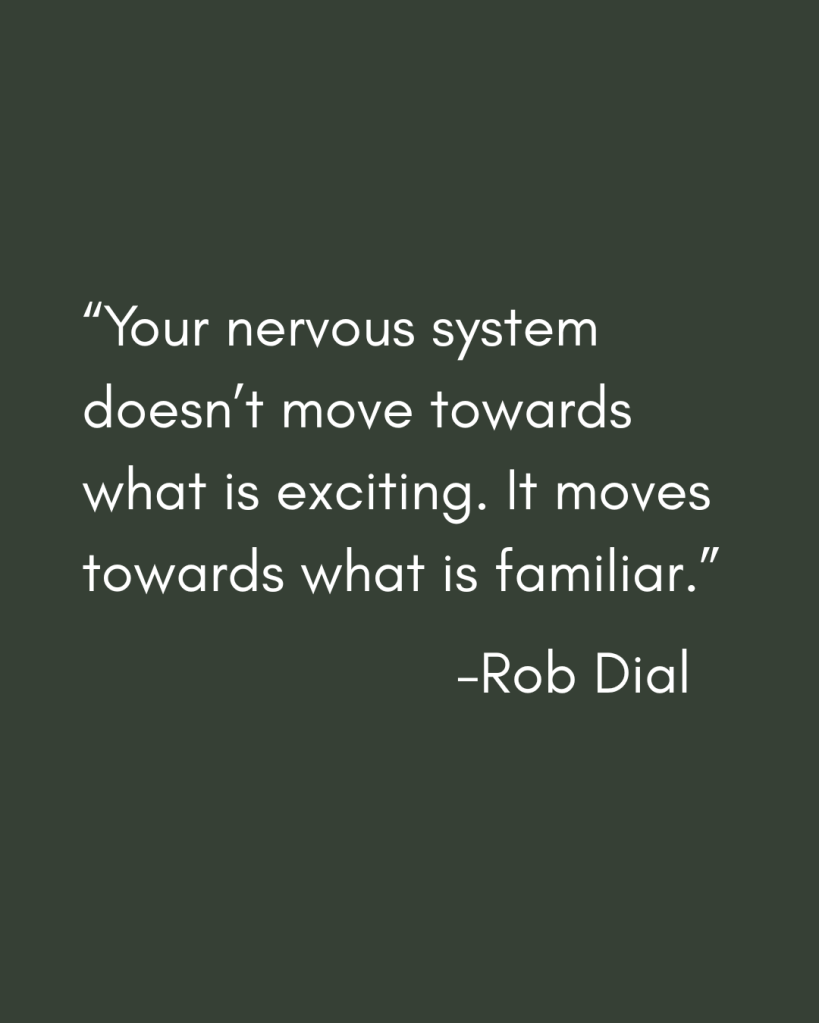
Modern life can easily pull us into urgency, comparison, distraction, and overstimulation. We must be intentional about living in a place of peace or calmness. Many people mistake calmness for weakness or passivity, but the truth is, calmness is emotional steadiness in the middle of uncertainty – which is anything but weak and passive. Calm people are not people without problems, they are people who have learned to respond rather than react. They believe the truth that they are the author of their reactions. Nothing outside of them has power unless they grant that power.

Calmness is a skill, not a personality trait. I can assure you because this is true from my own experience. I am not someone who is naturally calm, as I have dealt with anxiety most of my life. I have had to practice emotional regulation. Calmness is trained through repetition. Some people are naturally calm, and so this comes easier, but I think everyone to a certain degree has to learn emotional regulation. Staying calm does not mean ignoring our feelings. Emotional regulation involves acknowledging emotions, but not allowing those emotions to drive our behavior. A simple and practical way to implement this is to learn the art of pausing before you respond to something that is triggering. One moment of pause can completely change the outcome of a circumstance for you. Calmness often begins with slowing down our reactions.

There are several reasons why we may struggle to stay calm. The first reason being a need for control. This is probably the most common reason, and definitely the one I resonate with. It is easy to feel panic when life doesn’t match our expectations. That is why it is important to practice accepting uncertainty in life. Calmness can grow when we accept that life is unpredictable. Another reason we may struggle to remain calm is because of overconsumption. Too much noise, media, opinions, and stimulation can really trigger that feeling of overwhelm or being out of control. Our nervous system wasn’t designed to handle so much input. It is so easy these days with the internet and social media to get overstimulated. We must be intentional with our time. We must guard our time as though it is our most finite resource. It is the one thing you cannot get back. Recently I have been adding more things to my morning routine to focus on things that are beneficial and promote self growth to avoid just jumping on my phone first thing in the morning. I have been reading my Bible and praying first thing in the morning for many years, but last fall I added taking a morning walk with no headphones/input, and recently also added journaling. I don’t look at my phone until I have been awake for a couple of hours.

Another reason we may struggle to stay calm is because of internal pressure. We may put expectations on ourselves that we don’t even need. It could be because of a struggle with perfectionism and therefore having standards that are too high, it could be a fear of failure, or a feeling of falling behind in life compared to our peers. We must self reflect and evaluate if any of these things are serving us, or just causing us undue stress and anxiety, and then move forward being aware of the reality and what are the next best steps to take towards the life we want. Lastly, we may struggle to stay calm because of unhealed emotional patterns. Past experiences can make present situations feel bigger than they are. We must work through our emotions – whether that is through journaling, praying, talking to a friend or mentor, or seeking professional help.

There is a cost if we continually live in reactivity instead of responsiveness. Many people who do not learn the skill of emotional regulation end up living in a constant state of emotional exhaustion. They are constantly living on edge and allow notifications to control their lives. They feel burnt out from mental overstimulation. In addition to this, living in a state of reactivity can lead to poor decision making. Fear creates impulsive choices instead of thinking through the decision and weighing pros and cons. For someone who lives in a reactive state, anxiety narrows their perspective, making it difficult for them to make logical decisions. And, these individuals often struggle with anger because they feel so out of control. When we make decisions in anger, they are often not decisions informed by wisdom but instead by impulse. Lastly, not living in a calm state typically leads to loss of being present in the moment. Someone who lives in a reactive state misses the moment they are in because their mind is elsewhere. They are constantly anticipating the next thing – the next crisis, the next terrible thing, which steals their current peace. Calmness on the other hand allows us to actually experience life.

There are some practical ways you can cultivate calmness. First is probably obvious: slow down physically. Breathe deeper, walk slower, and stop always multi-tasking. You can also be intentional to protect your mental space. Reduce unnecessary noise and information. Set boundaries for yourself with your phone or screentime. Create intentional moments of quietness, like taking a walk with no headphones. Create daily grounding habits that will organically help you with these boundaries, like morning routines with journaling, prayer or mediation, and exercise or movement. Another practical way you can practice calmness is to learn to sit with discomfort. Choose voluntary difficulty. We were made for excellence not for ease. Calmness comes when you learn that not every uncomfortable feeling is an emergency and you can survive difficult things. The more you do difficult things, the easier those things become. And as I frequently say on these Thoughtful Thursday messages, focus on what YOU can control! Your effort, your mindset, your response. When you begin to focus on what is in your control instead of what you can’t control you feel empowered which leads to the feeling of calmness.

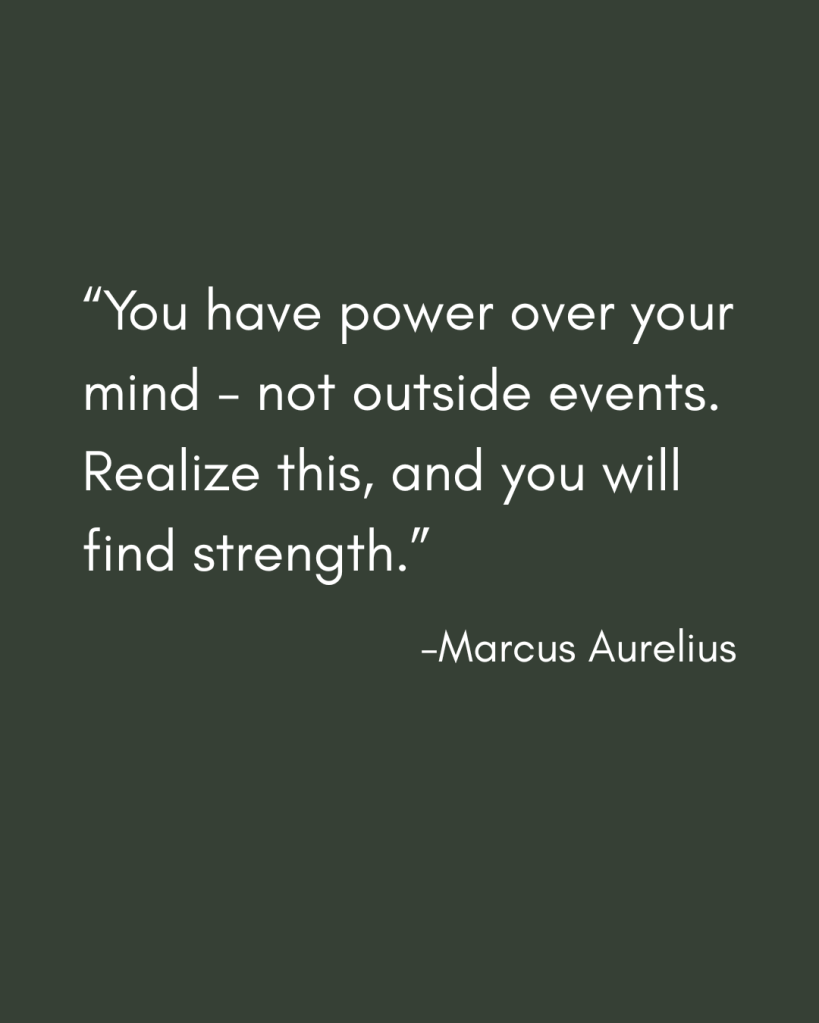
We must learn to accept that life will always be uncertain. Calmness doesn’t come from perfect circumstances, but instead from trust in ourselves. We must trust that we have the ability to adapt in all circumstances. We must trust that we have the ability to do hard things, and that those hard moments will pass. That is what life is all about. The quicker you accept that, the easier it will be to feel that calm state. Marcus Aurelius, a famous stoic said, “You have power over your mind – not outside events. Realize this, and you will find strength.”

This is the YouTube video I shared in conjunction with this blog post.

MEDITATIVE PRACTICE

Hey friends, for today’s Thoughtful Thursday I wanted to talk about something I was thinking about the other day while putting up our outdoor Christmas lights. I have been lining the path leading up to our house with lights for the last several years. It is a tedious process and I’m always trying to remember exactly how I installed them previously. I have these little light pick type holders, they are little stakes you put into the ground and then put each individual light bulb into individual stakes so that the lights are neatly lining the sidewalk. On the day I was doing this project I was not feeling great. I was dealing with some seasonal allergies, which made me a little irritable. I didn’t realize I had two different lengths of light strands and I thought I had installed the wrong ones because they didn’t reach all the way down the path, which irritated me even more! I later realized that the lights usually didn’t extend the full length of the pathway. But I had this thought while installing the lights – a lot of homemaking tasks and projects can be tedious, but they can also be quite meditative if we view it that way.

When we have a task that requires little thought and is a repetitive task, we can view this as an opportunity to have a meditative moment. As I was installing each little individual light, this repetitive motion afforded me the space to think through things that were on my mind. It gave me time to process some things I had been thinking about. I know when we perform these repetitive tasks it may be easy to want to entertain ourselves during that task. We may want to listen to music or a podcast, or watch a YouTube video. And there is nothing wrong with that! I certainly do that too. I just had this moment of clarity where I realized how meditative some tasks can be. I have been trying to mono-task more often lately. Doing one thing at a time – whether it’s cooking, cleaning, or putting up Christmas lights. This can help you to live more in the moment, and also leave more space for quietness and reflection.

Something that I have actually been thinking about all year is how inundated we are now with entertainment. Having a mini computer right in our pockets and going everywhere with us has made it really easy to access content and constant entertainment. I have noticed recently how easy it is to mindlessly open apps on my phone or mindlessly scroll Instagram. I go on to respond to comments or DMs and before I know it I’m just scrolling. I feel like it has become something that is an autopilot response. Any dead space we have – whether it’s sitting at a traffic light or waiting in line, our auto response can be to pick up our phones. I have been wanting to do a social media detox for a while now, but it’s just so complicated given that I post on social media for business purposes. I’m thinking about trying a 12 day detox leading up to Christmas day. And honestly, Instagram is the only social media app I struggle with. I do watch YouTube videos, but I feel like I am more intentional with YouTube. I got rid of Tik Tok and FaceBook a couple years ago. Social media is such a double edge sword because on the one hand it is a great way to connect, but it can also be a time suck. I have also wondered if I would spend more time with people in real life if I didn’t have this app to connect with people.

But back to the main topic I have been thinking about – meditative practices. I think once I filter out this extra input in my life, it will be easier to truly enjoy the meditative quality of some of my homemaking tasks. I will be less apt to find some way to entertain myself while cooking, cleaning, decorating, organizing, or decluttering and instead enjoy the process more and focus my mind on prayer, self reflection, or processing my most recent emotions. I do feel like this is such a challenge because of how prevalent media is in our lives. I don’t want to be a zombie and mindlessly open apps, and mindlessly scroll. I want to be intentional with what I do with my time and my brain space!

AGING GRACEFULLY, IT’S NOT WHAT YOU THINK

For today’s Thoughtful Thursday post I wanted to talk about aging gracefully. I wanted to share on this topic because I know a lot of people are surprised when they find out my age. For those of you who are new here or just don’t know, I am 50 years old. Aging gracefully is not just about creams and ointments, exercise, drinking plenty of water, and getting good sleep. Don’t get me wrong, I think all of those healthy habits contribute to aging gracefully, but it is far more than just surface level habits.

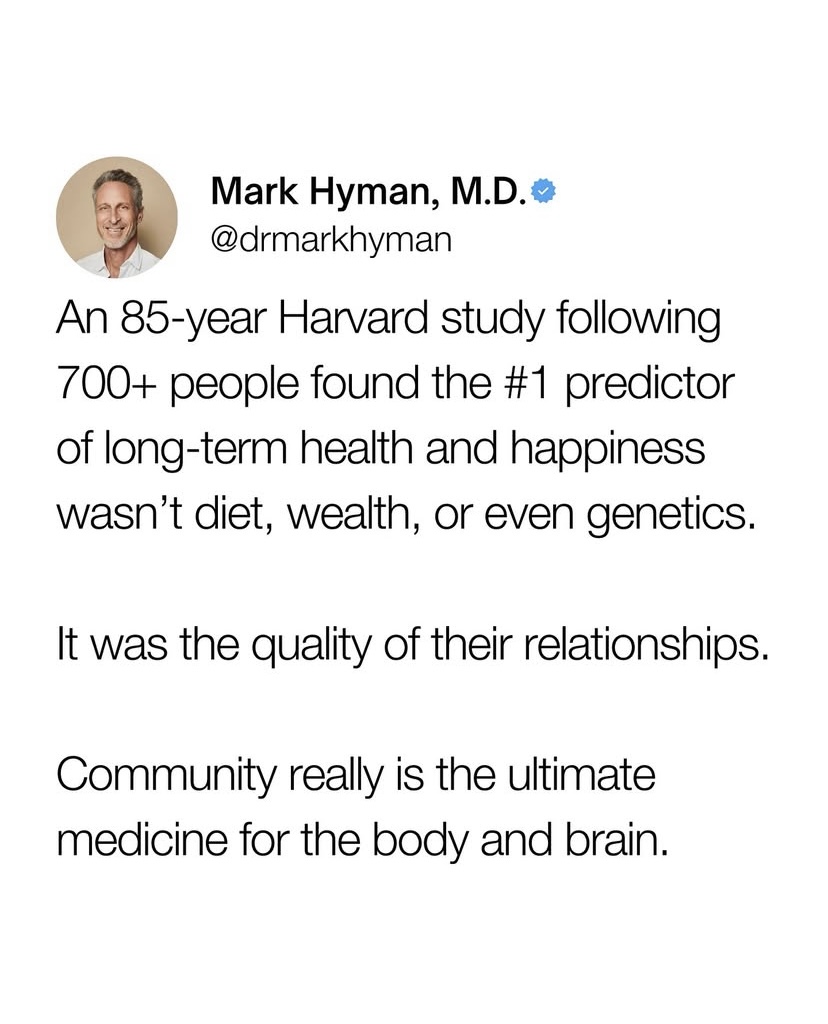
The first thing I wanted to talk about is relationships. I’m talking about genuine relationships. Those relationships where you have deep and meaningful conversations, hard conversations, remembering birthdays and other special dates, and showing care and love for one another. Dr. Mark Hyman has shared on this topic, the importance of relationships for health and longevity. On instagram he shared that if you have a loving, connected conversation with someone, it will turn on the genes that shut off inflammation in the body. He also shared “an 85 year old study following 700+ people found that the #1 predictor of long-term health and happiness wasn’t diet, wealth, or even genetics. It was the quality of relationships. Community is really the ultimate medicine for the body and brain.” This isn’t easy. Especially in this fast paced culture we live in. It is difficult to prioritize relationships, but it will help us to age gracefully! 

Something else that can help us to age gracefully is similar to prioritizing relationships is to look outward instead of inward. When we focus on listening to others, helping others, serving others instead of constantly focusing on ourselves and our own needs, we shine a little brighter!

We also must hold on to curiosity if we want to age gracefully. Have you heard that phrase, “he or she is set in their ways.” This is usually referring to someone who is older and has become closed-minded. Staying open-minded and curious can help us to stay more youthful. We can do this by listening to others’ perspectives and opinions, but we can also do this by being life-long learners, challenging and examining our own beliefs. Prioritizing education throughout your life will help you to age gracefully!

The next thing I have to share I would say is totally underrated. I think it is so important to hold onto whimsy. Typically, whimsy is something that is associated with children. Kids have an excitement and enthusiasm for life that is often lost in adulthood. Finding joy in the little things in life can help us to stay youthful! Look for ways to make life playful! Go play in the rain, skip into a store instead of walking, stop and ride on a swing when you pass one! Don’t lose your wonder for life! Make room for fun and laughter.  Don’t run yourself ragged saying yes to everything, but instead be intentional with your “yes.” Say yes to spontaneous adventures. Play isn’t pointless, you can get excited about things that aren’t necessarily useful or productive.

Another way you can age gracefully is by being gentle with yourself. Give yourself grace because no one is perfect. We all just do our best and if we have unattainable standards for ourselves, it will make us irritable and frustrated. I recognize that this is easier said than done and can take time to get there through practice! This shift is not something that can be bottled up and sold, but it definitely changes your demeanor, the way you carry yourself. Similarly, stop “should-ing” yourself. It’s okay to want to make changes in life and want to challenge yourself to do better, but don’t put unreasonable expectations on yourself. Self compassion softens you. You unfurl your brow, you lower your shoulders. This ease with yourself shines through and helps you to age gracefully.

You know what else softens you? Doing the inner work: processing your emotions, feeling them instead of fixing, denying, or covering them. Once you do this work, you relax physically – your shoulders lower, your jaw unclenches, your gut is at peace. You aren’t in a constant state of fight or flight and needing to protect yourself. In general, doing the hard thing over and over helps you to age gracefully. I’m not talking just about things that are physically hard like exercise and eating healthy, although those things are good! I’m talking about being emotionally honest with yourself, I’m talking about getting out of bed every morning when you don’t want to (or even have to). I’m talking about leaning into your healthy habits even when life circumstances start spiraling.

Something else that I have found to be so important is to prioritize rest. Making time for rest is not being lazy. Rest gives your body time to repair. Your physical body, but also your mind and your emotions. When you prioritize rest, you must be intentional with your time. A couple years ago I felt like God was calling me to take a true sabbath. I was working 7 days a week and often felt exhausted or burnt out. Now that I take Sundays off from working, I must be intentional with the other 6 days.

Even though I wanted to focus on things other than the obvious things that will help us age gracefully, let’s talk about exercise. When you age gracefully you learn to shift the focus from a certain body size to exercise for your mental health, appreciating the fact that your body can move. This is certainly not easy as we are undoing decades of programming from society. But this mindset shift is so important and honestly just freeing! No longer exercising because we ate a piece of cake or because we want to fit in a certain size of jeans, and instead habitually moving your body because it makes you stronger and more energized! When you learn to move with your body instead of against it you unlock a freedom you have not known!

Lastly, aging gracefully comes from living with integrity, heart, and contentment. When your actions and habits are in alignment with your values and priorities, you show up in this world in a different kind of way. You shine brightly because you are living in freedom. This kind of peace slows down the aging process! 

Here is the YouTube video I shared in conjunction with this blog post.