THE STORIES WE TELL OURSELVES

We all have a narrative about ourselves living inside our heads. The question isn’t whether you have a story you tell yourself, it’s whether your story is true. Many of the limits we put on ourselves aren’t real limits we have, but rather old beliefs that probably surfaced a long time ago. I recently heard a story shared on the Mel Robbins podcast from Dr. Shade Zahrai about a study that was done by a professor at Dartmouth in the late 70’s, early 80’s. He had two groups of people and with one group he drew a very noticeable, visible scar on their face, he let them see the scar so they knew it was there. With the other group he did not put a scar on their face. Then he sent them out to have conversations with people. When they returned he asked how the conversations went. The people with the scars on their faces felt like they were judged, like their conversation partner was cold, and that they were treated differently because of the scar. While those without the scar reported that the conversations went well. While that would have been an interesting experiment on discrimination, the fascinating thing about this study was right after he showed the scar participants their scar, he said that he was going to put some moisturizer on the scar to make sure it set but he was actually removing the scar entirely! So these participants went into the conversation only believing they had a scar, which led them to have an expectation of how people would treat them, which led them to pay attention to nuances in the conversation that objectively did not exist. So it is good to think about what kind of scars you are carrying that create this narrative of who you are and how it affects how you enter each conversation or circumstance in life.

A simple definition of self narrative is the ongoing story your brain tells you about who you are, what you are capable of, and what you deserve. From psychology we know that the brain is a meaning-making machine. It is always labeling and filing your life experiences. And then these narratives become the lens through which you filter each experience moving forward. Most of us don’t acknowledge that this complex process is going on, and therefore tend to live on autopilot, basically letting old stories or narratives about you make decisions. This can show up in any aspect of your life – home life, relationships, habits, self worth, and more.

These stories that we constructed, often subconsciously, came from many origins. It could come from childhood and the messages we received from parents, teachers, siblings, or even peers, often without these individuals even realizing the impact it would have on us. These stories can also come from our past failures, especially things that we never processed and forgave ourselves for, but instead the mistakes replay in our heads over and over. Comparison is another way we construct these stories about ourselves – we see those around us, like family or friends and measure how we are doing or our worth compared to how others are doing. This often isn’t the full picture as we see the narrative they feed us about themselves. This is especially true on social media – the place that is notorious for the highlight reel. Lastly, these stories we tell ourselves could be informed by cultural messages. There is messaging that comes from society that shows us for instance how a woman “should” be, how a home “should” look, or what success “should” look like. These narratives are rarely stories we choose to believe, but instead they were absorbed, handed to us, or formed in a moment of pain. But we almost subconsciously carry them as though they are fact.

These stories hold us back from becoming the best version of ourselves. They create a ceiling so to speak of what we believe we are or aren’t capable of. They almost become a self-fulfilling prophecy as we subconsciously act in ways that confirm the story. These narratives keep us stuck in “some day” thinking – believing that some day we will be more disciplined, more motivated, have more time, or are more ready to pursue the thing we want to do. It will also show up in how we talk to ourselves. When we make mistakes or don’t follow through on the steps it takes to get to our goals we are very critical instead of self compassionate. For example, a woman who believes she is “just not an organized person” will self-sabotage every organizing system she tries to implement, not because the system doesn’t work but instead because of this narrative she believes about herself that she is “just not organized.”

There are practical ways you can identify your limiting stories. First, watch your “I just am” statements. “I’m just not a morning person.” “I’m just not disciplined.” “I’m just disorganized.” The word “just” is a story pretending to be a fact. Notice always and never statements. “I always mess up.” “I never follow through.” Usually these statements are not true, but we can be prone to use them to support our story. Another way to identify limiting stories is to pay attention to resistance. When you have a strong emotional reaction to something, like defensiveness, shame, or avoidance, there is often a story underneath. There are a couple of questions you can ask yourself. If you are serious about getting to the bottom of your false narratives, spend some time journaling and asking yourself a couple of questions. One is: “What do I believe about myself that I have never questioned?” and/or ask: “Where did I first learn this about myself and was it a reliable source?” I know that self evaluation is not easy. It can be uncomfortable and even painful, but it is worth it.

So how do we rewrite these narratives? First I want to share with you what rewriting a narrative is NOT. It’s not toxic positivity. It’s not slapping platitudes or affirmations on a wound. Instead it is about moving from an outdated, inaccurate story to a more honest and empowering one. Use this statement to reframe your beliefs about yourself: “I used to believe _________, but the truth is ________.” An example would be: “I used to believe that I was a disorganized person, but the truth is I never had the right systems or anyone to teach me.” This won’t be easy. It won’t be a singular journal entry. New stories don’t just stick immediately because old neural pathways are deep. In order to reroute these new stories in your brain, so to speak, it will take consistent effort with intentional thought. Repetition is the key to successfully rewriting these narratives. Community and accountability are important in this process. The people around you either reinforce your old story or help you build a new one. Be intentional about who speaks into your life. Also, you must celebrate the small wins! Every time you act against the old story, you collect proof for the new one! 

Did the story about the study done with the participants who thought they had a scar at the beginning of this post resonate with you? Do you have beliefs about yourself that inform the way you interact in the world? I frequently talk about decluttering our physical spaces, but the mind is one of the most important spaces you will ever declutter and organize! This week, think of one “I just am” statement that you have been telling yourself and ask if that is actually true or just a story you are telling yourself!


Here is the YouTube video I shared in conjunction with this blog post.


HOW TO STAY CALM IN A CHAOTIC WORLD

Modern life can easily pull us into urgency, comparison, distraction, and overstimulation. We must be intentional about living in a place of peace or calmness. Many people mistake calmness for weakness or passivity, but the truth is, calmness is emotional steadiness in the middle of uncertainty – which is anything but weak and passive. Calm people are not people without problems, they are people who have learned to respond rather than react. They believe the truth that they are the author of their reactions. Nothing outside of them has power unless they grant that power.

Calmness is a skill, not a personality trait. I can assure you because this is true from my own experience. I am not someone who is naturally calm, as I have dealt with anxiety most of my life. I have had to practice emotional regulation. Calmness is trained through repetition. Some people are naturally calm, and so this comes easier, but I think everyone to a certain degree has to learn emotional regulation. Staying calm does not mean ignoring our feelings. Emotional regulation involves acknowledging emotions, but not allowing those emotions to drive our behavior. A simple and practical way to implement this is to learn the art of pausing before you respond to something that is triggering. One moment of pause can completely change the outcome of a circumstance for you. Calmness often begins with slowing down our reactions.

There are several reasons why we may struggle to stay calm. The first reason being a need for control. This is probably the most common reason, and definitely the one I resonate with. It is easy to feel panic when life doesn’t match our expectations. That is why it is important to practice accepting uncertainty in life. Calmness can grow when we accept that life is unpredictable. Another reason we may struggle to remain calm is because of overconsumption. Too much noise, media, opinions, and stimulation can really trigger that feeling of overwhelm or being out of control. Our nervous system wasn’t designed to handle so much input. It is so easy these days with the internet and social media to get overstimulated. We must be intentional with our time. We must guard our time as though it is our most finite resource. It is the one thing you cannot get back. Recently I have been adding more things to my morning routine to focus on things that are beneficial and promote self growth to avoid just jumping on my phone first thing in the morning. I have been reading my Bible and praying first thing in the morning for many years, but last fall I added taking a morning walk with no headphones/input, and recently also added journaling. I don’t look at my phone until I have been awake for a couple of hours.

Another reason we may struggle to stay calm is because of internal pressure. We may put expectations on ourselves that we don’t even need. It could be because of a struggle with perfectionism and therefore having standards that are too high, it could be a fear of failure, or a feeling of falling behind in life compared to our peers. We must self reflect and evaluate if any of these things are serving us, or just causing us undue stress and anxiety, and then move forward being aware of the reality and what are the next best steps to take towards the life we want. Lastly, we may struggle to stay calm because of unhealed emotional patterns. Past experiences can make present situations feel bigger than they are. We must work through our emotions – whether that is through journaling, praying, talking to a friend or mentor, or seeking professional help.

There is a cost if we continually live in reactivity instead of responsiveness. Many people who do not learn the skill of emotional regulation end up living in a constant state of emotional exhaustion. They are constantly living on edge and allow notifications to control their lives. They feel burnt out from mental overstimulation. In addition to this, living in a state of reactivity can lead to poor decision making. Fear creates impulsive choices instead of thinking through the decision and weighing pros and cons. For someone who lives in a reactive state, anxiety narrows their perspective, making it difficult for them to make logical decisions. And, these individuals often struggle with anger because they feel so out of control. When we make decisions in anger, they are often not decisions informed by wisdom but instead by impulse. Lastly, not living in a calm state typically leads to loss of being present in the moment. Someone who lives in a reactive state misses the moment they are in because their mind is elsewhere. They are constantly anticipating the next thing – the next crisis, the next terrible thing, which steals their current peace. Calmness on the other hand allows us to actually experience life.

There are some practical ways you can cultivate calmness. First is probably obvious: slow down physically. Breathe deeper, walk slower, and stop always multi-tasking. You can also be intentional to protect your mental space. Reduce unnecessary noise and information. Set boundaries for yourself with your phone or screentime. Create intentional moments of quietness, like taking a walk with no headphones. Create daily grounding habits that will organically help you with these boundaries, like morning routines with journaling, prayer or mediation, and exercise or movement. Another practical way you can practice calmness is to learn to sit with discomfort. Choose voluntary difficulty. We were made for excellence not for ease. Calmness comes when you learn that not every uncomfortable feeling is an emergency and you can survive difficult things. The more you do difficult things, the easier those things become. And as I frequently say on these Thoughtful Thursday messages, focus on what YOU can control! Your effort, your mindset, your response. When you begin to focus on what is in your control instead of what you can’t control you feel empowered which leads to the feeling of calmness.

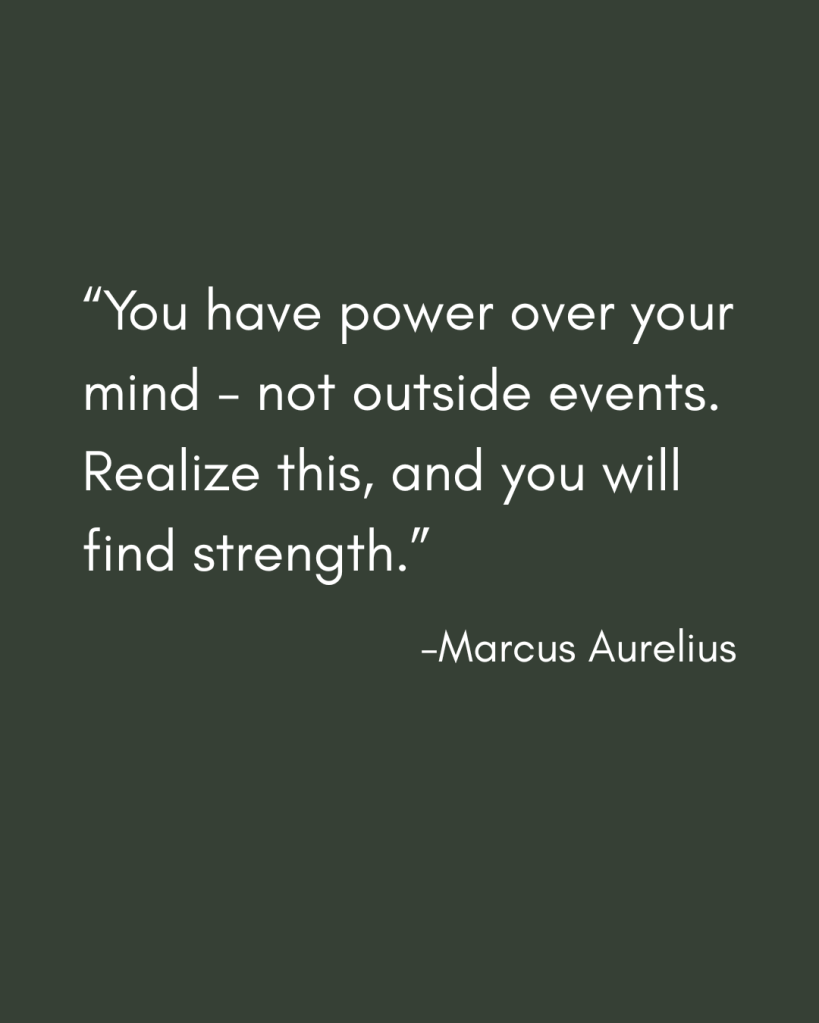
We must learn to accept that life will always be uncertain. Calmness doesn’t come from perfect circumstances, but instead from trust in ourselves. We must trust that we have the ability to adapt in all circumstances. We must trust that we have the ability to do hard things, and that those hard moments will pass. That is what life is all about. The quicker you accept that, the easier it will be to feel that calm state. Marcus Aurelius, a famous stoic said, “You have power over your mind – not outside events. Realize this, and you will find strength.”

This is the YouTube video I shared in conjunction with this blog post.

4 TIPS TO DECLUTTER SENTIMENTAL ITEMS

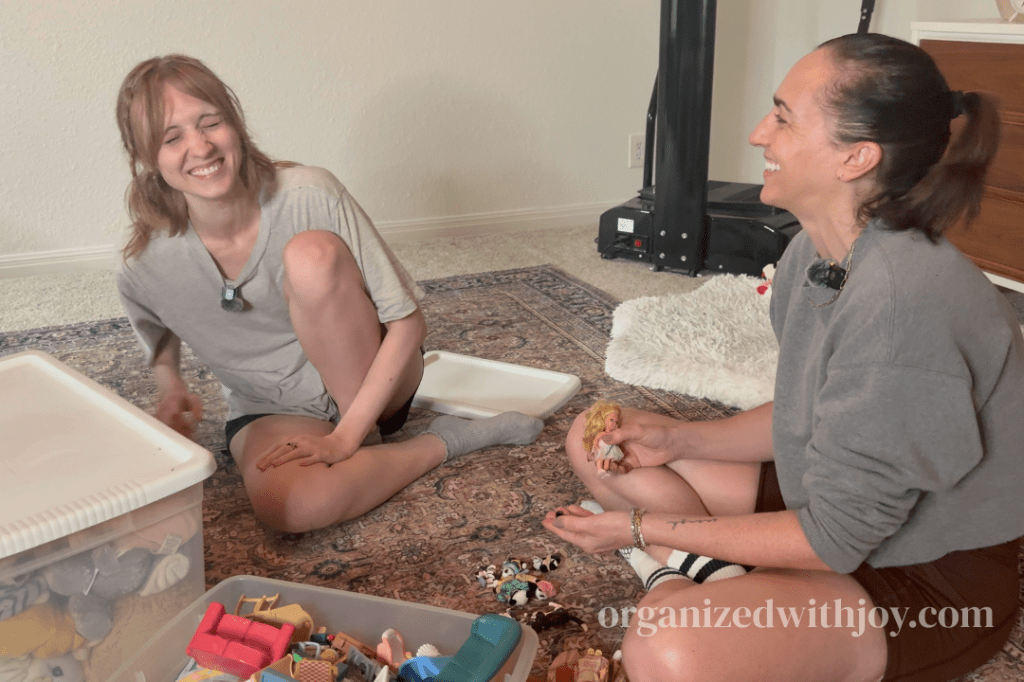
For today’s Thoughtful Thursday post I wanted to share about how difficult it is to declutter sentimental items. On my YouTube channel I shared the process of cleaning out our attic space and decluttering sentimental items and last week I shared a video of my daughter and I decluttering her sentimental items. It was tough. I wanted to share with you some tips before you start decluttering sentimental items.

Tip number one is don’t start with decluttering sentimental items. This should be one of the last categories of items you tackle when you are on a decluttering journey. I have been on a decluttering journey for several years, so I have truly built up my decluttering muscles before tackling this big project. Decluttering is a skill that is built over time and with practice. It does get easier over time to make decisions about what you want to keep and what you want to declutter. Saving sentimental items for last just makes sense because it is the most difficult thing to declutter.

The next tip I have is don’t rush. I ended up doing this project over the course of a few weeks. I can assure you since I just finished this project that going through your sentimental items is very emotionally and even mentally taxing. It takes a lot of time and energy to make decluttering decisions with regards to our sentimental items. Give yourself the time you need to not rush the decisions. Also, prepare to make multiple passes through your sentimental items. It is good to make multiple passes through all of our possessions, which is why you see an end of the month declutter with me video on my YouTube channel every month and I’ve been doing that series on my channel for years. But it is especially important when it comes to sentimental items. I will certainly make more passes through my sentimental items before we end up moving away from our current home and downsizing.

Another tip I wanted to share is to have a friend or family member help you talk through your sentimental items. It can be really helpful to talk through why you want to keep certain items. Having someone there with you in the process can give you an outside perspective and help you to balance the emotions with a more objective viewpoint. And honestly, sometimes it just helps to talk through things out loud.

The final tip I wanted to share is don’t get “lost in the weeds” so to speak. It can be easy to overthink things when trying to declutter sentimental items. Stay focused on one category at a time. Often our initial gut instinct on whether to keep or get rid of a sentimental item is the right one. It can be easy to go back and forth with this category of items because of that emotional component. Try your best to stay on task and not overthink each decision. I don’t mean to be morbid, but at the end of the day, what is important to you will likely not be as important to the next generations and none of us can take our stuff with us when we go!

Here is the YouTube video I shared in conjunction with this blog post.