GROWTH REQUIRES LETTING GO

We often think about growth as adding more to our lives – more habits, more effort, more discipline. But real transformation often comes with letting go. Letting go of old identities, routines, expectations, and even successful habits that no longer fit who we are working to become. Not all discipline is about pushing forward, some is about releasing what no longer works for us. This is not an easy thing.

I saw this Mel Robbins post recently that said: Your closet is not just clothes. It is a map of your past selves. Most closets are filled with clothes that no longer fit, from old chapters of your life, and clothes you bought for a version of you that never arrived. This is why getting dressed feels emotional. You are not just choosing an outfit, you are confronting old identities. Your closet should support who you are now and who you are becoming. I loved this example, but it is also just a general great analogy for life. We must evaluate what we are doing, and if those behaviors, routines, habits still fit into what our goals are for our lives.

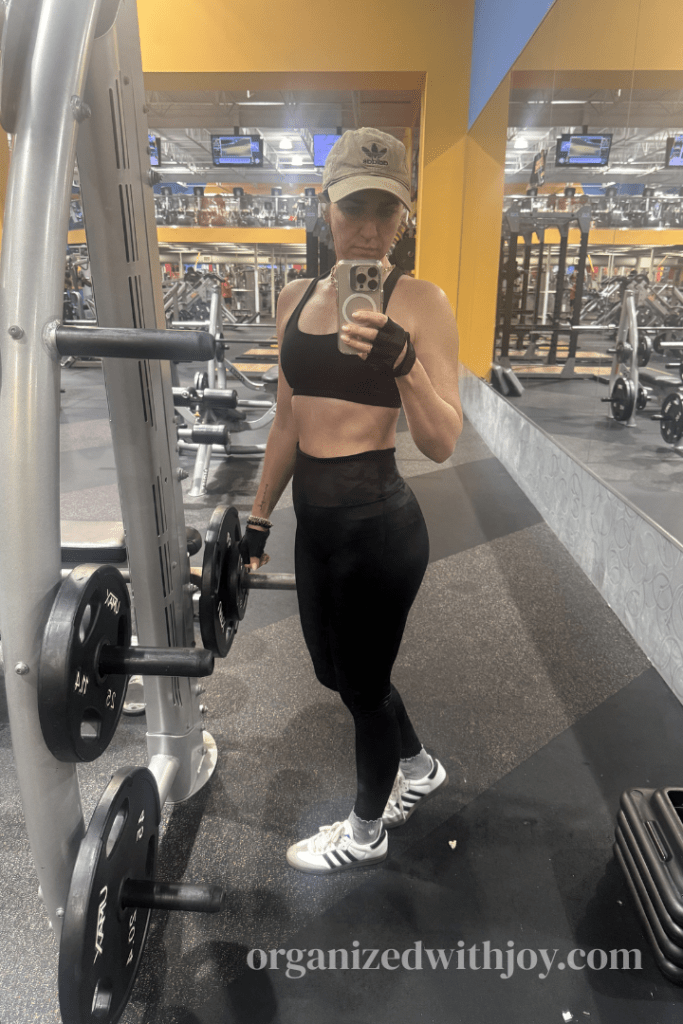
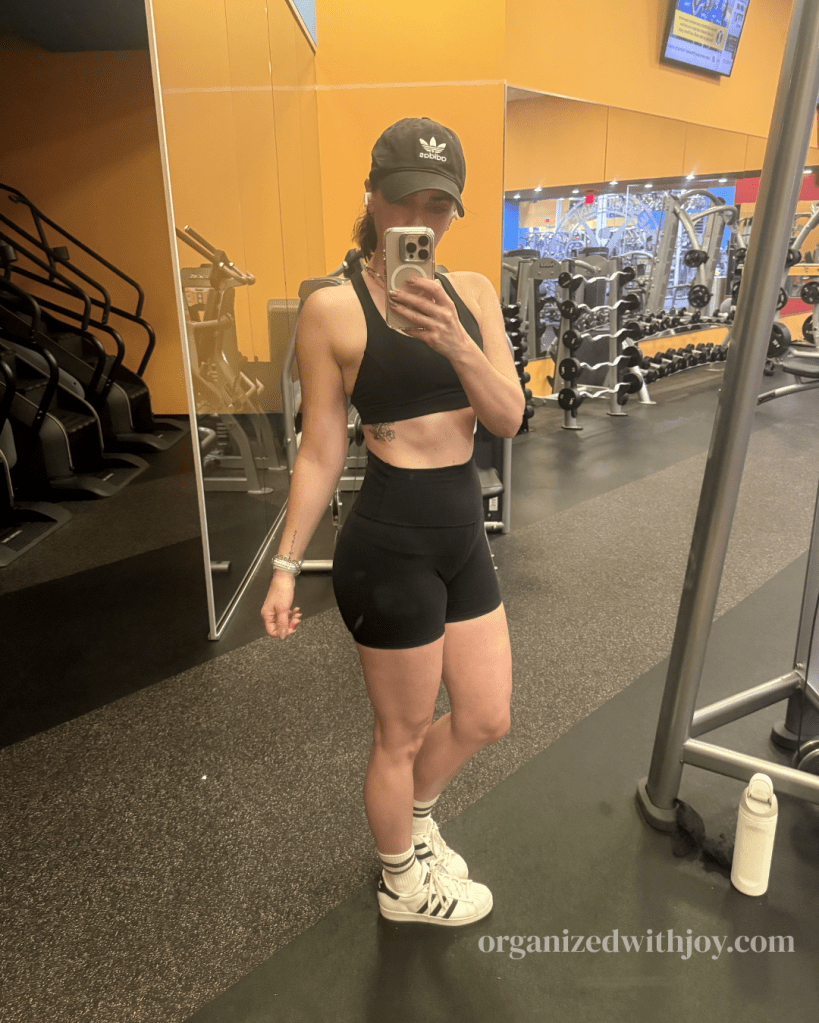
Letting go can feel hard. I have talked a lot about decluttering in my blog posts, and I have decluttered a LOT of stuff, sharing on my YouTube channel along the way. It can be hard to declutter physical possessions, but it is also hard to let go of old identities and old ways of thinking. It is easy to become attached to a certain identity, proclaiming: this is who I am. But we don’t have to accept that, we can work to change to become who we want to become, to become a better version of ourselves. But I recognize this isn’t easy. When we think of letting go, it can be scary. There is the fear of uncertainty and the “what if’s” creep in. It is scary to think of starting over. It is also difficult to let go of old ways of doing things that used to work for us, but no longer do. We resist the change just because it used to work, and even if we see signs that it is no longer working, we want to hold on. Exercise is a perfect example. When I was younger I loved running and used running as a way to stay fit. This worked for me for a long time, but now that I am in perimenopause my body responds differently. Intense workouts like that can spike cortisol, and when your body no longer produces estrogen or doesn’t produce as much, it can’t regulate the cortisol like it used to. Often this leads to belly fat which is so common for women in mid life. Now I do something different to help stay fit, I lift weights instead and keep my heart rate moderate for aerobic exercises. The comfort of the familiar can keep us stuck in a habit, routine, or lifestyle that is no longer serving us. Growth is uncomfortable, and it takes grit to be willing to feel that discomfort for growth to happen. 
If we begin to feel like something is no longer working for us – whether that is a habit, routine, job, or relationship – we must evaluate why we feel that way. There are signs that you have outgrown something. One sign is that you will feel resistance toward things you used to enjoy. If something is no longer serving you, often you will feel that “meh” feeling about it. Another sign is that your progress stalls despite continued effort. If you see no forward movement, there is a chance you need to make a change. You might begin to see that you operate on autopilot rather than with intention. Once you see that you are going through the motions and not present in the moment, it might be a sign that it is no longer working for you. Lastly, you may just feel a misalignment, even if everything looks right from the outside. Your life may be good and fine, but there is a gut feeling that can happen when you aren’t aligning with what you are meant to do and be.

So, what does this look like practically? Start with an audit: what feels heavy, forced, or outdated in your life? Acknowledge what it did for you. Maybe you learned from that experience, relationship, or habit. Maybe it helped you to grow and change for the season it was working. Honor what it gave to you without clinging to it, then release it. Make a clear decision to move on. Don’t be lukewarm about it. What’s the saying: either poo or get off the pot. Then if you need to replace it with something new, implement the new, but recognize that some things don’t need to be replaced right away. Sometimes we need to sit in the empty space. Letting go does create space and capacity for the new. It makes space for creativity to flourish, for something to come in that is better aligned with who you are now or who you are trying to become. It creates space for new growth. You can’t receive what you don’t have room for. There is this idea of “intentional subtraction” which is just the practice of deliberately removing things from your life so you can create space for what actually matters. It’s the opposite of the usual mindset of “add more to improve.” Instead of coming up with more habits, goals, and commitments, you step back and ask: “What can I remove that’s getting in the way of clarity, energy, and alignment?” This isn’t about quitting something because it’s hard, but rather removing what is misaligned, outdated, or unnecessary even if it once served you
Growth isn’t just about becoming more, adding more habits and routines, it’s about becoming more true to yourself. Growth usually requires letting go. If you want space for the new, you must let go of the old. I really like the clothing analogy I referred to earlier. Or really just the idea of any physical space with boundaries. Our closet has a boundary, once it is full, there is no more space for new clothes – or new identities. We must let go of the old, to make room for the new.
Here is the YouTube video I shared in conjunction with this blog post.

YOU HAVE THE POWER TO CHANGE EVERYTHING

Lately I have been thinking about how I have the ability to change so much in my life. Yes, there are a lot of things that are not in my control, which I shared about in last week’s blog post, but there is also so much in my control. A couple weeks ago I decided to take my diet more seriously. Not that I ever ate a lot of processed foods or foods that contained refined sugar, but I definitely have a sweet tooth and would eat homemade desserts almost daily made with maple syrup. I also drink alcohol occasionally, and while I tried my best to get as much protein as possible, I didn’t really pay much attention to my calories or where the calories were coming from. I have decided to not drink any alcohol for a month (I’m currently 2 weeks in), and no to little sugar. If I do have dessert, I make a high protein dessert sweetened with monk fruit. And just in those two weeks, I am starting to see results in a shift in my body composition!

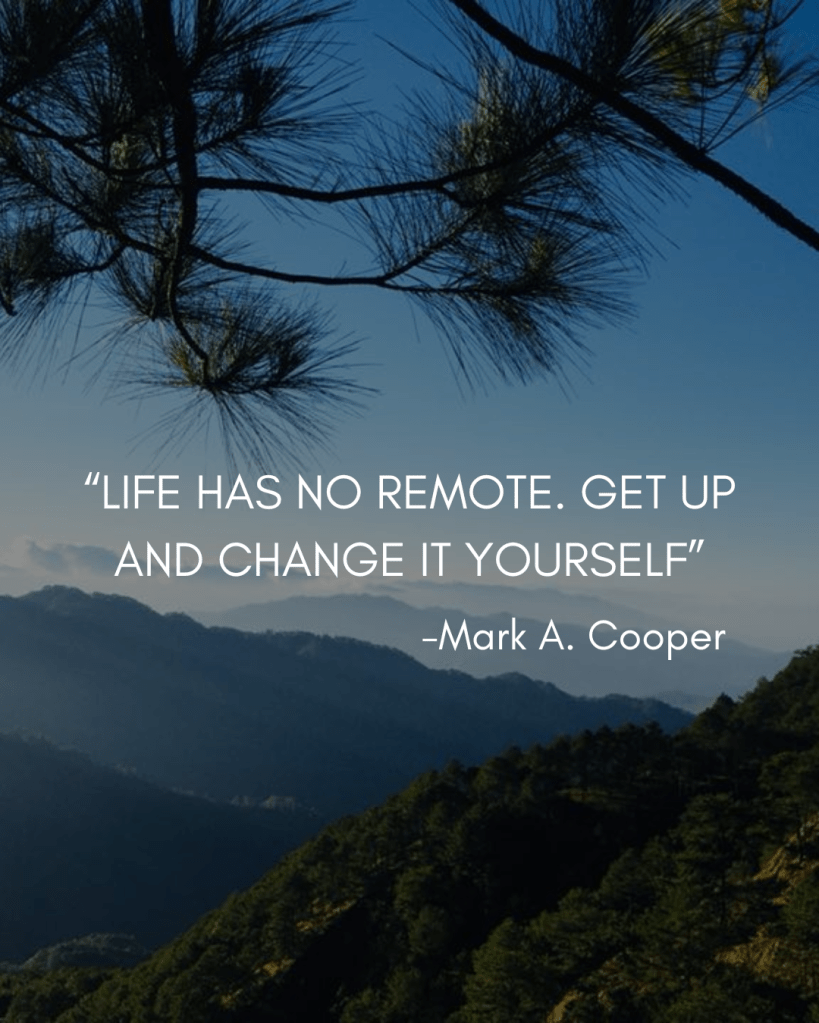
I share all this just to share one example of how we really do have control to make changes in our lives. I came across a couple of quotes that really spoke to me with regards to this topic and I wanted to share them with you. The first is a quote from Germany Kent, who is a journalist, author, actress, producer, and media personality. She said, “Never underestimate the power you have to take your life in a new direction.” The other quote comes from Mark A. Cooper and it says, “Life has no remote. Get up and change it yourself.” Both of these quotes really encapsulate this idea of choosing your own path in life.

I get that there are some things out of our control. That is just part of life. But let’s focus on the things that ARE in our control. Over the past several years I have been working to incorporate new healthy habits into my daily routines. Now there are so many things that I do without even thinking about it. They are just non-negotiables for me now. Reading my Bible daily and praying, going to the gym regularly – I started lifting weights a year and a half ago and incorporated incline walking a few months ago, drinking plenty of water, doing some sort of evening reading, and getting at least 7 hours of sleep at night. But I am always looking for new things I can do with my time that are healthy in order to keep me from spending time on things that aren’t beneficial for me.

I just saw a Reel on Instagram from Mel Robins that really spoke to me. It was a clip from an interview she did with Dr. Tina Seelig, Neuroscientist and Stanford Professor. Mel asked her if someone is feeling unlucky in life, what is the first thing they should do this week? Dr. Seelig replied that they should do something to “stir the soup” or do something to add something new to your life. She said, we are all one decision away from a completely different life. This really spoke to me because it reminded me that we really do have so much autonomy in our lives. 

I know I have shared recently about how I’ve been feeling stuck here in Austin, bored with my day to day life, wanting to move on. But I realized that I can make changes in my life now. It might not be downsizing and moving across the country right now, but I can find things to enjoy here and now. I can find ways to “stir the soup” right where I am! One thing I have started doing is going to the farmer’s market on the weekend. I used to go to the farmer’s market regularly, but when my kids got a little older and involved in activities my Saturday mornings were taken up with kids sports, and so I got out of the habit of going. It has been a long time since I had Saturday responsibilities that keep me from going to the farmer’s market, so this is one enjoyable thing I have added to my life. I have also been doing more solo hiking recently. I didn’t do this in the past because I always thought, maybe this weekend I could go on a hike with my husband or kids. But, I am not going to wait around for others to want to do things with me. I am just going to do the thing! I am going to be on the lookout for other ways I can “stir the soup.” I would love for you to share with me any ideas you may be thinking of to stir the soup in your life!

Here is the YouTube video I shared in conjunction with this blog post.

IT IS WHAT IT IS

One of the most difficult life lessons as a human is acceptance. There is so much we can’t control in life. And if you really think about it, it can start to feel debilitating. There are things that happen to us that we don’t like, we don’t want, and we didn’t ask for. I think there is a common misconception that acceptance is weakness, complacency, or defeat, but what if those things we don’t like are exactly what can help us grow and become a better version of ourselves? 

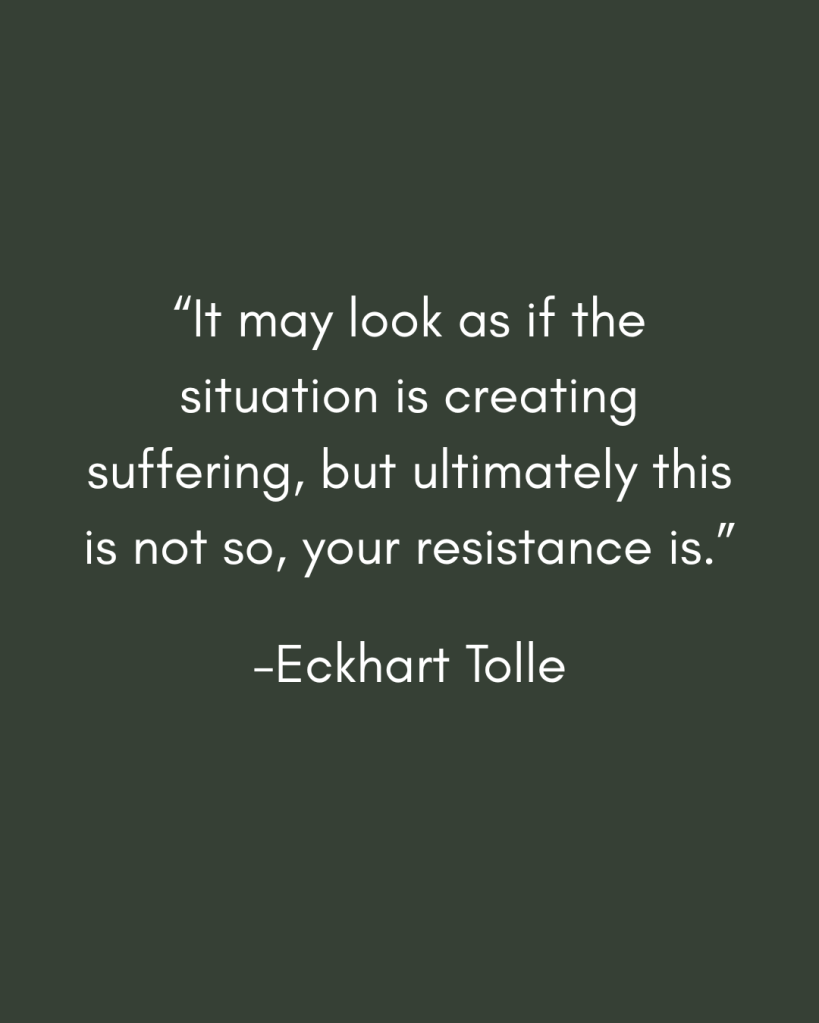
I was recently talking to a friend about this idea of acceptance. I don’t know about you, but there are some ongoing things in life that at times I will feel like I have fully accepted, but then at other moments – I guess moments of weakness, maybe when I feel tired, or lonely, or hormonal – where I don’t want to accept what is. Instead I want to try to fix or control the situation. There is a quote by Eckhart Tolle that says, “It may look as if the situation is creating suffering, but ultimately this is not so, your resistance is.” When we don’t accept what is, we will continue to suffer. Acceptance isn’t about liking or agreeing with reality, but instead acknowledging it so you can move forward with strength and clarity.

There are several reasons we tend to resist accepting things as they are. These may be cultural reasons, or just human nature. It is natural for us to want control and certainty in life. For some this is more true than for others and that is why some people are labeled control freaks. But it is probably true for everyone to a certain degree. Another reason we may resist acceptance is believing if we don’t accept what is, there is still a chance things could change. Once we truly accept what is, we quit fighting for change. It could also be emotional resistance. We may be in denial, or we may be bargaining to try to change the circumstance. Or we could just be trapped in the cultural message that we should never give up and fight for what we want. 

But there is a cost of not accepting. Not accepting what is can be hard on our mental and emotional health. We can get stuck in mental loops, replaying decisions, wishing, and thinking about the “what ifs.” Not accepting what is can also delay healing, which can prevent moving forward in life. Both of these things can lead to emotional exhaustion and prolonged suffering. It is easy to confuse the pain (which is inevitable) with suffering (which is often prolonged by the resistance).

So what does acceptance mean? Acceptance is acknowledging reality for what it is without distortion. Like I mentioned, it’s not liking the circumstances or agreeing with them, but instead acknowledging them. We must learn to separate the facts from the story we attach to them. It’s easy to have an entire narrative around the circumstances, but when we just look at the facts it can help us to have clarity. Also, it is important to allow ourselves to experience the emotions without being controlled by the emotions. It’s okay to feel sad, upset, disappointed, or hurt. It is good to work through those feelings in order to get to a place of healing and wholeness in order to move forward.

Acceptance is different from giving up. Giving up says, “Nothing is going to change, so why try?” while acceptance says, “This is what is right now, what is my next move?” When you focus on your next move, you are focusing on something that you are in control of. Acceptance is the starting point for intentional action, not for giving up. You can accept reality and still desire change. You need to construct a plan moving forward from the reality of the circumstances you are in. And that is the paradox really, acceptance actually creates freedom! When we stop resisting what is, we are able to reclaim our energy. We are able to make choices moving forward. When we focus on our next steps and our plans moving forward, clarity can replace that emotional chaos that we were living in. You begin to respond (by creating that intentional plan) instead of reacting. True change becomes possible only after you face and accept the reality.

In order to practice acceptance we must name the reality honestly: saying, “This is what is happening.” We then must let go of the need for it to be different (at least for the time being). We must learn to sit with the discomfort without immediately trying to fix it. Then we are able to choose our response instead of fighting the fact that things are the way they are. Ultimately, we want to reframe acceptance as a strength, not a weakness. As something that is good and beneficial for us. We must focus on the fact that peace comes from alignment with reality, not control over it. You don’t have to like your reality, but you do have to face it. Acceptance isn’t the end of control in your life, instead it’s the beginning of it!

This is the YouTube video I shared in conjunction with this blog post.

GOOD ENOUGH IS GOOD ENOUGH

Lately I have been thinking about the idea that sometimes good enough is good enough. I tend to have pretty high standards for myself and for me that can lead to burnout. For some people that can lead to giving up completely. I feel like I share about balance a lot on these Thoughtful Thursday posts and I guess it’s because I struggle with that, so I’m thinking about it a lot!

I have always kept a schedule to keep my house clean. Each day I have one or two weekly chores that I do. I also choose one room per week to deep clean and declutter. This has helped me to stay on track with keeping my whole house clean, but as a homemaker it has also given me structure, something that I crave. But the downside to this is that I can be very strict with myself and clean things even if it doesn’t make sense just because it’s “time to do it.” I feel like generally I’m not always efficient at what I am doing because I am too focused on doing it the “right” way. Whatever that means! It is some arbitrary, self-imposed way of doing things.

My friend Jessica, one of my YouTube friends who I went to Vegas with, is an inspiration to me in this area. We had a conversation about taking photos and videos while on a vacation or while doing something fun and I mentioned sometimes I’m really bad at taking photos and videos. She said she just snaps a bunch and usually some come out good. It got me thinking about how maybe even subconsciously I’m concerned about taking the “right” or “perfect” photo or video to share on social media and it prevents me from taking them.

Another conversation that recently happened that had me evaluating my behavior was with my husband. The other day I took a shower late in the day after my workout, and I put on athletic shorts primarily to be comfortable. When evening rolled around and I was getting ready for bed, I told him maybe I should just sleep in these athletic shorts because I was going to do a workout first thing in the morning anyway. I know this might seem SO silly to some people, but it just made me realize how I can be inefficient because of my arbitrary rules for myself like, “thou shalt wear pajamas to bed.” I just wondered how much time I wasted in my life doing stuff like that. Now, I get that it would not take long to change into pajamas that evening and then back into workout clothes the next morning, but it was just the principle of it that got me thinking.

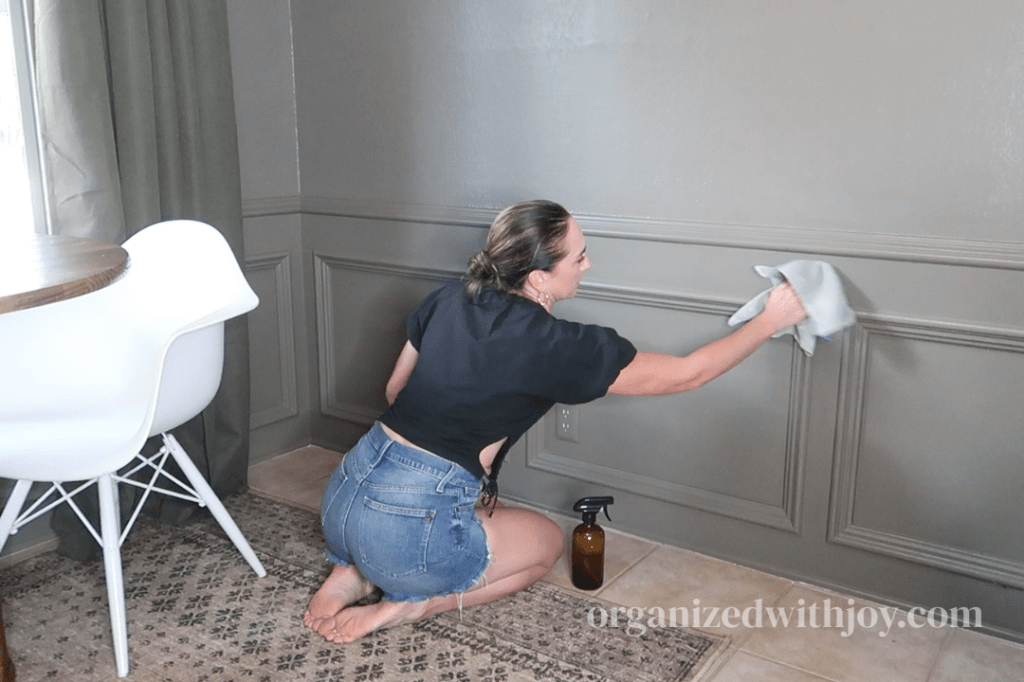
This week my deep clean and declutter space was my kitchen nook, which is basically my office space. I have noticed ever since I painted the wainscoting, that area has not been as dusty as it once was. It used to be necessary for me to dust the wood paneling every few months. But I noticed this time that it really didn’t need it. SO, I decided I am just not going to do it! A while back in a video where I was washing down the walls in my game room, which is also wood paneling, I got a comment from one of my regular viewers, Jenny, suggesting that I just use a dry mop to get the dust off the walls instead of washing it down with soapy water. Her reasoning made sense – we are not smokers and we don’t have young children touching the walls. I had never thought to clean differently because this was always the way I cleaned these walls. But, good enough is good enough!

In a recent post, I shared how I have been tired of cleaning this house, or at least this large of house. And how I am ready to downsize so I have less to take care of. But I am realizing that I need to be more realistic about what actually needs to be cleaned and how often. Maybe I don’t need to keep the same schedule I kept when I had three young kids and two dogs running around my house! Maybe I am wasting some of my time with these arbitrary routines I set up for myself. I think routines can be helpful, especially for someone who likes structure, but it is good to revisit it from time to time.

This is the YouTube video I shared in conjunction with this blog post.

THE BUY/DECLUTTER CYCLE

I recently heard an interview between Cass from the YouTube channel The Clutterbug and Peter Walsh, long time decluttering and minimalism guru. If you don’t know who he is, definitely check him out! He hosted a show called Clean Sweep which aired in the early 2000’s and he has a more recent show, Space Invaders. I wanted to share a few points that really resonated with me while listening to this podcast. The overarching theme for this podcast was the idea that we don’t have a decluttering problem as much as we have a consumerism problem. I have known this to be true for myself for a while now. I have done many no buy months over the past decade and did a no buy year in 2019 and then again in 2025. I have talked about the buy/declutter cycle before, so I am well aware of this truth that the problem is consumerism. It was a good reminder and Peter laid it out there and didn’t sugar coat anything, which I appreciated!

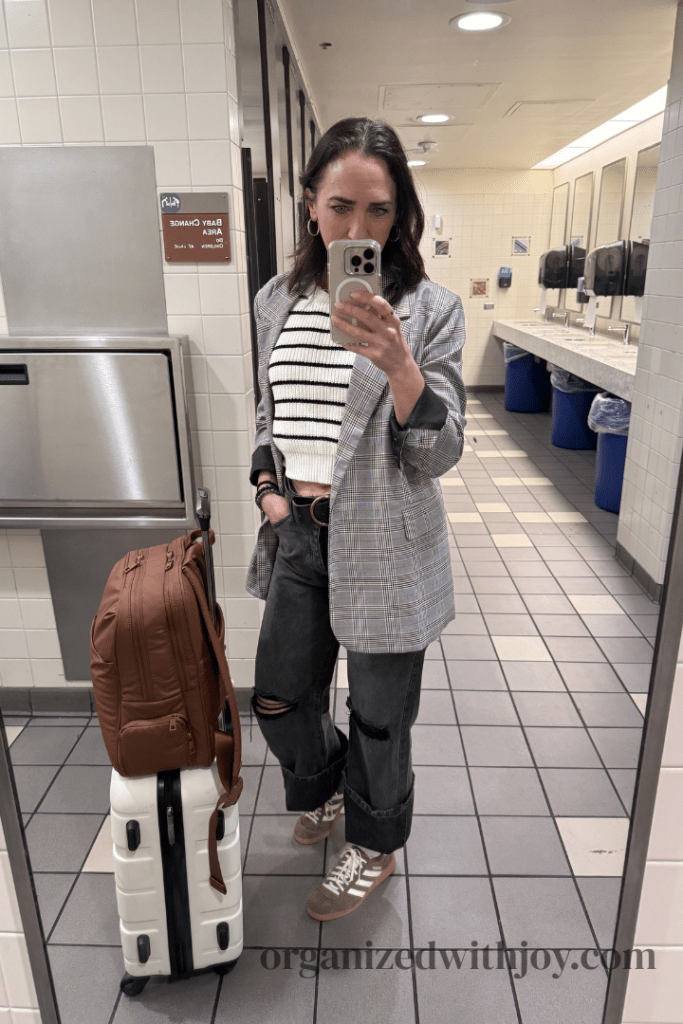
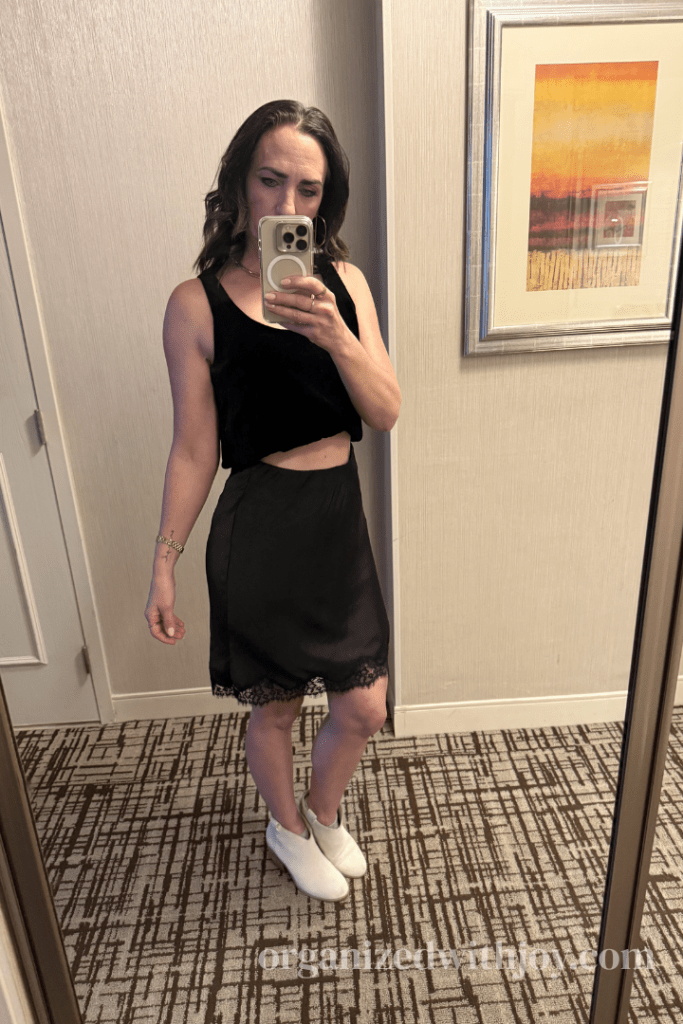
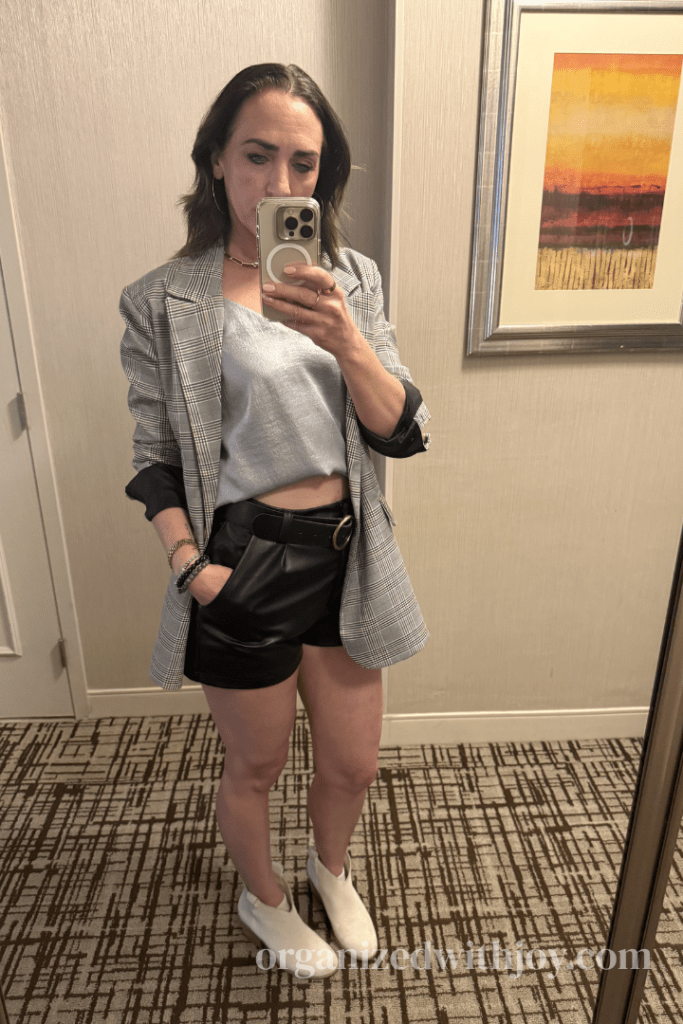
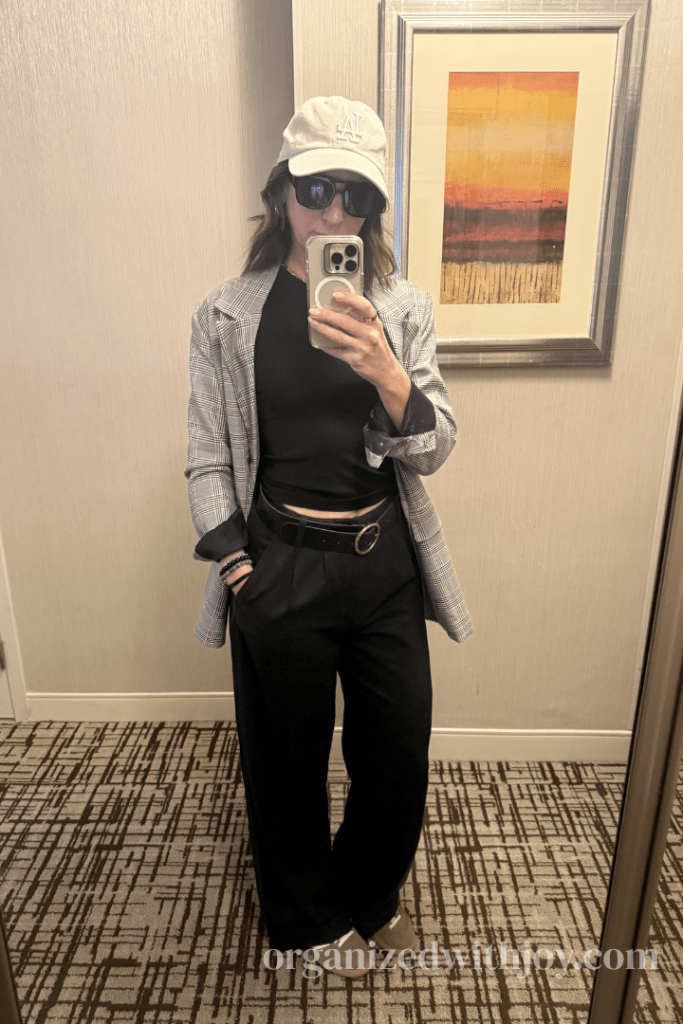
The other thought that came to me while I was listening to this podcast is that I feel like I’m not as disciplined as others perceive me to be. This thought came to me with regards to not having the discipline to stick with my shopping boundaries I set up for this year. I shared everything I have bought over the past 6 weeks over on my YouTube channel and I feel slightly embarrassed because I find it to be excessive! My goal was to not purchase more than 3 items of clothing each month, but in February I ended up purchasing 6 items, and 7 if we are going to count a baseball cap. And in March I also purchased 7 items! But I wanted to share because I never want to be inauthentic and come across as more disciplined than I actually am! I know that I tend to be hard on myself and those areas in which I’m disciplined I now view as just normal everyday habits. But I recognize why others see it as discipline. The point I wanted to make is that we all have our struggles, and I don’t want anyone to view me from a skewed perspective. I want to be real with what I share online and show that I’m not always disciplined in every area of my life! I will share some outfits I wore on my recent trip to Vegas, some of the items were items I purchased recently.

Something else that really hit me was when Peter quoted the Bible “thou shall not covet.” I feel like there are some sins that are just acceptable. At least culturally acceptable and this is one of them. When we want what other people have, that is coveting. Unfortunately that is just the influencer culture these days, which is so prevalent. It is an influencer’s goal to get you to covet what they have so that you purchase what they have and then they get a cut of the price you pay. To be honest that doesn’t sit fully well with me given I do have an audience. I want to be mindful of this as I promote brands. 

But with that said, Peter also suggested he didn’t think everyone should become monastic. This also resonated with me. I need to find a way to balance! He was not claiming everyone should quit buying things all together. We just must learn to be intentional with our purchases as it is so easy now to purchase things. We are constantly getting exposed to ads, and you can purchase things with just one click if you can access your credit card through your phone. It is definitely about finding balance.

Listening to this podcast reminded me that I want to get to a place where I don’t want things to come into my home. Most areas I have achieved that, but not with clothing! So it is just an area that I need to continue to be aware of and more intentional with what I bring in.

The YouTube video I shared in conjunction with this blog post.