Picture this, you are on your commute to work and suddenly traffic stops. You hear sirens coming and up ahead you can see there has been an accident. What are you thinking? What are you feeling? Are you irritated that this will inconvenience you? That this will make you late to work, you might start your day feeling behind, your boss might yell at you for being late. Inconveniences in life can cause our blood pressure to rise and stress to settle in. But you could choose a different mindset at this moment. Yes, I said choose. We may have an immediate negative reaction to inconveniences, but we don’t have to stay there.
What if instead of getting irritated and stressed in this moment you thought about how lucky you are that you were not the one in the accident that morning? That person in the accident likely is much more inconvenienced. They may be badly injured, perhaps causing them to miss days or even months of work while they recover. Or worse, they may have lost their life. It is easy to get frustrated when we are inconvenienced, but it is just as easy to shift our mindset to a more positive outlook. I saw a post on Instagram that said, “That 30 minute workout you hate? Someone’s in a wheelchair dreaming of it. That meal prep you avoid? Someone’s scraping together money to afford their next meal. That rest day you call ‘annoying’? Someone’s body is shutting down. Taking care of your body isn’t a chore, it’s a privilege.” It’s all about mindset!

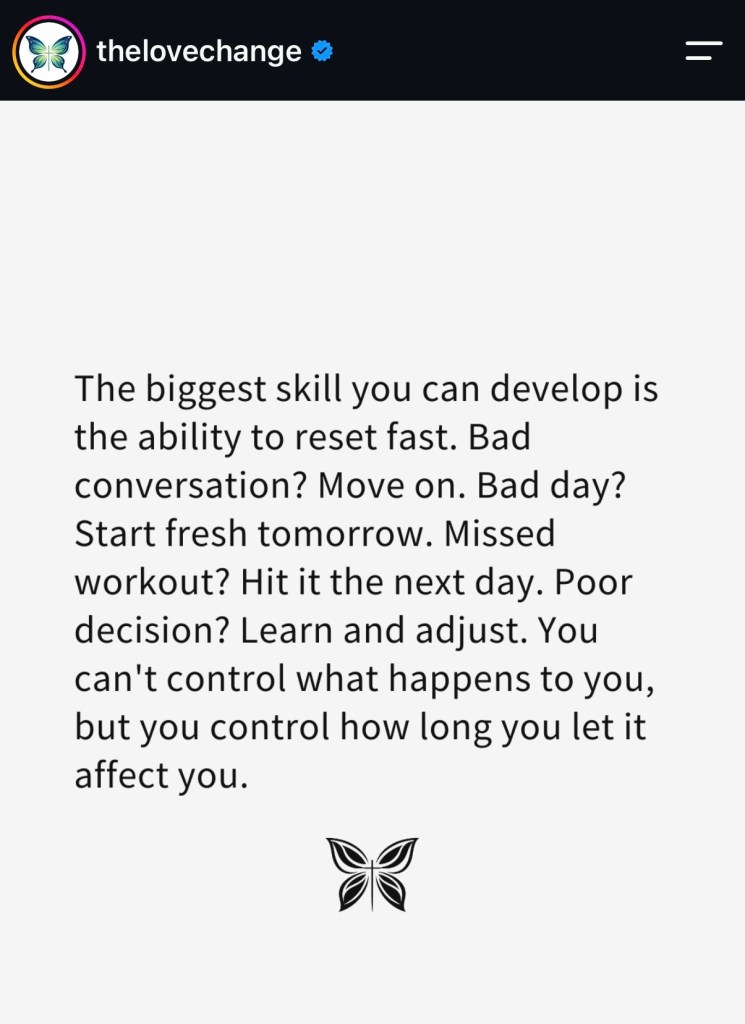
The traffic example I gave is a slight inconvenience, but I think even with bigger inconveniences we can have a more positive mindset and not let these things ruin our day or even week! Another post I saw the other day on Instagram said: “The biggest skill you can develop is the ability to reset fast. Bad conversation? Move on. Bad day? Start fresh tomorrow. Missed workout? Hit it the next day. Poor decision? Learn and adjust. You can’t control what happens to you, but you can control how long you let it affect you.” I wholeheartedly agree with this! It is natural to feel annoyed or frustrated at inconveniences or when things don’t go your way. But you do have the choice to dwell in that feeling or to choose to have a more positive outlook.
When life throws you a big inconvenience, it may take more than a moment to readjust and see the silver lining. I realize this is subjective. What is a big inconvenience to one person may not seem as big to another. But if it feels big to YOU, then it is big. There are things in life that are big curve balls. Things you did not expect or want to deal with. These things take time. Often with big inconveniences, we have to recalibrate. This often involves grieving. If nothing else you may be grieving the life you thought you would have or the person you thought you would be at this point in life.
When our kids were young, my husband and I would talk about how crazy it would be that we would be empty nesters at the age of 47. Here we are four years later and we cannot really call ourselves empty nesters yet. Currently two of our three adult children are living with us. Our oldest daughter is in a grad school program and living with us to save money as it is very expensive to live in Austin and she is paying for her grad school without debt. Our youngest son is still living with us as he just needs some extra time to grow and be ready to live on his own. This was unexpected. At first I really struggled with grieving what I thought my life would be at this age. But I was able to grieve that, and realize what a blessing it was to have extra years with two of our kids. It especially hit when our other son moved away, not just out of our house but out of the state! I appreciate the extra time I have with my two other kids! It has also been a mercy in a sense for me to ease out of being a stay at home mom. I’m still able to cook dinner for the family a few nights a week and help my kids with things.
My perspective now is that inconveniences are part of your path. When something happens that seems annoying, I like to think of it as protecting me and keeping me on the path I was meant to be on. Call it God or call it fate, or the universe… but I do think things happen the way they are supposed to happen for our higher good. Even when things seem bad in life, all circumstances can be used for good – to help us grow and become better versions of ourselves!