THE STORIES WE TELL OURSELVES

We all have a narrative about ourselves living inside our heads. The question isn’t whether you have a story you tell yourself, it’s whether your story is true. Many of the limits we put on ourselves aren’t real limits we have, but rather old beliefs that probably surfaced a long time ago. I recently heard a story shared on the Mel Robbins podcast from Dr. Shade Zahrai about a study that was done by a professor at Dartmouth in the late 70’s, early 80’s. He had two groups of people and with one group he drew a very noticeable, visible scar on their face, he let them see the scar so they knew it was there. With the other group he did not put a scar on their face. Then he sent them out to have conversations with people. When they returned he asked how the conversations went. The people with the scars on their faces felt like they were judged, like their conversation partner was cold, and that they were treated differently because of the scar. While those without the scar reported that the conversations went well. While that would have been an interesting experiment on discrimination, the fascinating thing about this study was right after he showed the scar participants their scar, he said that he was going to put some moisturizer on the scar to make sure it set but he was actually removing the scar entirely! So these participants went into the conversation only believing they had a scar, which led them to have an expectation of how people would treat them, which led them to pay attention to nuances in the conversation that objectively did not exist. So it is good to think about what kind of scars you are carrying that create this narrative of who you are and how it affects how you enter each conversation or circumstance in life.

A simple definition of self narrative is the ongoing story your brain tells you about who you are, what you are capable of, and what you deserve. From psychology we know that the brain is a meaning-making machine. It is always labeling and filing your life experiences. And then these narratives become the lens through which you filter each experience moving forward. Most of us don’t acknowledge that this complex process is going on, and therefore tend to live on autopilot, basically letting old stories or narratives about you make decisions. This can show up in any aspect of your life – home life, relationships, habits, self worth, and more.

These stories that we constructed, often subconsciously, came from many origins. It could come from childhood and the messages we received from parents, teachers, siblings, or even peers, often without these individuals even realizing the impact it would have on us. These stories can also come from our past failures, especially things that we never processed and forgave ourselves for, but instead the mistakes replay in our heads over and over. Comparison is another way we construct these stories about ourselves – we see those around us, like family or friends and measure how we are doing or our worth compared to how others are doing. This often isn’t the full picture as we see the narrative they feed us about themselves. This is especially true on social media – the place that is notorious for the highlight reel. Lastly, these stories we tell ourselves could be informed by cultural messages. There is messaging that comes from society that shows us for instance how a woman “should” be, how a home “should” look, or what success “should” look like. These narratives are rarely stories we choose to believe, but instead they were absorbed, handed to us, or formed in a moment of pain. But we almost subconsciously carry them as though they are fact.

These stories hold us back from becoming the best version of ourselves. They create a ceiling so to speak of what we believe we are or aren’t capable of. They almost become a self-fulfilling prophecy as we subconsciously act in ways that confirm the story. These narratives keep us stuck in “some day” thinking – believing that some day we will be more disciplined, more motivated, have more time, or are more ready to pursue the thing we want to do. It will also show up in how we talk to ourselves. When we make mistakes or don’t follow through on the steps it takes to get to our goals we are very critical instead of self compassionate. For example, a woman who believes she is “just not an organized person” will self-sabotage every organizing system she tries to implement, not because the system doesn’t work but instead because of this narrative she believes about herself that she is “just not organized.”

There are practical ways you can identify your limiting stories. First, watch your “I just am” statements. “I’m just not a morning person.” “I’m just not disciplined.” “I’m just disorganized.” The word “just” is a story pretending to be a fact. Notice always and never statements. “I always mess up.” “I never follow through.” Usually these statements are not true, but we can be prone to use them to support our story. Another way to identify limiting stories is to pay attention to resistance. When you have a strong emotional reaction to something, like defensiveness, shame, or avoidance, there is often a story underneath. There are a couple of questions you can ask yourself. If you are serious about getting to the bottom of your false narratives, spend some time journaling and asking yourself a couple of questions. One is: “What do I believe about myself that I have never questioned?” and/or ask: “Where did I first learn this about myself and was it a reliable source?” I know that self evaluation is not easy. It can be uncomfortable and even painful, but it is worth it.

So how do we rewrite these narratives? First I want to share with you what rewriting a narrative is NOT. It’s not toxic positivity. It’s not slapping platitudes or affirmations on a wound. Instead it is about moving from an outdated, inaccurate story to a more honest and empowering one. Use this statement to reframe your beliefs about yourself: “I used to believe _________, but the truth is ________.” An example would be: “I used to believe that I was a disorganized person, but the truth is I never had the right systems or anyone to teach me.” This won’t be easy. It won’t be a singular journal entry. New stories don’t just stick immediately because old neural pathways are deep. In order to reroute these new stories in your brain, so to speak, it will take consistent effort with intentional thought. Repetition is the key to successfully rewriting these narratives. Community and accountability are important in this process. The people around you either reinforce your old story or help you build a new one. Be intentional about who speaks into your life. Also, you must celebrate the small wins! Every time you act against the old story, you collect proof for the new one! 

Did the story about the study done with the participants who thought they had a scar at the beginning of this post resonate with you? Do you have beliefs about yourself that inform the way you interact in the world? I frequently talk about decluttering our physical spaces, but the mind is one of the most important spaces you will ever declutter and organize! This week, think of one “I just am” statement that you have been telling yourself and ask if that is actually true or just a story you are telling yourself!

Here is the YouTube video I shared in conjunction with this blog post.


ALLOWING THINGS TO HAPPEN AS THEY ARE

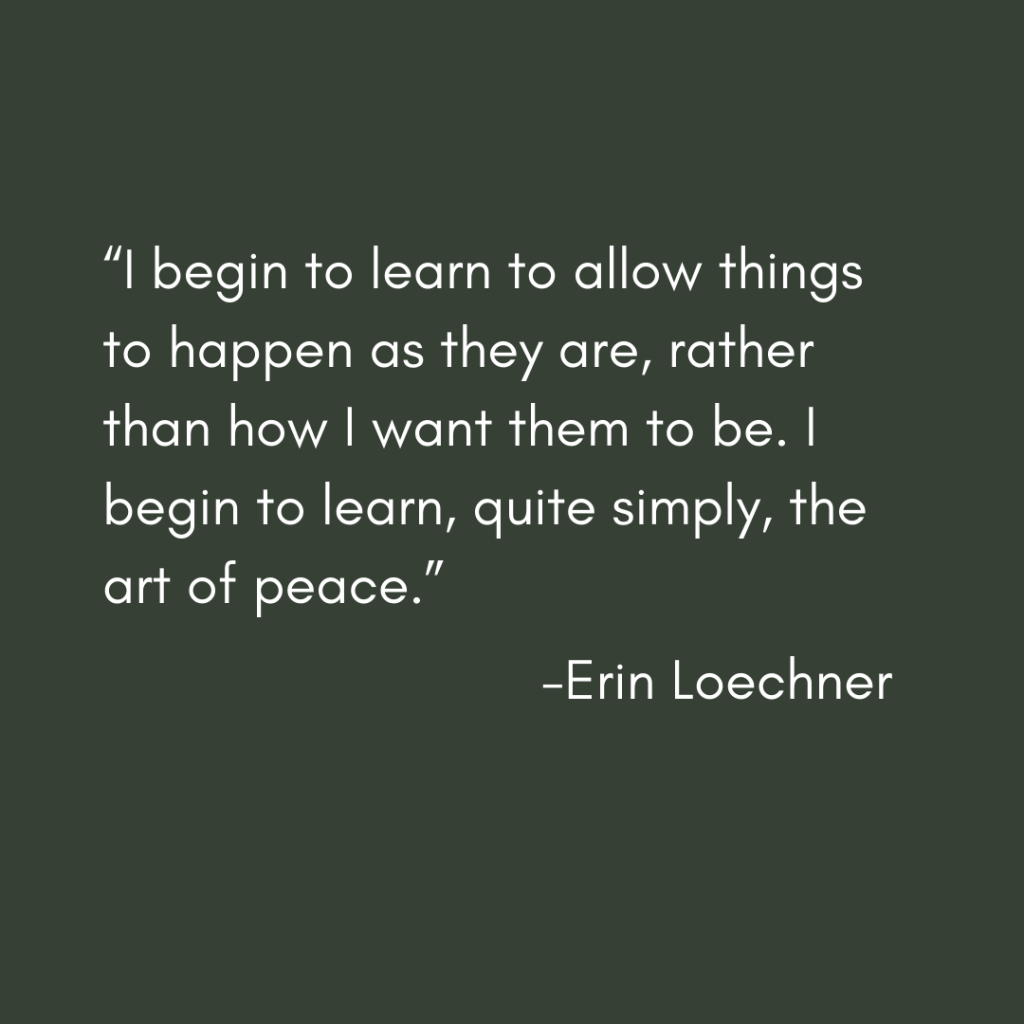
Earlier this week I shared an Erin Loechner quote on Instagram. I really love her book Chasing Slow. So much so that it is one of the few books I will keep in my collection. The quote says, “I begin to learn to allow things to happen as they are, rather than how I want them to be. I begin to learn, quite simply, the art of peace.” This quote really resonated with me. This idea that contentment isn’t found in some perfect definition of life. Contentment is found in the accepting. Accepting that things are the way they are. When we resign to this truth, we will find peace.

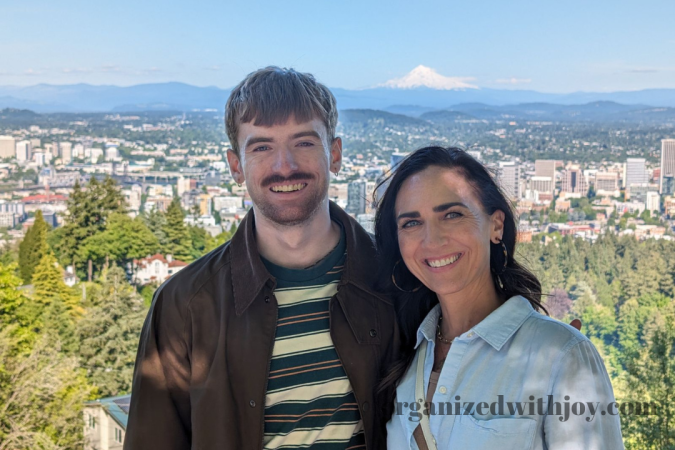
I think this quote resonated so much with me, partially right now, because I feel like I am in the in between in life. I just returned from visiting my son in Portland, and it really brought up that feeling of discontent in my heart. We have been considering moving to the Pacific Northwest, however now is not the time… yet. Currently our daughter is still living with us as she finishes her graduate school work. Graduation is in December, almost a year away. It doesn’t really seem like that long with how quickly time has been passing, but it also feels like I have already been waiting so long to downsize and move. Visiting Portland reminded me how happy my heart is there. For those of you who don’t know, we actually used to live in Portland. I really loved living there! We moved to Austin for my husband to go to graduate school, and that was now almost 24 years ago.

When our son got a job in Portland after graduating from college, I felt like that was almost like a sign we should move back. Our daughter has also always wanted to live in the PNW (although we shall see what happens with her career.) But reading this quote: “I begin to learn to allow things to happen as they are, rather than how I want them to be,” reminded me that I must fight for contentment everyday. When I accept where I am and find the joy and beauty in my everyday life here, I begin to experience that contentment and peace I long for.

For me, it’s not just about living in the PNW. I mean, it is – I think it will be an upgrade in lifestyle as I am an outdoorsy type person for sure. There are more opportunities to do outdoor activities there than here in Austin. But it’s also about downsizing. This is something I have been dreaming about for quite some time. If it’s not obvious by now, I long to live a more simple life. This is especially true as I age. I long to have less and do more. I long to take care of less stuff and take care of people more. I guess I just see that dream on the horizon and I’m ready for it NOW. I have been ready for it.

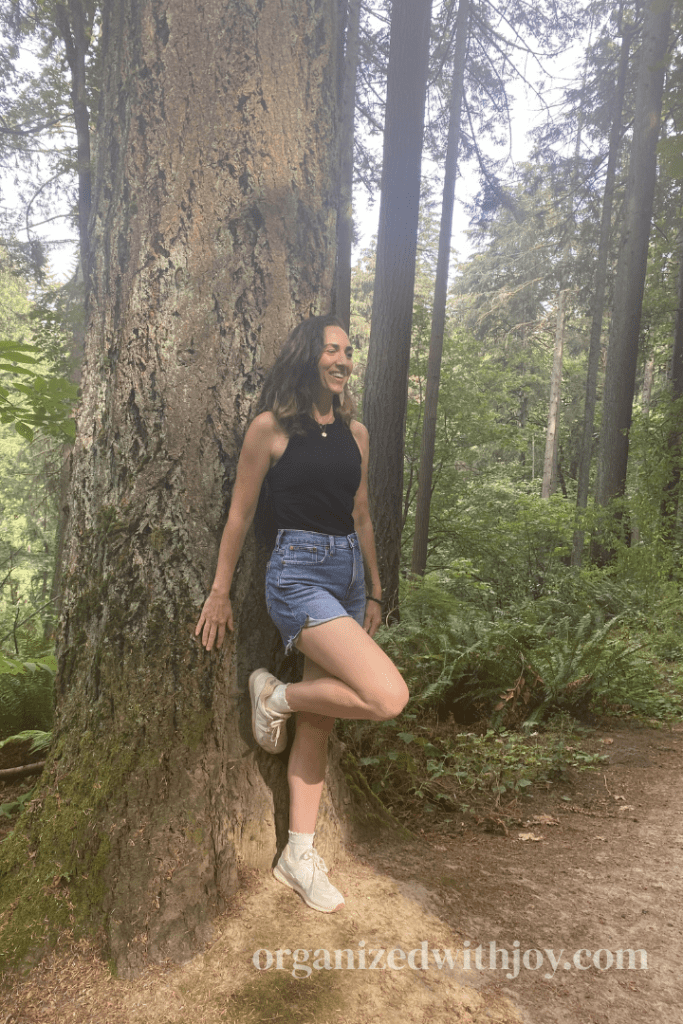
Me in my happy place! Hiking in Oregon!

Funny side story: I have always been adventurous! When we were graduating from Indiana University and my husband got a job offer in Portland, OR I said: “Awesome, let’s go!” When he wanted to go back to school for his MBA and got into the University of Texas I said: “Awesome, let’s go!” When we thought about moving within Austin to get our kids into a better school district I said: “Awesome, let’s go!” I have told my husband before that I am pretty much up for any adventure! I would sell everything and move half way across the world if we had to! I think some of what I am feeling is just too settled maybe? We’ve lived in Austin for almost 24 years and lived in this home for almost 17 years.

But back to the topic… I really want to challenge myself to a mindset shift. I find this to be one of the most important strategies to learn in life. And this quote sums it up. If we want peace, if we want contentment, we must learn to allow things to happen as they are. We must look for the joy and beauty in our lives here and now. We must CREATE joy and beauty in our lives in the here and now. Experiencing the art of peace isn’t as complicated as we may think. Look around you – be grateful for what you have, look for ways that you can grow and flourish in this season, in this very place where you are NOW! It’s okay to make plans for the future, but don’t let your contentment hinge on your future. I’m not just saying this for you, I’m reminding myself as well!

This is the YouTube video I shared in conjunction with this blog post.

HELPING ADULT CHILDREN

I recently saw a post on Instagram that really resonated with me. It said something along the lines of “when people ask me why I still help my adult children, I respond that being a parent is a life long role.” Even though my kids are young adults and fully capable of doing things themselves, I still absolutely love helping them and being there for them. I know one day my kids will be there for me when I grow old and need help. I especially love helping my kids with homemaking tasks as I have a lot of experience and gifting in this area. I might as well use my gifts!

Just last week I flew to Portland, OR to help my son move into a different apartment. While it was hard work to help my son move, I actually really enjoyed the process! For some reason I really love packing and I also enjoy organizing spaces (obviously) and making a space cozy and comfortable! I am thankful that my kids are so appreciative when I do help them! Also, I have to mention – working out and lifting weights at my age has practical benefits like being able to help my son move! It was just me and my son who moved his entire one bedroom apartment including some heavy furniture pieces. I am also thankful that I have the time and bandwidth to devote to traveling to Portland to help my son! I also have to say, it would be one thing if my kids took advantage of me, but my son is very responsible with a really good head on his shoulders, making it easier to give him this help. He absolutely could have accomplished this move on his own, recruiting friends, but I was happy to help him! And like I said, he expresses his appreciation for my help.

I do feel like generally people in westernized cultures don’t value community or family as much as other cultures, or even as much as they used to. In other cultures it is common for communities or families to come together to help one another for things like moving. It’s not “putting others out” like it seems to be here in America. People live so individualistically and independently from one another now, and I think with the emergence of the internet and social media it has gotten worse. It is all too easy to just live life online and not interact and function within a community of people. In other cultures, people don’t necessarily kick their kids out of the nest at 18 and often kids live with their parents until they get married. It’s also common in other cultures for aging parents to move in with their kids and live inter-generationally. All of this is rare in western cultures. I think life is more well lived and robust in a community or family structure!

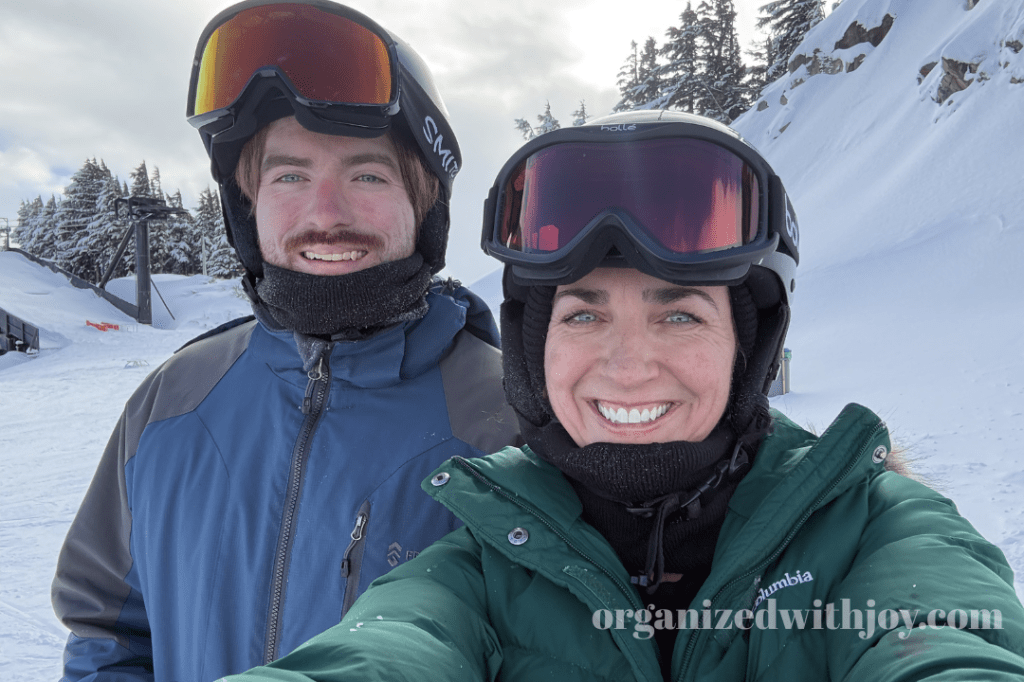
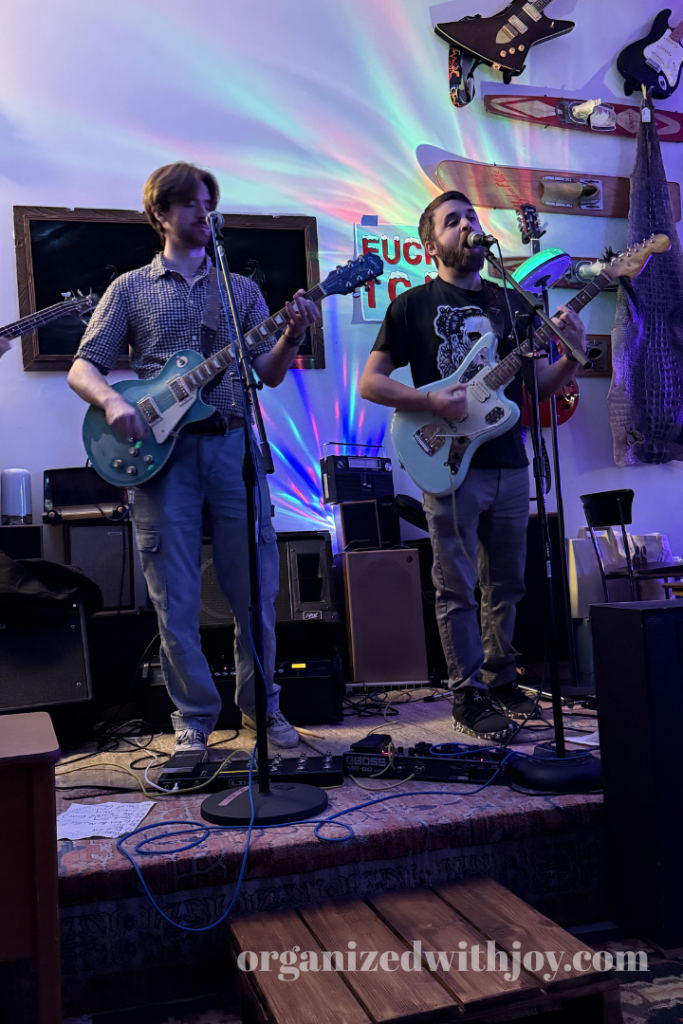
I have to brag about my son for a minute. He moved to Portland a year and a half ago. Since moving, he has developed two separate friend groups, who he regularly spends time with. He has been pursuing his hobbies outside of work – both this year and last year buying a season ski pass, and getting involved with a local open mic night to pursue his passion for music. Through that he actually joined a band and plays bass in another band. We had a conversation about this very topic and he expressed his high value of relationships and the importance of prioritizing those relationships. To say I’m proud is an understatement. Your kids will follow your lead in life – they will not necessarily listen to what you give lip service to, but they will see what your everyday habits are and often will adopt those habits as well in their adulthood!

Family is one of my highest priorities. Not just my immediate family, my husband and kids, but also extended family! I find nurturing relationships to be one of the most rewarding things you can do with your time!

YouTube video I shared in conjunction with this blog post.


LESSONS FROM GRANDMA & GRANDPA

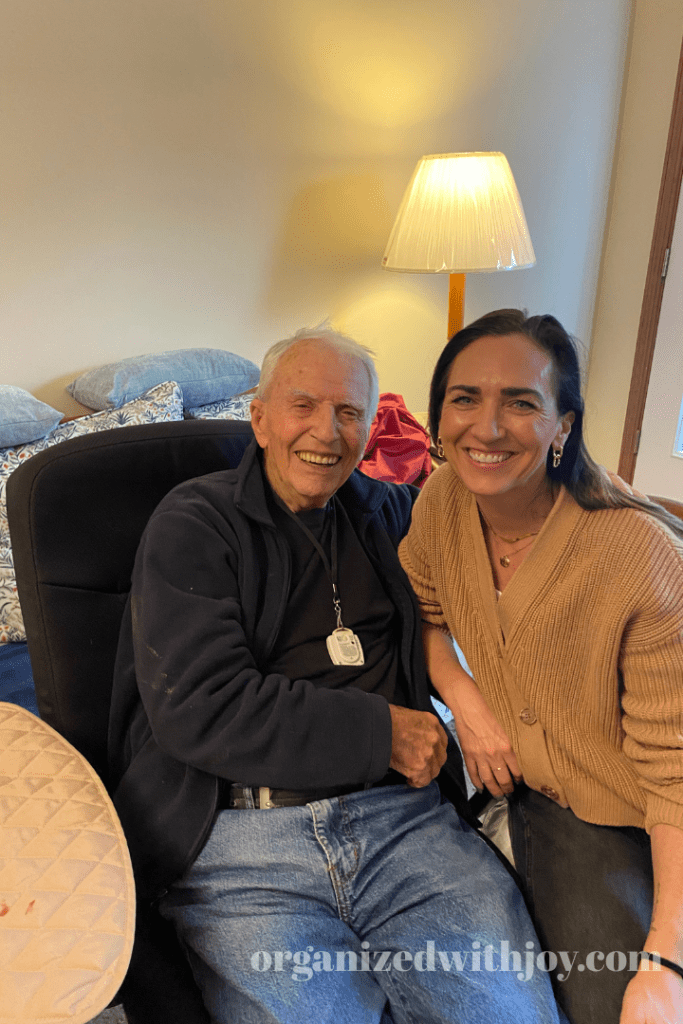
Just keep moving. That is the answer my grandpa, who lived until he was 100, would give when people asked the secret to a long life. My grandpa passed away a few weeks ago at the age of 100. It is truly amazing and an inspiration to me! Thankfully I did get to see him just a couple months ago back in November and he was still quite sharp and engaging! He certainly lived by this principle, just keep moving. He lived independently until the age of 99, only living in assisted care for 8 months. He took care of his house, his yard, and had a garden every summer. He also late into life was a woodworker and made a multitude of furniture pieces or other wood projects for family members. He was so creative and usually made things without any sort of blue print but just from his own head. For my kids he made a doll cradle and a rocking horse, he also made a jewelry box for my daughter and a mini keepsake type box for me from an old piano that they had in their home that was no longer working. It was an upright piano and had a neat floral design panel on the front which he decided to use as a wall decor piece in their living room.

My grandpa was a World War 2 vet and had a veteran’s funeral, which was amazing to see and quite an emotional experience. I had never been to a veteran’s funeral. As they were performing the folding of the flag – in a methodical and precise way, I was thinking about the life my grandpa lived before he was a husband, a father, and a grandfather. In that moment I truly embraced his humanity. I am sure he saw and had to do some unthinkable things in the war. I’m sure there were so many other things he went through in his life that were just human. You don’t think about that as a little kid, maybe not even as an adult – that your grandparents, your parents were human – just like you. With struggles and hurts. I know he was not perfect, but none of us are. I know as an adult, I’m doing the best I can with everything I experienced and I give him the benefit of the doubt that he also did the best he could. Realizing his humanity reminded me of this. 

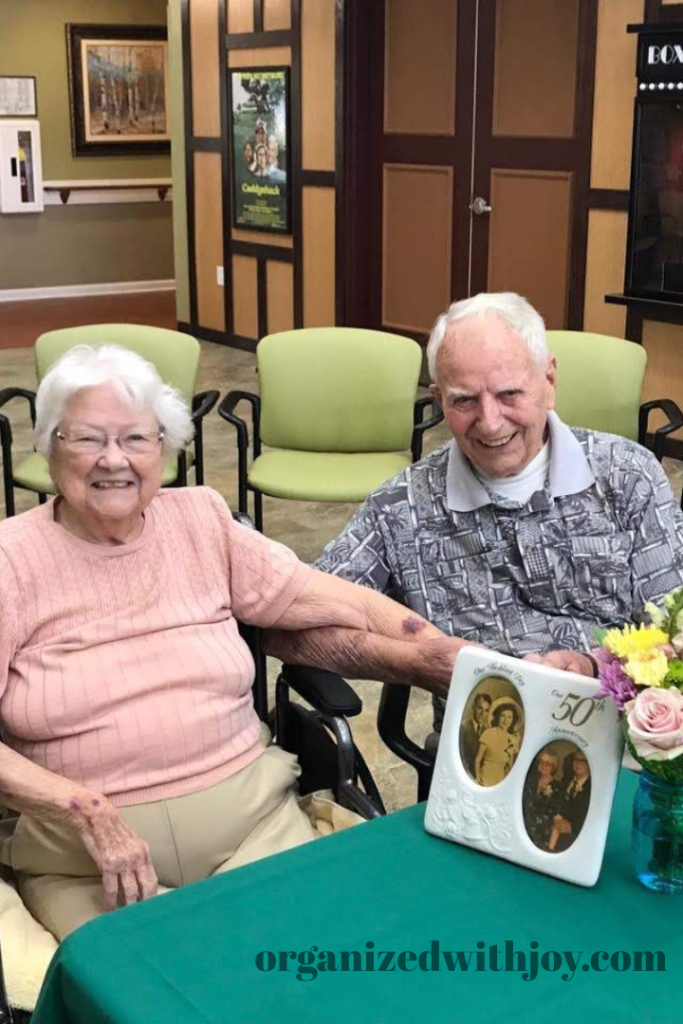
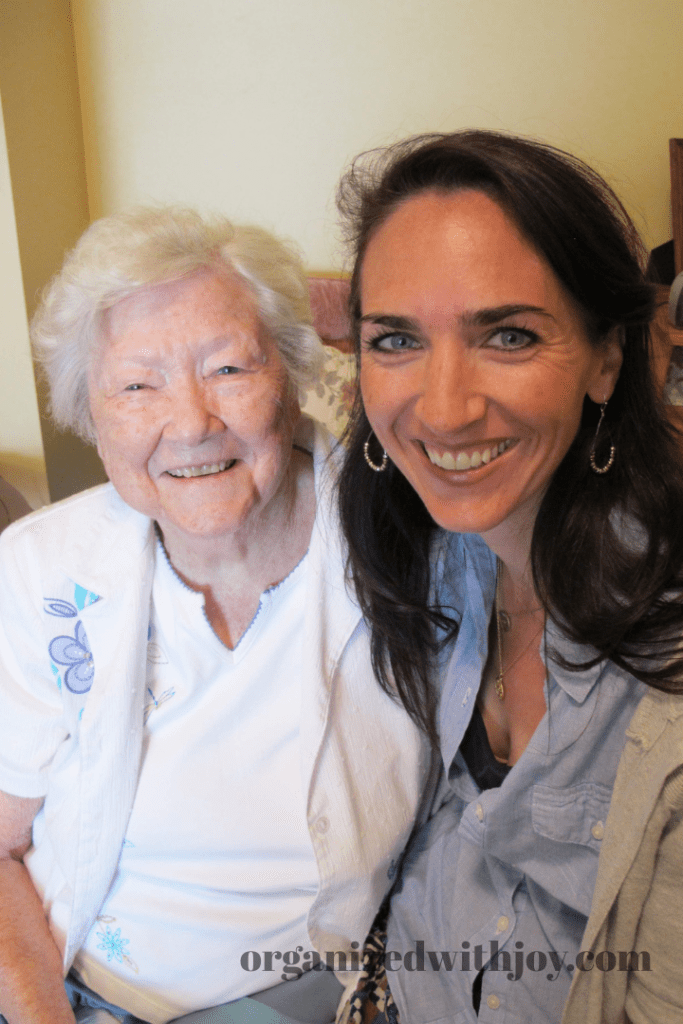
My Grandma passed away almost exactly 6 years ago, at the age of 93 by the way. Now with both of them gone I wanted to go say goodbye to their house one more time. They moved into that house when my mom was 16 years old, so that was always Grandma and Grandpa’s house for me since day one. I have SO many memories from their house. When I arrived it was a bit of upheaval because my family had to move the furniture out of my Grandpa’s assisted care facility back into their home. Also, my grandpa definitely didn’t keep the house as immaculately clean as I remember Grandma keeping it. I thought it would be difficult to say goodbye, but honestly it felt like a ghost town there. The life that was once so vibrant and bustling in that home was gone. It reminded me that people make a home, not the stuff. All the stuff seemed unimportant at that moment. My family will go in and get what they want, but most of their things will be sold in an estate sale including the home. It all seemed meaningless. I did take a few picture frames and some of my Grandma’s jewelry, but the stuff only had life when they were there using it. This reinforced my desire to focus my time, energy, and money on people and experiences over stuff!

I’m so thankful for all the lessons I learned from Grandma and Grandpa. Lessons I will take with me for the rest of my life. And even after their death I was learning from them. Keep moving, remember everyone is just human like you, and stuff is far less important than we think it is in the end. I hope these lessons I learned from my grandparents will help their legacy live on. Not just through me and our family, but through whoever embraces them as we share these lessons generously with others. I hope these lessons inspire you as well.


This was the YouTube video I shared in conjunction with this post.