10 Reasons Why It’s So Difficult To Declutter

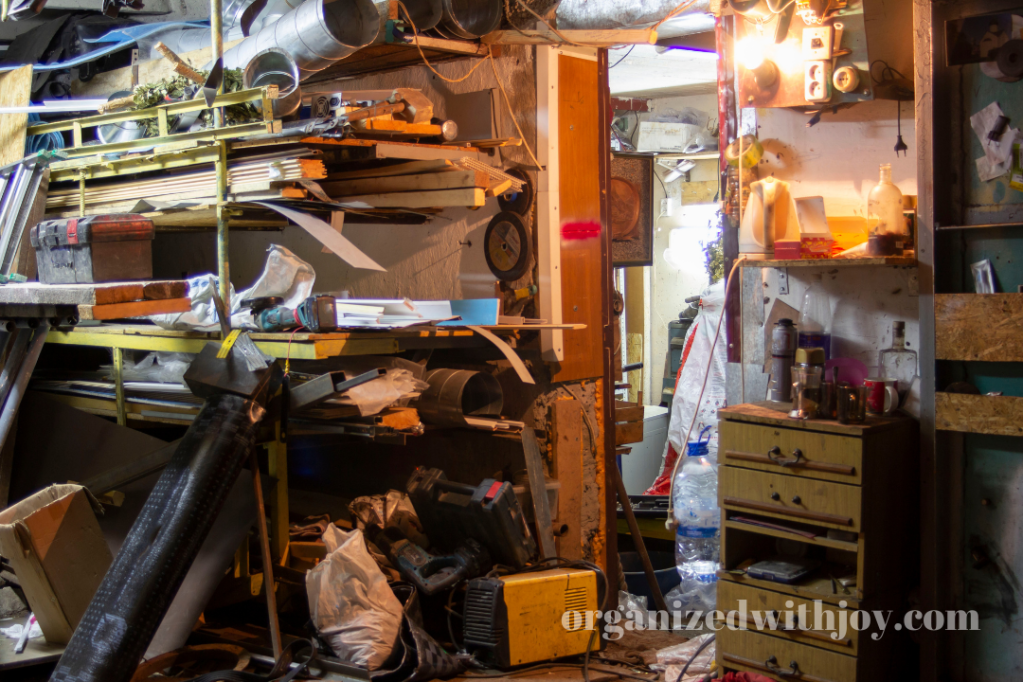
Decluttering can be tough! Today I wanted to share 10 reasons why decluttering is so difficult and ideas and tips to combat those reasons.

{{ONE}} The first reason people may find it difficult to declutter is that they are OVERTHINKING. When decluttering, decisions should be made quickly. I would say within 5-10 seconds your gut instinct is likely right. Believe me, I know this is tough because I am probably the queen of overthinking! Not just with decluttering, but literally everything in life! This is something you need to just train yourself to do, and like anything else it gets easier with practice.

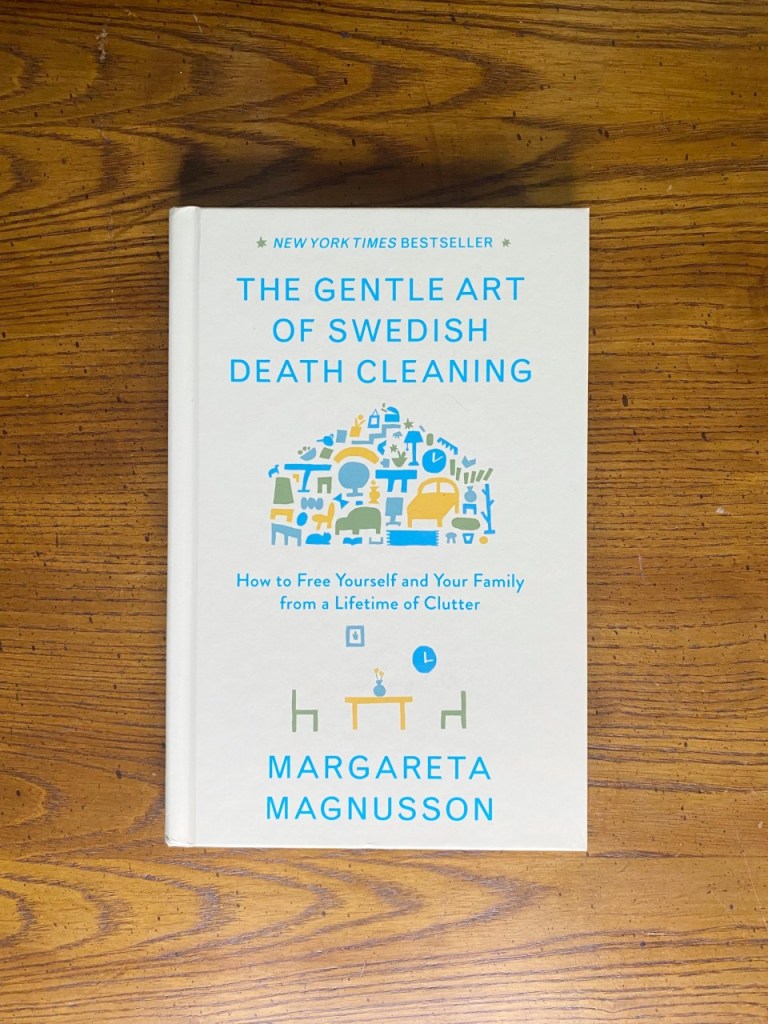
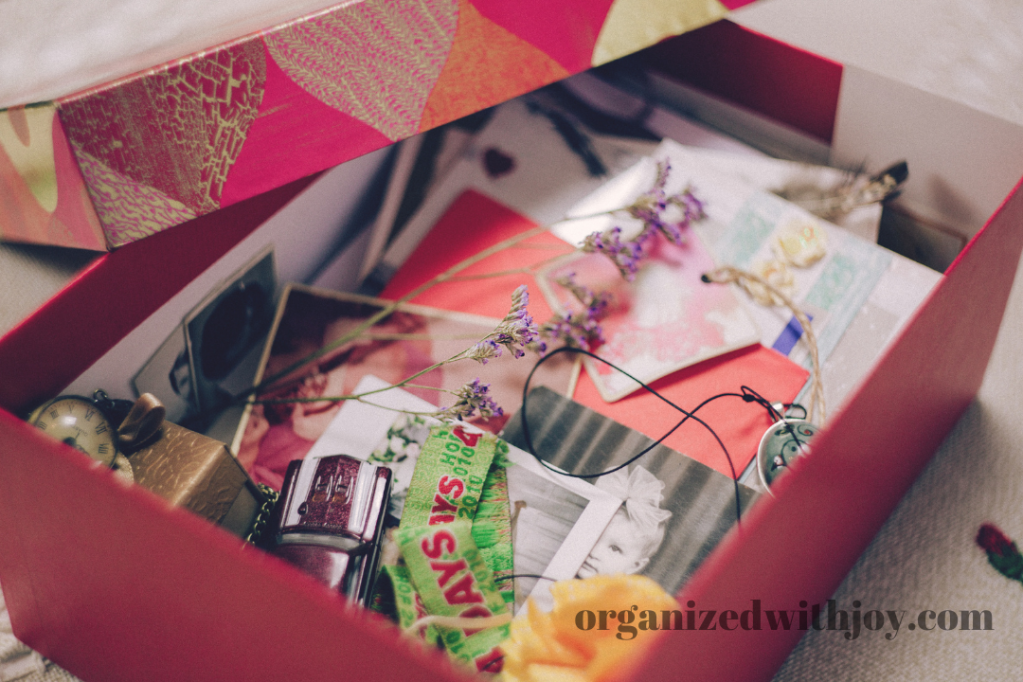
{{TWO}} The second reason is because THE ITEM IS SENTIMENTAL. Decluttering sentimental items can be very difficult. My encouragement on this one is actually to do the opposite of what I just suggested above and with sentimental items give yourself time. You need to be ready to let go of sentimental items. It can take time to get there, and that’s okay. There is no right or wrong amount of sentimental items to own because each person is different. One idea, which I got from the concept of Swedish Death Cleaning, is to think about if this is something your children or the younger generation would want to hold onto. Is this meaningful to just you, or would it be meaningful to your family members when you are gone?

{{THREE}} The third reason it is difficult to declutter is adjacent to sentimental items and that is it’s NOT EASY TO REPLACE. It can be difficult to let go of sentimental items because they cannot be replaced, but there are other reasons why items might be difficult to replace. Perhaps it is vintage or no longer in production so you can’t just go out and get the same thing. Or perhaps you don’t have the financial means to replace something readily. I am definitely sympathetic to these reasons and recognize sometimes you need to be intentional about the decluttering process.

{{FOUR}} Number four is that IT WAS A GIFT. This one is tough. I have talked about this in blog posts before. My take on gifts is that once the giver gives you the gift, the item belongs to you and you have a right to do with it as you please. You can appreciate the gesture behind the gift being given to you, and perhaps you used it or it was meaningful to you for a period of time. However, I think it is silly to be expected to keep every gift ever given to you. If an item is no longer being used or loved, it makes more sense to pass it along to someone who could get value from it. I am sure the gift giver would feel the same way, and would not want the gift to just clutter up your space or cause you stress.

{{FIVE}} The fifth reason decluttering might be difficult for you is because you are trying to do too much and EXPERIENCE DECISION FATIGUE. I recognize that there might be certain instances where you do need to go through a large amount of things in a short time – perhaps you are going through a deceased loved one’s home, you’re moving, or there are some other time frames put on you. If this is not the case, don’t feel like you need to declutter your entire home in one weekend! Or even an entire room. Know your limits on decision fatigue and come up with a plan based on that. I encourage people to set a timer or pick one space that is manageable – like one drawer – and then come back again at a later time. These things can help with preventing decision fatigue.

{{SIX}} The sixth reason is that you are PUTTING TOO MUCH VALUE OR IMPORTANCE ON YOUR STUFF. This one was a tough one for me to face in my own life. If you really think about what is important in life, none of it is stuff. For me the most important things are in the category of relationships or experiences. Most stuff can be replaced. If we have this perspective, decluttering becomes easier.

{{SEVEN}} The seventh reason is that you don’t have ENOUGH TIME. Like I mentioned previously, instead of thinking about decluttering your entire house, focus on one space at a time. Setting a timer for 15 minutes a day, or even a week, is better than not decluttering at all.

{{EIGHT}} Number eight is adjacent to number seven, and that is you FEEL OVERWHELMED. When you have a lot to declutter, it can be easy to feel overwhelmed. You don’t know where to start. My advice is to just pick a place and start! I encourage people to start with an area of your home that gets the most traffic. When you see progress in a place where you are spending a lot of time it can give you the motivation to keep going. Another tip is to choose a place that the decisions are easier to make – like in the kitchen or bathroom. These places have a lot of items that can be easily replaced. There is usually no sentimental attachment to items in these spaces as well, making the decision making easier. As we make decluttering decisions, it gets easier over time!

{{NINE}} The ninth reason people find it difficult to declutter is that they DON’T HAVE MOTIVATION. This is a tough one and I’m sympathetic to this as there are other areas in my life which I struggle with motivation. If decluttering becomes part of your every day or every week routine, over time it gets easier. There are always going to be things in life that we don’t really want to do, but as long as items are coming into your home, decluttering should be a regular practice.

{{TEN}} Lastly, number ten is that IT’S NOT YOUR STUFF. I am also very sympathetic to this one! I have a husband and three kids, so I have had to learn to allow them to declutter their own items and to be patient and understanding when they keep things that I would get rid of! My best advice is to just be an example to them of letting go of your own items which no longer serve you. Over time, they will see the value in living with less. It is also an opportunity to grow as a person, because everyone has a certain level of external chaos they can handle and if a family member is not bothered by their stuff, we need to learn to live with it because the relationship is important to us!

Well, I hope these ideas were helpful to you. Decluttering is not always easy, but as we make it a regular part of our lives, it does get easier over time!

Here is the YouTube video I made in conjunction with this blog post.

Tips For An Organized Closet

I have a problem. Clothes. This is the one area where I really struggle to keep minimal. I actually wrote a blog post a while back about why I no longer strive to create a capsule wardrobe. Because of my love of fashion, and therefore my plethora of clothes, it’s imperative that I stay on top of keeping this space organized and tidy. Today I wanted to share with you 7 tips for keeping your closet organized.

Tip number one is to DECLUTTER! Are you surprised that this is my number one tip? If you know me well, then you are not surprised! I always encourage people who want to get a space organized to first declutter! Getting rid of anything that no longer fits you, or has stains or holes is a good place to start. Keep only the clothes that you feel amazing in!

Tip number two is to KEEP A DONATION BIN in your closet for any clothes you want to declutter. If you are bringing new items into your closet, throw the items you are decluttering directly into the bin. Also, when you put something on and you don’t feel amazing in it, and you take it back off… don’t hang it back up! Put it directly into the donation bin. When the bin gets full, you can drop it off at your local donation center.

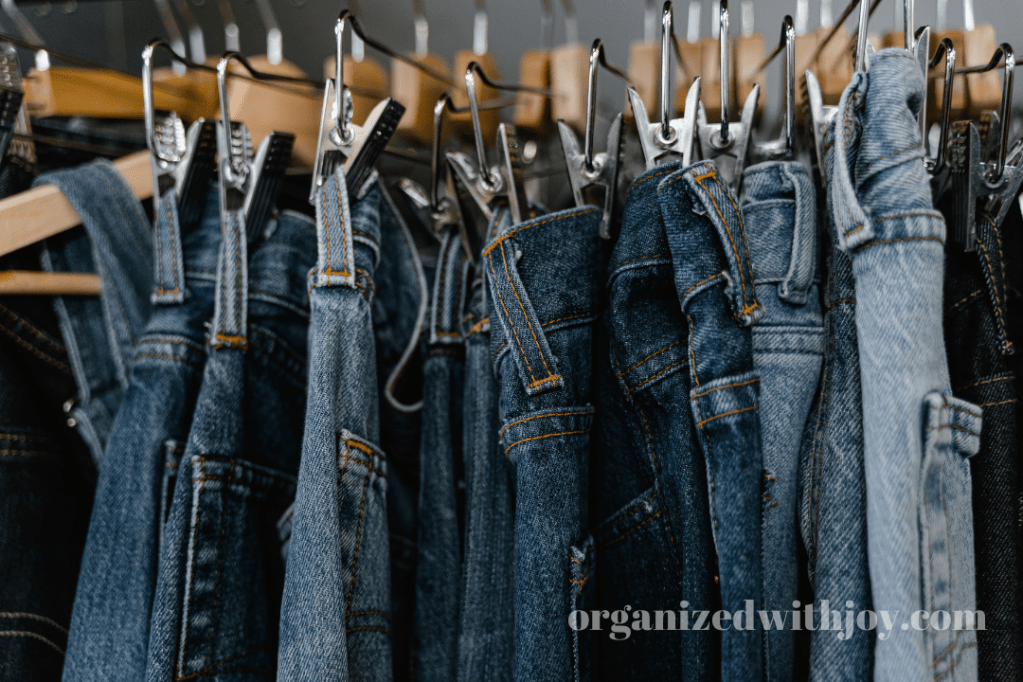
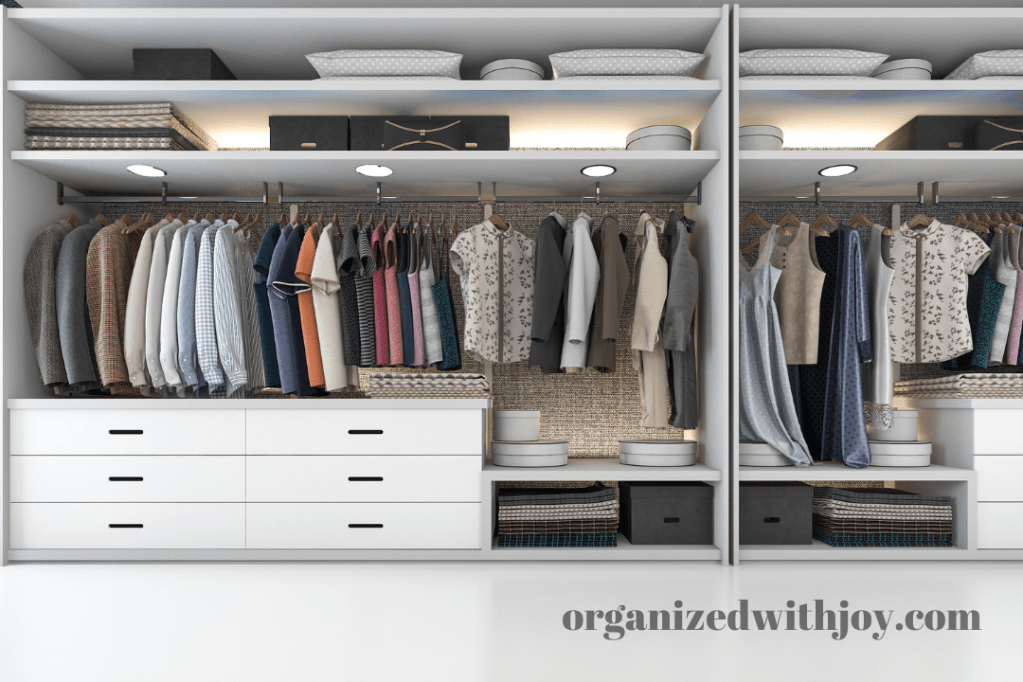
Tip number three is to BUY UNIFORM HANGERS. Having uniform hangers automatically makes a closet look more tidy and organized. My favorite type of hanger for aesthetic reasons is wood hangers. I have never owned the thin velvet type hangers, but I have also heard that these work really well because they fit more clothes into a space because of their thin design. Having uniform hangers also gives us natural boundaries on how many clothes we own (unless of course you go out and purchase more!) I have a set number of hangers and this helps me to stick to the “one in, one out” rule where I need to declutter items if I bring new items in.

Tip number four is to LABEL BINS you have in your closet. This is not a must, as you may already know what is in each bin, however labeling the bins makes it easier to identify each bin when you need to get something out.

Tip number five is to CATEGORIZE CLOTHING BY TYPE. I know that it looks pretty to categorize clothing Home Edit style in rainbow order, however it is more practical to have different sections for different types of clothing. You can still organize each category in rainbow order, still making it look nice. In reality, we dress for activity or weather. It is easier to find what we need if all of our tank tops are together, all of the short sleeve shirts, all of the cardigans – you get the picture. It takes less time and brain space if we know what type of clothing item we need and then only look through that section to select something. I also like to keep my shoes organized by category and have each type of shoe grouped together. 

Tip number six is to HAVE A PLACE FOR EVERYTHING. This tip is helpful really for your entire home! If you have a place for everything, it is much easier to put things back away quickly. If it is quick and easy to put things away, we are more likely to actually put them away instead of creating a pile of clothes in the corner chair, on a workout machine, or on the floor. If everything has a place, we are also more likely to stay on top of decluttering as more things come into the closet.

Lastly, tip number seven is to ADD GOOD LIGHTING to your closet. It is surprising what good lighting can do for your closet! When we moved into our home, our closet had no real light fixture, just a single bulb. Although I did not add brighter lighting, it did level up my closet to add an actual light fixture. I am in the process of looking for additional lighting to add to our closet so we don’t always have to turn on the overhead light. There are so many options for battery powered lights to add to your closet space!

Well, I hope these tips were helpful for you. In my opinion, closets can be the most difficult space to keep organized as there seems to be items coming in and going out frequently! Although I did say I’m not interested in creating a capsule wardrobe, I have decided to challenge myself in the month of February 2022 to live 28 days with 28 articles of clothing (not including pajamas, workout clothes, or accessories.) I will update you in March to let you know how that goes! I thought maybe trying it out without totally decluttering most of my wardrobe would give me a good picture of how I feel with less clothing options!

This is the YouTube video I made in conjunction with this blog post if you want to check that out!

5 Things To Declutter In December

It’s December! One of the busiest months of the year for most of us! But I wanted to encourage you to spend a little bit of time decluttering this month with certain items that make sense to evaluate in December!

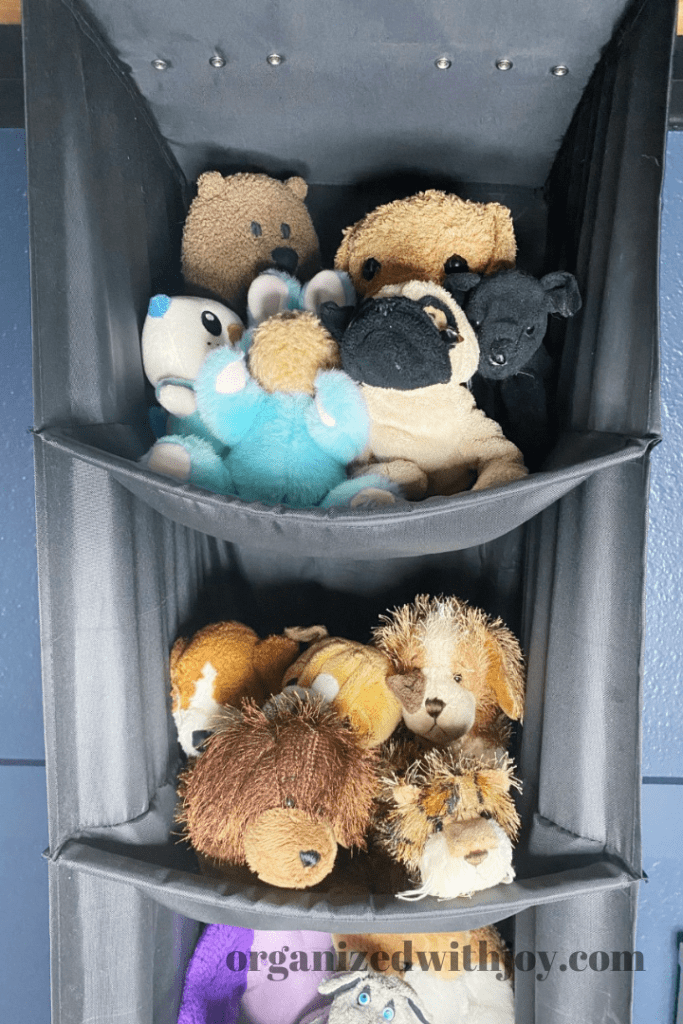
The first item is TOYS! It is smart to declutter toys prior to the inflow of new toys from Christmas gifts. It can be difficult to find a home for all the new toys that arrive on Christmas morning, so evaluating which toys your children no longer play with, finding broken toys or toys with missing pieces will help make room for the new items. If you purchased toys for your children, you can determine which category they fit in and see if other toys in that category can go. It’s always good to involve your children when decluttering toys at the appropriate age. Helping them understand that there is limited space for their toys and they should choose toys they no longer love to make room for the new toys that they will get for Christmas. Perhaps if the toys are gently used you could find a women’s shelter to donate to, helping your children learn to be giving – which is perfect for this time of year!

Next up is Christmas decor. This is the perfect time to evaluate which decor did not go up this year and determine if perhaps it’s time for it to go! Oftentimes if we don’t put it up this year, it is even less likely we will display it in the future. Be realistic about if it makes sense to store these items away for yet another year!

The third category of items to declutter in December is wrapping paper and wrapping accessories. When you are done wrapping all of your gifts for the season, it is a great time to determine if it is worth holding onto the scrap ends, stray tags, and extra ribbon. Certainly some of it might be worth holding onto for the next year, but really evaluate if you would actually use it a year from now.

The fourth category is winter coats, hats, scarves, and gloves. I know that in some parts of the country or world, you are well into the winter season with cooler weather! For me, here in Austin, the cool weather is just beginning! This is a great time to determine which coats and accessories you are wearing and which you are not. There might be a local charity for the homeless or perhaps a women’s shelter that would appreciate these items for the winter months.

The last category is kitchen items. During the holidays is probably when you are in the kitchen the most, using more of your kitchen items and gadgets than usual. Be honest with yourself if you are really using all the casserole dishes and spatulas that you own! Or perhaps you have holiday themed dishes that you had good intentions to use but never did. Now is a great time to declutter because you know if these items are actually useful to you!

Well, I hope this list of items you could easily declutter in December was helpful to you! Happy decluttering!

Here is the YouTube video I made in conjunction with this blog post!

6 Things To Do Before Getting Organized

Today I wanted to talk to you about the steps you should take before tackling an organizing project. It is important to prepare before organizing a space so you are efficient in getting your spaces organized.

{{ONE}} First, you need to remove everything from the space. If this is overwhelming, work section by section in a space. For instance, while organizing the kitchen, work one cabinet or one drawer at a time – removing everything from that section. Sometimes seeing everything out in the open can help you realize how much you have. It is also easier to organize things into a space that is a clean slate.

{{TWO}} Next, you need to declutter. Are you surprised?? Have I said this enough?? You must declutter prior to organizing. There is no need to organize items that are no longer needed or loved. It is also silly to buy organizing tools prior to decluttering because you will likely not need as much as you think.

{{THREE}} After you declutter, it is time to categorize. Keeping like items together usually makes the most sense when organizing a space. Once you group things together according to like items, you may be able to declutter even further if you see you have duplicates of items.

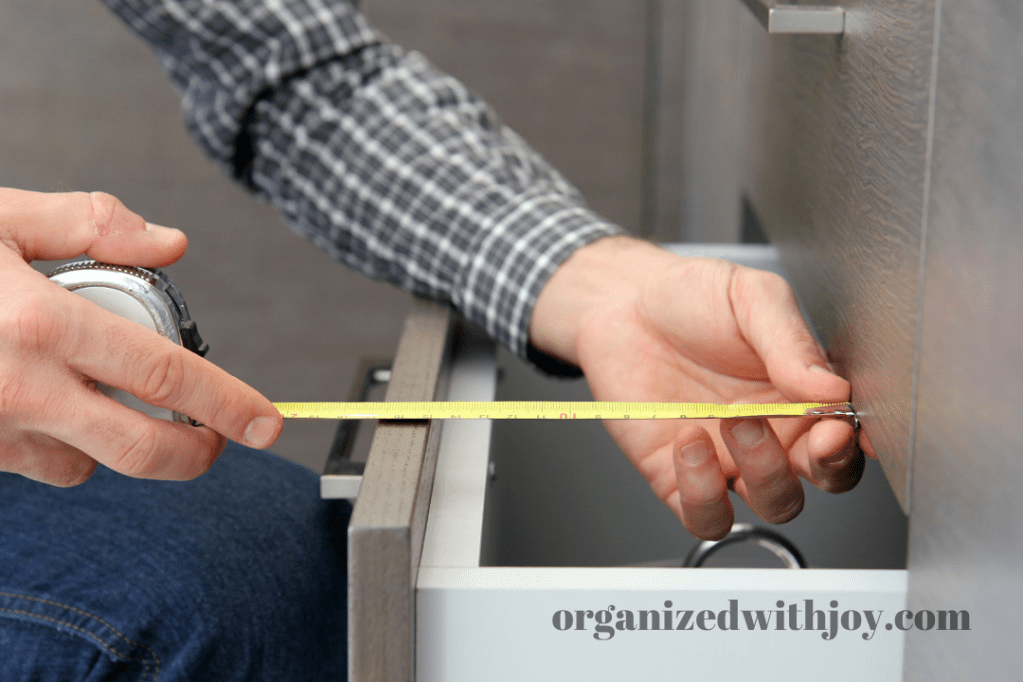
{{FOUR}} Once you have everything categorized, then you can decide how you would like to organize those items – in bins, baskets, boxes, or drawer organizers. You will then need to measure your space to determine what size of storage containers you will need. And you thought you would never use math again! Measure twice, buy once! It can take some research and shopping to find the right storage solution for your space.

{{FIVE}} Next, it’s time to purchase your storage solutions – whether it’s bins, baskets, boxes, or drawer organizers – find what works for your space. My favorite places for storage containers are The Container Store, Target, and Amazon. I know there are several other stores that have great storage solutions as well!

{{SIX}} This next step isn’t necessary, but I always like to deep clean a space before organizing it. If everything is already removed from the space, it’s the perfect time to clean it! It’s always nice to put items back into a clean space!

Well, I hope this post was helpful to you if tackling an organization project seems daunting to you. Taking these simple steps before trying to get organized will help to make your organization project go smoothly!

Here is the YouTube video I shared on my channel in conjunction with this blog post.

10 Ways To Find Joy and Purpose in Homemaking

Whether you stay at home or work outside of your home, I believe you can find joy and purpose in homemaking. I was a stay at home mom and homemaker for over 20 years and I truly enjoyed it and appreciated my husband working hard to financially support our family so I could pursue homemaking.

Unfortunately, I think staying at home with children and homemaking is undervalued in our culture. It used to be common for women to stay at home during the mid century time period in America. Now I think there is a high value on financial compensation and many families are now two income families. In addition to this, the standards in America have changed with regards to how big homes are and how many possessions Americans own, making it a necessity to have two incomes to keep up. The average size of home in America in 1950 was about 1,000 square feet with two bedrooms and one bathroom according to an article from the Chicago Tribune. By the year 2000, a typical home was 2,000 square feet or more and that average just seems to keep going up!

I wanted to share with you 10 ways to find joy and purpose in homemaking! I hope this encourages you if you are a stay at home mom, homemaker, or work outside of the home but also work as a homemaker!

First, value serving your family. For me, taking care of my family is a way that I show them love. Your husband and kids will see what you are doing day in and day out. They may not always verbally thank you, but I think seeing you consistently taking care of the home and family has a big impact. Being a homemaker gives you opportunities to show your kids how to serve others as you are an example of love and care for your family.

The second way you can find joy and purpose in homemaking is to be content with where you are. Regardless of if you stay at home or work outside the home, have a positive attitude about your roles in life. We all can have moments or even seasons of feeling overwhelmed, feeling unappreciated, or feeling like what we do may not matter. The truth is, what you are doing is very valuable. Focus on being grateful, and this can help you to find contentment.

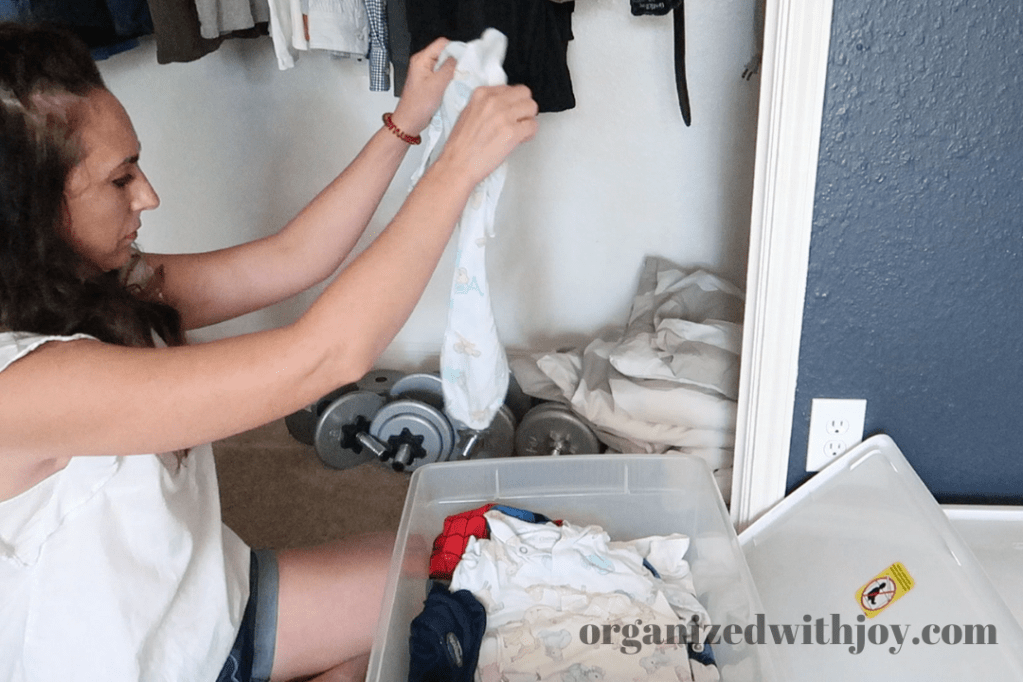
Number three is to see beauty in the mundane. Let’s be honest, homemaking tasks can be very mundane, but you can reframe your thinking by being present in everything you are doing. You can also make the mundane meaningful. One thing that I have done since my kids were very little is to pray for them while I fold their clothes, this helps this mundane task become more meaningful. If you don’t pray, maybe you could speak positive affirmations over your family as you do tasks to serve them.

The fourth way to find joy and purpose in homemaking is to acknowledge that it allows you to create a safe and cozy space for your family. I recognize that some people don’t enjoy decorating spaces to make them cozy, but perhaps you like baking and filling the house with the smell of freshly baked cookies or bread which also creates a sense of coziness. Perhaps just lighting a candle or turning on an oil diffuser will create that cozy feel. Whatever you do to create a soft space for your husband and children to land at the end of the day is valuable! It also allows you to enjoy the space you have created as well.

The fifth way is to recognize that it actually builds a lot of valuable skills. Managing a home, particularly if you have children and their schedules, is not an easy thing. It takes a lot of organization and executive functions to spin all those plates! Learning how to balance all of the responsibilities without a “boss” to direct you is actually challenging. There are a lot of little tasks that need to be taken care of, and a lot of little needs each of your family members have. Staying on top of all of this is a valuable skill set!

Next, recognize that homemaking provides an opportunity to learn new skills. I know that since becoming a wife over 25 years ago, I have learned so many new skills! Mostly by trial and error, sometimes with the help of a friend, or even taking a course. I have learned how to cook, sew, organize, and execute administrative tasks! Not to mention, learning to take care of our children, which was really trial and error!! Before I had my daughter, I had never changed a diaper before!

For those of us who are stay at home moms or homemakers and do not work outside of the home, recognizing that staying home allows time to make healthy meals and exercise can also shift our mindset and help us to find joy and purpose in homemaking. I am so grateful to have the margin in my life to exercise several times per week. We also eat at home 6 nights a week because I have time to meal plan, shop, and prepare healthy meals!

The eighth way to find joy and purpose in homemaking is to surround yourself with like minded friends for encouragement. If you are constantly hearing negative feedback about your role as a homemaker, it can wear on you. Surrounding yourself with friends who also value homemaking can help you to also value it. I have been really grateful to always have friends in my life who were stay at home moms or homemakers!

Number nine is to remind yourself that in the end your children will be grateful for all you did. I think back on what my mom did to make our home feel warm, welcoming, safe, and cozy and even though I did not realize it as a child, I recognize as an adult what she did was intentional – in spite of my mom being an elementary school teacher! Even if your children don’t appreciate it now, they will one day appreciate all you did. If you don’t have children, your husband will be grateful for the effort and energy you put into making your home cozy and safe.

Lastly, to find joy and purpose in homemaking, acknowledge when you feel undervalued and remind yourself of the aforementioned things. As I mentioned, it is not uncommon to sometimes feel undervalued or feel like what you are doing doesn’t make a difference. In those moments, it is helpful to remind yourself of all the things mentioned above!

Well, I hope this post was encouraging or inspiring to you today! Oftentimes, to be joyful and content in anything, it’s about a shift in mindset. Being grateful for the things we have and the roles we play in life.

My 6 Favorite Organizing Tools As a Professional Organizer

Today I wanted to share with you 6 of my all time favorite organizing tools as a professional organizer.

First up is BINS OR BASKETS. Anyone who has been to my home, or who has hired me to organize their home, can attest to my love of bins!! The number one thing you can do to get organized is to categorize. The easiest way to do this is with bins or baskets. My favorite bins are white plastic bins from The Container Store. They come in several sizes, are cost effective, simple, and durable.

Using UNIFORM HANGERS will always immediately make your closet look more organized. There are so many choices, from wooden to velvet or even plastic – as long as they are uniform it is just more pleasing to the eye.

Next is LAZY SUSANS. Using lazy susans throughout your home is such an efficient use of space to keep like items contained. They come in all sorts of sizes, and they can also come with a standard lip or a deeper one depending on what you are storing. I am currently obsessed with clear acrylic lazy susans!

I also love GLASS JARS. These are especially great for food storage like pasta, rice, or baking items. I love the Fido brand, but I also really like the simple Ball Mason jars as well. When using the Mason jars, I purchase white plastic lids to make taking the lids off and on easier.

Another item I love to use is UNIFORM CLEANING BOTTLES. Whether you choose clear or amber glass cleaning bottles, or even plastic ones, cleaning bottles look so much more streamlined and simplistic when they are all uniform.

What organization project is complete without LABELS? I love using labels for practical purposes so you know you know what is in the container, but I also just love the look of labels aesthetically! There are so many different options for labels! I love the label made by a Cricut, and I also love the look of just an old school embossed label!

Well, I hope this gave you some ideas on how you can take your home organization to the next level!

Here is the video I made with this information! It is a giveaway collaborating with several other YouTubers, so definitely go enter to win if you are reading this blog post close to the time it is posted! *Giveaway ends June 15, 2021*

My 25th Wedding Anniversary

Today is my 25th wedding anniversary. When you’ve been married this long, sometimes people say things like, “what’s the secret.” But honestly, I don’t think there is one secret. To tell you the truth, I don’t even feel like it’s possible that we’ve been married that long! I will share with you my thoughts on being married this long.

9,131 days. 
1,300 weeks. 

25 years. 

7 vehicles. 

6 apartments. 

3 kids. 

2 dogs. 

2 homes. 

This is us.

You know, I really think “secrets” are a myth. I think there really are only obvious answers. When people say things like “how do you stay looking young and healthy?” I joke – “It’s a BIG SECRET *insert sarcastic tone* – I eat healthy, exercise, drink lots of water, and get good sleep.” It’s the same with a lasting marriage, there is no big secret – you remain loyal when times get tough, you forgive, you ask for forgiveness, you give grace and compassion, and show humility. That doesn’t seem to be a big secret to me.

But, HOW do you do that. That is all easier said than done. I will share with you that I can’t imagine being so dedicated to my marriage if it weren’t for my faith in Jesus. In Philippians 2:3 it says, “Do nothing out of selfish ambition or vain conceit. Rather, in humility value others better than yourselves.” This is one of the principles I strive to live by. In all relationships, but especially in marriage. Believe me, there are times when I have to fight to believe this and live it out! It is certainly not always easy.

Also, marriage has not always been easy! That’s when I have learned to lean into Jesus and trust that He is refining me and making me more like him through my marriage. It also helps me to not put all of my hope and faith in a person {{my husband}} but recognizing that he is human and will let me down at times.

Loving someone unconditionally for 25 years is not easy – and I’m not just talking about me loving my husband, I’m talking about my husband loving me! It goes both ways. We both believe in the 1 Corinthians 13:4-7 passage regarding love. We may not always feel it, but we have to keep coming back to this passage:

“Love is patient, love is kind. It does not envy, it does not boast, it is not proud. It does not dishonor others, it is not self-seeking, it is not easily angered, it keeps no record of wrongs. Love does not delight in evil but rejoices with the truth. It always protects, always trusts, always hopes, always preserves.”

I will assure you – romance fades, hormones change, the honeymoon stage is just a phase – BUT, none of that compares with building a beautiful life with that person you fell in love with, had romantic moments with, and for a while couldn’t keep your hands off each other! We have so many wonderful and beautiful memories! We have spent the last 25 years building our family, which God intertwined our very beings together through our children and all the memories. 

You will always be my person. I love you David. Forever and always.

Six Decluttering Tips To Give You Momentum

Decluttering can be difficult and daunting. Sometimes it’s just getting started that is the hardest part! I wanted to share with you six tips to help you with the decluttering process. At the end of this blog post I will share with you a PDF printable document with a list of spaces in your home that you can declutter!

The first tip is to get rid of old things you are replacing immediately. If you are replacing an item, whether it’s a broken toaster, or a worn out set of dishes, immediately put the old items in the donation bin. You don’t even have to think about if you should or shouldn’t since you are replacing it with a new item. If you don’t get rid of it immediately, you may end up forgetting and having duplicates of the same type of item in your home.

The second tip is don’t second guess yourself – once it’s in the donation box, it stays there. It can be tempting to revisit the donation bin and second guess if you made the right decision. I would suggest if you have items that you are on the fence about to have a separate bin where you can store these items for a fixed amount of time (usually 6 months is a good amount of time), then move them to the donation bin once you realize that you didn’t miss the items. Usually there is a reason you initially put an item in the donation bin, so don’t second guess that gut instinct.

The third tip is don’t declutter other people’s stuff – you’re not responsible for it! Allow other people – whether that’s a spouse, children, or other family members living with you – to declutter their own items. It’s very important to allow people to make decisions about their own possessions. If you declutter someone else’s things, you risk having tension in the relationship and there is a good chance that they will bring more things into the space when you declutter their items without permission.

The fourth tip is to start with easy/non-sentimental items. It can be very time-consuming and therefore discouraging to start with decluttering sentimental items. When decluttering items that you don’t have a sentimental attachment to, or they are easier to replace, it makes the decluttering process go more quickly. Oftentimes with decluttering, you just need momentum to continue the process. Starting with something like decluttering kitchen items will make it easy and quick to make decisions giving you confidence moving forward.

The fifth tip is to set a timer. This makes it feel easier, like you’re not going to spend the entire day decluttering. Setting a timer allows your brain to know that you will only be working on this project for a finite amount of time. Sometimes decluttering projects can feel overwhelming, but you don’t have to declutter everything in one space all at once. Decluttering a few items is better than none.

The sixth and final tip is to have fun! Don’t overcomplicate it! Can decluttering be fun?? A couple of months ago, I played the Minimalism Game to declutter my home. If you’re not familiar with this game, you spend one month focusing on decluttering. On day one you declutter one item, on day two two items, on day three three items, and so on and so forth through the whole month. You end up decluttering over 400 items! This was a fun way to get things decluttered from my home. You could also enlist your family members’ help for items that belong to the whole family – like movies or games. Maybe take a vote on each one, and the majority wins! Or perhaps you could have a contest with other family members to see who can fill a box or bag of items to declutter the fastest! There are many creative ways to declutter that are fun and make it not as stressful as it could otherwise be!

I hope these tips gave you some inspiration on how you can declutter in your home today! Use this free printable to give you ideas on different spaces in your home that may need to be decluttered.

10 Things To Deep Clean In Each Room For Spring

Today I wanted to share the 10 things I like to clean in each room for spring cleaning! To be honest, I don’t specifically “spring clean.” I choose one room in my house each week to deep clean and declutter – meaning, usually my whole house gets deep cleaned and decluttered every three months or so. But, each of these items on the list I clean (for the most part, read on for exceptions) each time I deep clean a room. Be sure to scroll to the bottom where you can find a printable PDF document with all of these items on a check list! You could print it out once and stick it in a plastic protective sheet and mark off each item with a dry erase marker as you go, or print it out each time you have a room to deep clean! Happy spring!!

The first thing I like to do when deep cleaning a room is remove the drapes/curtains to wash or at least to shake out if they are not machine washable. Or even take them to the dry cleaners if you feel so inclined! At this time you can clean off the drape rods and finials as well. Remember when I mentioned the exceptions… I’m going to start with an exception right off the bat with this one. I don’t typically clean the drapes every single time I deep clean a room. I will do this once or twice a year.

The next thing I clean is the ceiling fan or light fixture in the room. Ceiling fans especially are prone to collect dust. I have an e-cloth extension duster like this that I like to use to clean fans. After I use this duster, I will go back with an all purpose cleaning spray and paper towels to get the remaining dust. I like using the all purpose cleaning spray to make the room smell good!

In addition to the drapes and ceiling fans/light fixtures, I make sure to vacuum the room, paying special attention to the edges and corners. I use the extension on my vacuum cleaner with the angled edger piece to get into the edges and corners of the room – something that doesn’t get done each time I vacuum a space.

Something else I do in each room when I am doing a deep clean is to dust the baseboards and clean the walls if necessary. We have a room with Wainscoting, and the trim definitely harbors dust which needs to be cleaned. I just use an all purpose cleaner and a microfiber cleaning cloth for this.Sometimes you just have to get on your hands and knees to get a space cleaned!

Next I will dust all of the horizontal surfaces in the room – shelving, dressers, entertainment centers, end tables, and anything else you may have which collects dust. Typically for wood surfaces I will use a specific wood cleaning product, and for painted surfaces I will use an all purpose cleaning spray.

I also like to be sure to clean the windows – at least the inside of the windows – and the blinds if that is applicable. I use a glass and mirror cleaner on the windows with a microfiber cleaning cloth, and I go back over it with a glass cleaning cloth – both I got from e-cloth. For the blinds, I use an all purpose cleaning spray and a microfiber cleaning cloth, however I have been wanting to get a specific blinds cleaning product as cleaning with the cloth can be very tedious.

In addition, I like to use my extension duster to clean the cobwebs off the ceiling whenever I deep clean a room!

Next I clean the inside and outside of dressers and cabinets. I like to take everything out and declutter as I go. While items are out of the cabinets and drawers, I take the time to clean it out with an all purpose cleaning spray.

Like I mentioned, the next thing I do is declutter. It’s always good to go through items and get rid of anything you are no longer using or loving!

Lastly, I will mop the room if it’s wood or tile, and use a steam vacuum if it is carpet. It’s always good to get a deep clean, especially with carpets!

I hope this gave you some ideas for things to deep clean in one of your rooms today! Be sure to check out my Deep Cleaning Checklist printable if you need guidance while cleaning a room!

Chaos To Order, Sustainable Room By Room Organization

Today I wanted to share with you how I keep our home organized room by room! There are several different organization tools that are helpful in keeping your home organized. But, there are also some everyday practices that will help in keeping your home organized.

The first thing I wanted to talk about is decluttering. I won’t be-labor this point as I know I have several blog posts about the value in decluttering. When getting a space organized, there is no sense in organizing items that you no longer love or are no longer useful to you. I’m sure by now you have all heard of Marie Kondo’s Konmari method of decluttering. I don’t necessarily like everything about her methodology, however I do like the idea of decluttering by category. Some people get overwhelmed by pulling everything out in one category, so I suggest working one room or space at a time as well. Start with items that are easier to declutter – like kitchen items, which don’t have sentimental value and work your way up to sentimental items. Generally, the process of decluttering gets easier as you gain momentum. Also, it’s important to note that each room or space in your home will need to be revisited. Unfortunately, decluttering is typically not a one time event but rather a process as most homes continually accumulate items.

I wanted to talk a little bit about a system I learned many years ago from the book The Fly Lady. She has lots of great advice in her book, but the thing I have implemented into my routine is creating “zones” coordinating with different spaces or rooms in your home, and each week choosing one zone to deep clean and declutter. I have 12 zones in my home, and by choosing one zone per week my entire house gets deep cleaned and decluttered every three months. It’s not only important to stay on top of decluttering, it’s also important to stay on top of your organization systems as things can get misplaced or in disarray over time.

My number one advice for client’s is to have a place for everything. When each item in your home has a place, it makes cleaning up and putting things away more efficient and easy. I love to use bins, baskets, and lazy susans throughout my home to house items which are alike. For many of these bins, I use labels, making it easy for everyone in my family to know where things are and where they belong.

The first space I want to talk about is your entryway – whether it’s at your front door, back door, or both! Typically this is a “drop zone” – a place where everyone sets down their everyday items and takes off their shoes. You want to have organization tools which will accommodate this. Hooks for purses and backpacks, a shoe rack or baskets for shoes, a key holder for keys, and bins to hold things like hats, scarves, and gloves. Having a space for each type of item works well, or perhaps you can have a bin and or hook for each family member. These are items that are notorious for getting lost, however if you have a place for these items, each family member will know where they go and where to find their items.

The next location I wanted to talk about is the living room/family room. In this space, it’s important to have functional furniture to store different items that belong in the room, such as game consoles, video games CDs, movies, remotes, and blankets. Once again, if items have a place, everyone will know where to find them. Blankets can be stored in an aesthetically pleasing way such as in a basket, on a blanket ladder, or draped across the sofa. If you’re like me and like to have a variety of throw pillows, you can choose to purchase pillow covers when possible, making it easier to store when not in use. In addition to this, if you like using different decor for different times of the year, find creative ways to store these items. I have a dresser in my office where I store all my extra decor that is not in season. I do have two large bins storing my Christmas specific decor, which I store in the attic. A trick I like is to use dual purpose decor. I use wood bead strings around my Christmas tree as garland, but when it is not Christmas season I use the beads as decor in other areas of my home. Also, you can find a lot of versatile “Christmas decor” that will transition into the winter season.

TV Console with space for Living Room items.
I store extra pillow cases in our side tables in the living room.
I store my extra home decor in a dresser in my office.

The next space I will talk about is the kitchen. This might be one of the most important places in the home to find an organization system that works well for you as it allows you to be more efficient in meal planning, getting groceries, putting away the groceries, and meal prepping. It’s helpful to have your kitchen organized in a functional way. Store items where you use them. I have a corner of my kitchen where I do most of the meal prepping, and that is where all of my utensils and dishes are stored. Organizing your pantry and refrigerator/freezer space by category helps to keep everything contained and easy to find. I have chosen a variety of bins, boxes, and jars to store items in my pantry. Taking pantry items out of their packaging and decanting items into streamline jars and bins is a more efficient use of space. Using labels will make it easy to put things away, and allow family members to know where items go. It also just looks more appealing! In the refrigerator and freezer, you can use bins to keep things in order, and again using labels so everyone knows where things belong. This also keeps your refrigerator more clean, so if anything spills or leaks, it is contained in the bin. Lastly, using drawer organizers helps to keep drawers neat and easy to maintain.

I also wanted to talk about the office. This is probably one of the most difficult spots to keep organized, primarily because often offices become overrun with papers. Again, organization systems help to keep everything in its place. If you have drawers in your desk, invest in drawer organizers, which can be fairly inexpensive. Having little compartments in your desk drawers to store all the little office type items will help to keep your desktop clean of clutter. Dealing with paper clutter can be time consuming and overwhelming! Definitely invest in some sort of filing system for important documents, whether that’s a filing cabinet built into your desk drawer, or some sort of external accordion style filing folder. Additionally, you can use an app like Adobe Scan, a document scanning app, to keep digital records of your paperwork, eliminating a lot of the paper clutter! In my opinion, it’s so much easier to get work done in a organized and tidy space!

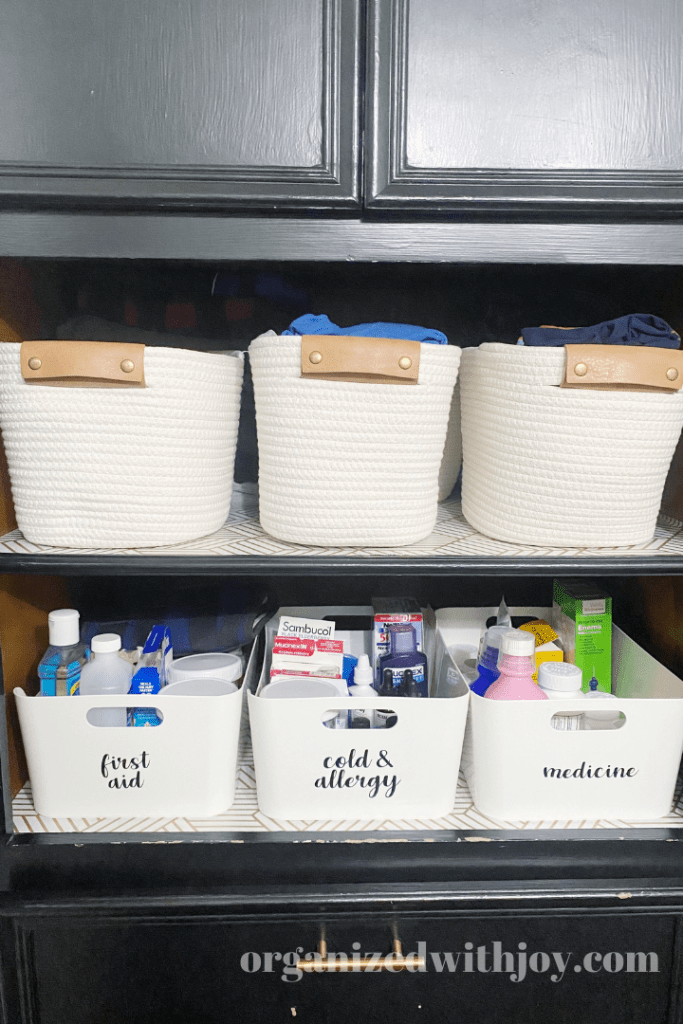
A couple of other spaces that often need organization systems are the laundry room and the bathroom linen closet. Having bins to house like items is definitely helpful in these spaces. I store all of our medicine in three separate bins which are labeled, making it easy for family members to find which type of medication they are looking for. Folding your sheets and towels in a uniform way will also help to keep your linen closet in order. I have a YouTube video where I show you the way I fold sheets so they will look neat in your cabinet! This might not work for everyone, but we own two bath towels per person, two hand towels per hand towel hook, and two sets of sheets per bed in our home. One for in use and one for in the laundry or in the cabinet. Having a system like this will cut back on clutter in this space.

The final space I wanted to discuss is the closet and/or dresser. This is another space that can be hard to stay on top of as we often have a constant flow of items coming in. Again, it’s important to make it a habit of going through your clothing items and donating anything you no longer wear or love, anything that is too small or too big, or anything that has a hole or stain. One of the easiest ways to make your closet look more organized is to invest in uniform hangers. It’s up to you to decide how many! Everyone is different in the amount of clothing they have space for and want to own. Also, finding storage systems for shoes, off season clothing items, and anything else you store in your closet is important. As far as the dresser goes, I want to mention the Konmari method again. I have found using the Konmari folding method to be the most efficient way by far to store clothing. More clothing fits in the space when folded this way, it’s easier to find what you are looking for, and once you learn to fold in this way it is very efficient to get your clothing folded. Once again, I have a tutorial YouTube video on how to fold Konmari style!

I hope this gave you some ideas or information on how you can get your home organized and functioning efficiently today!