10 Reasons Why It’s So Difficult To Declutter

Decluttering can be tough! Today I wanted to share 10 reasons why decluttering is so difficult and ideas and tips to combat those reasons.

{{ONE}} The first reason people may find it difficult to declutter is that they are OVERTHINKING. When decluttering, decisions should be made quickly. I would say within 5-10 seconds your gut instinct is likely right. Believe me, I know this is tough because I am probably the queen of overthinking! Not just with decluttering, but literally everything in life! This is something you need to just train yourself to do, and like anything else it gets easier with practice.

{{TWO}} The second reason is because THE ITEM IS SENTIMENTAL. Decluttering sentimental items can be very difficult. My encouragement on this one is actually to do the opposite of what I just suggested above and with sentimental items give yourself time. You need to be ready to let go of sentimental items. It can take time to get there, and that’s okay. There is no right or wrong amount of sentimental items to own because each person is different. One idea, which I got from the concept of Swedish Death Cleaning, is to think about if this is something your children or the younger generation would want to hold onto. Is this meaningful to just you, or would it be meaningful to your family members when you are gone?

{{THREE}} The third reason it is difficult to declutter is adjacent to sentimental items and that is it’s NOT EASY TO REPLACE. It can be difficult to let go of sentimental items because they cannot be replaced, but there are other reasons why items might be difficult to replace. Perhaps it is vintage or no longer in production so you can’t just go out and get the same thing. Or perhaps you don’t have the financial means to replace something readily. I am definitely sympathetic to these reasons and recognize sometimes you need to be intentional about the decluttering process.

{{FOUR}} Number four is that IT WAS A GIFT. This one is tough. I have talked about this in blog posts before. My take on gifts is that once the giver gives you the gift, the item belongs to you and you have a right to do with it as you please. You can appreciate the gesture behind the gift being given to you, and perhaps you used it or it was meaningful to you for a period of time. However, I think it is silly to be expected to keep every gift ever given to you. If an item is no longer being used or loved, it makes more sense to pass it along to someone who could get value from it. I am sure the gift giver would feel the same way, and would not want the gift to just clutter up your space or cause you stress.

{{FIVE}} The fifth reason decluttering might be difficult for you is because you are trying to do too much and EXPERIENCE DECISION FATIGUE. I recognize that there might be certain instances where you do need to go through a large amount of things in a short time – perhaps you are going through a deceased loved one’s home, you’re moving, or there are some other time frames put on you. If this is not the case, don’t feel like you need to declutter your entire home in one weekend! Or even an entire room. Know your limits on decision fatigue and come up with a plan based on that. I encourage people to set a timer or pick one space that is manageable – like one drawer – and then come back again at a later time. These things can help with preventing decision fatigue.

{{SIX}} The sixth reason is that you are PUTTING TOO MUCH VALUE OR IMPORTANCE ON YOUR STUFF. This one was a tough one for me to face in my own life. If you really think about what is important in life, none of it is stuff. For me the most important things are in the category of relationships or experiences. Most stuff can be replaced. If we have this perspective, decluttering becomes easier.

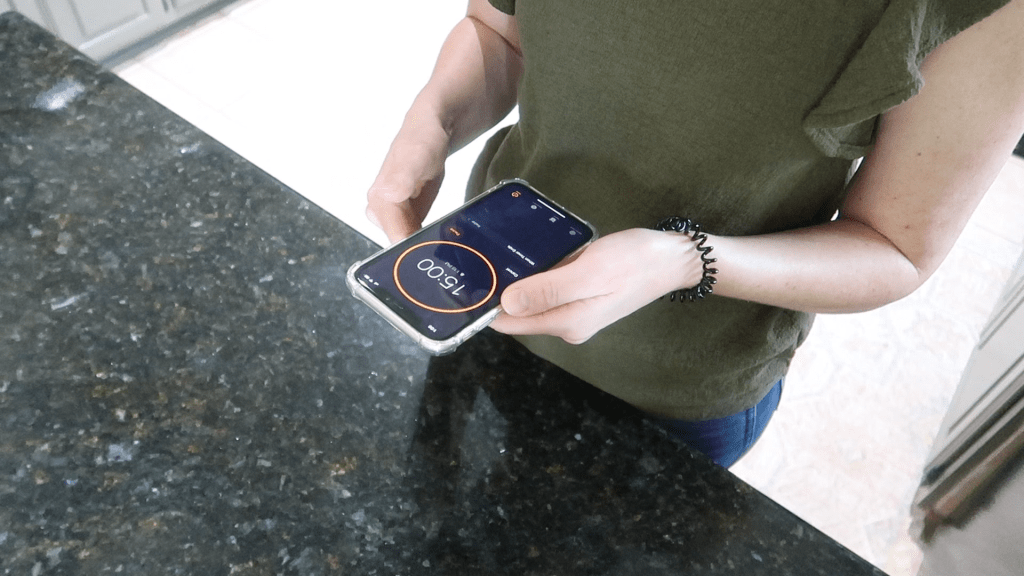
{{SEVEN}} The seventh reason is that you don’t have ENOUGH TIME. Like I mentioned previously, instead of thinking about decluttering your entire house, focus on one space at a time. Setting a timer for 15 minutes a day, or even a week, is better than not decluttering at all.

{{EIGHT}} Number eight is adjacent to number seven, and that is you FEEL OVERWHELMED. When you have a lot to declutter, it can be easy to feel overwhelmed. You don’t know where to start. My advice is to just pick a place and start! I encourage people to start with an area of your home that gets the most traffic. When you see progress in a place where you are spending a lot of time it can give you the motivation to keep going. Another tip is to choose a place that the decisions are easier to make – like in the kitchen or bathroom. These places have a lot of items that can be easily replaced. There is usually no sentimental attachment to items in these spaces as well, making the decision making easier. As we make decluttering decisions, it gets easier over time!

{{NINE}} The ninth reason people find it difficult to declutter is that they DON’T HAVE MOTIVATION. This is a tough one and I’m sympathetic to this as there are other areas in my life which I struggle with motivation. If decluttering becomes part of your every day or every week routine, over time it gets easier. There are always going to be things in life that we don’t really want to do, but as long as items are coming into your home, decluttering should be a regular practice.

{{TEN}} Lastly, number ten is that IT’S NOT YOUR STUFF. I am also very sympathetic to this one! I have a husband and three kids, so I have had to learn to allow them to declutter their own items and to be patient and understanding when they keep things that I would get rid of! My best advice is to just be an example to them of letting go of your own items which no longer serve you. Over time, they will see the value in living with less. It is also an opportunity to grow as a person, because everyone has a certain level of external chaos they can handle and if a family member is not bothered by their stuff, we need to learn to live with it because the relationship is important to us!

Well, I hope these ideas were helpful to you. Decluttering is not always easy, but as we make it a regular part of our lives, it does get easier over time!

Here is the YouTube video I made in conjunction with this blog post.

Tips For An Organized Closet

I have a problem. Clothes. This is the one area where I really struggle to keep minimal. I actually wrote a blog post a while back about why I no longer strive to create a capsule wardrobe. Because of my love of fashion, and therefore my plethora of clothes, it’s imperative that I stay on top of keeping this space organized and tidy. Today I wanted to share with you 7 tips for keeping your closet organized.

Tip number one is to DECLUTTER! Are you surprised that this is my number one tip? If you know me well, then you are not surprised! I always encourage people who want to get a space organized to first declutter! Getting rid of anything that no longer fits you, or has stains or holes is a good place to start. Keep only the clothes that you feel amazing in!

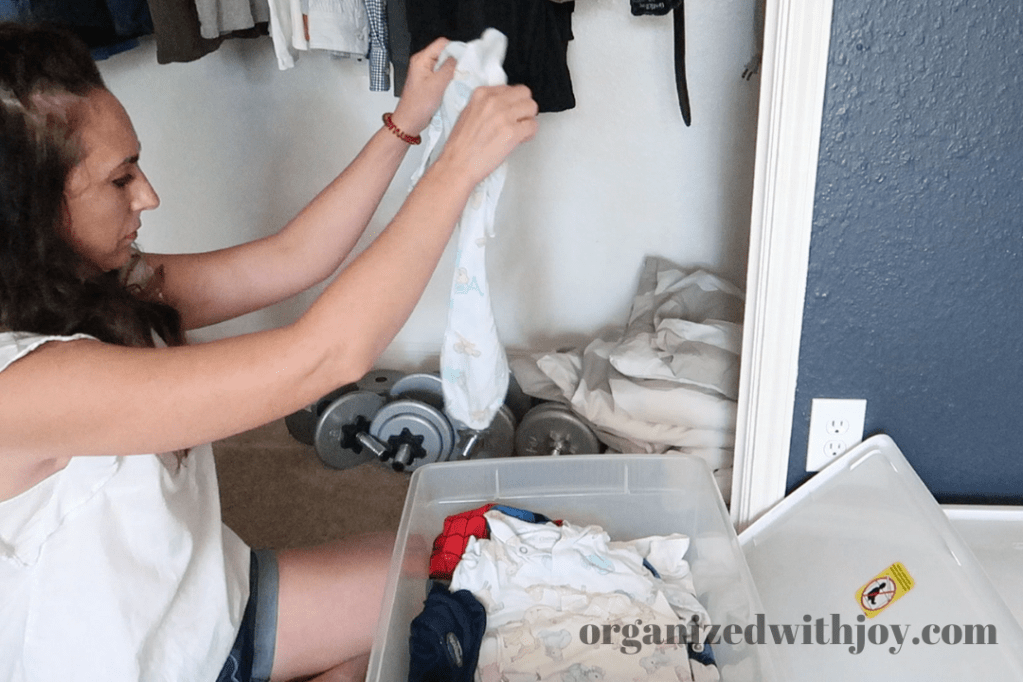
Tip number two is to KEEP A DONATION BIN in your closet for any clothes you want to declutter. If you are bringing new items into your closet, throw the items you are decluttering directly into the bin. Also, when you put something on and you don’t feel amazing in it, and you take it back off… don’t hang it back up! Put it directly into the donation bin. When the bin gets full, you can drop it off at your local donation center.

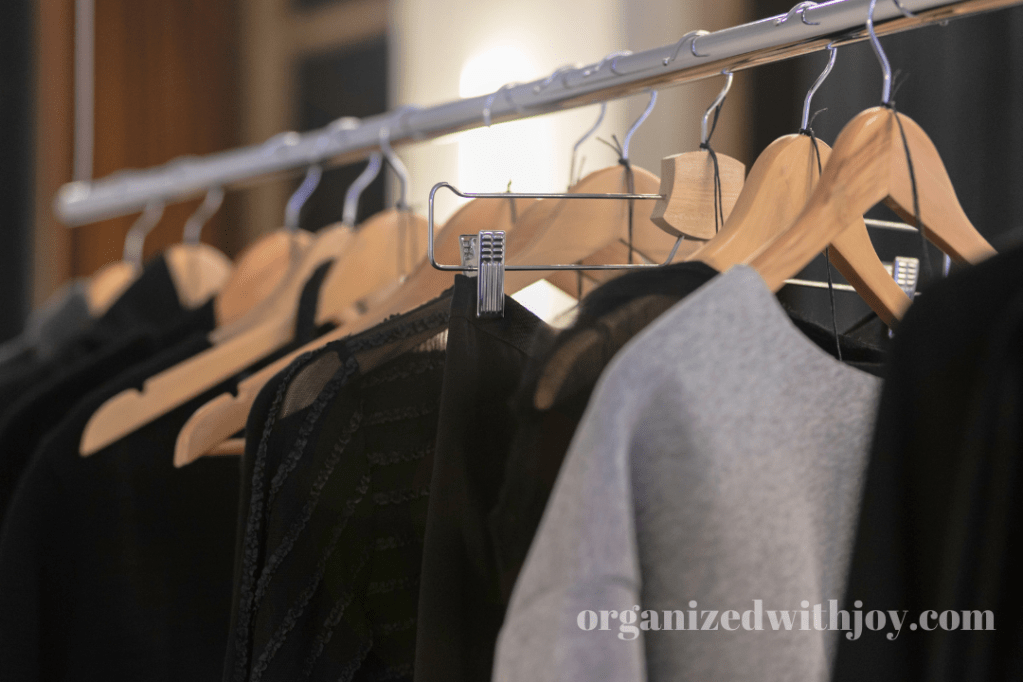
Tip number three is to BUY UNIFORM HANGERS. Having uniform hangers automatically makes a closet look more tidy and organized. My favorite type of hanger for aesthetic reasons is wood hangers. I have never owned the thin velvet type hangers, but I have also heard that these work really well because they fit more clothes into a space because of their thin design. Having uniform hangers also gives us natural boundaries on how many clothes we own (unless of course you go out and purchase more!) I have a set number of hangers and this helps me to stick to the “one in, one out” rule where I need to declutter items if I bring new items in.

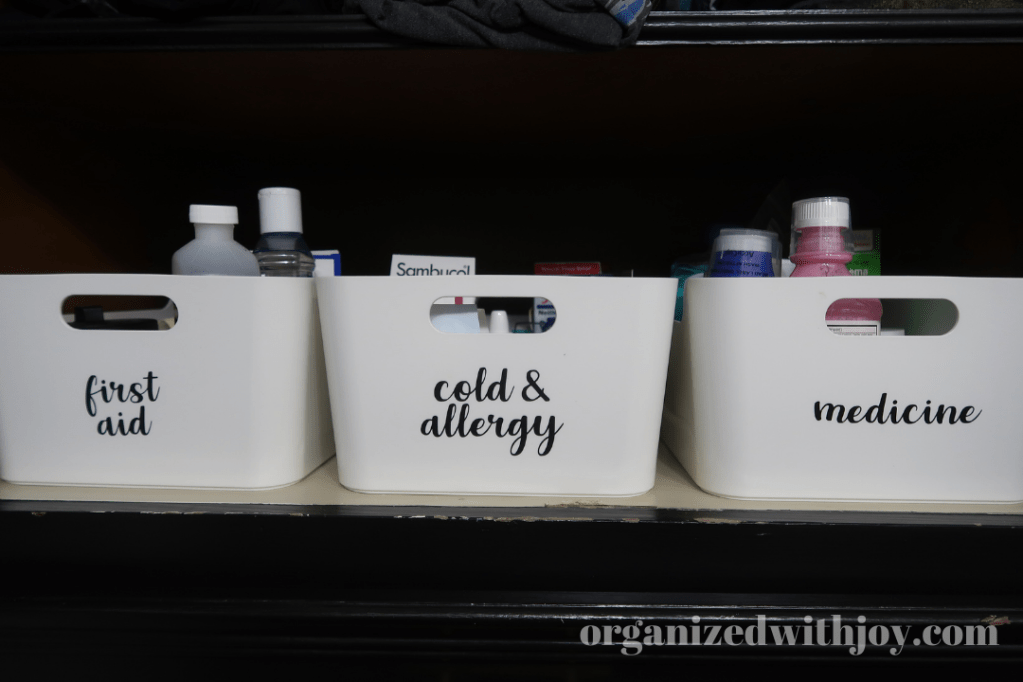
Tip number four is to LABEL BINS you have in your closet. This is not a must, as you may already know what is in each bin, however labeling the bins makes it easier to identify each bin when you need to get something out.

Tip number five is to CATEGORIZE CLOTHING BY TYPE. I know that it looks pretty to categorize clothing Home Edit style in rainbow order, however it is more practical to have different sections for different types of clothing. You can still organize each category in rainbow order, still making it look nice. In reality, we dress for activity or weather. It is easier to find what we need if all of our tank tops are together, all of the short sleeve shirts, all of the cardigans – you get the picture. It takes less time and brain space if we know what type of clothing item we need and then only look through that section to select something. I also like to keep my shoes organized by category and have each type of shoe grouped together. 

Tip number six is to HAVE A PLACE FOR EVERYTHING. This tip is helpful really for your entire home! If you have a place for everything, it is much easier to put things back away quickly. If it is quick and easy to put things away, we are more likely to actually put them away instead of creating a pile of clothes in the corner chair, on a workout machine, or on the floor. If everything has a place, we are also more likely to stay on top of decluttering as more things come into the closet.

Lastly, tip number seven is to ADD GOOD LIGHTING to your closet. It is surprising what good lighting can do for your closet! When we moved into our home, our closet had no real light fixture, just a single bulb. Although I did not add brighter lighting, it did level up my closet to add an actual light fixture. I am in the process of looking for additional lighting to add to our closet so we don’t always have to turn on the overhead light. There are so many options for battery powered lights to add to your closet space!

Well, I hope these tips were helpful for you. In my opinion, closets can be the most difficult space to keep organized as there seems to be items coming in and going out frequently! Although I did say I’m not interested in creating a capsule wardrobe, I have decided to challenge myself in the month of February 2022 to live 28 days with 28 articles of clothing (not including pajamas, workout clothes, or accessories.) I will update you in March to let you know how that goes! I thought maybe trying it out without totally decluttering most of my wardrobe would give me a good picture of how I feel with less clothing options!

This is the YouTube video I made in conjunction with this blog post if you want to check that out!
A Clutter Free Christmas!

As the holiday season is upon us, most of us are thinking about gift giving. I have to admit, for me this time of year is difficult. As someone who is intentional with what I bring into my home, I want to make sure any gifts I give are also intentional. I want to make sure anything that I am giving to someone that goes into their home will be used and appreciated instead of just adding to any clutter they may already have in their homes. Today I wanted to share three categories of gifts that are sure to be used and appreciated that will not cause clutter in your family or friends homes!

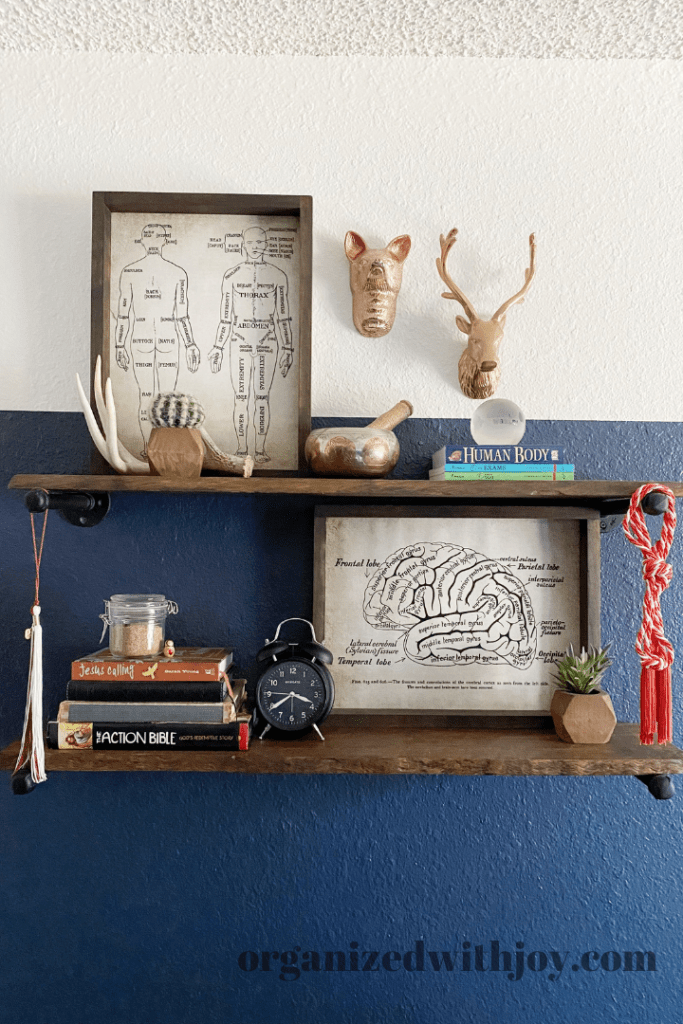
The first type of gift I wanted to talk about is the intentional gift. In spite of what people may think, I truly do love giving gifts to others! Some people may think since I am anti clutter I am anti gift-giving. One of the ways I like to be sure I’m giving a gift that will be used and loved is by knowing the person and paying attention to what they talk about to get clues about their interests. Purchasing a gift in line with the person’s interests is the best way to give them something intentional. Maybe your Mom likes a certain store, or your Dad collects something specific. Perhaps you can get something that is adjacent to their interests. For instance, my son was interested in the medical field when he was in high school, so I purchased some medical related wall art. My daughter loves nature and wants to visit the National Parks around the US, so I got her a coffee table type book with photos and information about the National Parks. Actively listening to and engaging with people in your everyday interactions will give you clues as to their interests!

The second type of gift that will prevent clutter is a consumable gift. Most people enjoy receiving special food or drinks for a gift that they otherwise might not purchase for themselves. Perhaps it’s a fancy bottle of wine, or a gift basket of their favorite type of food! Perhaps they don’t like to cook and you could give them a subscription to one of the dinner making kits. Another great category for consumables are special body products – like soaps, bath bombs or salts, or lotions. Be mindful if you know someone is sensitive to smells to take that into account. Lastly, another great consumable gift is a candle. Again, you will want to be mindful if the person likes scents and which type of scents they prefer. All of these items are great gifts because they will be used up over time and will not create clutter for the receiver.

The third and final category of gifts that will be useful is an experiential gift. There are such a wide variety of experiences you could give to a friend or family member – from some sort of subscription, to some fun experience you know they have wanted to have like going to a theme park. I will share a list of ideas that might be helpful as this is my favorite type of gift to give!

Gift card to their favorite restaurant

A vacation or plane tickets

We took our son to Hawaii for his graduation gift!

Passes to a theme park or museum

I took my son to Disney for a special mother and son trip!

Movie theater or live theater tickets

A tour – wine or factory, or plane or helicopter ride over the city

Adventure type experience like skydiving, bungy jumping, or ziplining

Concert tickets

A spa day package

Nail salon gift card

Coffee shop gift card

A cooking, painting, or some other sort of class of their interest

You could also get a season pass for a local venue they frequent:

The zoo

Children’s museum

Arcade

Indoor trampoline/bounce house park

Roller skating rink

You could also get them a gift card to some sort of subscription service:

Streaming service like Netflix, Hulu, HBO Go, Disney +

Spotify

Audible

Gym membership

Yoga/spin studio membership

Lastly, you could give to a charity in their honor. There are many charities that appreciate end of the year giving. Think about what organization may be meaningful to the person you are giving the gift to. One year for Christmas, my husband purchased several livestock animals for “me” through an organization we trust, to help support an impoverished community in another part of the world. It was SO meaningful to me. I loved that I wasn’t bringing more stuff into my house, and we were able to bless someone else at the same time. Maybe you have an animal lover and you could give money in honor of them towards animal protection. Or perhaps you have someone who is into astrology and would love to have a star named after them!

As you can see there are a lot of ideas for gifts that would not clutter someone’s home and truly be meaningful and appreciated! I hope this gives you some ideas for family members or friends in your life!

Here is the YouTube video I made in conjunction with this blog post.

5 Things To Declutter In December

It’s December! One of the busiest months of the year for most of us! But I wanted to encourage you to spend a little bit of time decluttering this month with certain items that make sense to evaluate in December!

The first item is TOYS! It is smart to declutter toys prior to the inflow of new toys from Christmas gifts. It can be difficult to find a home for all the new toys that arrive on Christmas morning, so evaluating which toys your children no longer play with, finding broken toys or toys with missing pieces will help make room for the new items. If you purchased toys for your children, you can determine which category they fit in and see if other toys in that category can go. It’s always good to involve your children when decluttering toys at the appropriate age. Helping them understand that there is limited space for their toys and they should choose toys they no longer love to make room for the new toys that they will get for Christmas. Perhaps if the toys are gently used you could find a women’s shelter to donate to, helping your children learn to be giving – which is perfect for this time of year!

Next up is Christmas decor. This is the perfect time to evaluate which decor did not go up this year and determine if perhaps it’s time for it to go! Oftentimes if we don’t put it up this year, it is even less likely we will display it in the future. Be realistic about if it makes sense to store these items away for yet another year!

The third category of items to declutter in December is wrapping paper and wrapping accessories. When you are done wrapping all of your gifts for the season, it is a great time to determine if it is worth holding onto the scrap ends, stray tags, and extra ribbon. Certainly some of it might be worth holding onto for the next year, but really evaluate if you would actually use it a year from now.

The fourth category is winter coats, hats, scarves, and gloves. I know that in some parts of the country or world, you are well into the winter season with cooler weather! For me, here in Austin, the cool weather is just beginning! This is a great time to determine which coats and accessories you are wearing and which you are not. There might be a local charity for the homeless or perhaps a women’s shelter that would appreciate these items for the winter months.

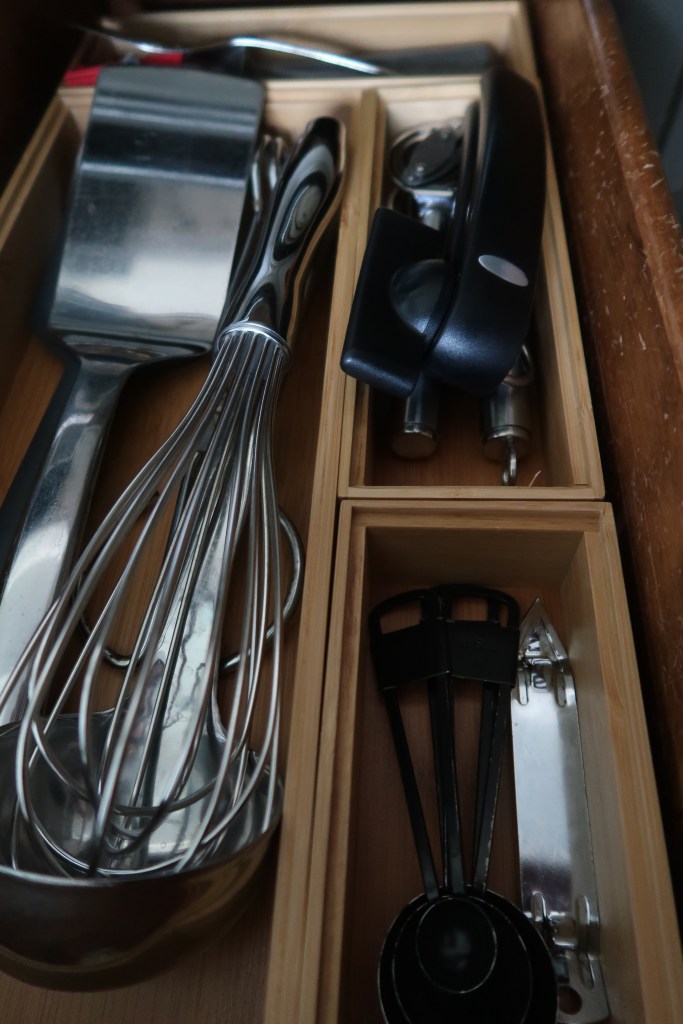
The last category is kitchen items. During the holidays is probably when you are in the kitchen the most, using more of your kitchen items and gadgets than usual. Be honest with yourself if you are really using all the casserole dishes and spatulas that you own! Or perhaps you have holiday themed dishes that you had good intentions to use but never did. Now is a great time to declutter because you know if these items are actually useful to you!

Well, I hope this list of items you could easily declutter in December was helpful to you! Happy decluttering!

Here is the YouTube video I made in conjunction with this blog post!

15 Things I No Longer Purchase

If you are new around here, you may not know that I have been on a long, slow journey towards minimalism. I’m learning the balance of making my home cozy, but also not owning an abundance of stuff! I’ve been learning what areas in my home it makes sense to own less, and then there are other spaces where I’ll be honest I like to have a variety – like clothes and shoes! One thing that I have found helps with keeping a minimal home is not just what goes out through decluttering, but also what comes in. I wanted to share with you 15 things I no longer purchase now! Not purchasing these items has helped to keep the inflow of items down. With that said, some of these items are consumable as well. All of these items are things that I used to purchase.

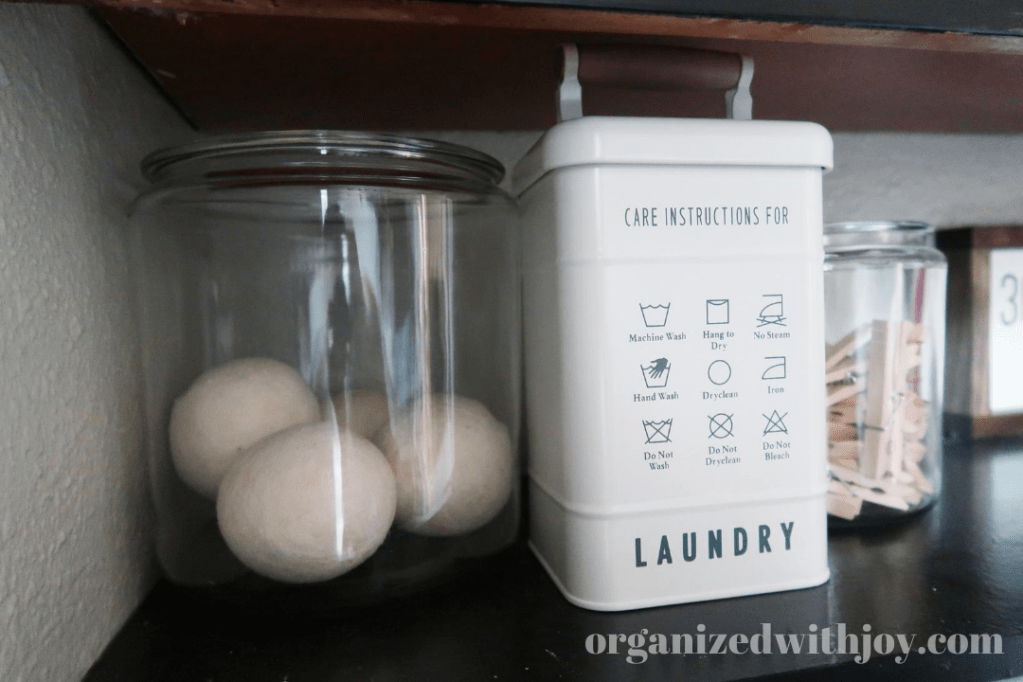
{{ONE}} First is dryer sheets. I used to use dryer sheets, however now I use wool dryer balls. I purchased the dryer balls a couple years ago and I really love them! Not only are they more environmentally friendly than dryer sheets, I actually like them better for making my clothes smell better! I just use a few drops of essential oil on the balls prior to adding them to my laundry in the dryer. In addition, dryer sheets often have chemicals in them.

{{TWO}} Next is plastic straws. I have been drinking protein shakes for my breakfast for a very long time and I used to use throw away plastic straws. Several years ago I bought some reusable metal straws and I have never bought plastic straws since!

{{THREE}} The next item I no longer purchase is plastic water bottles. Well, I no longer consistently buy these! After the crazy winter storm here in Austin in 2021 I decided maybe we should have a package of bottled water on hand in case of an emergency! On a day to day basis our family uses a reusable water bottle. We have a reverse osmosis system in our home, so our water is purified and tastes great! I think it tastes better than bottled water.

{{FOUR}} I also no longer purchase cans of soda. It was quite a while ago that I began learning about the importance of eating whole foods and avoiding unnecessary processed sugar. This ages me, but I recall really starting to get into whole foods when I was pregnant with my second who is now 20 years old! I used to drink a soda every afternoon for the caffeine and I would often drink soda on the weekends with pizza or take out. I have stopped purchasing cans of soda to have on hand. We do purchase sparkling water, which is somewhat of a substitute for soda. We also occasionally have soda when we get fast food, but I no longer regularly purchase it.

{{FIVE}} The next item I no longer purchase is pre-cut food. Pre-cut food is so much more expensive than purchasing it not pre-cut. It was definitely something that was very convenient when my kids were younger and I was busier with their schedules. Now that they are older, I find I have more margin in my life to devote to cooking – something I love to do! Cutting up fruits and vegetables is very cathartic for me and something I actually enjoy.

{{SIX}} Next up is magazines. I used to love magazines many moons ago before Pinterest and Instagram were a thing. I used to love home and home decor magazines for inspiration and even had a 3 ring binder that I would keep all of my magazine clippings in for home decor inspiration. Now I am inspired by photos on Instagram and finding ideas and inspiration on Pinterest. My in-laws do purchase Consumer Reports for us as a Christmas gift, but recently my husband and father-in-law had a conversation about how all of this information is easily accessible online, so it is silly to receive paper copies of this magazine, so we will no longer receive those after this year.

{{SEVEN}} Another item I no longer purchase is special events or holiday dishware. I used to have different dishes that were for specific holidays, only getting used once a year. Now I have all white dishes and serveware and can use napkins and table decor to make any holiday or event feel special!

{{EIGHT}} Along those lines, I no longer purchase special event clothes. I have several dresses in my closet to choose from and I use what I have on hand to make work for any special event or holiday.

{{NINE}} Next up is sale items. I used to be a sucker for the sale section in any store – clothes, shoes, accessories, and home decor! I would definitely get drawn in by the price and the “great deal.” Oftentimes these items didn’t last long and I would soon have a pile of things to declutter. Now I have different shopping habits where I am more intentional with what I bring into my home. Since I am not bringing as much into my home, I can spend a little more on fewer items that are more meaningful to me or I absolutely love. Don’t get me wrong – I will purchase something that is on sale if it is something that I love and would make a good addition to my home, but I do not shop sales just because there is a sale now.

 {{TEN}} I also no longer purchase souvenirs. To be fair, I will if it is something that is really meaningful, but I don’t purchase them just for the sake of having an item to remember a trip. I always take a lot of photos to remember trips!

{{ELEVEN}} Next, I no longer consistently purchase nail, brow, or lash services. I actually never did get lash extensions, so maybe I should not have included that, but it is in that same category! I used to consistently get my eyebrows waxed, but when COVID happened and a lot of those places shut down for a while I learned I could live without that! I didn’t ever consistently get my nails done, but I would get them done a few times a year and I have stopped going to get my nails done as well ever since COVID.

{{TWELVE}} Another item I no longer purchase is purses. I used to have a variety of purses and in different sizes and colors, but a while back I noticed that I really don’t like to take the time to switch my purse over to a different one and decided to only keep one. I use that purse basically until it breaks and then buy a new one. I tend to purchase a high quality purse so that it will last longer. I do have a smaller purse that can be a fanny pack, cross body, or clutch that I will use when we go out, but on the daily I only use one purse.

{{THIRTEEN}} I also do not buy the newest version of phone! I actually have never been one to purchase the newest available phone or electronics. I use my phone until it dies!

{{FOURTEEN}} Something else I no longer purchase is seasonal decor. I do have some seasonal decor that I have had for many years – some pumpkins, Christmas decor, and Easter decor, but over the last few years I have looked for decor that could be used year round. For instance, I have some brass deer which are great for Christmas or winter time, but would really work year round. I also like purchasing items that are a great color scheme for different seasons, but you could still use them year round. In general, I do not purchase new decor each year for every season.

{{FIFTEEN}} Lastly, I do not purchase things I cannot afford. Again, this is something we have always done as a couple and as a family. We have chosen to live debt free with the exception of our mortgage. Everything else we want to purchase we save up for. We don’t have any credit card debt.

Well, I hope this inspired you to think about items you could potentially quit purchasing, or at least made you think about why you purchase what you purchase. I would love to hear what things you no longer purchase. Do you have some of the same items on your list? Or do you have different items?

This is the YouTube video I made in conjunction with this blog post if you would like to check that out!

Reducing Visual Clutter

Does your external environment cause you anxiety? Do you struggle to focus because of external clutter? Today I wanted to talk about visual clutter, the impact it has on us, and how to reduce it.

For many people, visual clutter is distracting. The reason is because our brain is constantly processing our environment. Visual clutter can have an impact on our mental and emotional health, resulting in us not being as efficient and productive as we could otherwise be.  Clutter has been linked to cortisol production, the stress hormone. Research from a 2009 study out of UCLA’s Center on Everyday Lives of Families (CELF) has shown that women who perceive their homes to be cluttered tend to have unhealthy patterns of cortisol levels. Interestingly, men did not have the same cortisol response with regard to clutter. This could potentially be because women tend to take on more of the household chores even if they are also working full time. Clutter is also linked to lack of self control, resulting in unhealthy eating habits. According to a Cornell University study from 2016, stress triggered by clutter may also trigger coping and avoidance strategies, like eating junk food, oversleeping or binge-watching Netflix.

So what can we do to reduce visual clutter? I wanted to share some ideas for you to reduce visual clutter in your home today.

First, the obvious one: declutter your possessions. When you have less, it is easier to clean, store, and organize your items. This can be easier said than done, so I suggest doing this slowly over time. If we try to declutter all of our items at once, we can get overwhelmed and experience decision fatigue. Slowly but surely as you declutter your possessions, you will have less visual clutter.

The next one goes along with the first. Be intentional with what you keep and what you bring into your home. When you are intentional with what comes into your home, you have an idea of where the item will go and how you will use the item or what purpose the item will fulfill to you. Sometimes people get into the habit of purchasing anything they find beautiful without intentionally thinking about its purpose. This is when it gets difficult to find a place for everything we bring into our homes. I have learned to enjoy and appreciate items visually at the store, acknowledging that you like it and it is beautiful,  without having to take the item home with me.

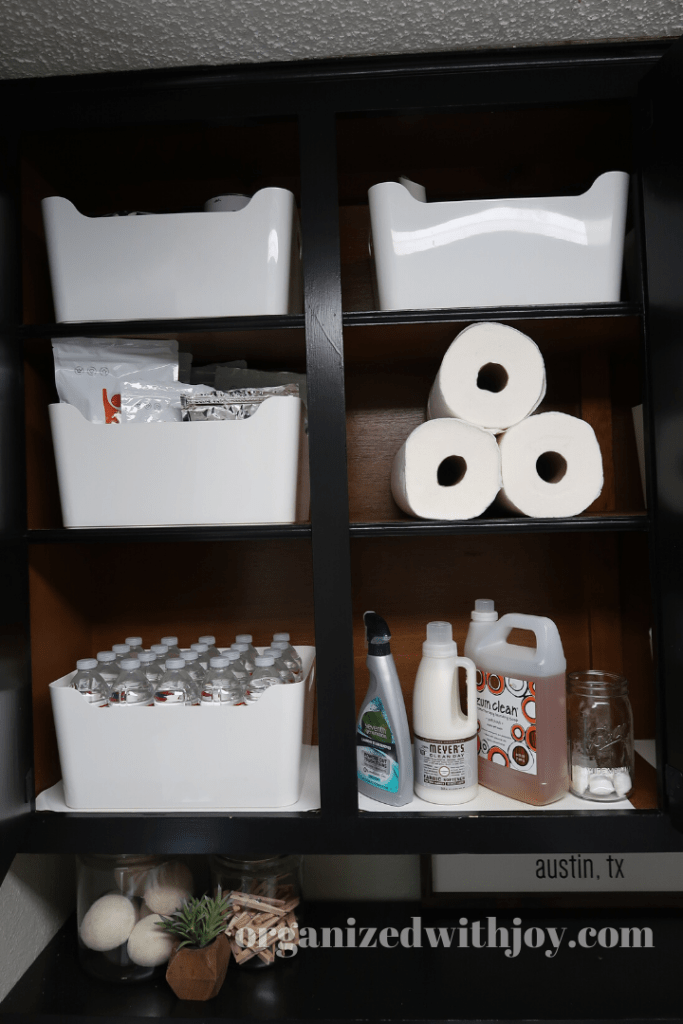
Next, group like items together in bins or baskets. When smaller items are stored away in bins or baskets, there is less visual clutter.

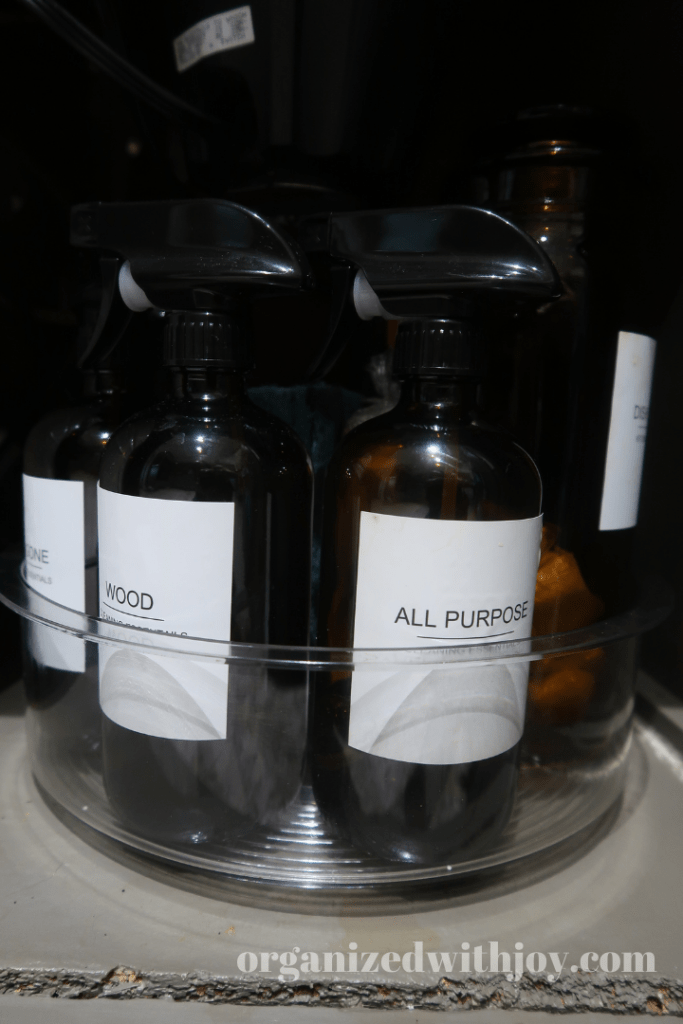
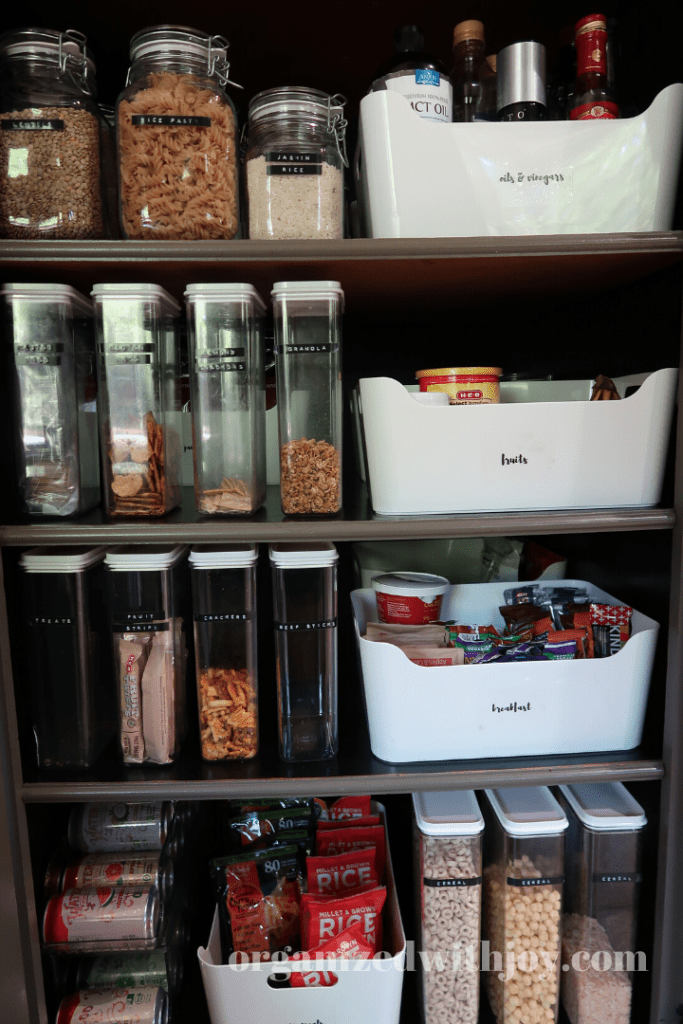
Choose uniformity when organizing and storing items. Get uniform food storage containers, cleaning bottles, and storage bins. When you have uniform jars, bins, and bottles you eliminate bright colored packaging, making your space feel more calm.

Have a place for everything. If you have a home for each of the items you own, they are less likely to get left lying around your home. When things are put in their proper place, your home feels less chaotic and less cluttered.

Another principle you can implement to reduce visual clutter in your home is maybe one (or a few) is better than an abundance. Throw pillows are a good example here (although admittedly I likely own too many of these!!) Maybe having 2 on your sofa is better than having the entire sofa lined with pillows. Or perhaps it’s home decor. Maybe having a small vignette of 3 items grouped together is better than the entire piece of furniture being covered in home decor.

Lastly, storing items away in a cabinet or drawer instead of leaving it out can reduce visual clutter. For me, I like to have a spot in my cabinet to store things like our toaster, the blender, and other large appliances. In the bathroom, you can have space for your items such as make up, a hair brush, toothbrush, and facial products in your bathroom drawers or cabinets instead of housing them on top of the counter. This will immediately reduce visual clutter in these spaces.

I hope this gave you some practical ideas on how you can reduce visual clutter in your home today!

The YouTube video I made in conjunction with this blog post.

Six Decluttering Tips To Give You Momentum

Decluttering can be difficult and daunting. Sometimes it’s just getting started that is the hardest part! I wanted to share with you six tips to help you with the decluttering process. At the end of this blog post I will share with you a PDF printable document with a list of spaces in your home that you can declutter!

The first tip is to get rid of old things you are replacing immediately. If you are replacing an item, whether it’s a broken toaster, or a worn out set of dishes, immediately put the old items in the donation bin. You don’t even have to think about if you should or shouldn’t since you are replacing it with a new item. If you don’t get rid of it immediately, you may end up forgetting and having duplicates of the same type of item in your home.

The second tip is don’t second guess yourself – once it’s in the donation box, it stays there. It can be tempting to revisit the donation bin and second guess if you made the right decision. I would suggest if you have items that you are on the fence about to have a separate bin where you can store these items for a fixed amount of time (usually 6 months is a good amount of time), then move them to the donation bin once you realize that you didn’t miss the items. Usually there is a reason you initially put an item in the donation bin, so don’t second guess that gut instinct.

The third tip is don’t declutter other people’s stuff – you’re not responsible for it! Allow other people – whether that’s a spouse, children, or other family members living with you – to declutter their own items. It’s very important to allow people to make decisions about their own possessions. If you declutter someone else’s things, you risk having tension in the relationship and there is a good chance that they will bring more things into the space when you declutter their items without permission.

The fourth tip is to start with easy/non-sentimental items. It can be very time-consuming and therefore discouraging to start with decluttering sentimental items. When decluttering items that you don’t have a sentimental attachment to, or they are easier to replace, it makes the decluttering process go more quickly. Oftentimes with decluttering, you just need momentum to continue the process. Starting with something like decluttering kitchen items will make it easy and quick to make decisions giving you confidence moving forward.

The fifth tip is to set a timer. This makes it feel easier, like you’re not going to spend the entire day decluttering. Setting a timer allows your brain to know that you will only be working on this project for a finite amount of time. Sometimes decluttering projects can feel overwhelming, but you don’t have to declutter everything in one space all at once. Decluttering a few items is better than none.

The sixth and final tip is to have fun! Don’t overcomplicate it! Can decluttering be fun?? A couple of months ago, I played the Minimalism Game to declutter my home. If you’re not familiar with this game, you spend one month focusing on decluttering. On day one you declutter one item, on day two two items, on day three three items, and so on and so forth through the whole month. You end up decluttering over 400 items! This was a fun way to get things decluttered from my home. You could also enlist your family members’ help for items that belong to the whole family – like movies or games. Maybe take a vote on each one, and the majority wins! Or perhaps you could have a contest with other family members to see who can fill a box or bag of items to declutter the fastest! There are many creative ways to declutter that are fun and make it not as stressful as it could otherwise be!

I hope these tips gave you some inspiration on how you can declutter in your home today! Use this free printable to give you ideas on different spaces in your home that may need to be decluttered.

Real Life Organizing | You Can Be Organized!

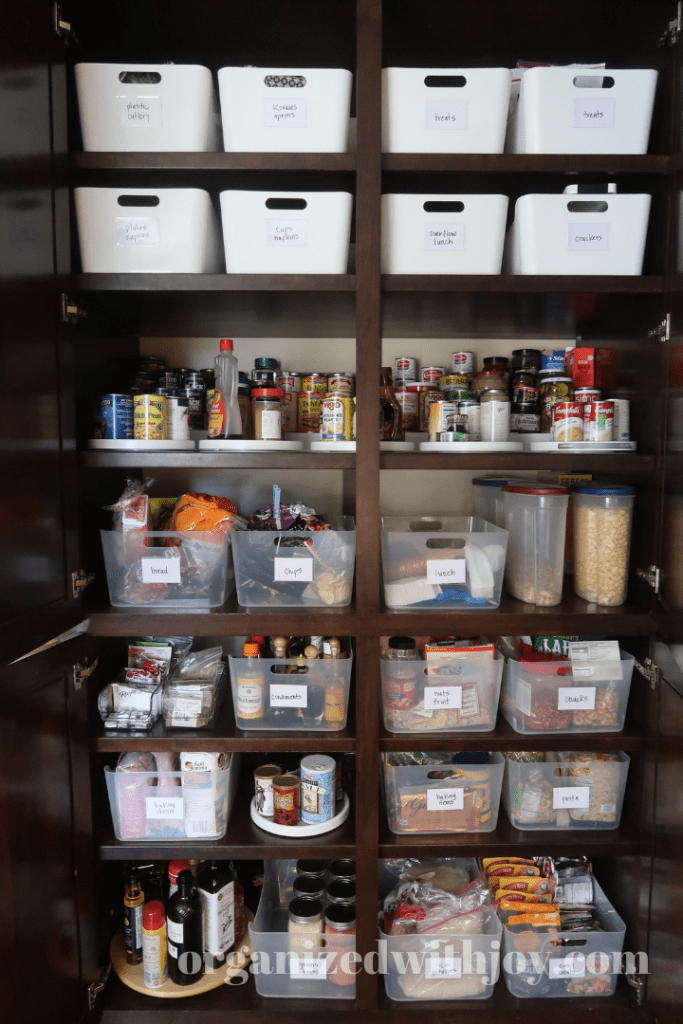
Sometimes while talking to clients or friends they either allude to or say outright that their space can’t be organized. Recently one of my friends hired me to help with her pantry. She came over to my house to see how I had organized my own pantry, hoping for inspiration or maybe to gain some trust that I could in fact get her pantry organized? She said that I seemed to be more of a methodical cook than her, and she wasn’t so sure her pantry could function like my pantry. She still reluctantly hired me as I encouraged her that I was up for the challenge! In the end she was surprised that she did in fact have distinct categories in her pantry! Several weeks after I was finished with her pantry, she let me know how much easier it was to order and put away groceries now that her pantry had a system. She was shocked and surprised that there was a sustainable organization system that worked for this space!

This is my pantry

I share this story because I think people often think that their space (or spaces) cannot be organized. I told my friend that is why she needed to hire me! I had a vision that she couldn’t even imagine. We all have gifts and talents, and my brain just processes things in light of order. Organizing projects can feel overwhelming at first. Even for me, sometimes I feel overwhelmed before starting a project, but I know you just have to take things one step at a time no matter how big or small the project is!

Here is my friend’s before pantry picture

The first step to getting any space organized is always to declutter. You don’t want to organize items that you no longer need, use, or love. 

The next step is to identify categories in the space. The best way to efficiently organize a space is by category. This is why I am a big fan of bins. This will help contain items for each category, making it quick and easy to put items away in the future.

After you have decluttered and identified your categories, you will need to measure your space and then go on a hunt for bins, boxes, baskets, or lazy susans that will fit the space and your style. This can be tricky at times. When we were looking for bins for my friend’s pantry, we were balancing a multitude of specifications. We were looking for bins of a certain size, style, and price point. You have to balance all of these specs and give weight to the importance of each. Just know that this can take time! You may have to scour the internet as well as stores in your local area. It’s not always a one stop trip! Don’t forget your labels too!

Next is the fun part!! Or at least for me!! You will need to remove everything from the space, and I always like to give it a good clean while the space is empty. Then you can begin organizing things into categories. Label each box making it easy to find homes for each of the items.

Organizing a space is certainly not a one size fits all, and it can’t always be done as quickly as a Home Edit Netflix episode. Be realistic, and have your expectations set so that you are not disappointed in how long this process can take.

If it all feels too overwhelming and you can’t hire a professional organizer, enlist a friend to help! Oftentimes it helps just to have accountability even if they are just as clueless as you!

Here is what her pantry looked like after!
Here is the YouTube video I made in conjunction with this blog post

10 Habits of An Organized Person

I think most people would say they would like to be more organized, or they would like to be an organized person. Friends and family often ask me how I stay organized. They may even comment that I’m so lucky to just be naturally organized. People who seem naturally organized really just implement habits in their lives that lead to an organized life. Today I wanted to share with you 10 habits of people who are organized.

The first habit is that they have a place for everything. The number one advice I give to people who want to get organized is to have a place for everything. When everything has a place, over time you don’t even have to think about putting things away. Your brain makes neural pathways as you repetitively put the items away in the same location. Eventually you do it as second nature. Also, if something does not have a home, it just continues to float around your house and every time you use that item, you must think about where to put it down when you’re finished using it.

In addition to having a place for everything, organized people actually put things away in their place after they are done using it. I call this the “one touch rule.” When they are done with an item, they immediately put it back where it belongs. They don’t drop the towel on the bathroom floor, or kick off their shoes wherever they want to take them off. A great example – and a problem place for many people – is the mail creating paper clutter in that dreaded drop zone where everything seems to pile up in your house. Someone who is organized has a habit of immediately dealing with the mail. They make it a habit to get the mail when they have the time to go through and discard junk mail, pay bills, and file papers that come through the mail.

In order to be able to deal with things like mail, functional systems must be set up and used. An organized person has these systems, which they continue to tweek until it works well for them. They have a paper filing system, a place for shoes, hooks for backpacks and jackets, a location where dirty laundry goes (and family members know this as well), and any other organizing bins for everyday used items.

Along with functional systems, organized people have daily routines set up. Having routines will allow you to get things done almost without thinking about it. Not only general routines like exercise, daily Bible reading or meditation, and getting up and going to bed at approximately the same time each day; but also cleaning, decluttering, and organizing habits. We all have a fairly consistent inflow of things into our homes, whether it’s junk mail, kids artwork, or gifts. Having routines set up to deal with the inflow and the organic daily messes that are created, help to keep you organized.

Another habit of an organized person is that they are constantly decluttering. Like I just mentioned, we all have a constant inflow of items into our homes. No matter how minimalist someone appears to be, there is still a need to declutter items from the home.

To help make the decluttering process a bit easier, another habit of an organized person is that they are intentional about what comes into their homes. Some things we don’t have control over – mail sent to us or what our family members bring into our home is out of our control. However, an organized person closely evaluates their purchases to decide if the items will add value, particularly in the long run.

Along those same lines, organized people only own what they use and what they love and declutter the rest. The less stuff we have, the less stuff we have to organize. The less stuff we have to organize, the easier it is to be and stay organized.

Another habit of an organized person is that they keep lists. Keeping lists for different aspects of life help to keep things organized. If you get ideas or to dos out of your head and onto paper (or digitally if that is your thing), your head is clear and you won’t worry about forgetting anything. It’s great to keep separate lists for different aspects of life – a work to do list, a daily to do list, a long term to do list, and an ideas list to name a few.

Organized people create deadlines for themselves. Oftentimes we organically have deadlines – whether that’s for work, school, or things that must get done related to our children or our personal lives (like appointments, preparation for events, etc.) When an organized person doesn’t have a set deadline – like with home projects or cleaning, they make deadlines for themselves. Having a deadline helps motivate you to get tasks and projects done. Of course there is always room for grace when unexpected things come up!

Lastly, organized people don’t procrastinate. Oftentimes people put off decluttering, putting things away, or everyday tasks. People who are organized, deal with things immediately, and then tasks don’t pile up and get to the point where they are overwhelming. It’s easier to stay on top of things when we don’t procrastinate.

I hope this gave you some practical tips on how you can become a more organized person. It’s never too late to make changes in your habits!

Here is the YouTube video I made in conjunction with this blog post.

12 Days to an Organized Christmas

The holiday season is a busy time. We often have extra responsibilities during this season, which can cause stress and feeling overwhelmed. I wanted to share 12 things you can do, one each day, to prepare for the holidays and make your holiday season run a little more smoothly. As of today (December 13th), we are 12 days away from Christmas!

{{DAY 1}}

Create a holiday to-do list. Writing out everything that needs to be done – whether with a pen and paper, or in a list app on your phone – begins the process of getting everything organized. From decorating, baking, and purchasing gifts; to wrapping gifts, sending holiday cards, and planning for parties, it can all be very overwhelming. Start by listing all the tasks that need to get done.

{{DAY 2}}

Allocate tasks to each day leading up to the holiday. It can be daunting to look at that list you just made. But, as you begin to plug in tasks to different time slots on your calendar, you begin to feel less stressed as you make a concise plan to get tasks done.

{{DAY 3}}

Clean up and organize your family drop zone. Everyone has a “drop zone” in their home – you know, that place where your family members seem to organically DROP all of their things when they return home? It could be a kitchen desk, mudroom, or entryway. Get this area into shape so that it functions well. Add labeled baskets, a file sorter for kids school work, or a bin for mail. This area of our home can cause a lot of stress if it is chaotic, and our stress level is already high during the holidays.

{{DAY 4}}

Keep a list of inventory. It’s important to keep track of everything you have purchased and need to purchase. You can write this down on a notepad, or use an app on your phone. Keep track of the gifts you have and need to purchase and how much you have spent to stay on budget. Also keep track of what you need to purchase for baking, special meals, or items for parties. Be sure to assess what you already have – check what holiday paper and ribbon you have leftover from last year to determine what you need to purchase. See what you already have in your pantry or refrigerator/freezer to determine what items you need to get for baking and holiday parties.

TIME TO DECLUTTER!

{{DAY 5}}

Holiday decor. After you have decorated your house for the holiday season is a great time to assess what you did not use this year. The chances of you using something next year that you did not use this year is very slim. This is an easy declutter process as it happened naturally just from you decorating! Purge what is leftover!

{{DAY 6}}

Pantry and refrigerator/freezer. Right before the holidays is a great time to declutter unused or expired food from your pantry and refrigerator/freezer. At this time, you can assess what needs to be replenished. We always need special items which we don’t tend to buy throughout the year for the holiday season – especially baking items.

{{DAY 7}}

Kids toys! This is a great time to assess what toys are broken and can be thrown away and what toys your children aren’t playing with. Include your children in this process. Remind them of the boundaries in your home with regard to toys and that you need to make room for the new toys that will arrive on Christmas morning. Encourage them to be generous, as it is a season of giving, and have them choose toys that you all could take to a women’s shelter or children’s home to bless those less fortunate. Not only are you teaching them about boundaries and decluttering, you are also teaching them about how this season is about giving.

{{DAY 8}}

Coats and blankets. This is a great time of year (at least for those of us living in the northern hemisphere!) to gather coats and blankets that you are not using. Again, get your family involved to declutter their items as well and take your extra coats and blankets to a homeless shelter.

{{DAY 9}}

Last on the decluttering list is mugs. Mugs seem to be an item that many people accumulate. Many of us are regularly using mugs during this season to enjoy hot drinks. Choose your favorites, and donate the rest!

{{DAY 10}}

Prioritize what is important to your family this holiday season. There are a lot of opportunities to spend time together with family and friends. There are parties, extended family gatherings, traditions, and more. It’s okay to say “no” to things in this season. Do what works best for your family, and the life phase your family is in. Maybe there is a tradition that worked well and was fun when your kids were really young, but now as they are getting older it’s just annoying to them. Find something else that will be meaningful and memorable to do together!

{{DAY 11}} 

Prepare for guests arrival. This won’t pertain to everyone, but many of us have guests in town for the holidays. Inflate the blow up mattress, wash the guest room sheets and towels, prepare a basket full of necessities – like an extra toothbrush, toothpaste, shampoo, etc. for in case your guests forgot something. You could also include extra things like water bottles and snacks to make your guests comfortable. Another idea is to display a picture frame with the wifi network and password. Or go all out and provide slippers and/or a robe for your guests!

{{DAY 12}}

Leave margin for rest! As I mentioned before, the holiday season can be a very stressful time of year. Plan into your schedule time for rest – to get a manicure or massage, or maybe it’s just leaving room for the things that you do all year long to recharge – reading a book, journaling, or exercising. If you organize your schedule and have a plan, then it’s much easier to include time to relax!

I hope you are inspired to start making a plan for this holiday season! The 12 day countdown to Christmas is on!!