We often think about growth as adding more to our lives – more habits, more effort, more discipline. But real transformation often comes with letting go. Letting go of old identities, routines, expectations, and even successful habits that no longer fit who we are working to become. Not all discipline is about pushing forward, some is about releasing what no longer works for us. This is not an easy thing.

I saw this Mel Robbins post recently that said: Your closet is not just clothes. It is a map of your past selves. Most closets are filled with clothes that no longer fit, from old chapters of your life, and clothes you bought for a version of you that never arrived. This is why getting dressed feels emotional. You are not just choosing an outfit, you are confronting old identities. Your closet should support who you are now and who you are becoming. I loved this example, but it is also just a general great analogy for life. We must evaluate what we are doing, and if those behaviors, routines, habits still fit into what our goals are for our lives.
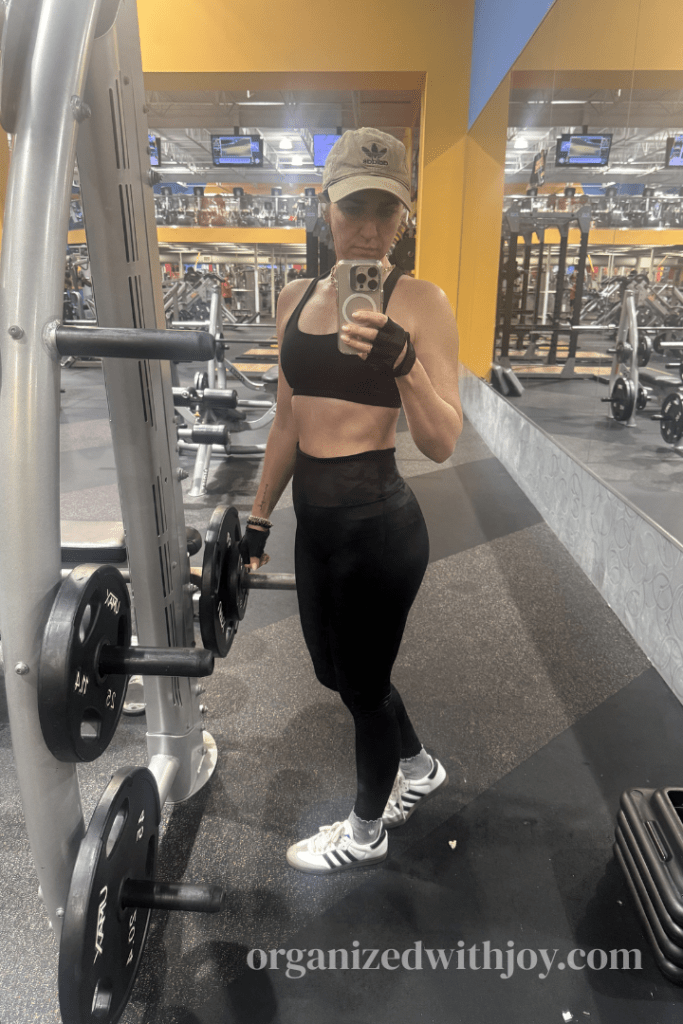
Letting go can feel hard. I have talked a lot about decluttering in my blog posts, and I have decluttered a LOT of stuff, sharing on my YouTube channel along the way. It can be hard to declutter physical possessions, but it is also hard to let go of old identities and old ways of thinking. It is easy to become attached to a certain identity, proclaiming: this is who I am. But we don’t have to accept that, we can work to change to become who we want to become, to become a better version of ourselves. But I recognize this isn’t easy. When we think of letting go, it can be scary. There is the fear of uncertainty and the “what if’s” creep in. It is scary to think of starting over. It is also difficult to let go of old ways of doing things that used to work for us, but no longer do. We resist the change just because it used to work, and even if we see signs that it is no longer working, we want to hold on. Exercise is a perfect example. When I was younger I loved running and used running as a way to stay fit. This worked for me for a long time, but now that I am in perimenopause my body responds differently. Intense workouts like that can spike cortisol, and when your body no longer produces estrogen or doesn’t produce as much, it can’t regulate the cortisol like it used to. Often this leads to belly fat which is so common for women in mid life. Now I do something different to help stay fit, I lift weights instead and keep my heart rate moderate for aerobic exercises. The comfort of the familiar can keep us stuck in a habit, routine, or lifestyle that is no longer serving us. Growth is uncomfortable, and it takes grit to be willing to feel that discomfort for growth to happen.
If we begin to feel like something is no longer working for us – whether that is a habit, routine, job, or relationship – we must evaluate why we feel that way. There are signs that you have outgrown something. One sign is that you will feel resistance toward things you used to enjoy. If something is no longer serving you, often you will feel that “meh” feeling about it. Another sign is that your progress stalls despite continued effort. If you see no forward movement, there is a chance you need to make a change. You might begin to see that you operate on autopilot rather than with intention. Once you see that you are going through the motions and not present in the moment, it might be a sign that it is no longer working for you. Lastly, you may just feel a misalignment, even if everything looks right from the outside. Your life may be good and fine, but there is a gut feeling that can happen when you aren’t aligning with what you are meant to do and be.
So, what does this look like practically? Start with an audit: what feels heavy, forced, or outdated in your life? Acknowledge what it did for you. Maybe you learned from that experience, relationship, or habit. Maybe it helped you to grow and change for the season it was working. Honor what it gave to you without clinging to it, then release it. Make a clear decision to move on. Don’t be lukewarm about it. What’s the saying: either poo or get off the pot. Then if you need to replace it with something new, implement the new, but recognize that some things don’t need to be replaced right away. Sometimes we need to sit in the empty space. Letting go does create space and capacity for the new. It makes space for creativity to flourish, for something to come in that is better aligned with who you are now or who you are trying to become. It creates space for new growth. You can’t receive what you don’t have room for. There is this idea of “intentional subtraction” which is just the practice of deliberately removing things from your life so you can create space for what actually matters. It’s the opposite of the usual mindset of “add more to improve.” Instead of coming up with more habits, goals, and commitments, you step back and ask: “What can I remove that’s getting in the way of clarity, energy, and alignment?” This isn’t about quitting something because it’s hard, but rather removing what is misaligned, outdated, or unnecessary even if it once served you

Growth isn’t just about becoming more, adding more habits and routines, it’s about becoming more true to yourself. Growth usually requires letting go. If you want space for the new, you must let go of the old. I really like the clothing analogy I referred to earlier. Or really just the idea of any physical space with boundaries. Our closet has a boundary, once it is full, there is no more space for new clothes – or new identities. We must let go of the old, to make room for the new.

 organized with joy