Today I wanted to share the 10 things I like to clean in each room for spring cleaning! To be honest, I don’t specifically “spring clean.” I choose one room in my house each week to deep clean and declutter – meaning, usually my whole house gets deep cleaned and decluttered every three months or so. But, each of these items on the list I clean (for the most part, read on for exceptions) each time I deep clean a room. Be sure to scroll to the bottom where you can find a printable PDF document with all of these items on a check list! You could print it out once and stick it in a plastic protective sheet and mark off each item with a dry erase marker as you go, or print it out each time you have a room to deep clean! Happy spring!!
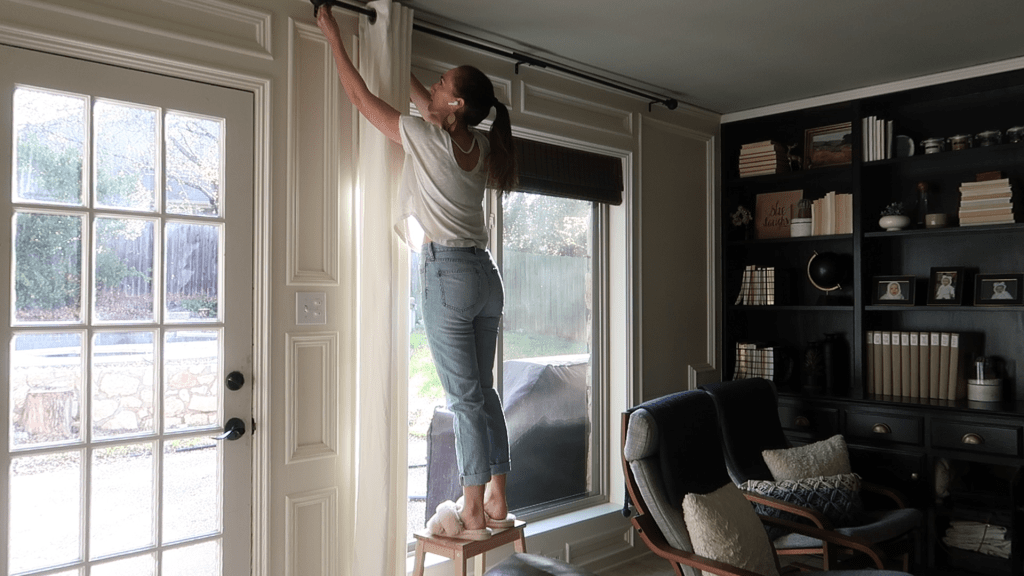
The first thing I like to do when deep cleaning a room is remove the drapes/curtains to wash or at least to shake out if they are not machine washable. Or even take them to the dry cleaners if you feel so inclined! At this time you can clean off the drape rods and finials as well. Remember when I mentioned the exceptions… I’m going to start with an exception right off the bat with this one. I don’t typically clean the drapes every single time I deep clean a room. I will do this once or twice a year.
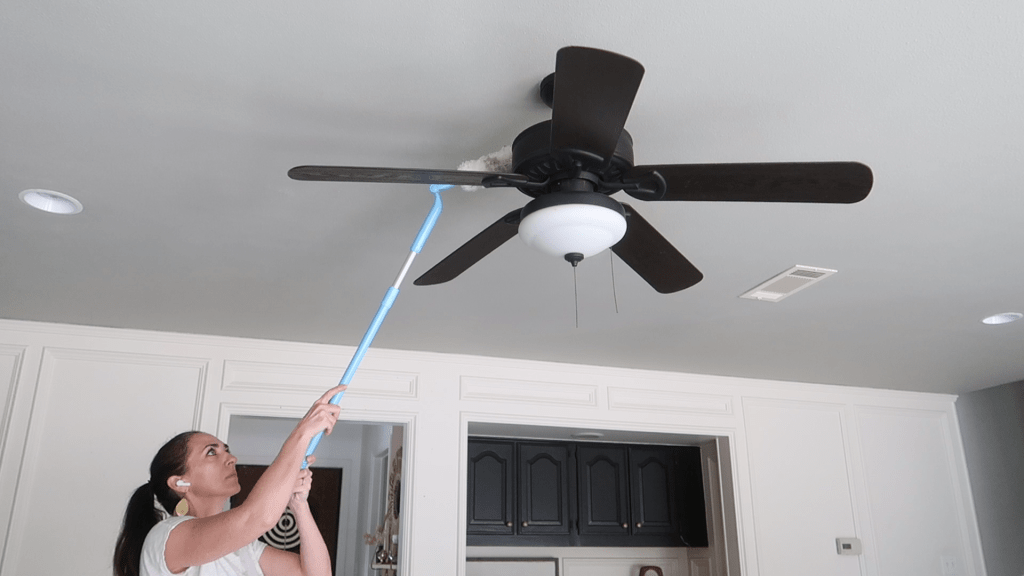
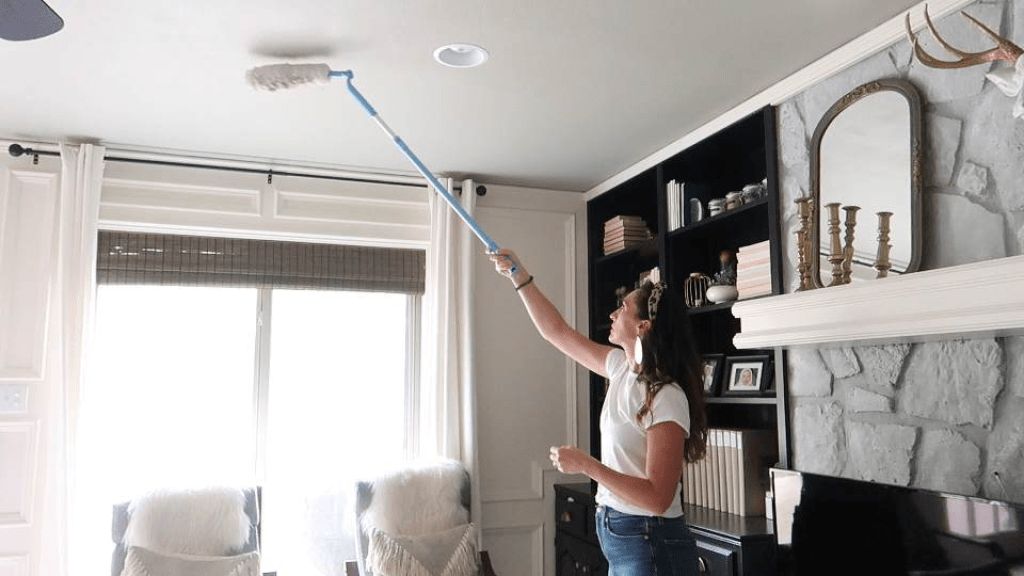
The next thing I clean is the ceiling fan or light fixture in the room. Ceiling fans especially are prone to collect dust. I have an e-cloth extension duster like this that I like to use to clean fans. After I use this duster, I will go back with an all purpose cleaning spray and paper towels to get the remaining dust. I like using the all purpose cleaning spray to make the room smell good!
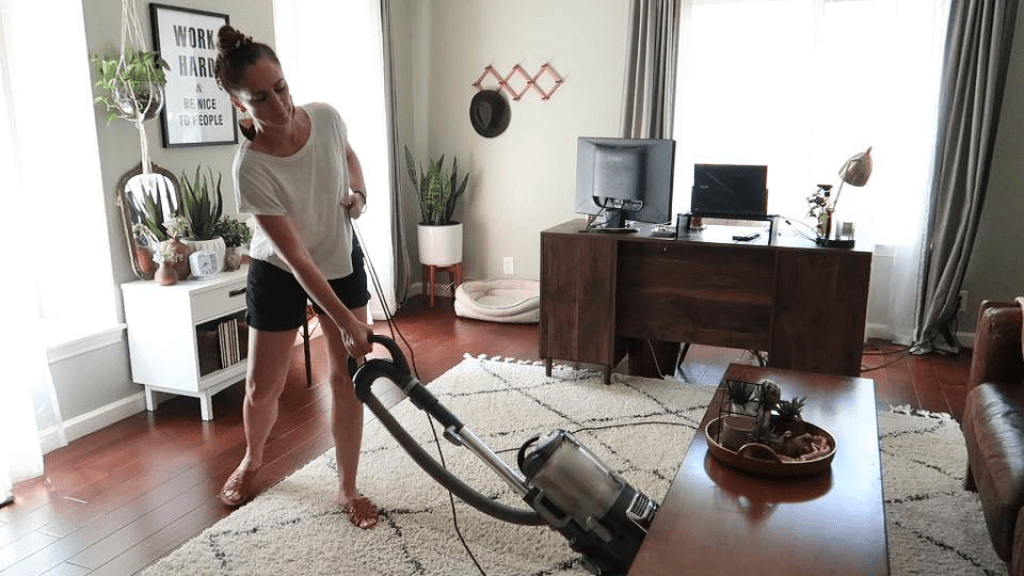
In addition to the drapes and ceiling fans/light fixtures, I make sure to vacuum the room, paying special attention to the edges and corners. I use the extension on my vacuum cleaner with the angled edger piece to get into the edges and corners of the room – something that doesn’t get done each time I vacuum a space.
Something else I do in each room when I am doing a deep clean is to dust the baseboards and clean the walls if necessary. We have a room with Wainscoting, and the trim definitely harbors dust which needs to be cleaned. I just use an all purpose cleaner and a microfiber cleaning cloth for this.Sometimes you just have to get on your hands and knees to get a space cleaned!
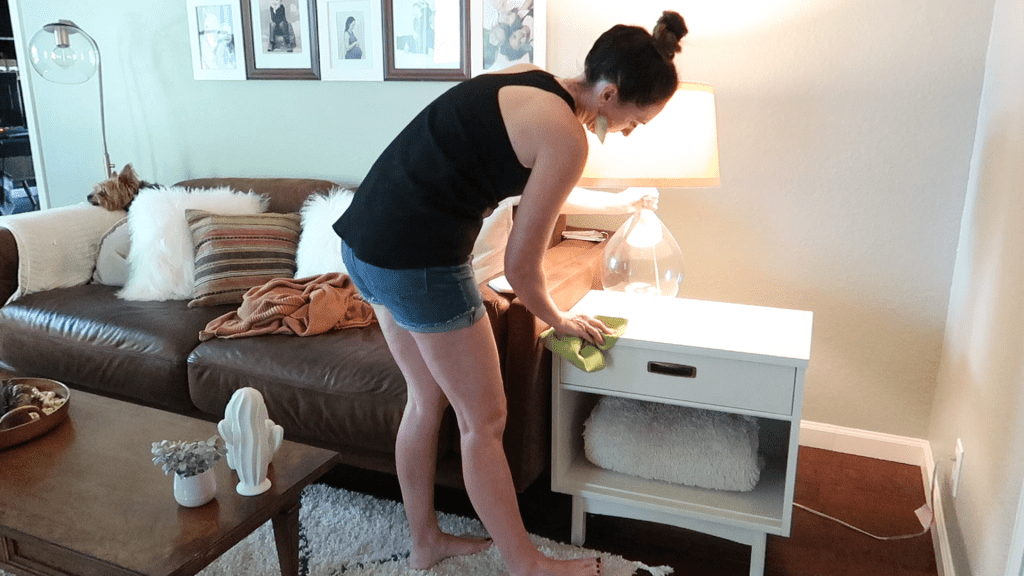
Next I will dust all of the horizontal surfaces in the room – shelving, dressers, entertainment centers, end tables, and anything else you may have which collects dust. Typically for wood surfaces I will use a specific wood cleaning product, and for painted surfaces I will use an all purpose cleaning spray.
I also like to be sure to clean the windows – at least the inside of the windows – and the blinds if that is applicable. I use a glass and mirror cleaner on the windows with a microfiber cleaning cloth, and I go back over it with a glass cleaning cloth – both I got from e-cloth. For the blinds, I use an all purpose cleaning spray and a microfiber cleaning cloth, however I have been wanting to get a specific blinds cleaning product as cleaning with the cloth can be very tedious.
In addition, I like to use my extension duster to clean the cobwebs off the ceiling whenever I deep clean a room!
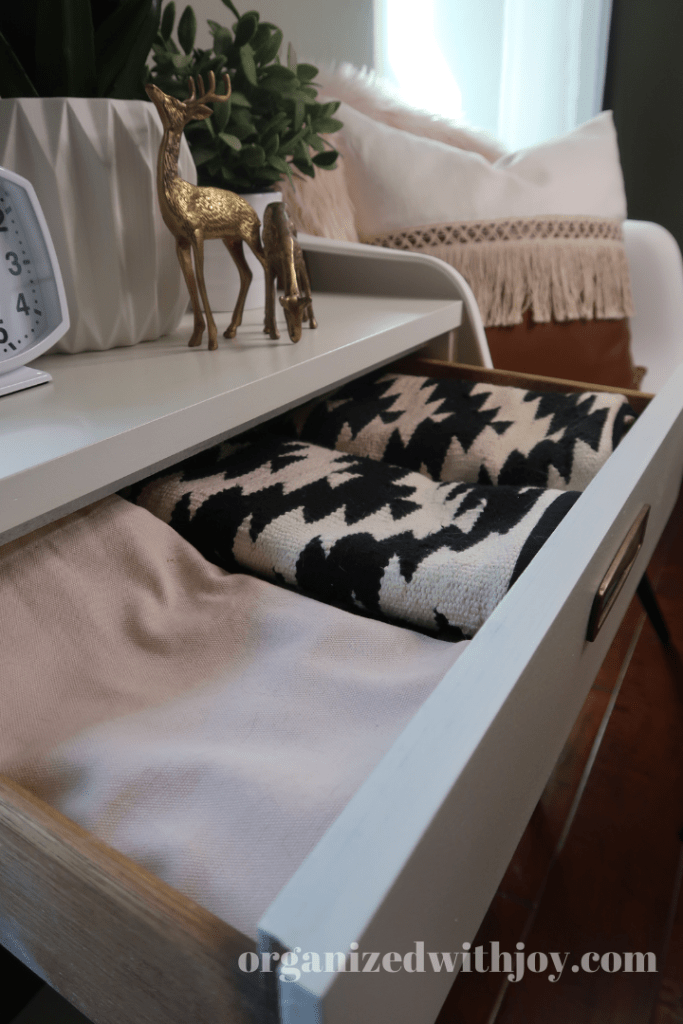
Next I clean the inside and outside of dressers and cabinets. I like to take everything out and declutter as I go. While items are out of the cabinets and drawers, I take the time to clean it out with an all purpose cleaning spray.
Like I mentioned, the next thing I do is declutter. It’s always good to go through items and get rid of anything you are no longer using or loving!
Lastly, I will mop the room if it’s wood or tile, and use a steam vacuum if it is carpet. It’s always good to get a deep clean, especially with carpets!
I hope this gave you some ideas for things to deep clean in one of your rooms today! Be sure to check out my Deep Cleaning Checklist printable if you need guidance while cleaning a room!
Today I wanted to share with you how I keep our home organized room by room! There are several different organization tools that are helpful in keeping your home organized. But, there are also some everyday practices that will help in keeping your home organized.
The first thing I wanted to talk about is decluttering. I won’t be-labor this point as I know I have several blog posts about the value in decluttering. When getting a space organized, there is no sense in organizing items that you no longer love or are no longer useful to you. I’m sure by now you have all heard of Marie Kondo’s Konmari method of decluttering. I don’t necessarily like everything about her methodology, however I do like the idea of decluttering by category. Some people get overwhelmed by pulling everything out in one category, so I suggest working one room or space at a time as well. Start with items that are easier to declutter – like kitchen items, which don’t have sentimental value and work your way up to sentimental items. Generally, the process of decluttering gets easier as you gain momentum. Also, it’s important to note that each room or space in your home will need to be revisited. Unfortunately, decluttering is typically not a one time event but rather a process as most homes continually accumulate items.
I wanted to talk a little bit about a system I learned many years ago from the book The Fly Lady. She has lots of great advice in her book, but the thing I have implemented into my routine is creating “zones” coordinating with different spaces or rooms in your home, and each week choosing one zone to deep clean and declutter. I have 12 zones in my home, and by choosing one zone per week my entire house gets deep cleaned and decluttered every three months. It’s not only important to stay on top of decluttering, it’s also important to stay on top of your organization systems as things can get misplaced or in disarray over time.
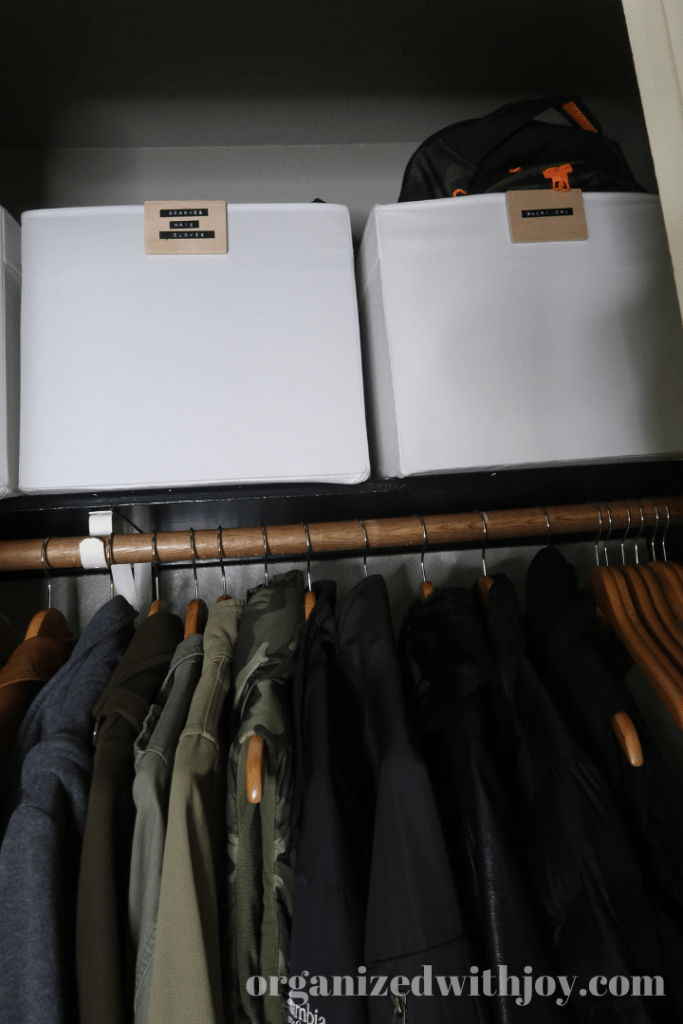
My number one advice for client’s is to have a place for everything. When each item in your home has a place, it makes cleaning up and putting things away more efficient and easy. I love to use bins, baskets, and lazy susans throughout my home to house items which are alike. For many of these bins, I use labels, making it easy for everyone in my family to know where things are and where they belong.
The first space I want to talk about is your entryway – whether it’s at your front door, back door, or both! Typically this is a “drop zone” – a place where everyone sets down their everyday items and takes off their shoes. You want to have organization tools which will accommodate this. Hooks for purses and backpacks, a shoe rack or baskets for shoes, a key holder for keys, and bins to hold things like hats, scarves, and gloves. Having a space for each type of item works well, or perhaps you can have a bin and or hook for each family member. These are items that are notorious for getting lost, however if you have a place for these items, each family member will know where they go and where to find their items.
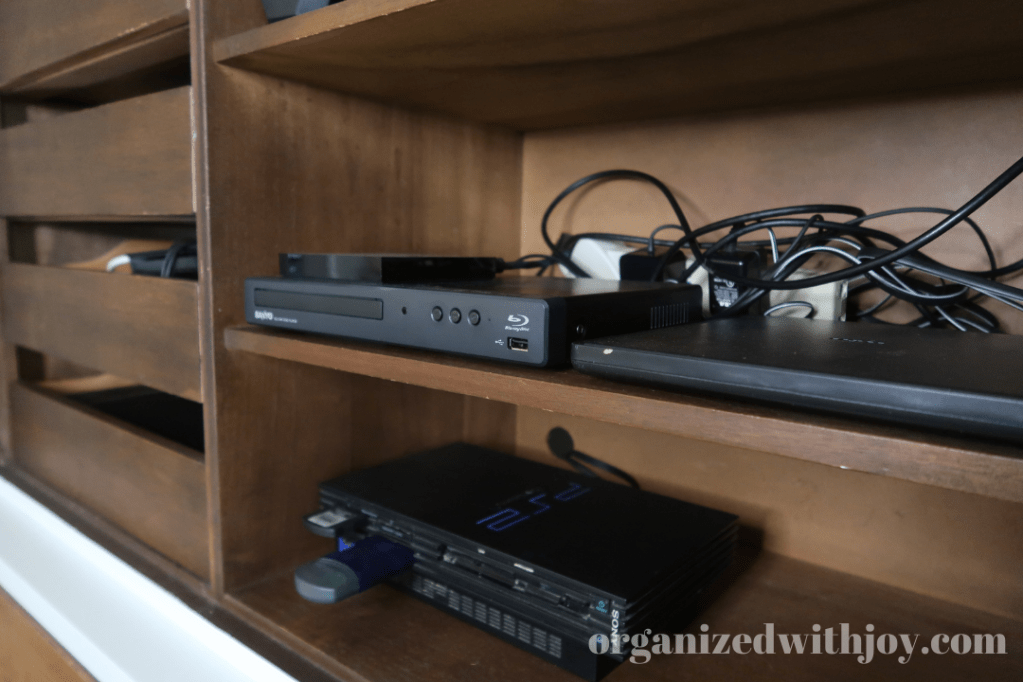
The next location I wanted to talk about is the living room/family room. In this space, it’s important to have functional furniture to store different items that belong in the room, such as game consoles, video games CDs, movies, remotes, and blankets. Once again, if items have a place, everyone will know where to find them. Blankets can be stored in an aesthetically pleasing way such as in a basket, on a blanket ladder, or draped across the sofa. If you’re like me and like to have a variety of throw pillows, you can choose to purchase pillow covers when possible, making it easier to store when not in use. In addition to this, if you like using different decor for different times of the year, find creative ways to store these items. I have a dresser in my office where I store all my extra decor that is not in season. I do have two large bins storing my Christmas specific decor, which I store in the attic. A trick I like is to use dual purpose decor. I use wood bead strings around my Christmas tree as garland, but when it is not Christmas season I use the beads as decor in other areas of my home. Also, you can find a lot of versatile “Christmas decor” that will transition into the winter season.
TV Console with space for Living Room items.I store extra pillow cases in our side tables in the living room.I store my extra home decor in a dresser in my office.
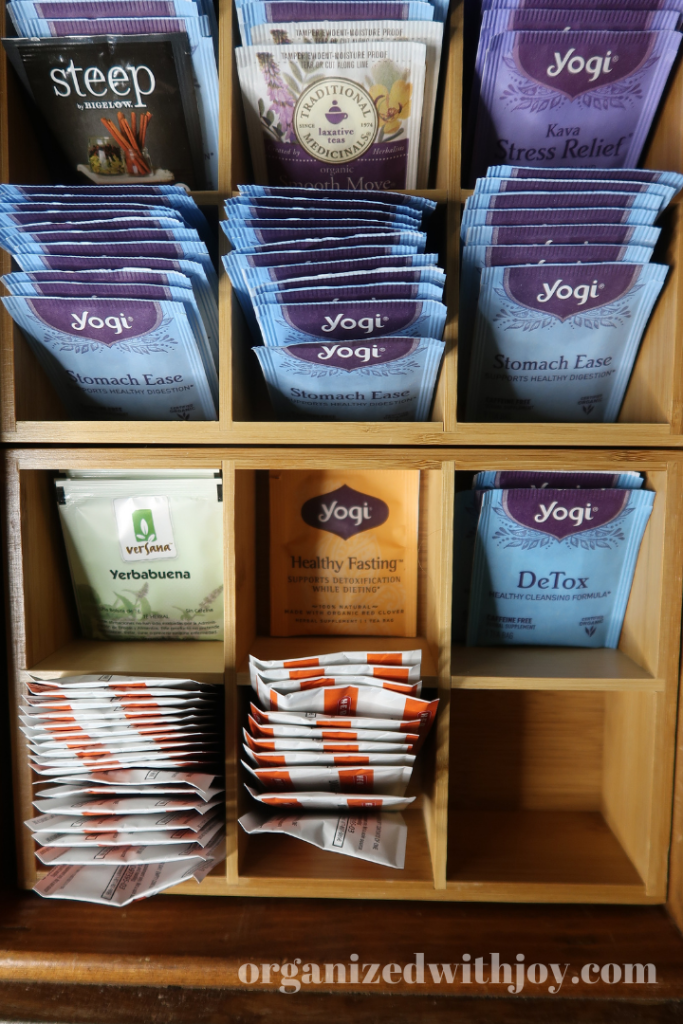
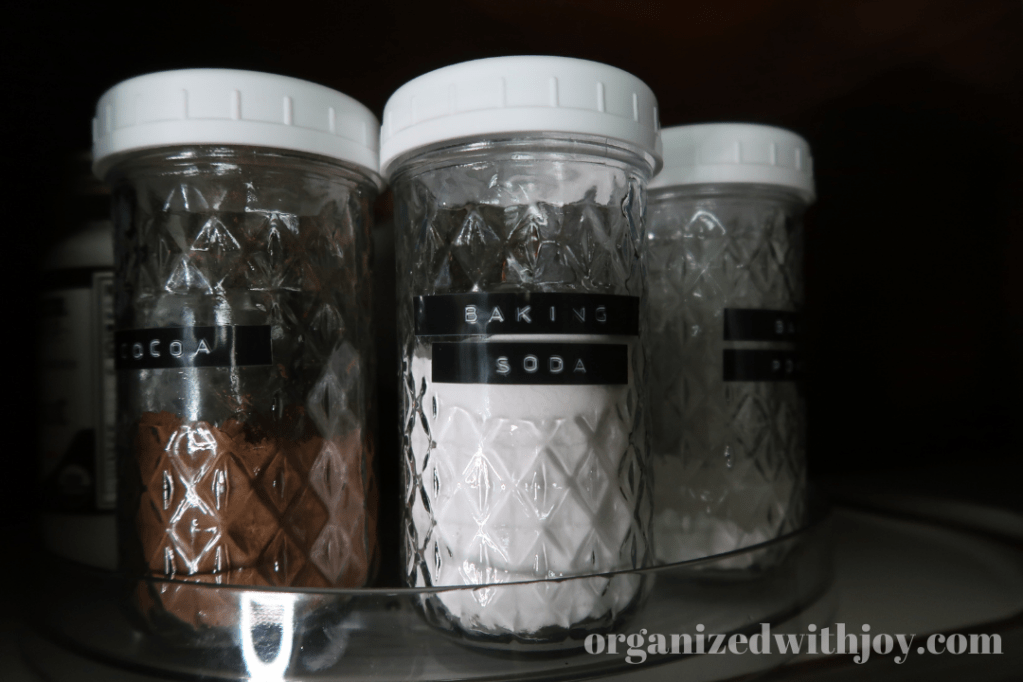
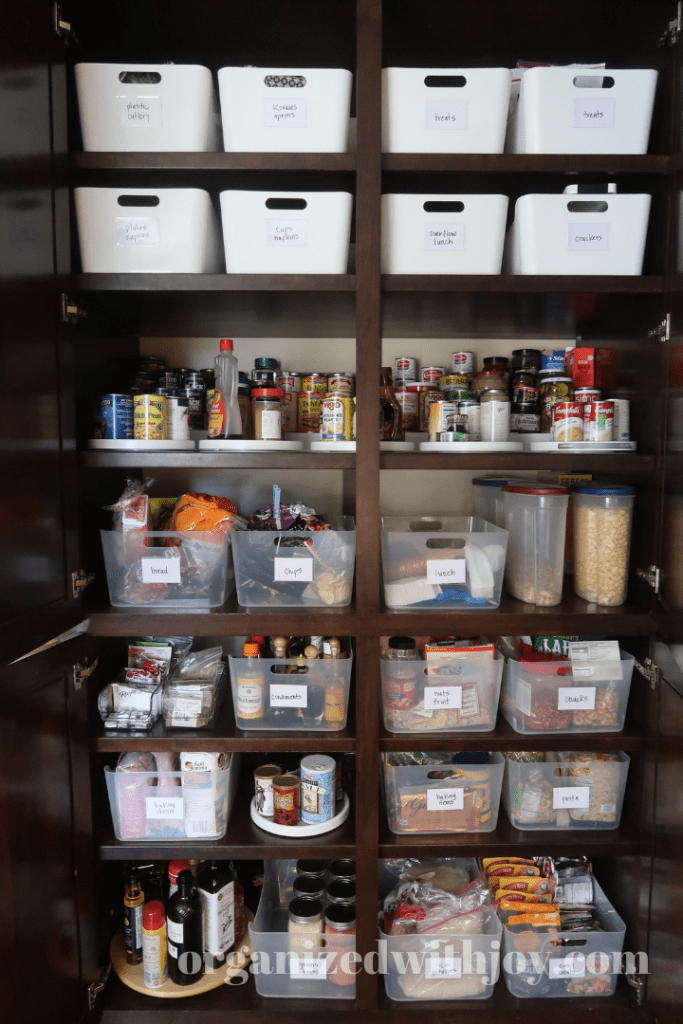
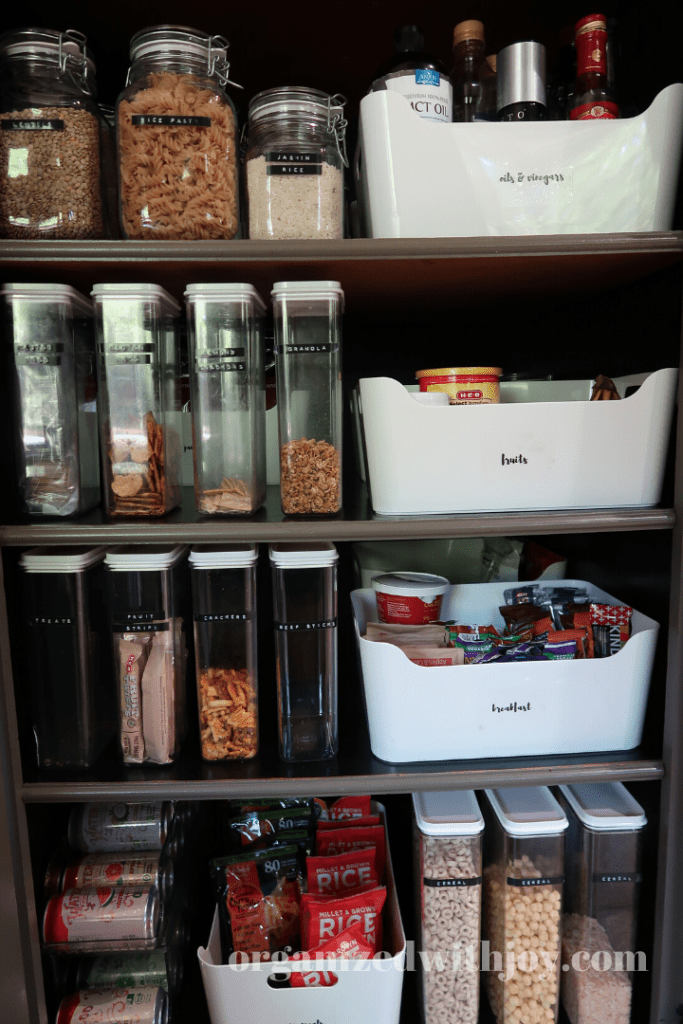
The next space I will talk about is the kitchen. This might be one of the most important places in the home to find an organization system that works well for you as it allows you to be more efficient in meal planning, getting groceries, putting away the groceries, and meal prepping. It’s helpful to have your kitchen organized in a functional way. Store items where you use them. I have a corner of my kitchen where I do most of the meal prepping, and that is where all of my utensils and dishes are stored. Organizing your pantry and refrigerator/freezer space by category helps to keep everything contained and easy to find. I have chosen a variety of bins, boxes, and jars to store items in my pantry. Taking pantry items out of their packaging and decanting items into streamline jars and bins is a more efficient use of space. Using labels will make it easy to put things away, and allow family members to know where items go. It also just looks more appealing! In the refrigerator and freezer, you can use bins to keep things in order, and again using labels so everyone knows where things belong. This also keeps your refrigerator more clean, so if anything spills or leaks, it is contained in the bin. Lastly, using drawer organizers helps to keep drawers neat and easy to maintain.
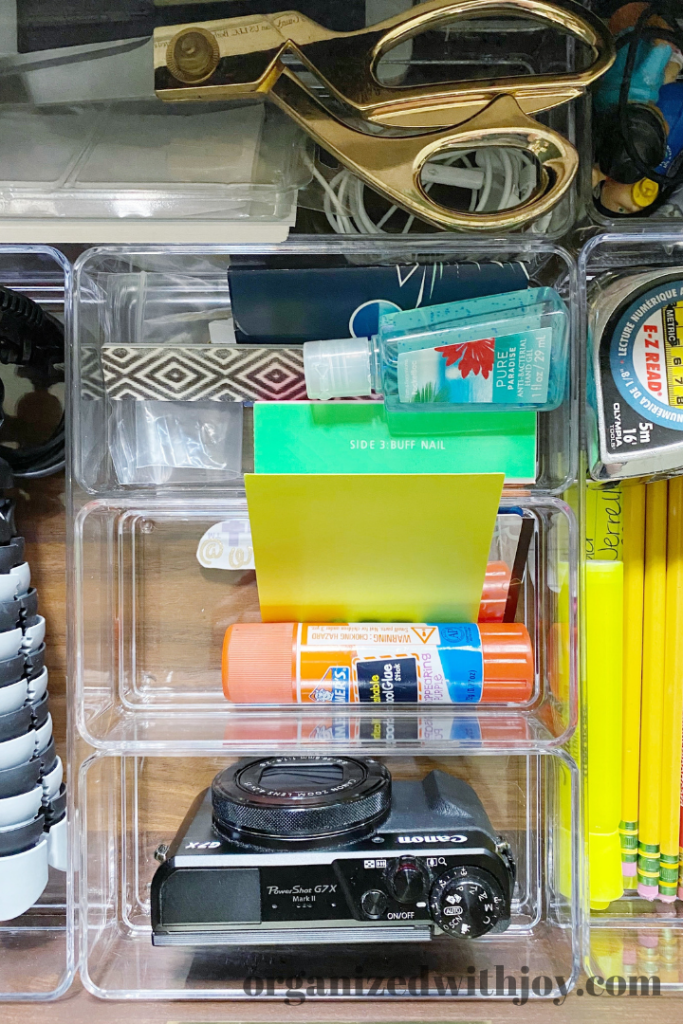
I also wanted to talk about the office. This is probably one of the most difficult spots to keep organized, primarily because often offices become overrun with papers. Again, organization systems help to keep everything in its place. If you have drawers in your desk, invest in drawer organizers, which can be fairly inexpensive. Having little compartments in your desk drawers to store all the little office type items will help to keep your desktop clean of clutter. Dealing with paper clutter can be time consuming and overwhelming! Definitely invest in some sort of filing system for important documents, whether that’s a filing cabinet built into your desk drawer, or some sort of external accordion style filing folder. Additionally, you can use an app like Adobe Scan, a document scanning app, to keep digital records of your paperwork, eliminating a lot of the paper clutter! In my opinion, it’s so much easier to get work done in a organized and tidy space!
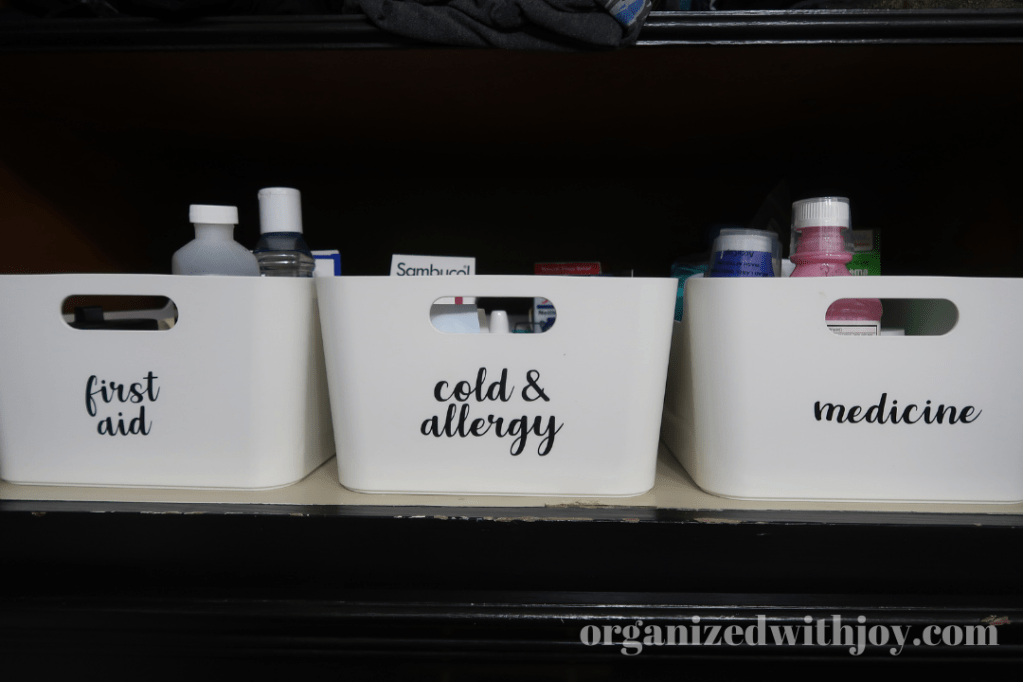
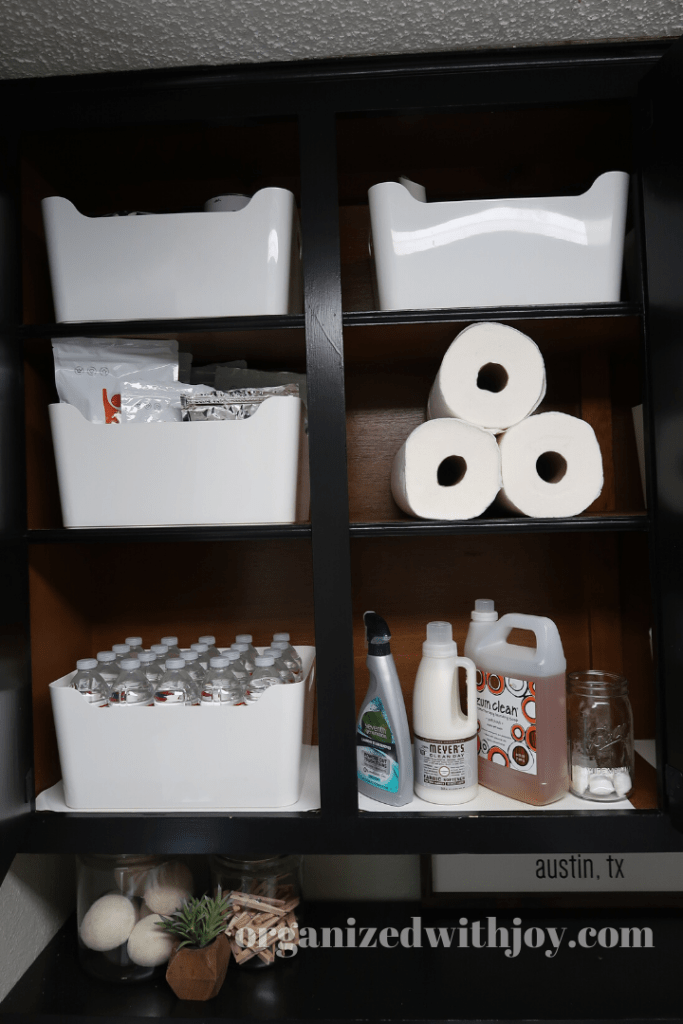
A couple of other spaces that often need organization systems are the laundry room and the bathroom linen closet. Having bins to house like items is definitely helpful in these spaces. I store all of our medicine in three separate bins which are labeled, making it easy for family members to find which type of medication they are looking for. Folding your sheets and towels in a uniform way will also help to keep your linen closet in order. I have a YouTube video where I show you the way I fold sheets so they will look neat in your cabinet! This might not work for everyone, but we own two bath towels per person, two hand towels per hand towel hook, and two sets of sheets per bed in our home. One for in use and one for in the laundry or in the cabinet. Having a system like this will cut back on clutter in this space.
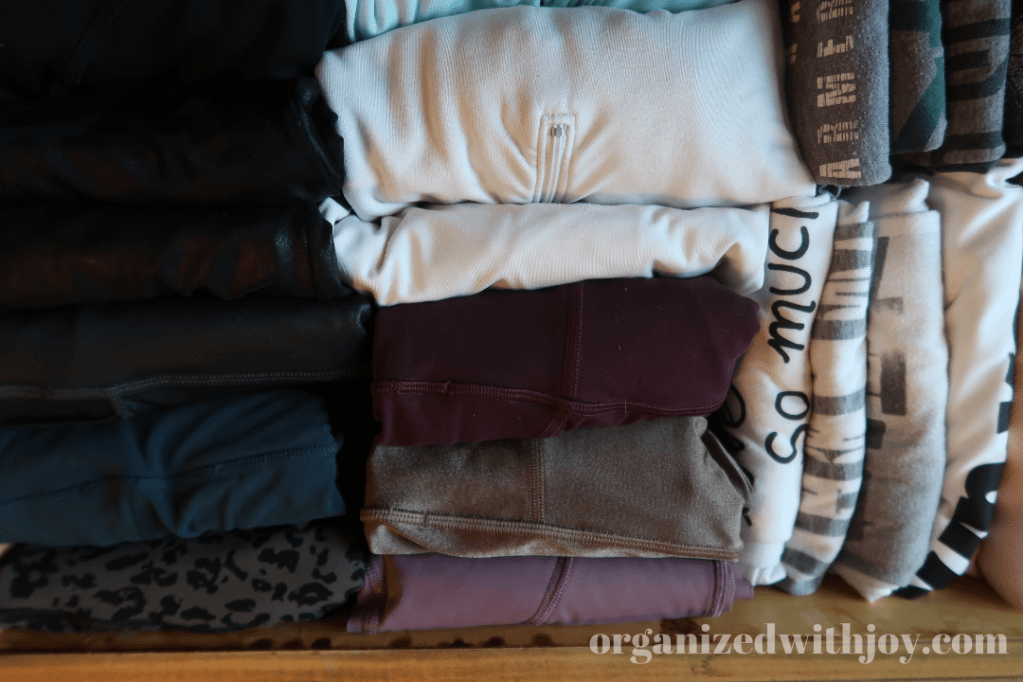
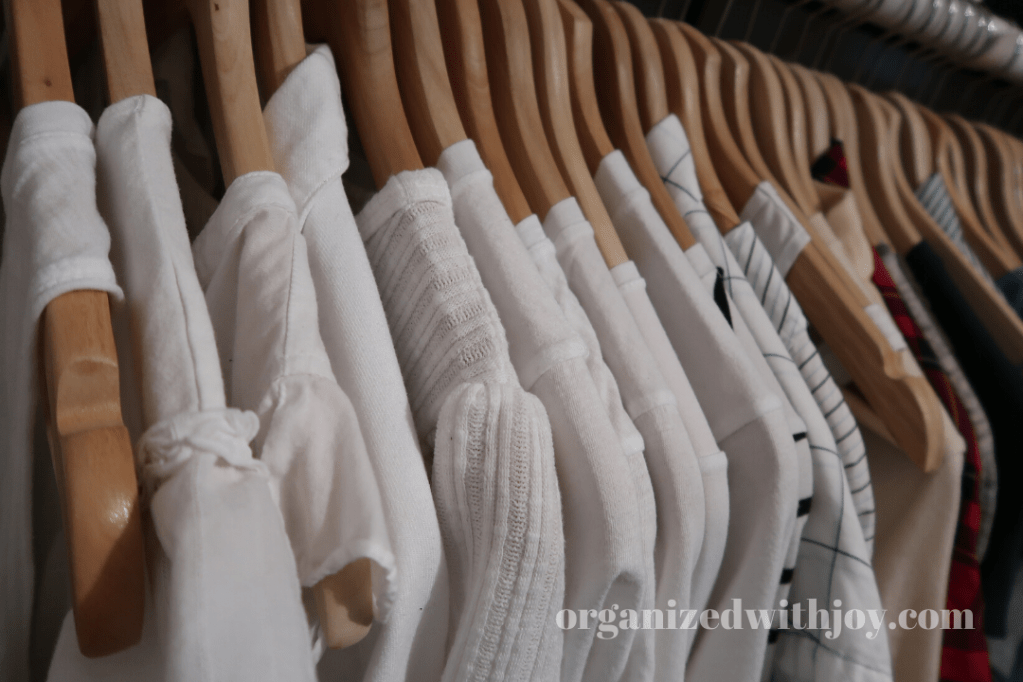
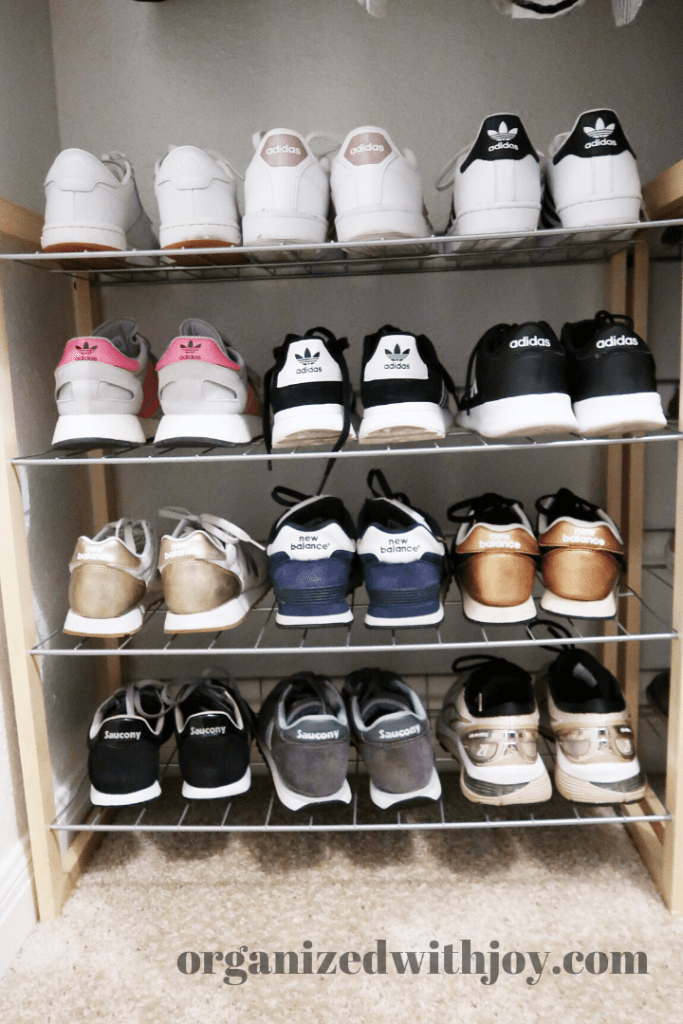
The final space I wanted to discuss is the closet and/or dresser. This is another space that can be hard to stay on top of as we often have a constant flow of items coming in. Again, it’s important to make it a habit of going through your clothing items and donating anything you no longer wear or love, anything that is too small or too big, or anything that has a hole or stain. One of the easiest ways to make your closet look more organized is to invest in uniform hangers. It’s up to you to decide how many! Everyone is different in the amount of clothing they have space for and want to own. Also, finding storage systems for shoes, off season clothing items, and anything else you store in your closet is important. As far as the dresser goes, I want to mention the Konmari method again. I have found using the Konmari folding method to be the most efficient way by far to store clothing. More clothing fits in the space when folded this way, it’s easier to find what you are looking for, and once you learn to fold in this way it is very efficient to get your clothing folded. Once again, I have a tutorial YouTube video on how to fold Konmari style!
I hope this gave you some ideas or information on how you can get your home organized and functioning efficiently today!
Today I wanted to share with you 10 common assumptions about professional organizers and if they are true or false. Obviously this is from my experience and perspective, so other professional organizers may answer differently, but I thought it would be fun to share with you my thoughts!
{ONE} We want you to get rid of everything. FALSE. This is not at all true. We recognize that everyone needs and wants a different amount of items to bring satisfaction and fulfillment to life. We are all in different life stages, requiring different amounts of things. The most important thing is that you get rid of the items that are no longer useful to you, or no longer bring you joy.
{TWO} Every space in our homes is organized or perfect. FALSE. Most professional organizers likely have a “Monica’s Closet” (for you who are fans of the tv show Friends!) I have a few spaces in my home that seem to get disorganized easily or pile up with stuff. We have an attic crawl space, a storage closet in our garage, and the desk in our kitchen which all get out of control from time to time. Truthfully, organization is not something that is once and done. It is a constant process.
The next three assumptions are similar but separate assumptions…
{THREE} We judge you for your disorganization. FALSE. This is certainly not true! We understand that not everyone has the time or ability to easily organize a space. We recognize that you likely hired us because you want your space to be organized but don’t know where to start or how to efficiently do it. We don’t judge your disorganization, and think it’s amazing that you took the step to hire someone to help you get organized!
{FOUR} We judge you for how much you own. FALSE. Like I mentioned with number one, everyone has different needs and wants for how much they own. And everyone is in different life stages, requiring different things. I will certainly organize any amount of stuff, as long as it fits in the space! My only rule is that we do purge any items that you are no longer using or loving because it’s silly to organize things that you no longer want or need. My goal is that when I organize a space, everything has a home!
{FIVE} We judge our friends and family member’s homes. FALSE. This is also false! Most of the time when I go into someone’s home, I experience how THEY make me feel not how their home makes me feel. Everyone has a different comfort level when it comes to clutter and cleanliness. While I would not like clutter in my own home, I don’t judge other people for clutter in their home because I don’t have to live there!
{SIX} We are perfectionists with attention to detail. TRUE. I will have to say, this assumption is true. I like to call myself a “recovering perfectionist” because I feel like the word perfectionist has a negative connotation. I don’t want to be the type of person who has high or unreasonable expectations on others. I’m learning that sometimes good enough is good enough!
{SEVEN} Organizing comes naturally to us, so it’s really easy for us. TRUE + FALSE. This is true and false. I think there is a natural component to the ability to organize – whether it’s inborn or we are taught to keep our things tidy and to have a place for everything. However, I am not always motivated to organize, declutter, or clean. Also, some projects are challenging and take a lot of thought and time to complete, so while it might come naturally, it’s not always easy.
{EIGHT} Our homes are always tidy. FALSE. This is definitely not true. In my home, I have 5 people who are currently living here. There are constantly things that need to be cleaned up or tidied. Where people live, there will always be things to clean!
{NINE} We are minimalists. FALSE + can be TRUE. This can be true, but certainly not all professional organizers are minimalists. Everyone wants a different amount of things to feel fulfilled in life. Some people like an abundance and some people don’t. Being a minimalist makes it easier to keep things clean and organized with minimal effort, however that doesn’t mean all professional organizers are minimalists.
{TEN} Our kids are also organized. FALSE. Just because we are organized, does not necessarily mean our kids will be organized too. I have two kids who are more on the disorganized side, and one who is more on the organized side. I have taught all three of them techniques to keep their spaces neat and organized, but not all of them follow through. Which is perfectly fine since they are each their own individuals and need to learn to navigate life, and find what works for them!
Well, I hope you found this post interesting or entertaining! Let me know if there are other assumptions you have about professional organizers!
Sometimes while talking to clients or friends they either allude to or say outright that their space can’t be organized. Recently one of my friends hired me to help with her pantry. She came over to my house to see how I had organized my own pantry, hoping for inspiration or maybe to gain some trust that I could in fact get her pantry organized? She said that I seemed to be more of a methodical cook than her, and she wasn’t so sure her pantry could function like my pantry. She still reluctantly hired me as I encouraged her that I was up for the challenge! In the end she was surprised that she did in fact have distinct categories in her pantry! Several weeks after I was finished with her pantry, she let me know how much easier it was to order and put away groceries now that her pantry had a system. She was shocked and surprised that there was a sustainable organization system that worked for this space!
This is my pantry
I share this story because I think people often think that their space (or spaces) cannot be organized. I told my friend that is why she needed to hire me! I had a vision that she couldn’t even imagine. We all have gifts and talents, and my brain just processes things in light of order. Organizing projects can feel overwhelming at first. Even for me, sometimes I feel overwhelmed before starting a project, but I know you just have to take things one step at a time no matter how big or small the project is!
Here is my friend’s before pantry picture
The first step to getting any space organized is always to declutter. You don’t want to organize items that you no longer need, use, or love.
The next step is to identify categories in the space. The best way to efficiently organize a space is by category. This is why I am a big fan of bins. This will help contain items for each category, making it quick and easy to put items away in the future.
After you have decluttered and identified your categories, you will need to measure your space and then go on a hunt for bins, boxes, baskets, or lazy susans that will fit the space and your style. This can be tricky at times. When we were looking for bins for my friend’s pantry, we were balancing a multitude of specifications. We were looking for bins of a certain size, style, and price point. You have to balance all of these specs and give weight to the importance of each. Just know that this can take time! You may have to scour the internet as well as stores in your local area. It’s not always a one stop trip! Don’t forget your labels too!
Next is the fun part!! Or at least for me!! You will need to remove everything from the space, and I always like to give it a good clean while the space is empty. Then you can begin organizing things into categories. Label each box making it easy to find homes for each of the items.
Organizing a space is certainly not a one size fits all, and it can’t always be done as quickly as a Home Edit Netflix episode. Be realistic, and have your expectations set so that you are not disappointed in how long this process can take.
If it all feels too overwhelming and you can’t hire a professional organizer, enlist a friend to help! Oftentimes it helps just to have accountability even if they are just as clueless as you!
Here is what her pantry looked like after!
Here is the YouTube video I made in conjunction with this blog post
Raise your hand if there are areas in your home which you keep putting off cleaning? There are several spaces in my home that I tend to forget to clean, I put off, or it’s just not in my regular cleaning schedule. Some of these areas I have incorporated into my regular cleaning schedule, but there are other spots that I will notice how dirty it has gotten and decide I can put it off no longer! Today I wanted to share with you 10 spaces you may be forgetting to clean.
The FIRST area is ceilings. Oftentimes we neglect to clean the cobwebs from our ceilings. We may notice them right before we are ready to host a big event in our homes, then frantically clean ALL the ceilings, but typically day to day we don’t notice dirty ceilings. I struggle to clean our ceilings because most of them have popcorn texture, making it very difficult to clean without being rained on by ceiling texture!
SECOND, another common overlooked area is ceiling fans and light fixtures. I have built into my cleaning schedule cleaning these things whenever I deep clean a room, but since they are somewhat out of site (like the ceiling), it can be out of mind and you don’t realize how dusty the light fixtures and ceiling fans have become.
The THIRD item that may not get cleaned often is drape or curtain rods and the drapes/curtains themselves. I just use a multi-purpose cleaning spray and microfiber cleaning cloth to clean the drape rods off. You will definitely need to read the tags on your drapes to see the best way to clean them. I have some drapes in my home that I wash in the washing machine, and others that I just shake out the dust outside.
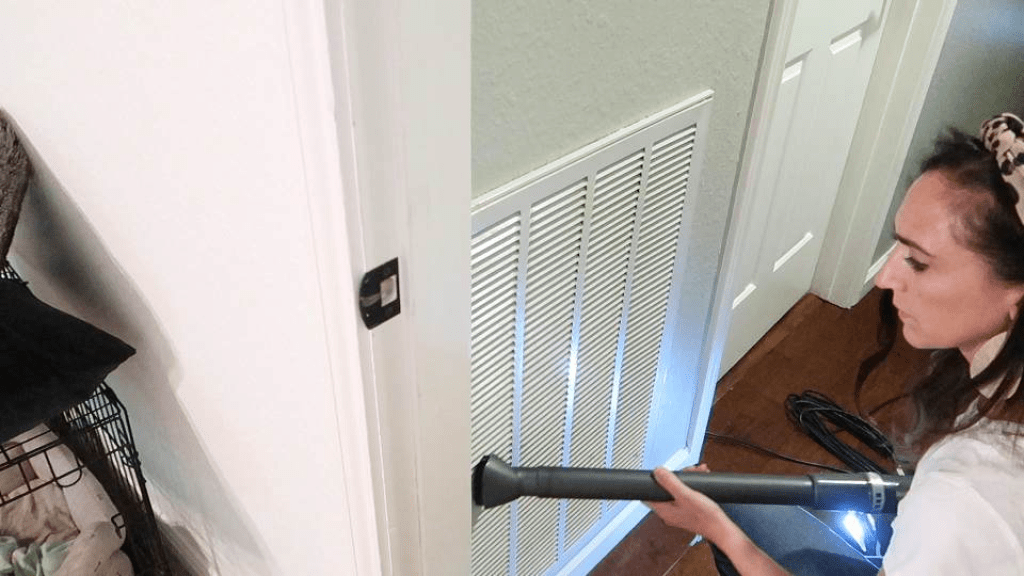
The FOURTH area that we may forget about is our air vents, and along with that would be changing our air filters. We are so bad about remembering or having a schedule to change our air filters. I know there are some subscription services that will send air filters to you automatically at the duration you choose, which could be a good option so you don’t have to remember. I like to vacuum our air vents and clean them with a multi-purpose cleaner every once in a while, because they certainly get dirty!
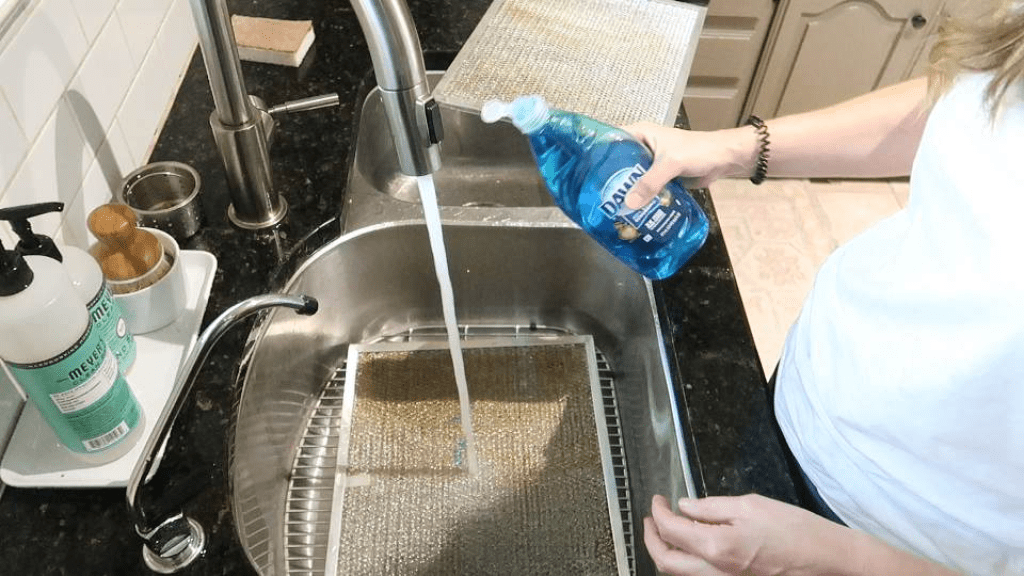
The FIFTH space that may get overlooked is the vent screens in our kitchen exhaust fan above our stove top. These can get particularly dirty because of all the grease and food particles that get pulled in through the vent. I don’t typically use Dawn dish soap, but I have it on hand to clean really greasy areas. I soak mine in hot water with the Dawn dish soap and that seems to cut through the grease. Alternatively, I have heard that you can wash them in your dishwasher as well.
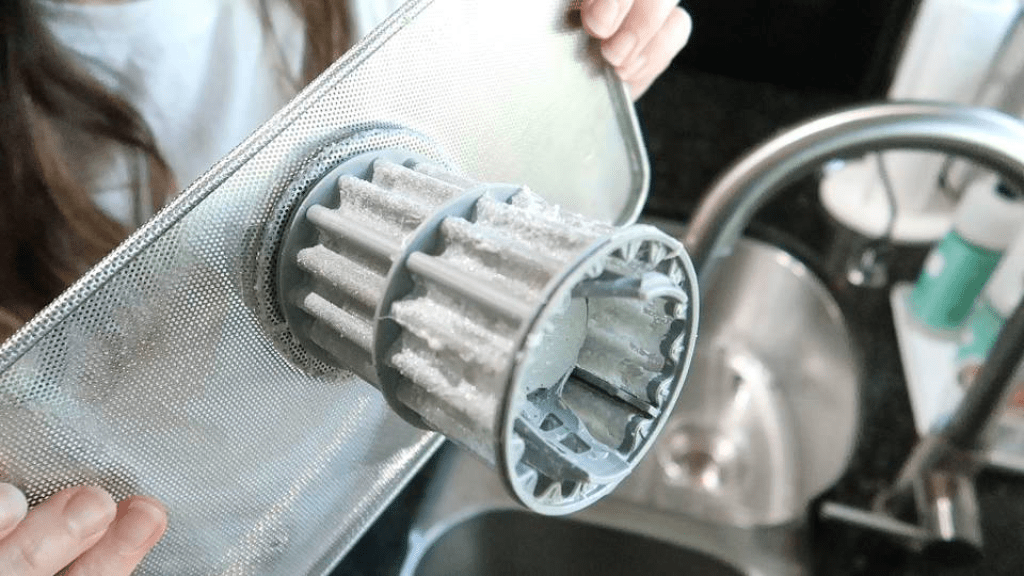
Speaking of dishwashers, the SIXTH item is the drain screen at the bottom of your dishwasher. It’s important to clean these as they can get clogged causing your dishwasher to have trouble draining. The last time I cleaned mine, it actually wasn’t all that dirty, but it might be because we have had drainage problems with our dishwasher in the past, so I like to stay on top of keeping it cleaned!
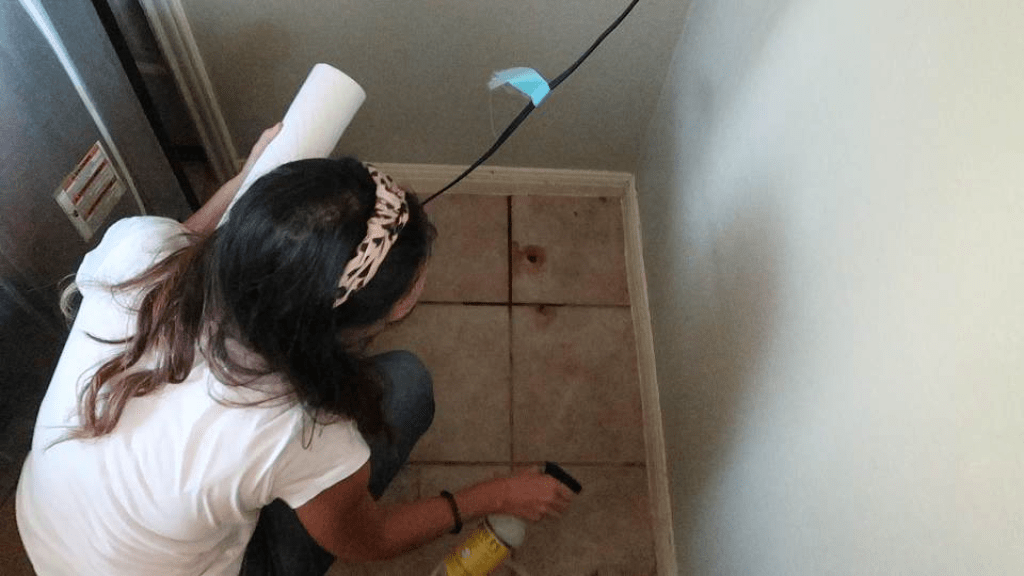
The SEVENTH place we may forget to clean is under large appliances, like under the refrigerator, oven, or washer and dryer. Luckily for me I have built in ovens, but I am so bad at cleaning under my refrigerator. It gets to the point where I can see how dirty it is and then I know I need to deal with it!
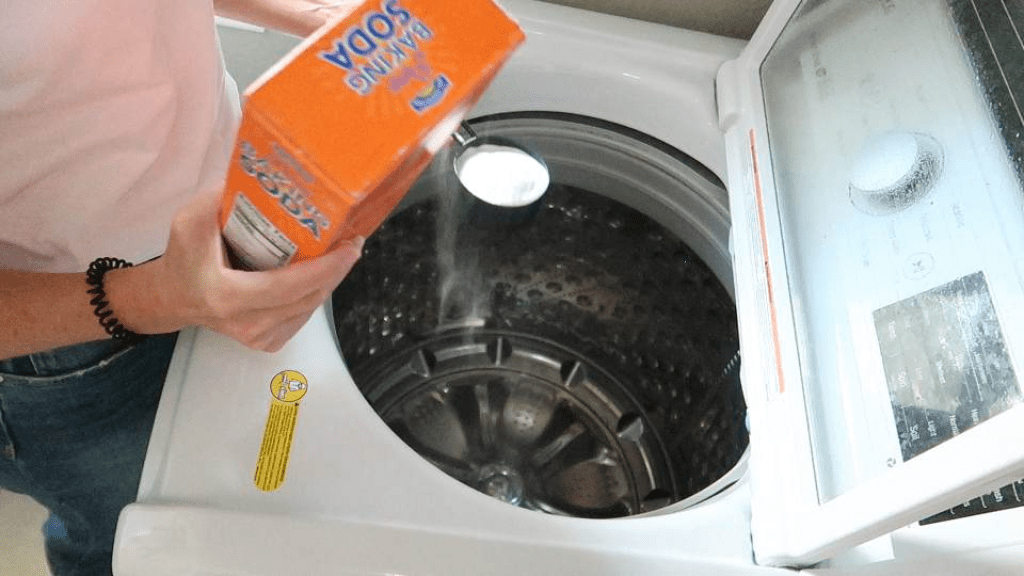
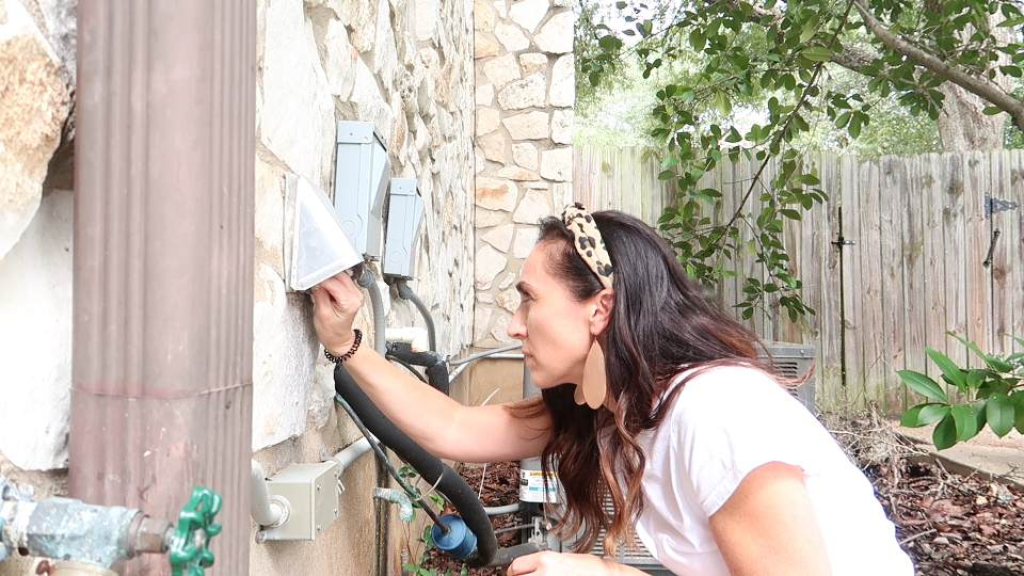
The EIGHTH space we might forget to clean is our washing machine. It’s good to clean your washer every once in a while in order for it to perform at it’s best. I did a quick Google search on how to clean your washing machine with natural products and the first item that popped up suggested running a cycle with 2 cups of vinegar on hot, followed by another cycle of ½ cup of baking soda on hot. My washer actually has a “tub clean” setting. In addition to the washing machine, the dryer vent should also be cleaned out periodically. It can become a fire hazard to allow lint to build up in the dryer vent. You can access the exterior dryer vent by going to the outside of your home, and reaching up into the vent to pull out any excess lint. You can also detach the dryer hose from the inside to clean in from the inside as well. Just be sure you have some dryer hose tape or aluminum tape on hand to reattach it.
The NINTH area that may need attention is your bathroom sink drains. There are simple tools available on Amazon to remove hair from the drain. You can also clean the cap to the sink drain at this time as it also gets dirty with build up.
Lastly, the TENTH thing you may be forgetting to clean is your light switch plates. These are probably the most touched area in your home, so to prevent illness from spreading it’s good to clean these regularly with some sort of antibacterial wipe or spray. When my kids were little, I would enlist their help by giving them a container of antibacterial wipes and had them go around and wipe down all the light switches. I think they thought it was fun, so win-win!
Well, I hope this gave you some ideas of places you can get clean around your home that you might have been forgetting about! Fall is a great time to get everything clean and ready for the upcoming holiday season!
Here is the YouTube video I made in conjunction with this blog post!
I think most people would say they would like to be more organized, or they would like to be an organized person. Friends and family often ask me how I stay organized. They may even comment that I’m so lucky to just be naturally organized. People who seem naturally organized really just implement habits in their lives that lead to an organized life. Today I wanted to share with you 10 habits of people who are organized.
The first habit is that they have a place for everything. The number one advice I give to people who want to get organized is to have a place for everything. When everything has a place, over time you don’t even have to think about putting things away. Your brain makes neural pathways as you repetitively put the items away in the same location. Eventually you do it as second nature. Also, if something does not have a home, it just continues to float around your house and every time you use that item, you must think about where to put it down when you’re finished using it.
In addition to having a place for everything, organized people actually put things away in their place after they are done using it. I call this the “one touch rule.” When they are done with an item, they immediately put it back where it belongs. They don’t drop the towel on the bathroom floor, or kick off their shoes wherever they want to take them off. A great example – and a problem place for many people – is the mail creating paper clutter in that dreaded drop zone where everything seems to pile up in your house. Someone who is organized has a habit of immediately dealing with the mail. They make it a habit to get the mail when they have the time to go through and discard junk mail, pay bills, and file papers that come through the mail.
In order to be able to deal with things like mail, functional systems must be set up and used. An organized person has these systems, which they continue to tweek until it works well for them. They have a paper filing system, a place for shoes, hooks for backpacks and jackets, a location where dirty laundry goes (and family members know this as well), and any other organizing bins for everyday used items.
Along with functional systems, organized people have daily routines set up. Having routines will allow you to get things done almost without thinking about it. Not only general routines like exercise, daily Bible reading or meditation, and getting up and going to bed at approximately the same time each day; but also cleaning, decluttering, and organizing habits. We all have a fairly consistent inflow of things into our homes, whether it’s junk mail, kids artwork, or gifts. Having routines set up to deal with the inflow and the organic daily messes that are created, help to keep you organized.
Another habit of an organized person is that they are constantly decluttering. Like I just mentioned, we all have a constant inflow of items into our homes. No matter how minimalist someone appears to be, there is still a need to declutter items from the home.
To help make the decluttering process a bit easier, another habit of an organized person is that they are intentional about what comes into their homes. Some things we don’t have control over – mail sent to us or what our family members bring into our home is out of our control. However, an organized person closely evaluates their purchases to decide if the items will add value, particularly in the long run.
Along those same lines, organized people only own what they use and what they love and declutter the rest. The less stuff we have, the less stuff we have to organize. The less stuff we have to organize, the easier it is to be and stay organized.
Another habit of an organized person is that they keep lists. Keeping lists for different aspects of life help to keep things organized. If you get ideas or to dos out of your head and onto paper (or digitally if that is your thing), your head is clear and you won’t worry about forgetting anything. It’s great to keep separate lists for different aspects of life – a work to do list, a daily to do list, a long term to do list, and an ideas list to name a few.
Organized people create deadlines for themselves. Oftentimes we organically have deadlines – whether that’s for work, school, or things that must get done related to our children or our personal lives (like appointments, preparation for events, etc.) When an organized person doesn’t have a set deadline – like with home projects or cleaning, they make deadlines for themselves. Having a deadline helps motivate you to get tasks and projects done. Of course there is always room for grace when unexpected things come up!
Lastly, organized people don’t procrastinate. Oftentimes people put off decluttering, putting things away, or everyday tasks. People who are organized, deal with things immediately, and then tasks don’t pile up and get to the point where they are overwhelming. It’s easier to stay on top of things when we don’t procrastinate.
I hope this gave you some practical tips on how you can become a more organized person. It’s never too late to make changes in your habits!
Here is the YouTube video I made in conjunction with this blog post.
Today I wanted to share with you common reasons we tend to hold onto clothes, and some ideas for letting go. It can be overwhelming to downsize our wardrobe, especially if we are not in the habit of purging items from our closet and the job has gotten out of control. The best advice I have if you’re feeling overwhelmed by a decluttering project is to take it in bite size pieces. Choose one drawer a week to go through, or set a timer for an allotted amount of time. Oftentimes getting started is the most difficult part. Once we start, we have momentum to continue forward.
{{ONE}} We feel guilty about the amount of money we spent on the items. This is probably the number one reason we find it hard to declutter clothes – and really any items from our home. It can be difficult to just give away items that we have spent money on. If the items are in relatively good condition, an alternative is to sell these clothes. You could choose a consignment platform like Poshmark (my go-to), or Mercari. You could send it to Thread Up if you don’t want the clothes just sitting in your home as you wait for them to sell, or you could bring them to a local consignment shop to get some of your money back. You won’t make as much money with Thread Up or a consignment shop, but then the clothes are out of your house. If you have enough items in general that you are wanting to get rid of, another option is to have a good old fashioned garage sale. I have found it much easier to let go of items that I am on the fence about when I can make some money back. Lastly, if you have taken a basic economics course, then you learned about “sunk cost.” Basically, sometimes we make poor financial decisions, but keeping the item doesn’t get us the money back. If anything, every time we see that item we think – either consciously or subconsciously – that we spent money on that, but no longer love it/want it. It might be better to just get it out of our field of vision!
{{TWO}} We think we might lose – or even gain – weight. Sometimes we hang onto clothing items that used to fit us, but no longer fit because we have gained weight. We hold onto them as though it was an incentive to lose the weight to get back into that size. Or perhaps you have the opposite problem where you went through a weight loss journey and you’re concerned you will gain the weight back. Either way, I personally don’t keep items that are too big or too small. It can be discouraging to have that pair of jeans two sizes too small sitting in the back of your closet. Instead, perhaps you could use the incentive of purchasing new items when/if you do lose the weight. And if you went through a weight loss journey, it could be cathartic to get rid of all of those large clothes believing you WILL maintain the weight you are at currently. Certainly there are exceptions. If you are expecting a baby, you will likely need different sizes in your wardrobe to account for different stages of pregnancy and postpartum.
{{THREE}} We have sentimental attachment. This is a tough one. It may take time to be ready to let go of some of these items. When beginning the process of decluttering, I agree with Marie Kondo, it is wise to leave sentimental items until the end. This gives you momentum, and you also begin to “learn how to declutter.” You begin to feel more confident in your choices to part with things. If you have things like school or sports team t-shirts that you don’t want to let go of, consider having a quilt/blanket made out of the t-shirts/jerseys so you can still appreciate and enjoy them without having a box of them stuffed in the back of your closet. Other items that have sentimental value could be displayed in your home so you are able to appreciate them. Get a shadow box for that special jersey, or the outfit you brought your child home from the hospital in. Find a way to display/enjoy it, instead of continuing to allow these items to sit in a box in a closet or attic space. Perhaps you could pick your favorite few – maybe you don’t need to keep an entire tote of baby clothes from when your children were babies. Choose a couple of memorable outfits. Or perhaps you can keep a couple of school t-shirts instead of 13 from every year of school from kindergarten through 12th grade!
{{FOUR}} We don’t have time/don’t want to spend our time this way. I understand this. Honestly, in the end, it comes down to what is important to you. If you are okay with and not bothered by overflowing closets and drawers, then you do you. But, I would imagine if you’re reading this post, you are interested in paring down your wardrobe. As I mentioned, you don’t have to do the Konmari method and pile all your clothes from every drawer and hanger into the middle of your room. You could focus on a little at a time – choosing one drawer, or one section of your closet. Another idea is to purge clothing items by category. Sometimes you don’t realize how many of one category you own – so taking inventory of all of your shorts, or all of your sweaters at once may give you a better idea of what to get rid of. Think realistically about how many items in each category you might need. Think about the climate you live in and how often you do laundry. Another idea would be to set a timer. If you don’t have hours to spend decluttering. Set a timer for 10, 15, or 20 minutes, then grab a bag or box and start filling it with the items you know you no longer wear. Another trick I use is to turn your hangers backwards, then turn them back forwards as you wear/wash each item. After 6 months to a year (depending on how temperate your climate is) you will get an idea of which clothes you are wearing. If turning your hangers around seems like a lot of work, push all your clothes to one end of your closet, then hang them back up at the other end as you wear/wash them.
{{FIVE}} It was a gift. I think it is a universal feeling to feel guilt getting rid of something someone gave to you. Even if you are someone who doesn’t attach sentimental value to things readily, it is difficult. I’m sure it’s even more difficult for those who do attach sentimental value to items. The truth is, when someone gives you a gift, that item now belongs to you which means you can do with it what you please. You can appreciate their gesture and experience the joy of the act of giving in that moment, but if this item is not useful to you or does not bring you joy then it is silly to hold onto it just because it was given to you. If the person who gave you the item would be upset because you didn’t use it or you gave it away – that is a boundary issue they have, not you. Usually, your friends and relatives would not want an item they gave you to cause stress or clutter in your home. I think most people would rather the item that they spent money on be given to someone else who would use itl than for it sit in a drawer or closet in your home.
{{SIX}} We have space in our closet. I relate well to this one. I used to not purge things that were difficult to purge because I had the space for it, so why not just leave it. The truth is, physical clutter can cause mental clutter. If every time you open your closet or drawers and they are filled to the top, your brain has to process everything that is in there. With less stuff, it’s less the brain has to process. I am beginning to enjoy having empty spaces in my home! For me personally, I realize that one day we will likely downsize and live in a smaller home. I like the idea of being able to slowly over time purge my items rather than being forced into it when we do choose to downsize. Even further down the road (or not since we never know!) when we leave this earth we will leave our things behind, and our family will have to make choices about what to do with those things. I don’t want my stuff to become a burden to my children or family members.
{{SEVEN}} We think we want lots of options. This may be true for some people. I have thought about trying to transition to a capsule wardrobe, but even I like to have a variety of choices when it comes to clothes. One thing I have found helpful for myself is to have a “uniform” then having options within that uniform. I pretty much assemble the same look every day, just with different items. But, some people want all different kinds of styles and options within those styles. I think having too many options can be overwhelming and contribute to decision fatigue. This may be the main reason people want to declutter their closets in the first place. They might not be able to put their finger on why, but ultimately it’s that there are too many choices in our closets. By using some of the techniques and tips mentioned earlier, you can pare down your wardrobe so it’s easy to get dressed each day and you love what you are wearing EVERYDAY! Can you say that now??
I hope this gave you some motivation or inspiration to reassess how many clothing items you own! It can be tough to declutter clothes, but if you do a little at a time it can be less overwhelming!
Here is the YouTube video I made in conjunction with this blog post!
When I first started pursuing the idea of becoming more minimal I thought “I could never be a minimalist” because I really enjoy decorating our home to make it more cozy and inviting. Five years later, I’m realizing that “minimalism” is not a one size fits all. There is no true definition of minimalism, or a box you can put it in. To me, it just means living with the things I use and love. With this in mind, I wanted to share with you the ways I make my home cozy and inviting while still striving towards minimalism.
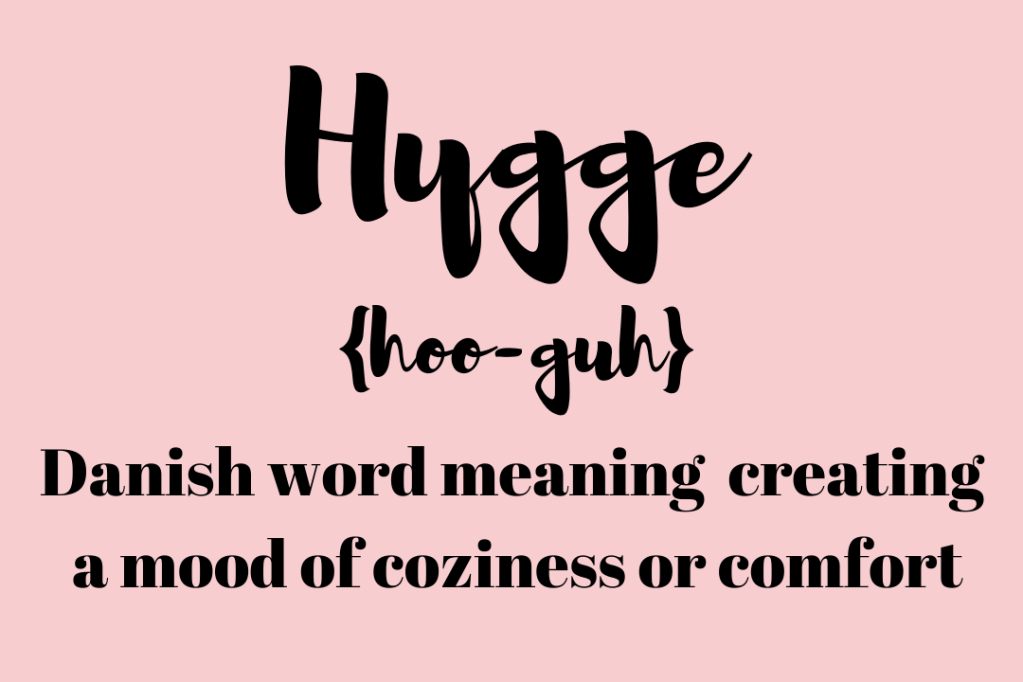
I know there are several books written on Hygge (pronounced hoo-guh), which is a Danish word meaning creating a mood of coziness or comfort. I haven’t read these books, but “The Little Book of Hygge” is on my reading list! I wanted to share with you what little I’ve learned from what I know of Hygge, and just how I have organically practiced it in my home. Coziness and an inviting space doesn’t have to equate to a lot of material things.
First, I like to use throw pillows, blankets, and rugs to warm up a space. I choose pillows, blankets, and rugs of different textiles to give depth and provide interest. I like to use different colors and textiles for the seasons. I try to purchase pillow covers instead of full pillows so that they are easier to store.
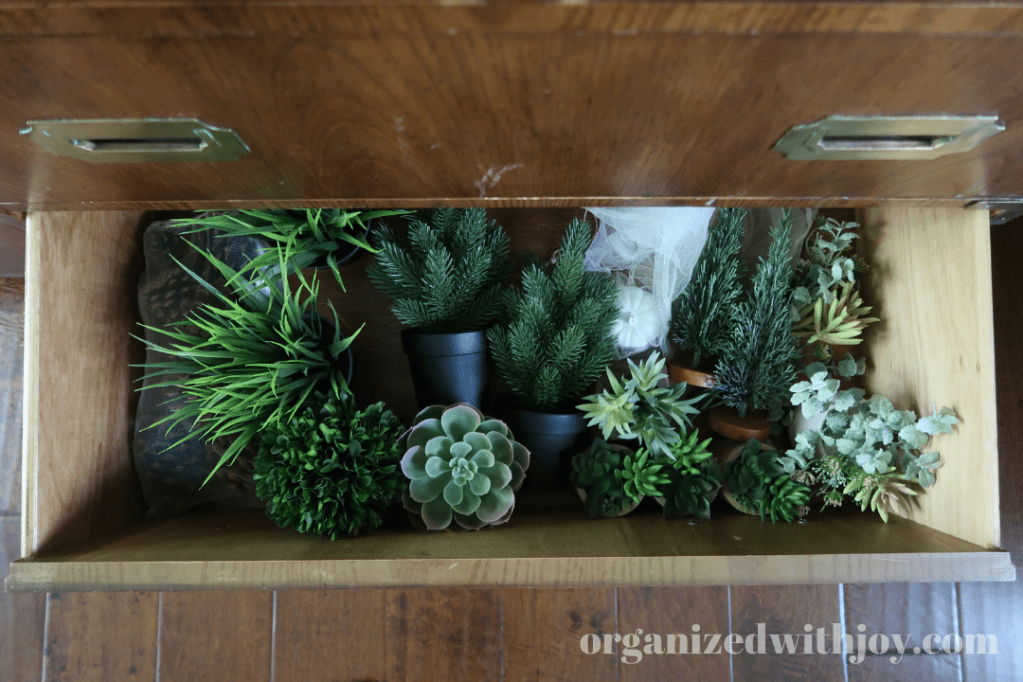
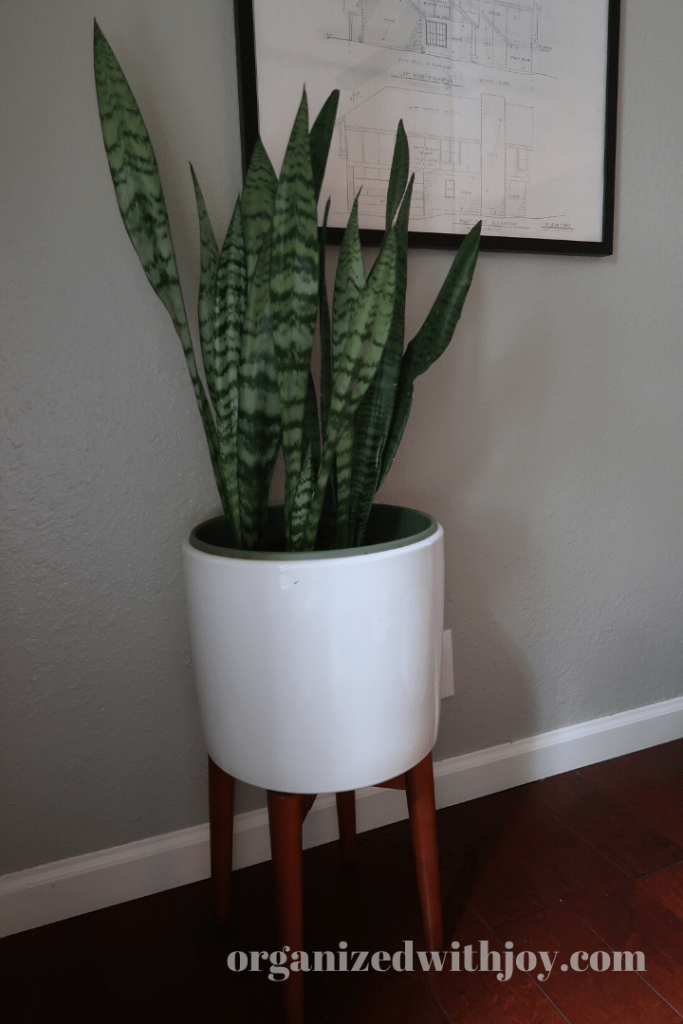
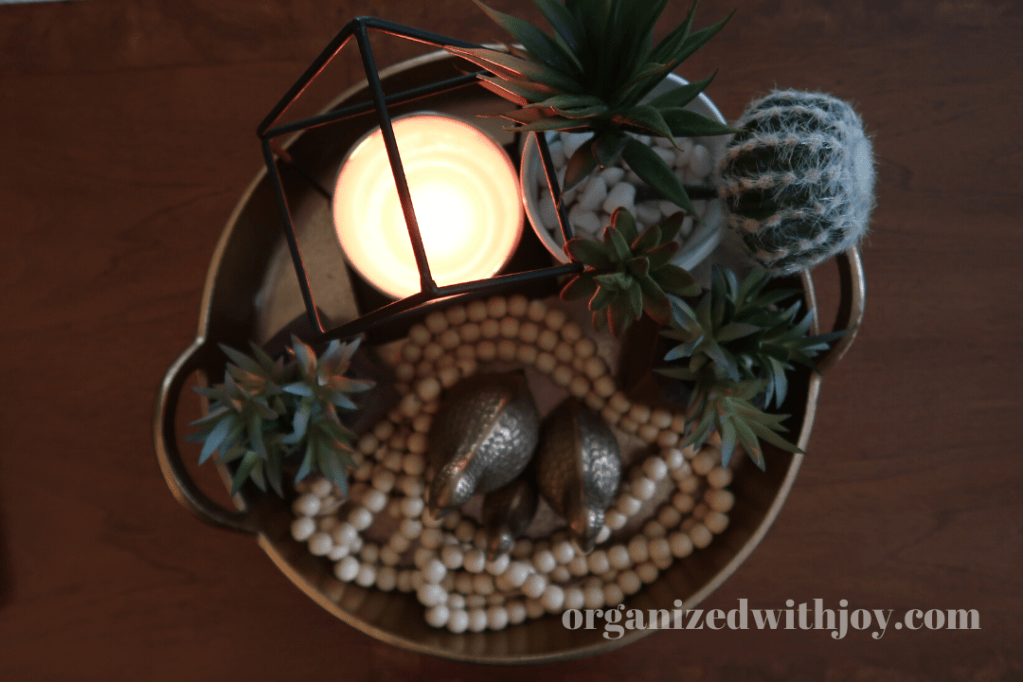
Next, I like to use plants throughout my home to give a feeling of aliveness to my spaces. I admit that many of my plants are fake plants as I struggle to keep live ones living. I do have several live plants throughout my home as well. Not only does it bring that feeling of life to a room, but it also brings that texture, organic color, and dimension.
Third, lighting choice really does change the mood of a room. Using warmer tone bulbs, especially in the evening, creates a calming atmosphere. Using lamps as opposed to overhead lights, or even displaying twinkle lights in a fireplace or around a tree in your home can create this mood. In addition to that, lighting candles can create that soft light and cozy mood in your home.
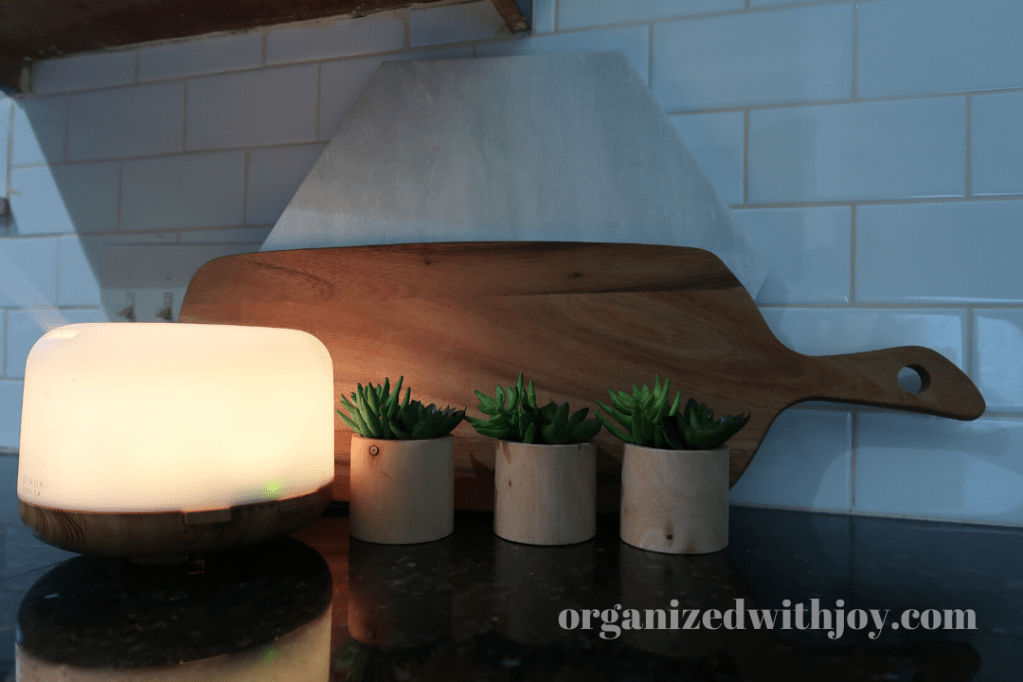
Fourth, is scent. With scented candles, you can get the coziness of the light of the candle burning and the scent. You could also use an oil difuser to create that good smelling scent throughout your home. Another way you could get the coziness of scent is through baking or cooking. The smell of freshly baked cookies or bread in the oven, or perhaps a pot roast fills your home and creates that feeling of coziness and warmth. Lastly, you can create those good scents through cleaning products, which leads into my next point…
Fifth is order. Most humans thrive in a space that has order. Chaos in our physical space can breed chaos in our minds, which does not lend to a feeling of coziness or peace. I have different practices which help keep my home tidy, which I have a blog post about and you can read that post here. When things are put away, and clean this lends to a feeling of coziness.
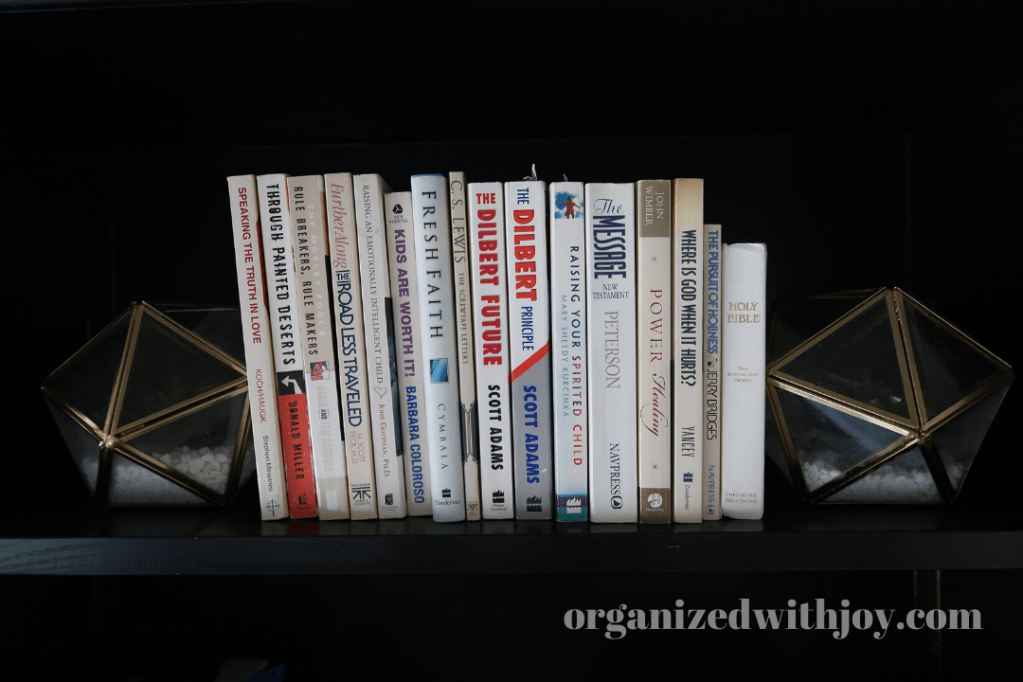
Lastly, surrounding yourself with things you find beautiful – whether that’s family photos, books, or intentional home decor. In spite of what some people think, “minimalism” doesn’t have a number of certain things. It’s whatever makes YOU feel comfortable, and whatever brings YOU joy!
I hope this post inspired you to find new and creative ways to create a feeling of cozy throughout your home.
Here is the YouTube video I made with this information.
Getting organized can be difficult and stressful for some people. I wanted to share with you 10 reasons why you might want to hire a professional organizer. I also have a YouTube video with this content if you’d like to check that out!
{{ONE}} You want to declutter, but you feel overwhelmed. Many people feel overwhelmed when thinking about organizing a space. It can be difficult to know where to start. A professional organizer can help you break these big projects into smaller tasks, making it a bit more manageable. We don’t have to stay with you the whole time. We can give you advice and homework to do while we are not there.
{{TWO}} You need accountability. Many people have good intentions but no follow through. Life can get in the way and before you know it, your good intentions get covered by the day-to-day busyness. Hiring a professional organizer will give you that accountability to push through and get a project done. Often times when we organize one space in our home, it gives us momentum to continue with other spaces.
{{THREE}} Another set of eyes for organization ideas. It can be really helpful to have another person looking at your space and giving you ideas of how to organize it, or ideas of organizing tools which would work well in the space. We may have things to share with you that you have never thought of for the space.
{{FOUR}} Someone to talk you through getting rid of things, especially the difficult things. We often get wrapped up in our emotional connection to items when trying to purge things on our own. We can also be blinded by the fact that we spent money on items, making it difficult to let go. Having someone else there to talk you through the costs and benefits of letting go of an item can be very helpful.
{{FIVE}} We keep you on task – it can be hard to stay focused. When working on decluttering and getting a space organized, it can be easy to get side tracked. Having someone there to keep you focused on the task at hand can make the process of decluttering and organizing more efficient and effective.
{{SIX}} Our expertise. Whether it’s from education, experience, or just a natural bent, a professional organizer has expertise that you may not have. This expertise can be very beneficial if you want to get a space organized efficiently.
{{SEVEN}} You don’t have time to organize your space. Life can be busy, especially if you have a full time job and/or kids. Managing your schedule, your kids’ schedules and other responsibilities can be time consuming.
{{EIGHT}} It’s worth it for your mental health to have organization systems that work well for you and your family. It can be challenging to find organization systems or tools that help to keep your spaces organized. A professional can organize your spaces in a logical way. It’s worth it for your mental health to have spaces that are organized and prevent you from feeling more anxious and overwhelmed.
{{NINE}} You’re moving. Moving can be a very stressful and crazy time in life. If you don’t have the skills to efficiently pack things in an organized way, it can be helpful to hire a professional. This will make packing up your old home easier, and then the unpacking process when you arrive at your new home a more smooth process.
{{TEN}} It’s more fun to purge and organize with someone rather than by yourself! I have had so much fun helping clients organize their spaces. It has been fun to hear their stories and to share my own stories as well. We get to know each other in this process, which is fun!
If you live in the Austin, Texas area and need help with organizing a space in your home, I would love for you to connect with me!
It’s hard to believe we have entered a new year, but even more difficult to believe we’ve begun a new decade! So much can happen in one decade. As we rang in the new year, I was reminiscing about the experiences I had enjoyed over the last 10 years. I thought it would be fun to share what I did prior to being a professional organizer (and now YouTuber!)
First day of 7th grade, 3rd grade, and kindergarten
Ten and a half years ago, in July of 2009 we moved from the Northeast side of Austin to the Northwest side. We moved primarily to live in a better school district for our children. Our oldest child, our daughter, was entering 7th grade that fall. Our two boys were about to enter third grade and kindergarten. We moved into a home that was a bit of a fixer upper.
That year was filled with soccer, basketball, band, and piano lessons. My daughter was involved in a non profit Christian club, Wyldlife (middle school version of Young Life) and I became involved in that as a parent helper. In addition to that, I volunteered in both my boys’ classrooms, brought them each lunch once a week, and began the long process of remodeling our home.
When we first moved into this neighborhood, I looked to see if there was a Mom’s In Prayer group. I found one for my kids’ schools, and joined right away. MIP is an international organization for moms of school aged kids to gather together to pray for their kids, schools, teachers, and administrators. I participated in this group for the last 10 years, and for the last 2 years I was the leader for the high school group.
I continued to help with Wyldlife when my daughter was in 8th grade, and ended up taking over as the lead parent role for Wyldlife. Once a week I coordinated dinners for the leaders, snacks for the kids for club, communicated with the parents to keep them informed about club and special events. Our parent team also planned our annual fundraiser every fall. The leaders were college students from the University of Texas in Austin, so I mentored a couple of college age girls each semester. It was fun to get to know them, make them care packages, meet them for lunch or coffee, text them, and pray for them! I was involved with this organization as the parent leader until the spring of 2019. It was bittersweet to leave that role. I developed so many amazing relationships through that role. I will be forever grateful for that experience.
In 2010, I trained for my third half marathon, we went on our first family ski vacation, and I continued to be chauffeur for after school sports for my two boys. That fall, I unfortunately began down a long journey of health issues and trying to figure out why I had some severe digestive issues and anxiety. Thankfully, I eventually landed in a holistic doctor’s office where I learned all about gluten intolerance. Within weeks of changing my diet, I was feeling so much better and eventually was able to go off my acid reflux medication.
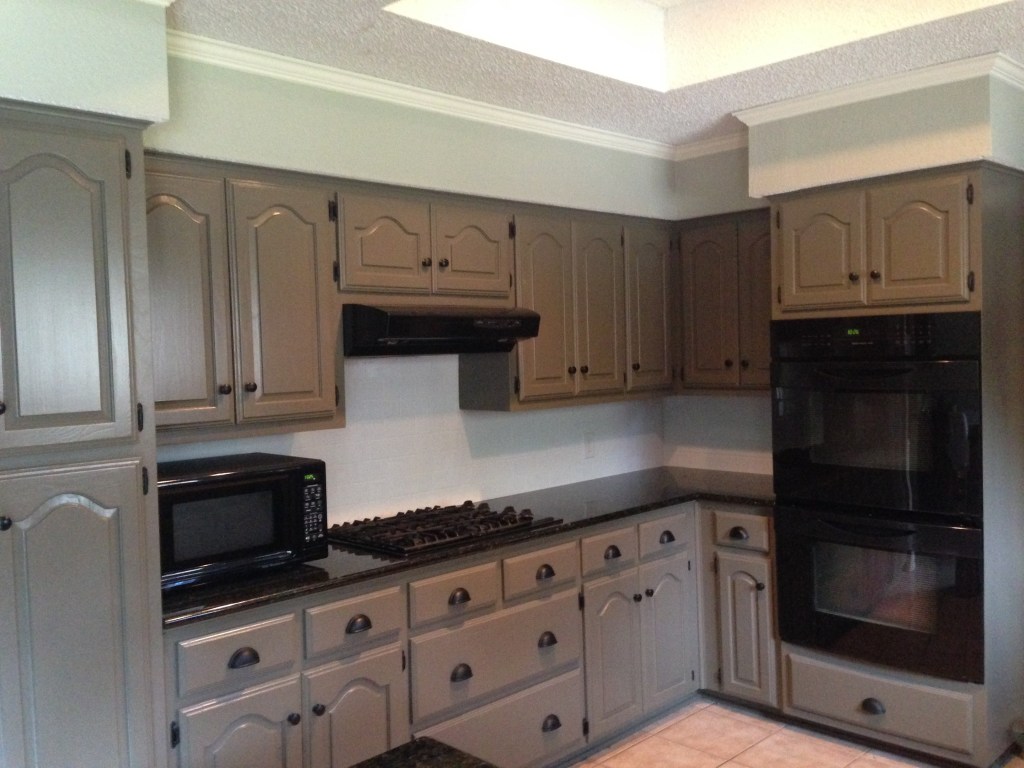
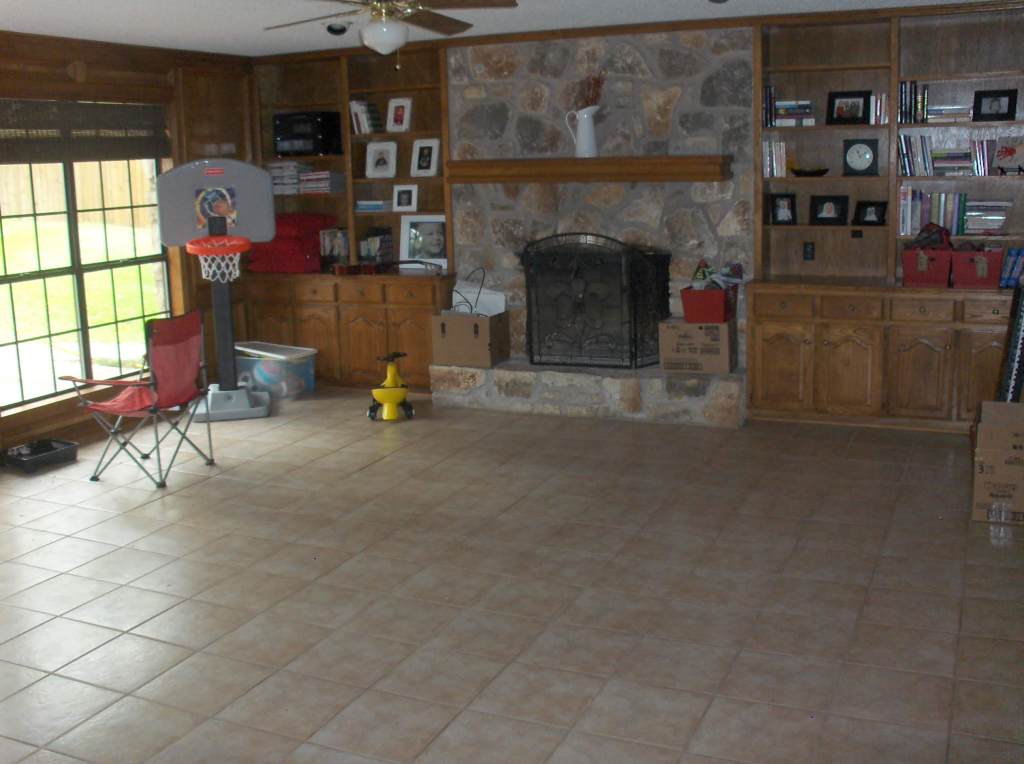
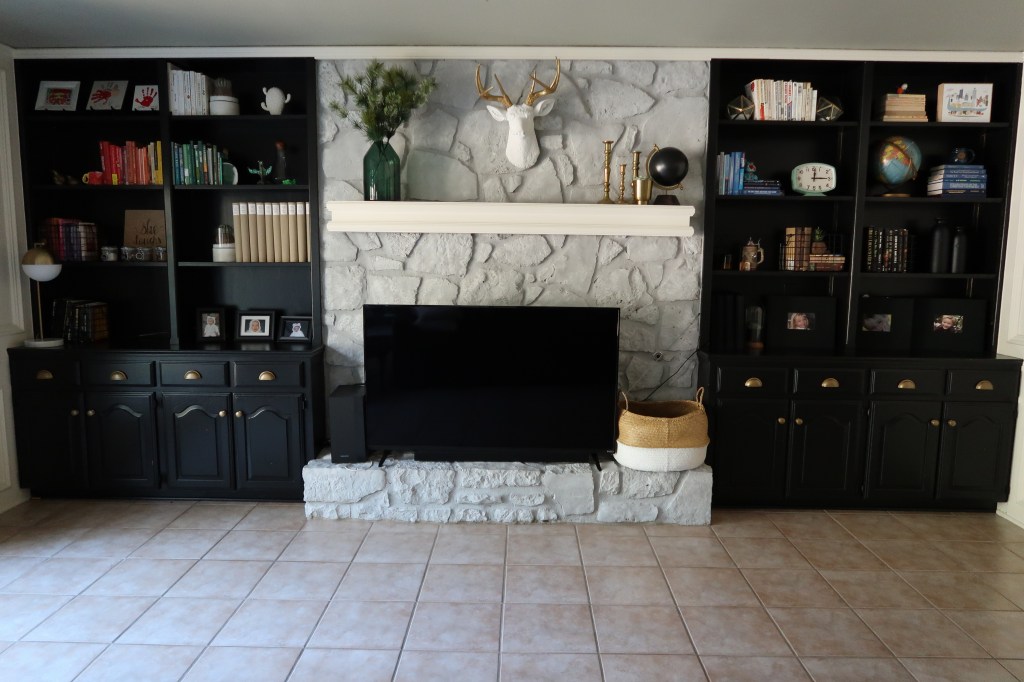
In 2011 I undertook the big project of painting our kitchen cabinets. I loved how it turned out, and ended up painting our game room and bathroom cabinets as well. It was a huge project, but well worth the effort!
BEFOREAFTERBEFOREAFTER
My boys had been playing soccer and basketball since they were in kindergarten, but both of them decided to try flag football in 2011.
In 2012, my boys continued to participate in sports – in the spring my older son played flag football and my younger son soccer, then in the fall my older son decided to join the middle school cross country team. My younger son played basketball that winter. Needless to say, I was busy running kids to practices and watching the games. That year, we decided to find a smaller church where we could make more connections. We found a church which we loved and started developing lifelong relationships. The pastor was looking for someone to take over some of the administrative roles that he had been doing, and I stepped into that role and worked there for a year and a half. 2013 and 2014 brought more sports, homework, and friends revolving through our house. I continued my role as admin for our church, and as I mentioned was still the parent leader for Wyldlife. My older son started the orthodontic journey in 2014, and my daughter decided she wanted to take ballet lessons. We decided it would be fun to do together, so at age 40 I picked up ballet! In the midst of all of this, I was still working on updating our home.
2015 was a momentous year for us. All three of our children graduated from their respective schools – our daughter from high school, our older son from middle school, and our youngest from elementary school. It was definitely a year of big changes. In 2016, with my oldest in college and my boys beginning to be more independent, I was searching for something I could do with my time other than the Wyldlife role. I became a BeachBody coach for a very short time – leading online fitness challenge groups. I quickly learned that I was not thriving in this role.
There was a home decor and furniture boutique that I loved to frequent and became friends with the owner. I told her to let me know if she ever needed help. In the fall of 2016, she contacted me to take me up on my offer and I started working for Vintage Fresh, managing the store while the owner was not there. It was there that I learned my love for organizing as I organized the inventory in the stockroom. I left this role in the winter of 2018 to begin research on starting my own business as a professional organizer. I worked with several friends that spring – helping them organize spaces in their homes. I worked on building a website – using Wix, as I knew this would be a good place to learn website building.
I loved organizing the stock at Vintage Fresh.
In the fall of 2018, our youngest son got very sick. He had GI issues that his pediatrician could not diagnose. He ended up missing many days of school, and in and out of the doctor’s office and finally a specialist. By the time he saw the Pediatric GI doctor, he had missed so much school that it was going to be difficult to catch up. We decided it was best for him to do online school instead because of his health. Overnight I became a “homeschool” mom, something I was totally unprepared for. Because of my son’s health and getting him settled into his new schooling routine, I had to put my organizing business on the back burner. I continued to write blog posts here and there. I also managed social media accounts for my business, but it wasn’t until the fall of 2019 that I really pursued marketing this business. I transferred my Wix site to a WordPress site and began more consistently writing blog posts and posting on social media. In November of 2019 I took the big leap of starting a YouTube channel in conjunction with my business.
The last decade has been a wild ride for sure! I feel so privileged to have had the opportunity to stay at home with our children, volunteer at their school and in other organizations, and pursue my hobbies – one of which has turned into a business! I’m excited to see what the next 10 years will hold for me!



















































 organized with joy