INTENTIONAL LIVING, VALUING EXPERIENCES OVER THINGS

Hey friends, for today’s Thoughtful Thursday post I wanted to talk about part of my life ethos with regard to intentional living. Part of choosing to live intentionally for me is valuing experiences over things. Some people may say that when you spend money on an experience, it is over after that experience is over, whereas with things you will have it for as long as you would like. But I would argue that experiences actually last you a lifetime. You will always have the memories you make. I think now more than ever it’s important to be intentional about spending time with family and friends, or even by yourself off of screens!

This year I am turning 50 years old. I was joking with some friends that some people celebrate their birthday week or even their birthday month, but Joy is going to celebrate her birthday year! I plan to do lots of traveling in 2024 as I am focusing on this principle of experiences over stuff!

We recently returned from a family ski vacation in the mountains. The mountains are for sure my happy place! I love skiing for lots of reasons, one being the peace I feel on top of a mountain and as I ski down. There is nothing like the sound of silence in the mountains. The mountains are a place that also moves me emotionally and spiritually. There were several times where I just started crying because of my awe of the beauty and majesty of the mountains. That feeling really can’t be replicated.

I also wanted to share a little story about some of the things that went wrong on our trip. This seems to be a theme for our ski trips! I shared a ski vlog a couple of years ago on my YouTube channel, which I can link below, and you can listen to the stories I told from the adventures of that ski trip! But I wanted to throw in here this idea that it’s okay when things go wrong or we endure hardships when we prioritize experiences. I’m learning that just goes along with the territory and it can teach us lessons as well!

So, it was snowing when we entered the resort. Our condo was at the top of a hill on a small road which had not been plowed. AND we don’t have four wheel drive… you can probably tell where this story is going. We tried getting up the hill from two different entrances AND we tried helping push the vehicle up the hill while my husband hit the gas, to no avail! So, we decided we would park in the parking lot of the resort and walk our stuff the 400 yards or so up the hill to the condo! I have never experienced altitude sickness, but I think between working hard carrying bags up a hill immediately upon entering the mountains, and also not really getting enough to eat or hydration for the day since we were driving all day, made me more susceptible to getting sick. That night, in the middle of the night I got a text from my son saying he felt really sick too. I was then wide awake, not feeling well myself but also worried about him. I tried to get up to go to the bathroom, but took two steps before I passed out. I called for my husband to help me and I was trying to stand up again and passed out again! I woke up to him standing over me asking if I was okay. I was like, no I can’t stay conscious haha! He helped me get back into bed, gave me electrolytes, and a trash can cuz I was feeling nauseous. Sorry for the TMI, I did end up throwing up, but felt better after that. I thought for sure I wouldn’t be  able to ski the next day but surprisingly I was able to rally! Unfortunately my son felt sick for most of the trip and was only able to ski one half day of the three we were skiing!

Also, the morning we were supposed to leave it was predicted to accumulate close to 11 inches of snow, so we tried to get out as quickly as possible! It was a little precarious, but we did in fact make it out of the resort and down the mountain and then home safely!

One other thing I wanted to share with regards to valuing experiences: look for opportunities to experience whimsy. I find that I basically turn into a five year old child who is enamored with whimsy when I’m in the snow! Maybe this is a result of living in a climate where I rarely get to see snow, but nevertheless, it reminds me of the importance of finding joy in the little things in life. Look for moments or opportunities to experience playfulness. Sometimes we need to just stop taking ourselves so seriously!

Here is the YouTube video I posted in conjunction with this blog post.

LISTENING TO YOUR BODY

Okay friends, for today’s Thoughtful Thursday post I wanted to encourage you to listen to your body. This is a time of year where it can be really easy to run ourselves ragged trying to get everything done for the holiday season, but we must listen to our bodies and eat when we need to eat, and sleep when we are feeling run down.

It’s inevitable that we will have more to do during the holiday season probably than any other time during the year. There are presents to buy, wrap, and potentially send. There are Christmas cards to send (if you’re still doing those!) There are parties to attend, kids’ holiday concerts or events, extra food to prepare, and of course decorating our homes! It can all be a bit overwhelming.

If you are finding year after year you feel overwhelmed and run down, perhaps evaluate all of the commitments you make this time of year. It is okay to say no or to scale back. I know that is not always easy for sure! But we need to create margin in our lives this time of year to have down time and time to take care of ourselves – either special self care type time or just time to get proper nutrition and rest!

Earlier on in our marriage we would get gifts for all of our siblings and the nieces and nephews. As we added more and more nieces and nephews we decided to do a gift exchange with the adults and buy for all of the kids. Then as the kids got older, we decided to do an exchange with all of them as well. Over time I realized that it seemed like we were essentially exchanging money as everyone would send wish lists with specific items – especially as the nieces and nephews got to be teenagers and a little more challenging to purchase for. I decided that it was silly for us to continue doing these exchanges because we live far from both sides of the family and do not get together for the holidays, so I not only had to purchase and wrap gifts but also stand in line at the post office to send them. It was so freeing to step away from those gift exchanges.

Next I decided to quit sending physical Christmas cards. This has been a relatively recent decision. I believe the last one I sent was in 2019. It was a big ordeal and I understand that I could have simplified it instead of quit all together. But we would get our family photo professionally taken in the fall, I would order the photo cards, write a family letter updating everyone on the happenings during that year, print those out then stuff envelopes. I am really thankful for the years we did it and I have kept those for us and for each of our kids to have for memories, but as my kids got older I felt like there was less to share in those letters. You could choose to quit sending physical cards all together, or you could just simplify the process.

Food preparation and decorating are other big commitments this time of year. Again, we can choose to scale back. Perhaps instead of making eight different types of Christmas cookies you could choose your favorite four. Perhaps you could go through your Christmas decor and declutter items that you don’t love, only keeping your favorite items that you love and are meaningful to you. Having a smaller collection of Christmas decor will simplify the decorating process making it less overwhelming.

Something else that I am still learning to do is to enlist help. If there are tasks you can delegate to your spouse or children, find ways they can help. It’s great to get the whole family involved in prepping for the holiday season! I admit that this is really not easy for me. I struggle in general to ask for help, but I recognize that sometimes it’s difficult or even more time consuming to delegate tasks – explaining what needs to get done.

I share all this with you to give you ideas or help you think of ways you can simplify or streamline responsibilities during the holiday season. This time of year can become so overwhelming and busy, but there are ways we can simplify so we have time to enjoy the season!

Here is the YouTube video I shared in conjunction with this blog post!

DEBUNKING THE BUSYNESS CULTURE

Okay friends, for today’s Thoughtful Thursday post I wanted to talk about the culture of busyness. I have often talked about living intentionally, and part of that is living at a slower pace – spending time on the things I love and the things that are important to me, and cutting out the things that just keep me busy.

In today’s fast-paced world, many people are proud of how busy they are. They may believe this busyness is a sign of importance or productivity. Today I wanted to challenge this glorification of busyness and the idea that constant activity is synonymous with success and/or fulfillment. I wanted to debunk this idea that busyness is always positive by sharing the detrimental effects it can have on our mental well-being, relationships, and overall quality of life.

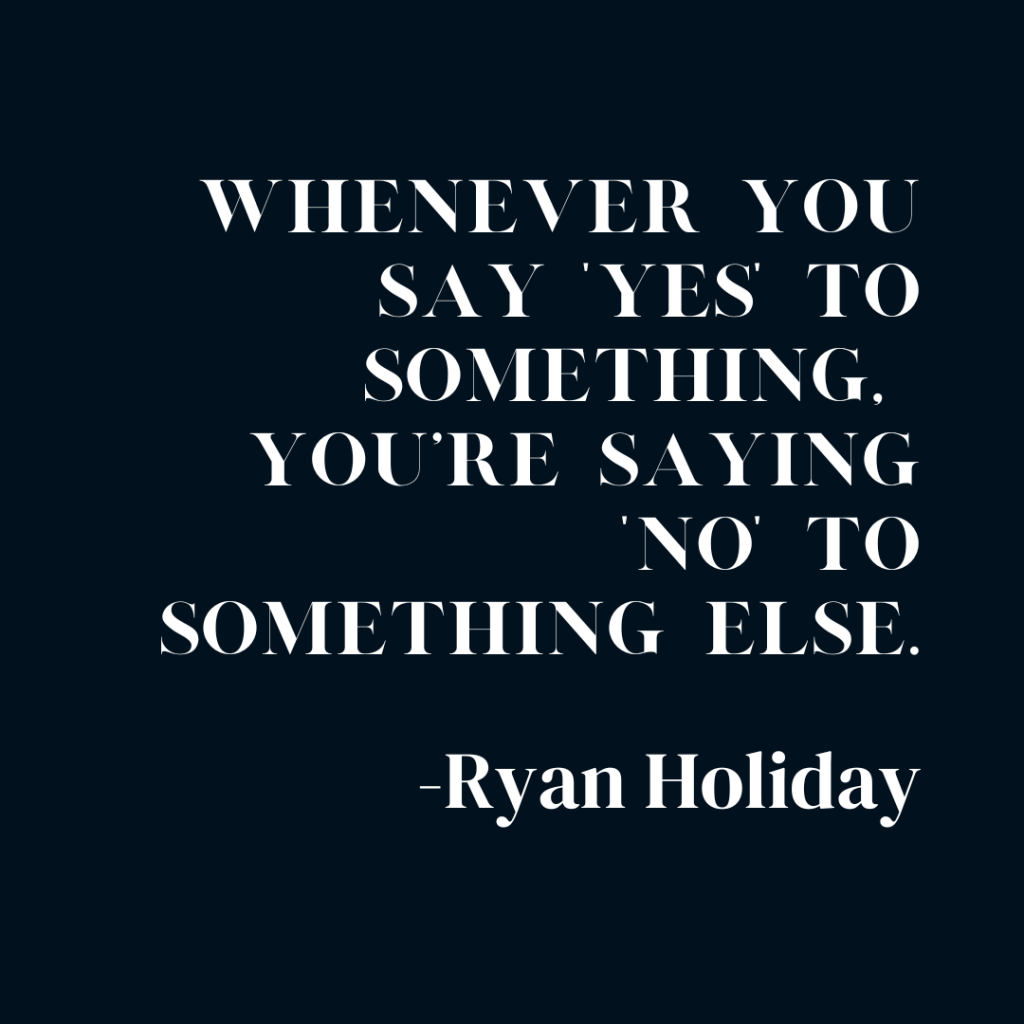
Ryan Holiday, an author and content creator has said this: “Whenever you say ‘yes’ to something, you’re saying ‘no’ to something else.” We all make decisions on how to spend our time. And we all have a finite amount of time. If we say yes to lots of things, then we may be forfeiting time to rest and rejuvenate. 

One of the primary things I wanted to talk about is this assumption that being busy equates to productivity. The reality is, busyness often leads to inefficiency and burnout. When we have a lot on our plates, our ability to focus on and prioritize tasks diminishes. This affects our productivity and our quality of work. Being busy is different from being productive, and I think people often don’t realize this.

Something else I wanted to address is the effect constant busyness has on our mental well being. The constant pursuit of busyness can over time take a toll on our mental health. Having nonstop obligations leave little room for rest, relaxation, and self-care. All things that I think can be undervalued. This can lead to stress and anxiety which causes emotional exhaustion. Rest and relaxation are not a negative thing, these are not things to be viewed as being lazy, but instead as part of a healthy lifestyle. Scheduling in times of rest prevents you from being lazy by making a plan in your schedule for rest AND for work. When we give our brains, bodies, and emotions time to rest and rejuvenate, we are more likely to be productive when we are working. If you think about athletes training, they schedule in time to allow their bodies to rest for their muscles to recover. Our brains are no different, and need time to recover as well.

Our relationships can also take a toll when we are constantly busy and have a packed schedule. In the pursuit of busyness, we can sometimes sacrifice quality time with friends and family. When we are busy all of the time, it can be difficult to be present in the moment as we do interact with others, we may be thinking of all the other things that we must get done. Deep and meaningful relationships require time and attention. When we leave little margin in our lives to develop these kinds of relationships, we are left feeling alone and/or disconnected. We must schedule our time in a way that we can be fully present in everything we do, including time with people fostering these deeper connections.

Contrary to popular belief, a truly fulfilling life cannot be measured by the number of tasks we accomplish each day. Busyness can cause us to not live in the moment, and therefore we may miss life’s little pleasures as we are rushing from one task to another or one activity to another. Again, as we keep a schedule that allows for margin we are more likely to truly live in the moment, enjoy the little things, and therefore experience more gratitude in life. If we have a balanced life of productivity and the ability to live in the moment our quality of life will go up!

To counteract this culture of busyness, we must embrace simplicity and mindfulness. Simplifying our schedules, and learning what to say yes to and what to say no to can create the space we need for this type of presence in each task and activity in life. As we are more mindful of how we spend our time, we begin to become self aware of our priorities and moving forward we can begin to choose our time doing the things that align with our values and goals in life.

I did want to say that I recognize that there will always be busier seasons in life. I remember when my kids were all school aged we felt busy and on the go constantly. This was just a season. Also, we chose to combat the extreme busyness by limiting the number of activities our kids could participate in each season. We wanted to teach them the value in not overcommitting and to be fully committed to the things they wanted to invest their time in. We not only embrace these ideas for ourselves but to teach our children the value of rest and self-care. 

Lastly, I just wanted to encourage you to challenge our culture’s narrow view of success, which often revolves around busyness and external achievements. True success should be viewed more holistically, accounting for mental well being, healthy relationships, and personal fulfillment. When we adopt this mindset, we will be able to escape this culture of busyness and replace it with something far more meaningful.

This is the YouTube video I posted in conjunction with this blog post.

10 Questions to Ask Yourself When Decluttering Sentimental or Holiday Items

Today I wanted to talk about decluttering sentimental items, and in particular holiday decor. Decluttering sentimental items can be such a difficult thing! Holiday decor can have an added layer of difficulty because of the sweet and fond memories wrapped up in the items. I always encourage people to start with an easier category when beginning their decluttering journey because momentum is the key. It’s a whole lot easier to declutter items that don’t have a sentimental attachment. Starting there will give us the confidence in our decision making process as we gain momentum with decluttering. If you are in a place where you are ready to tackle decluttering sentimental items, but you are struggling, I have ten questions you can ask yourself as you make these decisions.

The first question you can ask yourself is: Am I going to use it again? If you didn’t put it out this year, how likely are you to put it out next year? Oftentimes if we do not display something from our Christmas bins one year, we are not very likely to display it the next year. And even less like the next year, or the next. I know it can be difficult to be realistic with ourselves when it comes to sentimental items, but really evaluate if you are going to display items in the future. 

If you’re not going to display the items, the second question you can ask is: are these items worth just storing away in a closet, attic, or basement? I am all about displaying or discarding. For me, when things are out of sight, they are out of mind. Be honest with yourself if the items are important enough to just have stored away in a box somewhere.

The third question to ask is: Am I believing in my  fantasy self? This term refers to having items in your home that you think you will one day use because of who you wish you would be. You have a desire to follow through on ideas you have, but the reality is you probably won’t. Maybe you’re keeping old Christmas cards to use for a future craft project, or you have some other craft materials to make things that you will actually never make, or maybe you have a lot of holiday decor with the idea that you will put it all out but the reality is you don’t have the time or bandwidth during the holiday season to do so. Again, being realistic with yourself is the key. Ask yourself how much you really need to have on hand. How much will you actually use?

The fourth question you can ask yourself is: is this meaningful to my children or family members? Think about if your children or family members would want these items when you are gone. I know this is a bit morbid to think about, but it is a good way to help make these decisions. If you missed my previous blog post (or YouTube video) regarding Swedish Death Cleaning, you should check it out for a more in depth explanation, but this mindset has helped me when making decisions especially regarding sentimental items. The basic idea of Swedish Death Cleaning is recognizing that one day when you pass away your children or other family members will have the responsibility of deciding what happens with the belongings you left behind. It is already an emotional time dealing with the loss of a loved one, but there is the added burden of going through their stuff. Therefore this question of will your family members find these items meaningful is valuable.

An adjacent question you can ask yourself with regards to your children or other family members is: can I pass anything along to my children or family members now? While you are still living it is a great time to ask your family members what items are important to them. You may find that what is important to you may not be important to them, or vice versa. It may be easier to let go of sentimental items if you know they are going to be cherished by family.

The sixth question you can ask yourself is: will this matter to me one year from now? Five years from now, or ten years from now? Thinking about sentimental items in terms of the future can help you to make those decisions. You may want to hold onto items for now and that’s okay. It can take time to let things go. In a recent video on my YouTube channel where I was going through my Christmas decor to declutter, a friend asked me if I was emotional going through my kids’ childhood items (my three children are now young adults). I honestly was not emotional. It took time, but I am starting to get to a place where I am accepting this life stage. It takes time to transition for sure, but when you’re ready to let go, you’re ready.

The seventh question you can ask yourself is: is this item something I could take a photo of to have the memory? Sometimes it’s enough to have a photo of the special item, and this takes up far less physical space since photos are now digital. This is an especially great technique for larger sentimental items.

Another question you can ask yourself is: how much Christmas clutter am I okay with having displayed in my home? Everyone has a threshold of how much stuff they can have around them. Studies have shown that clutter can contribute to feelings of anxiety and overwhelm. For some people that threshold is higher, but really evaluate your threshold. If you like a lot of holiday decor and you have the time and energy to put it all up, then by all means keep it all! But if the reality is you have way more than you feel comfortable displaying then it’s time to evaluate what you can part with. 

The ninth question you can ask yourself is: do I have the space to store what I want to keep? Physical boundaries can be a great way to limit what you keep. It can be helpful to give yourself boundaries by having a certain number of bins for your holiday decor and only keeping what fits in the bins.

The tenth and final question you can ask yourself is: Am I keeping items because of guilt? Sometimes we keep sentimental items or holiday items because they were gifts given to us. It can be very difficult to let go of items given to us, however it doesn’t seem sustainable to keep every gift ever given to you. I am sure the person who gave you the gift would not want you to keep the item simply out of guilt and might rather you pass it along to someone who can use and enjoy it!

Well, I hope these ten questions were helpful to you to process through making decisions when it comes to decluttering sentimental and holiday items. This time of year as we get out our holiday decor and set it up is a great time to think through these questions! Happy decluttering, and happy holidays!

Here is the YouTube video I created in conjunction with this blog post if you would like to check that out.

How To Love Your Home Now

If you’re anything like me, you can get overwhelmed and inundated by all the perfect home images out there – Instagram, Pinterest, YouTube videos. It can lead to discontent and a feeling like your home needs a total overhaul! I consider myself a creative, and the main outlet that is realized is in home decorating and home renovations. So I am especially susceptible to wanting overnight changes. The other day I was thinking about the drastic transformation my home has gone through since moving in 11 years ago {{you can read the blog post where I shared all the renovations we did to our home!}} It has certainly been a slow process, and I continually have ideas to change things up! It takes time – sometimes what feels like a turtle’s pace – because home renovations take time if you’re doing the work yourself and money! I was thinking about simple and cost effective ways you can “transform” your home, and wanted to share those with you!
The very first thing you can do is clean your home! You may think this doesn’t change much, but truly when everything is cleaned and put away your home just feels more cozy and peaceful. Making your bed daily is a habit that will help to make your home feel more inviting.

Along with cleaning in general, I wanted to mention floors specifically. Deep cleaning the grout in your tile, or polishing your wood floors can make them look new again! {{I have an inspirational YouTube video of cleaning my grout!}}

Rearrange! Move furniture around – either in the room they are in, or to another room. You can also rearrange your home decor – moving pieces to other rooms. I don’t like to own a lot of home decor and this helps to make things feel new.

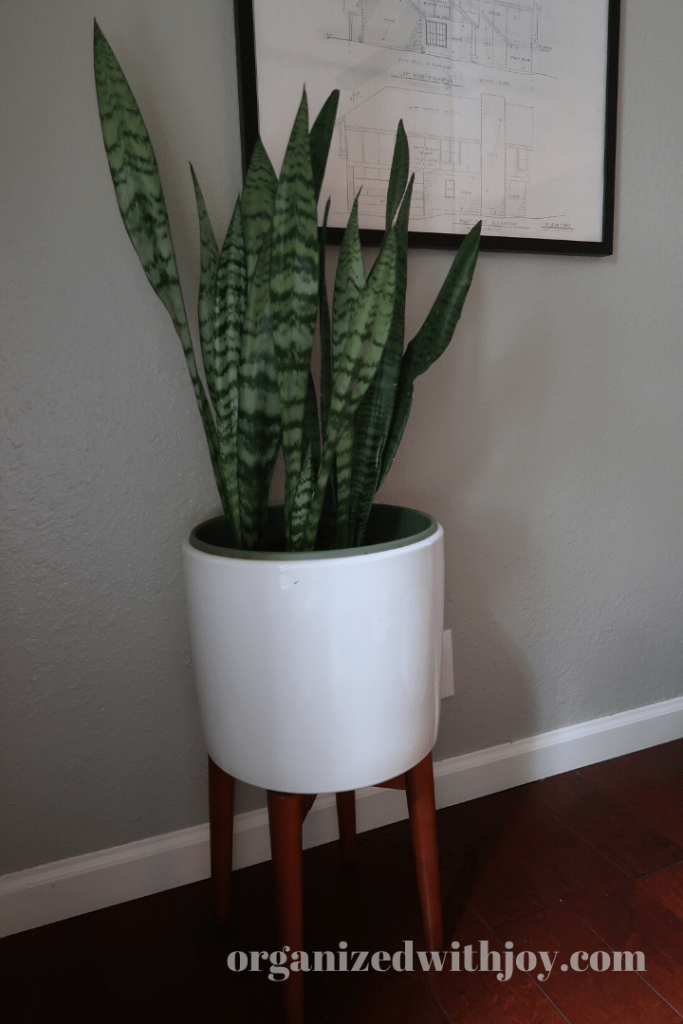
Bring in fresh flowers or plants. I feel like fresh flowers and plants make a much bigger impact to a room than you would expect! I even like rearranging my plants – moving them to different rooms. If you are afraid of taking care of a plant, there are a lot of real looking faux plant options out there as well.

Use scent to enjoy your home more. Whether it’s a scented candle burning, an essential oil diffuser running, cookies baking, or a pot roast in the oven! Scent can really bring extra joy to a space.

Of course you know I can’t write a blog post without mentioning DECLUTTERING! Letting go of the things that you no longer love, or no longer serve you will make a great impact on feeling comfortable in your home. Display what you love and get rid of the rest!

Another idea is to initiate trading home decor with your friends or family members. You could even host a party where everyone brings what they no longer love for their own home. One man’s trash is another man’s treasure!

In addition to trading home decor, you can scour Facebook Marketplace, Craigslist, or local thrift stores to find new to you items on a budget to incorporate a style that reflects you. Along with finding home decor at these places, you can find some amazing deals on furniture that just need a little TLC. Flipping thrifted furniture is definitely a cost effective way to upgrade your home.

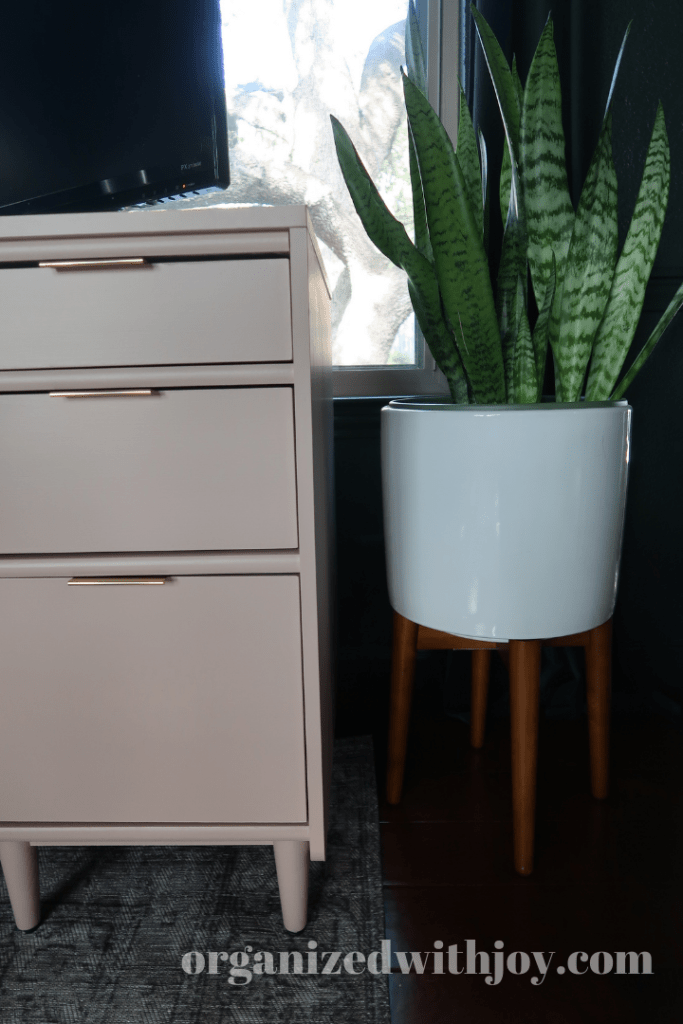
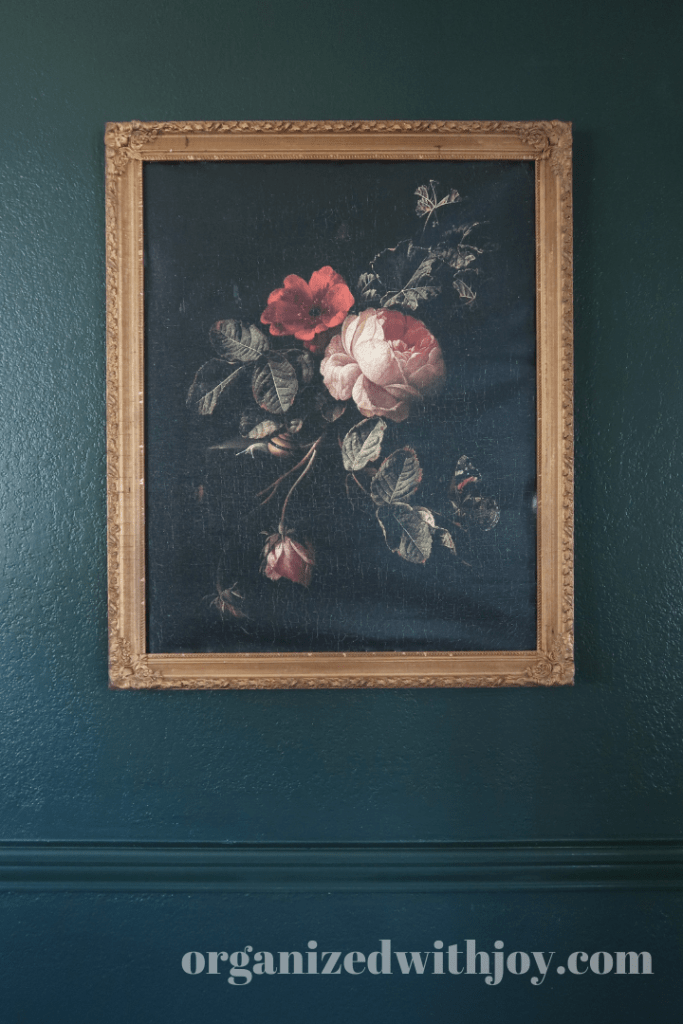
I purchased this dresser for a good deal off Facebook Marketplace then cleaned it up! Also, several of the pieces of art in this photo were thrifted!

The next thing I wanted to share is PAINT! Paint is such a cost effective way to make a dramatic impact in any room in your home. If you’re willing and have the time to put in the work of painting yourself, it is quite inexpensive. I have always used Behr Ultra primer and paint in one paint and it is $32 a gallon. Most rooms can be painted with one gallon, depending on which color you are going to and which color the room was at first. Obviously if you go from light to dark or visa versa, or if the room is large, then you will need more paint. You can also paint furniture or spray paint home decor you no longer love – a vase, picture frame, drape rods, and more!

BEFORE
AFTER

Another thing you can do is to hang drapes. Okay, I know this isn’t for everyone, but I feel like hanging drapes makes a room feel much more luxurious, taller, and more cozy. When we moved into this home, an IKEA had just opened near us and I purchased all of our drapes from there. I love their drapes because you can get really long ones (96” or 108”) for a great price. Hanging your drapes as high as possible gives the illusion that your room is taller and more luxurious!

You can also make your own artwork, use your children’s artwork, or frame family photos for inexpensive art. Another recent thing I learned about is downloading art prints that you can then print off on whatever medium you choose – like a canvas, or a print to frame. Even if you’re not super crafty, some of the art that is popular now is very simplistic and easy to replicate.

Learn a new skill!! Usually, the biggest cost of home renovations is the labor involved and potentially also paying a contractor if you don’t already have connections. If you want to do some bigger renovations like installing new flooring or a new backsplash, it might be worth it to look into learning these skills. Usually projects like this just take a weekend to complete, especially if you have a partner to help you.

Lastly, if nothing else, start a gratitude journal. When you are focused on the things you are thankful for, you are less likely to focus on the negative or on the things you want changed!

Some of these options may not be feasible for you, but I hope this gave you some ideas that you have not thought of before on how you can love your home now!

7 Reasons We Keep Clothes + Ideas To Declutter Clothes

Today I wanted to share with you common reasons we tend to hold onto clothes, and some ideas for letting go. It can be overwhelming to downsize our wardrobe, especially if we are not in the habit of purging items from our closet and the job has gotten out of control. The best advice I have if you’re feeling overwhelmed by a decluttering project is to take it in bite size pieces. Choose one drawer a week to go through, or set a timer for an allotted amount of time. Oftentimes getting started is the most difficult part. Once we start, we have momentum to continue forward.

{{ONE}} We feel guilty about the amount of money we spent on the items. This is probably the number one reason we find it hard to declutter clothes – and really any items from our home. It can be difficult to just give away items that we have spent money on. If the items are in relatively good condition, an alternative is to sell these clothes. You could choose a consignment platform like Poshmark (my go-to), or Mercari. You could send it to Thread Up if you don’t want the clothes just sitting in your home as you wait for them to sell, or you could bring them to a local consignment shop to get some of your money back. You won’t make as much money with Thread Up or a consignment shop, but then the clothes are out of your house. If you have enough items in general that you are wanting to get rid of, another option is to have a good old fashioned garage sale. I have found it much easier to let go of items that I am on the fence about when I can make some money back. Lastly, if you have taken a basic economics course, then you learned about “sunk cost.” Basically, sometimes we make poor financial decisions, but keeping the item doesn’t get us the money back. If anything, every time we see that item we think – either consciously or subconsciously – that we spent money on that, but no longer love it/want it. It might be better to just get it out of our field of vision!

{{TWO}} We think we might lose – or even gain – weight. Sometimes we hang onto clothing items that used to fit us, but no longer fit because we have gained weight. We hold onto them as though it was an incentive to lose the weight to get back into that size. Or perhaps you have the opposite problem where you went through a weight loss journey and you’re concerned you will gain the weight back. Either way, I personally don’t keep items that are too big or too small. It can be discouraging to have that pair of jeans two sizes too small sitting in the back of your closet. Instead, perhaps you could use the incentive of purchasing new items when/if you do lose the weight. And if you went through a weight loss journey, it could be cathartic to get rid of all of those large clothes believing you WILL maintain the weight you are at currently. Certainly there are exceptions. If you are expecting a baby, you will likely need different sizes in your wardrobe to account for different stages of pregnancy and postpartum.

{{THREE}} We have sentimental attachment. This is a tough one. It may take time to be ready to let go of some of these items. When beginning the process of decluttering, I agree with Marie Kondo, it is wise to leave sentimental items until the end. This gives you momentum, and you also begin to “learn how to declutter.” You begin to feel more confident in your choices to part with things. If you have things like school or sports team t-shirts that you don’t want to let go of, consider having a quilt/blanket made out of the t-shirts/jerseys so you can still appreciate and enjoy them without having a box of them stuffed in the back of your closet. Other items that have sentimental value could be displayed in your home so you are able to appreciate them. Get a shadow box for that special jersey, or the outfit you brought your child home from the hospital in. Find a way to display/enjoy it, instead of continuing to allow these items to sit in a box in a closet or attic space. Perhaps you could pick your favorite few – maybe you don’t need to keep an entire tote of baby clothes from when your children were babies. Choose a couple of memorable outfits. Or perhaps you can keep a couple of school t-shirts instead of 13 from every year of school from kindergarten through 12th grade!

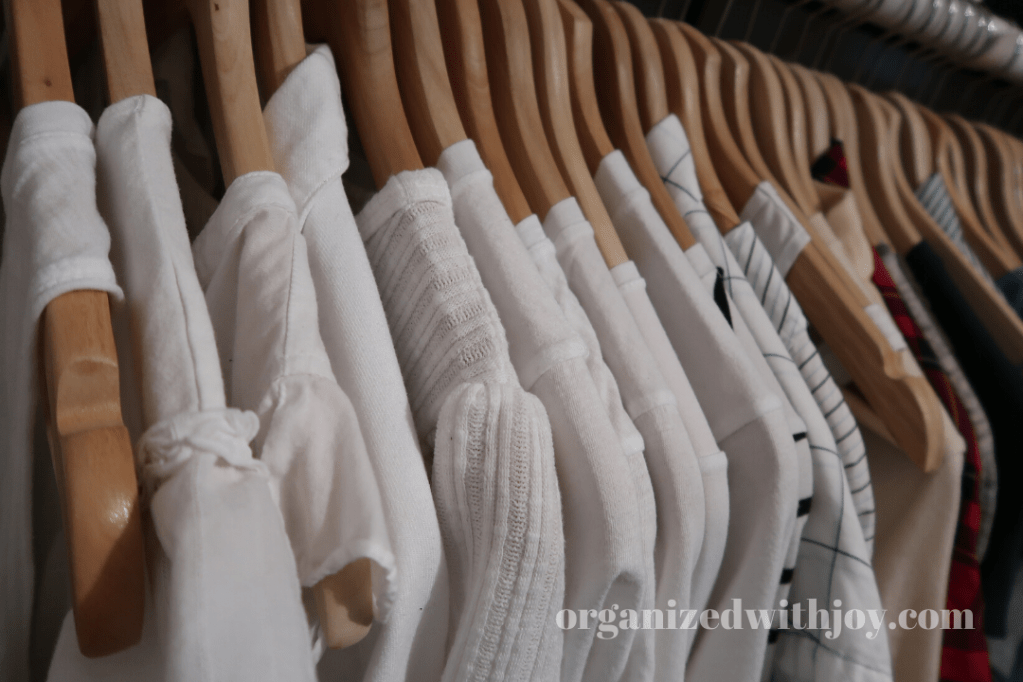
{{FOUR}} We don’t have time/don’t want to spend our time this way. I understand this. Honestly, in the end, it comes down to what is important to you. If you are okay with and not bothered by overflowing closets and drawers, then you do you. But, I would imagine if you’re reading this post, you are interested in paring down your wardrobe. As I mentioned, you don’t have to do the Konmari method and pile all your clothes from every drawer and hanger into the middle of your room. You could focus on a little at a time – choosing one drawer, or one section of your closet. Another idea is to purge clothing items by category. Sometimes you don’t realize how many of one category you own – so taking inventory of all of your shorts, or all of your sweaters at once may give you a better idea of what to get rid of. Think realistically about how many items in each category you might need. Think about the climate you live in and how often you do laundry. Another idea would be to set a timer. If you don’t have hours to spend decluttering. Set a timer for 10, 15, or 20 minutes, then grab a bag or box and start filling it with the items you know you no longer wear. Another trick I use is to turn your hangers backwards, then turn them back forwards as you wear/wash each item. After 6 months to a year (depending on how temperate your climate is) you will get an idea of which clothes you are wearing. If turning your hangers around seems like a lot of work, push all your clothes to one end of your closet, then hang them back up at the other end as you wear/wash them.

{{FIVE}} It was a gift. I think it is a universal feeling to feel guilt getting rid of something someone gave to you. Even if you are someone who doesn’t attach sentimental value to things readily, it is difficult. I’m sure it’s even more difficult for those who do attach sentimental value to items. The truth is, when someone gives you a gift, that item now belongs to you which means you can do with it what you please. You can appreciate their gesture and experience the joy of the act of giving in that moment, but if this item is not useful to you or does not bring you joy then it is silly to hold onto it just because it was given to you. If the person who gave you the item would be upset because you didn’t use it or you gave it away – that is a boundary issue they have, not you. Usually, your friends and relatives would not want an item they gave you to cause stress or clutter in your home. I think most people would rather the item that they spent money on be given to someone else who would use itl than for it sit in a drawer or closet in your home.

{{SIX}} We have space in our closet.  I relate well to this one. I used to not purge things that were difficult to purge because I had the space for it, so why not just leave it. The truth is, physical clutter can cause mental clutter. If every time you open your closet or drawers and they are filled to the top, your brain has to process everything that is in there. With less stuff, it’s less the brain has to process. I am beginning to enjoy having empty spaces in my home! For me personally, I realize that one day we will likely downsize and live in a smaller home. I like the idea of being able to slowly over time purge my items rather than being forced into it when we do choose to downsize. Even further down the road (or not since we never know!) when we leave this earth we will leave our things behind, and our family will have to make choices about what to do with those things. I don’t want my stuff to become a burden to my children or family members.

{{SEVEN}} We think we want lots of options. This may be true for some people. I have thought about trying to transition to a capsule wardrobe, but even I like to have a variety of choices when it comes to clothes. One thing I have found helpful for myself is to have a “uniform” then having options within that uniform. I pretty much assemble the same look every day, just with different items. But, some people want all different kinds of styles and options within those styles. I think having too many options can be overwhelming and contribute to decision fatigue. This may be the main reason people want to declutter their closets in the first place. They might not be able to put their finger on why, but ultimately it’s that there are too many choices in our closets. By using some of the techniques and tips mentioned earlier, you can pare down your wardrobe so it’s easy to get dressed each day and you love what you are wearing EVERYDAY! Can you say that now??

I hope this gave you some motivation or inspiration to reassess how many clothing items you own! It can be tough to declutter clothes, but if you do a little at a time it can be less overwhelming!

Here is the YouTube video I made in conjunction with this blog post!

Minimal and Cozy

When I first started pursuing the idea of becoming more minimal I thought “I could never be a minimalist” because I really enjoy decorating our home to make it more cozy and inviting. Five years later, I’m realizing that “minimalism” is not a one size fits all. There is no true definition of minimalism, or a box you can put it in. To me, it just means living with the things I use and love. With this in mind, I wanted to share with you the ways I make my home cozy and inviting while still striving towards minimalism.

I know there are several books written on Hygge (pronounced hoo-guh), which is a Danish word meaning creating a mood of coziness or comfort. I haven’t read these books, but “The Little Book of Hygge” is on my reading list! I wanted to share with you what little I’ve learned from what I know of Hygge, and just how I have organically practiced it in my home. Coziness and an inviting space doesn’t have to equate to a lot of material things.

First, I like to use throw pillows, blankets, and rugs to warm up a space. I choose pillows, blankets, and rugs of different textiles to give depth and provide interest. I like to use different colors and textiles for the seasons. I try to purchase pillow covers instead of full pillows so that they are easier to store.

Next, I like to use plants throughout my home to give a feeling of aliveness to my spaces. I admit that many of my plants are fake plants as I struggle to keep live ones living. I do have several live plants throughout my home as well. Not only does it bring that feeling of life to a room, but it also brings that texture, organic color, and dimension. 

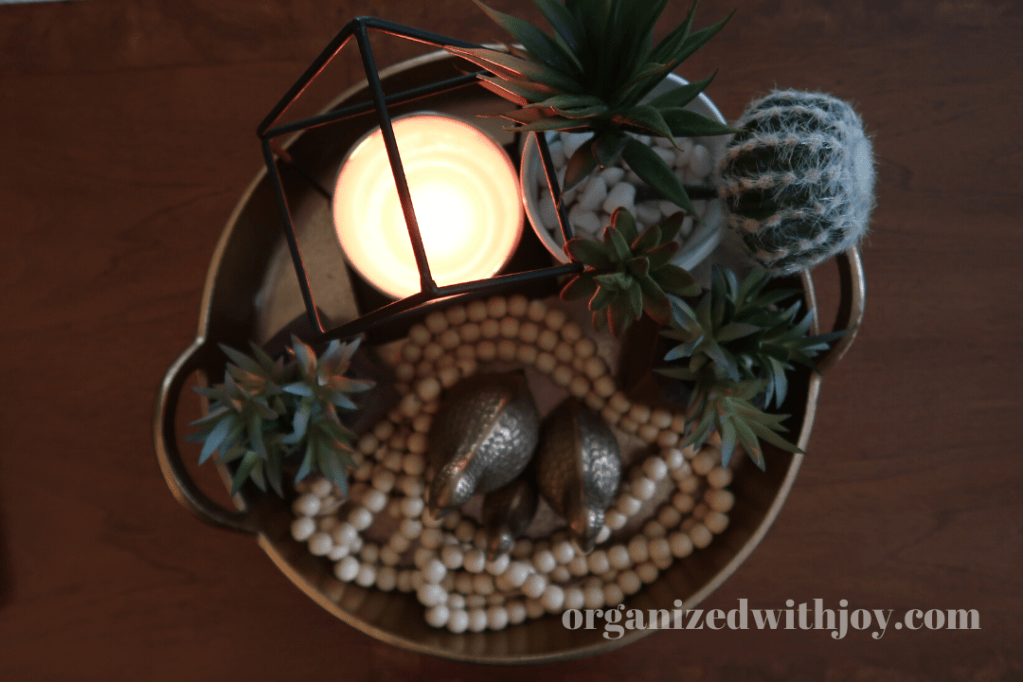
Third, lighting choice really does change the mood of a room. Using warmer tone bulbs, especially in the evening, creates a calming atmosphere. Using lamps as opposed to overhead lights, or even displaying twinkle lights in a fireplace or around a tree in your home can create this mood. In addition to that, lighting candles can create that soft light and cozy mood in your home.

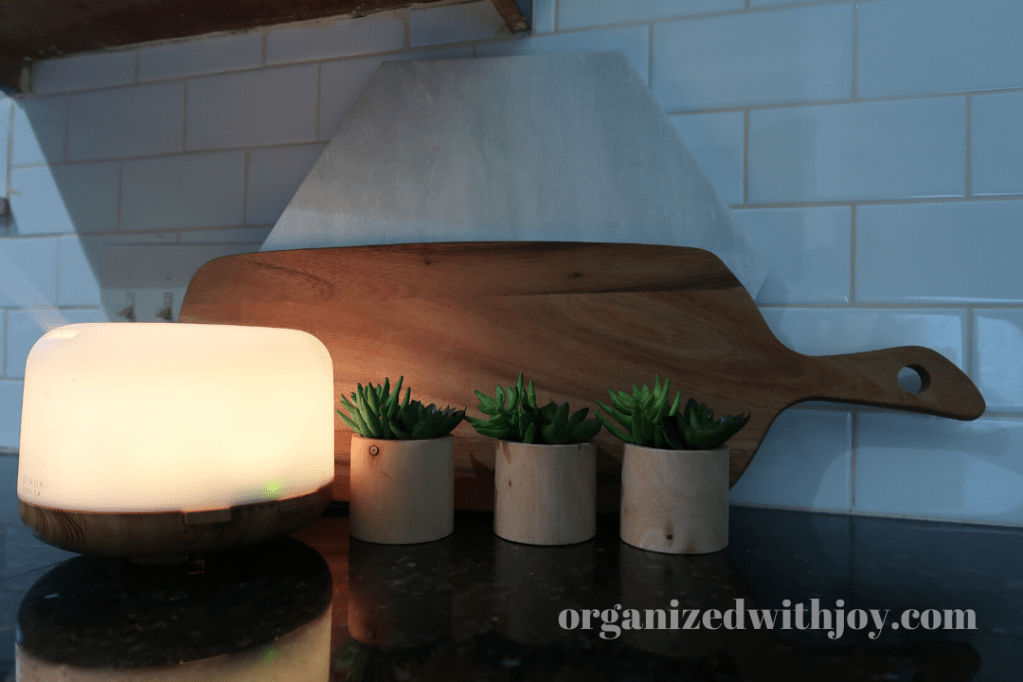
Fourth, is scent. With scented candles, you can get the coziness of the light of the candle burning and the scent. You could also use an oil difuser to create that good smelling scent throughout your home. Another way you could get the coziness of scent is through baking or cooking. The smell of freshly baked cookies or bread in the oven, or perhaps a pot roast fills your home and creates that feeling of coziness and warmth. Lastly, you can create those good scents through cleaning products, which leads into my next point…

Fifth is order. Most humans thrive in a space that has order. Chaos in our physical space can breed chaos in our minds, which does not lend to a feeling of coziness or peace. I have different practices which help keep my home tidy, which I have a blog post about and you can read that post here. When things are put away, and clean this lends to a feeling of coziness. 

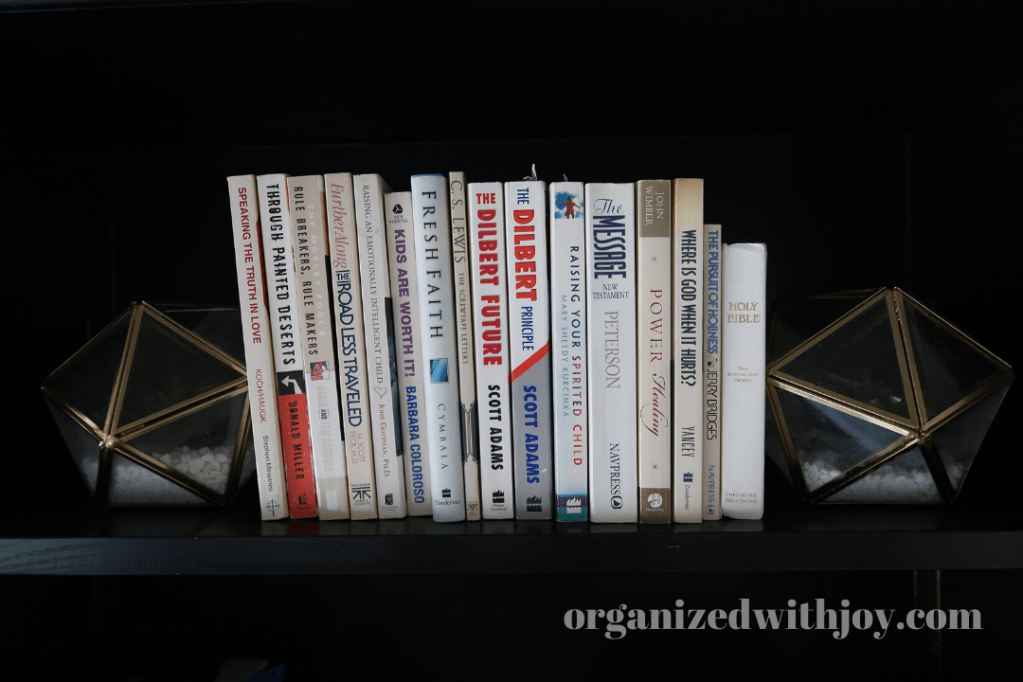
Lastly, surrounding yourself with things you find beautiful – whether that’s family photos, books, or intentional home decor. In spite of what some people think, “minimalism” doesn’t have a number of certain things. It’s whatever makes YOU feel comfortable, and whatever brings YOU joy!

I hope this post inspired you to find new and creative ways to create a feeling of cozy throughout your home.

Here is the YouTube video I made with this information.