FUN MINIMALISM GAME: SILENCING A ROOM

For today’s Thoughtful Thursday post I wanted to talk about a concept I recently learned about from another YouTuber. In her video she talked about the idea of silencing or quieting a room. I have been on this journey towards minimalism and decluttering for almost 10 years now and I’m always looking for different ways to level up in order to challenge myself further on this journey. The basic idea of silencing a room is to remove everything from the space (or most things) in order to reset it to square one, and then bring items back into the space as necessary.

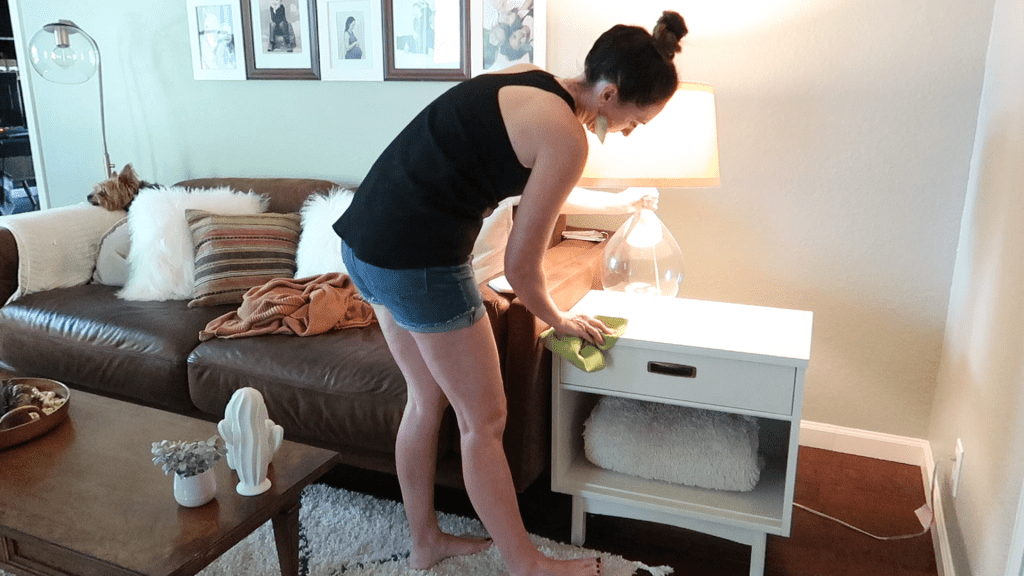
I decided to try this technique for the first time in our living room. I know this might work better in a more functional space, like a bathroom or bedroom, but I decided it was a good space to start in our home since this space was fairly minimal to begin with. I did challenge myself to remove items from this space and to live with it for about a month to see how I feel. 

As I pursue minimalism, one of the challenges I have faced is finding the balance between creating spaces which are minimal and easy to maintain while also feeling cozy and inviting. Our living room is definitely one of those spaces I have been working on to create that perfect balance. I was surprised by how much I was able to remove from this space and as I have lived with it for a few days, I still feel like it feels cozy and not sterile.

I do think when we are pursuing minimalism it can be a slow process. I know for me I have decluttered our home slowly and in phases over the last 10 years. I have been married for almost 30 years, so I decided it took 20+ years to accumulate all of our possessions, so it might take a while to declutter them. Doing it slowly and in phases has helped me to not feel as overwhelmed. However, when we are slowly decluttering we may not notice our progress. I highly encourage you to take photos or videos of your spaces as you are on a decluttering journey so you can chronicle your progress. I’m thankful that I have a YouTube channel which has organically allowed me to keep track of this progress as I have so many videos on my channel of how my home has transformed over the past 5 years.

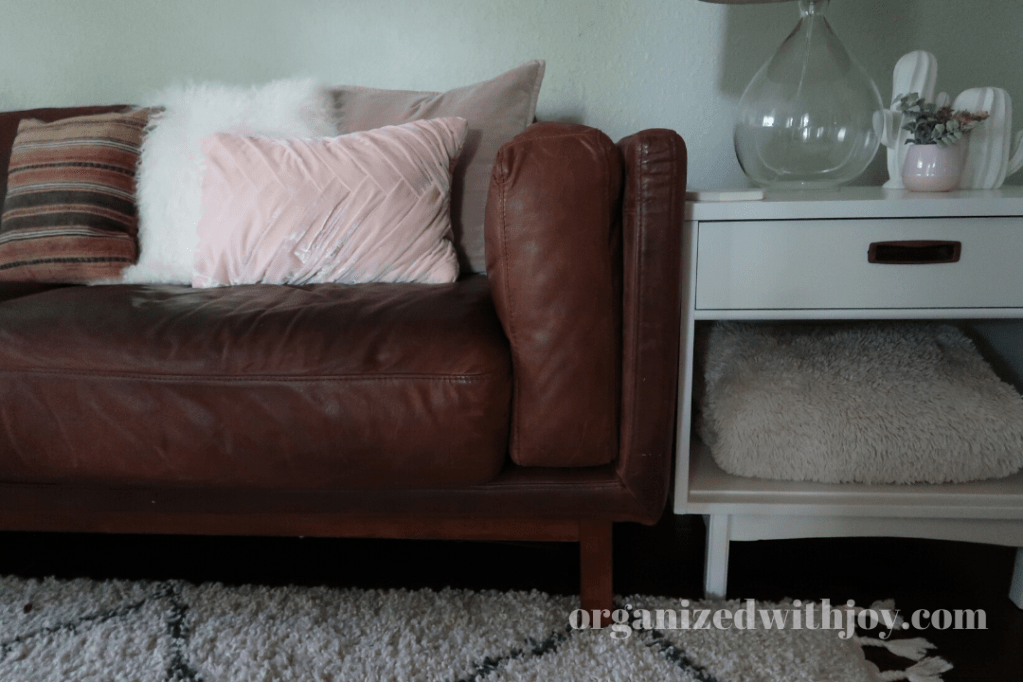
Here is one item I removed from my living room. I am not quite ready to declutter this piece, I was just removing it from the space for now.

Sometimes we can feel like we are not making much progress and that is why documenting with photos or videos can be helpful. But I wanted to share a story with you of something that really made me recognize my progress. Over the holidays I was at a friend’s home for a party. I always viewed this friend as being minimal and she and I have similar home decor taste. Granted I know her Christmas decor was up, but sitting in her living room I realized how minimal my home and home decor was compared to hers. Don’t get me wrong, her home is beautiful, clean, and organized, but the difference was striking to me. I had never noticed how much more decor she had than me being in her home before.

One of the greatest benefits of decluttering and pursuing minimalism is having less to take care of. Less to clean, less to organize, less to manage. When we have less to manage we are able to pursue other things. We have more time to invest in hobbies and relationships, which I find to be far more fulfilling than taking care of stuff.

I am excited to implement this concept in other spaces around my home in order to challenge myself to potentially declutter even more! The more we declutter, the more we build those muscles, and it gets easier! I shared a video over on my YouTube channel of the process of silencing my living room. If you would like to check it out I will link it below!

Here is the video I shared in conjunction with this blog post.

ORGANIZATION MAINTENANCE

For today’s Thoughtful Thursday post I wanted to talk about a couple of things. First, I wanted to share how important organization maintenance is and I also wanted to talk a little bit about my plans for 2025 for food purchases in light of my no buy year. Of course we have to buy food, but I am just going to be more intentional about it.

So first I wanted to talk about how one tip in keeping your home organized is to maintain your organized spaces. Maybe this is an obvious point, especially for spaces like the pantry that have a high turnover rate. But we can sometimes neglect maintaining our organized spaces after we have done the initial process of getting it organized. Having an organization framework with organization tools will definitely help to make it easier to keep your spaces organized, but they do need to be maintained, and sometimes revamped completely like I did with my pantry as your individual or household needs change.

Our homes and possessions are ever evolving, so we need to recognize how we organize should evolve as well. As we transition through different life stages our needs change. We have different possessions based on what life phase we are in, or based on our hobbies and other needs. When my kids were younger and we had very busy schedules I relied more on processed or pre packaged foods for packing lunches or even to make a quick, easy dinner. My pantry looked very different 10, even 5 years ago based on a different life stage and different needs. Keeping our spaces organized is just one of those homemaking tasks that will be ever present! Like dishes and laundry!

The other thing I wanted to talk about today is how I’m being more intentional with the food I purchase in 2025 as a part of my no buy year. There were a lot of items I used to purchase at Costco that I will no longer purchase. I want to focus on primarily having whole foods on hand and not as much processed and pre packaged foods. This is why I decided to transform pantry into a primarily ingredient pantry so that it was easier for me to see the healthy snack or food options in general at the front of the pantry, or as I like to call the prime real estate area.

The other thing I am going to change is to not purchase so much back stock to have on hand. I don’t mind having a certain amount, but I would like to be more reasonable than I have been in the past. Currently there are four people living here, so I see no need to have a ton of extra food on hand. In general, as I pursue minimalism, I’m realizing the value of not having a bunch of back stock on hand – whether it’s food, cleaning products, toiletries, or beauty products. It’s easier to maintain our organized spaces the less inventory we have on hand! I am being really conscientious about using up what we have on hand before purchasing more and making my meal plans around what I already have on hand. This will require me to buy less. Also, if I want to try a new recipe that calls for an obscure spice or ingredient that I don’t keep on hand, I will see if there is any substitute that would work that I already have. Lower inventory equals less to take care of equals more time and more peace!

Okay friends, that is all I have to share for today’s Thoughtful Thursday! I hope you enjoyed hearing what I had to share today! Please let me know your thoughts on my thoughts down in the comments!

Here is the YouTube video I shared in conjunction with this blog post.


GRACE IN HOMEMAKING

Okay friends, for today’s Thoughtful Thursday post I wanted to address something that some of my girlfriends and I were talking about this week. We were talking about this idea that there are different seasons in life that allow for different abilities and different bandwidth for homemaking.

I wonder if some people come to my YouTube channel and see my organized spaces, see my tidy home, hear me talking about my disciplined homemaking schedule and think to themselves: I don’t have the bandwidth for that. Guess what, I have not always had the bandwidth for the way I live now! We are all in different seasons of life, have different responsibilities and obligations, and we all have different abilities. Some of you may have a chronic illness, or depression, or other health conditions that limit what you can do in this season in life. You may have young children with busy schedules, or you have other priorities and commitments outside of your home – whether that is a job or an organization you’re involved in. I just want to let you know, if you visit my YouTube channel, you are seeing one stage in my life. You are seeing the stage of life where I have more margin in my life. My kids are older now and more independent, and in addition to that, ever since Covid I have not been involved in as many things I once used to be involved in. I have enjoyed this slower pace of life, and so have been more intentional with my schedule and what commitments I will make moving forward.
Check out my YouTube channel if you have not already!

Thirteen years ago I went through some health issues that affected my ability to be productive. I had pretty severe anxiety and debilitating acid reflux for quite a while before I learned about my food sensitivities and some of my hormonal imbalances. During that time in life, which was also when my kids were in middle and elementary school, and my husband traveled a lot for his job often leaving me essentially to be a single parent, I had to evaluate realistically what I could do. It’s in these more difficult seasons of life that we must give ourselves grace with regards to homemaking. Sometimes just keeping people alive is enough!

While I have always had a schedule, even when my kids were very young, I have also allowed myself flexibility based on what commitments we had in each stage of life. While I have always incorporated deep cleaning and decluttering in my schedule, it certainly didn’t happen as regularly as it does now. There were some weeks when my kids were younger that I just didn’t have the bandwidth to get it done. In those seasons I had to prioritize other things – like my kids activities, volunteering, and other obligations outside of the home. 

If you have watched my channel over it’s lifetime (which by the way I officially had my four year YouTube anniversary on November 1st!), you will have seen the transformation of my home. While I did my best to keep our home clean, organized, and tidy while my kids were growing up, that wasn’t my priority then. But since starting my channel 4 years ago, with my kids older and more independent, I have done a lot of organizing projects and a lot of decluttering, which I only now have had the time to be intentional about. It took us 27 years of marriage to accumulate all of the things we have today, and it has taken me the last 8 years or so of prioritizing decluttering and organizing to get my home to where it is today. I organized and decluttered our spaces little by little over time, it didn’t happen overnight.

I did want to share this with you to let you know that anything I share on my YouTube channel or my blog comes from a place of where I am in my season of life. I share with you tips and things that have helped me as I get my home decluttered and organized, but I fully understand that not everyone is in a season where they have time to devote to these things. This is why I am such a big advocate for doing things a little at a time, and being intentional about what comes into your home! 

I hope if you are in a season where you don’t have as much bandwidth for homemaking, that you would give yourself grace today. I truly hope anything I share is inspirational to you and doesn’t make you feel discouraged because you can’t do things the way I do them. I only share to inspire and motivate! If you are in a more difficult season, where you don’t have as much time or energy – just be encouraged that seasons change! They always do!

Check out the YouTube video that I shared in conjunction with this blog post!

8 TIPS TO KEEP YOUR PANTRY ORGANIZED

Okay friends, for today’s Thoughtful Thursday I wanted to share some tips with you on how to keep your pantry organized. I was having a conversation with some friends on Marco Polo where we were all talking about our pantries and what works for us and what doesn’t and it inspired me to share these tips with you!

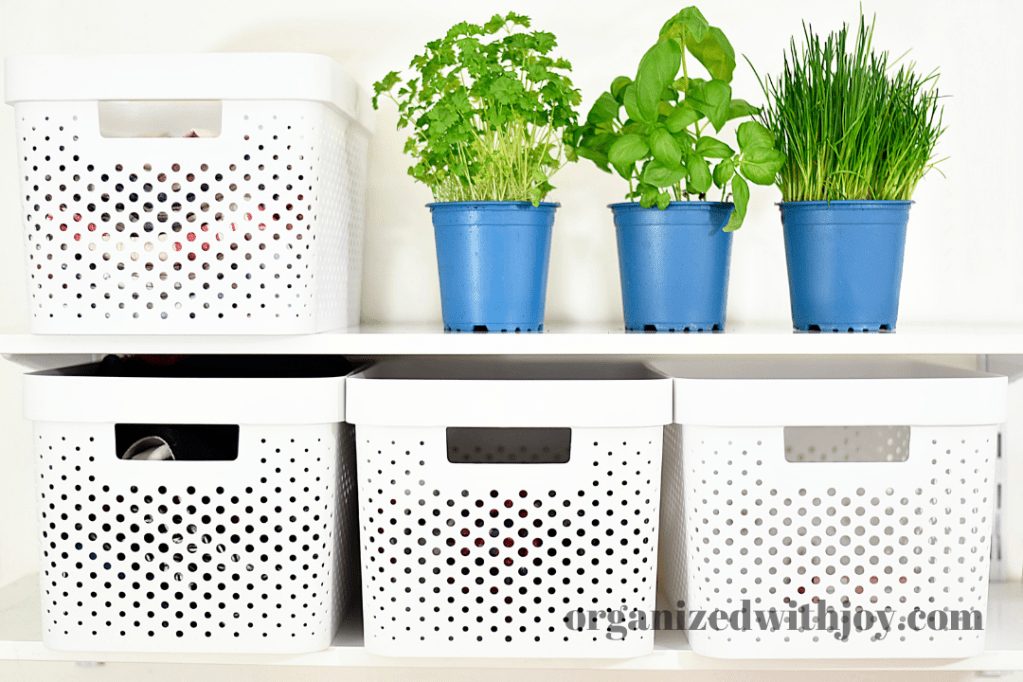
My first tip is to have bins and containers with broad category labels to store your food. Storing food according to like categories is a great way to easily find what you need in your pantry. When you choose broad labels it makes it more flexible if you’re not purchasing the exact same things every week. These bins act as drawers in your pantry making it easier to keep things contained. It’s also a more efficient use of space to take things out of the original boxes or packaging to make your pantry more streamlined. You don’t have to spend a lot of money to achieve this look. You could use bins from around your home, or even cardboard boxes to contain things. Honestly, there are a lot of affordable bin options out there these days, including the white bins I have in my pantry (pictured below). I purchased them from The Container Store and these are the large and medium sizes, costing $6.99 and $4.99 respectively.

My second tip is to invest in uniform bins if you can. Having uniform bins will not only fit more efficiently, but will also make your pantry look more aesthetically pleasing. You might notice in my pantry I have a few different styles for different types of food. I like using the white bins to store broad categories of food, the plastic storage boxes with the white lids for snacks and other categories we are getting in and out of regularly or taking with us to different rooms, and the glass jars are great for staple dry goods such as rice, pasta, and quinoa. I really love those glass jars for storing baking items as well, which I don’t store in this pantry.

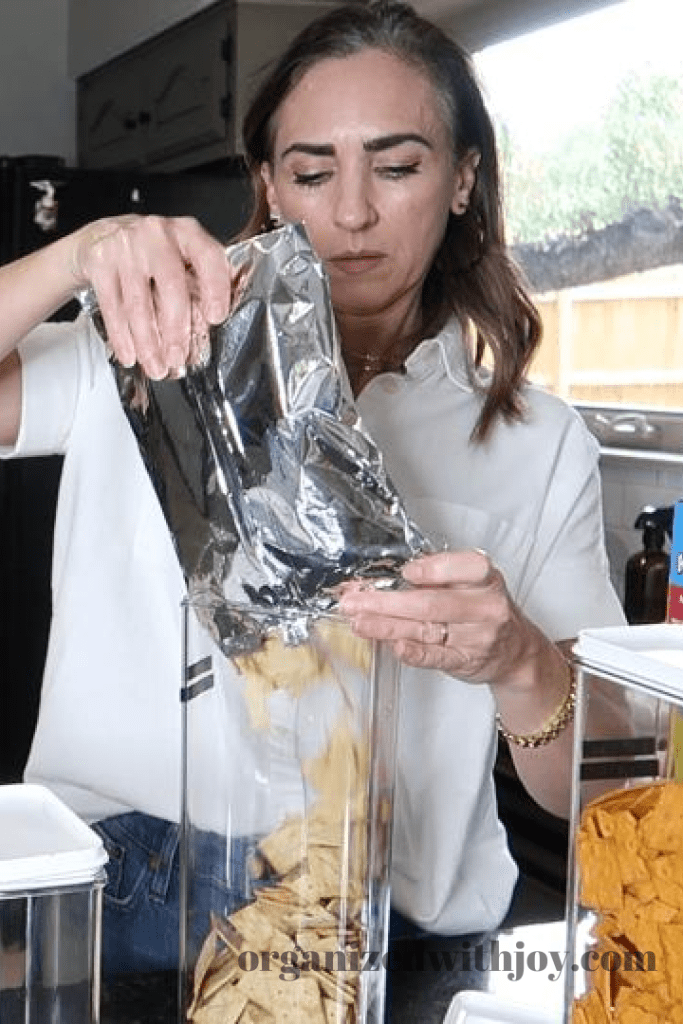
With all that said, tip number three is to only purchase containers if you have the time and are willing to decant your food. It will be more disorganized if you have the containers and packaging in your pantry. I actually find it very cathartic to decant my food, so I really enjoy it, but I know it’s not for everyone.

My fourth tip is to spend time regularly tidying your pantry. I usually give our pantry a little tidy each week when I pick up groceries and decant all of the food I purchased. Even though my family members know the system I have in place, they don’t always put the snack boxes back exactly where I would, so I take that time to just put everything back where I like it. I also like to take everything out every three months or so to wipe everything down in order to get it clean and back in shape!

Another tip I have is to inform your family of your pantry system. Like I mentioned, my family knows the general system I have set up for our pantry. If family members know the basic system, they can help stay on top of putting things where they belong making it a more effective system. You could add labels to the bins to make this easier for family members, and I find labels also aesthetically pleasing.

The sixth tip I have is to use the back of the pantry which is more difficult to get to for back stock. This is obviously for those of you who have a deeper pantry like I do. If you don’t have a deep pantry, maybe there is another space in your home where you can store back stock. In addition to storing things in the back of our pantry, we also have a secondary pantry where I store things that have a longer shelf life that I can purchase at Costco.

Another tip I have is when decanting your food, dump out old product into a dish before adding the new product to the container so it can be on top and used up first. Whenever I’m decanting dry goods into a jar or storage container, I like to be sure the older product is on top so it gets used before the newer product. When decanting liquids, I only add more into the uniform bottle if I’m adding from an already opened product. Once that product is gone, I use it up fully then wash out the uniform bottle with soap and water before opening a new product and adding it.

The eighth and final tip I have to share is to be realistic about the space you have for food and intentional with only purchasing what you can store. If you don’t have a deep pantry, or a secondary pantry, you will not be able to keep a lot of back stock on hand. The less space you have means the less food you will be able to have on hand. Being realistic about your space boundaries for food will help you to not have a cluttered pantry, which will make it easier to keep organized.

Well friends, I hope these tips helped you today! I love hearing from you in the comments, so share any tips you have to keep your pantry organized!

This is the video I shared in conjunction with this blog post if you would like to check it out!

The Real Secret of Tidy People

I think I have figured out the real secret to being a tidy person. I have a whole blog post sharing how to keep your house tidy. These habits are easier to develop if we adopt this secret of being a tidy person. In my other blog post I share several habits you can cultivate to become a tidier person. Dealing with things immediately instead of setting them down to deal with later, having a cleaning routine that makes sense so you can stick to it, enlisting the help of other family members, and having a place for everything are all great habits that can help you to stay on top of clutter accumulating. But the real secret is the final tip I shared in that post – DON’T OWN A LOT OF STUFF!

The real secret of being a tidy person is that they don’t have extra inventory in their homes. They don’t keep things just in case. They don’t want to manage a lot of inventory. I think I came to this conclusion as my kids got older. Now that all of our children are adults, even though currently they are all living with us, I realize that there is a lot less stuff I need to manage. When they were younger there were toys, school papers, and sports equipment. Now that they are older they manage their own things.

In addition to that, over the past 7-8 years I have been pursuing minimalism. It is definitely a slow process for me decluttering my home and learning new spending habits, but less inventory in my home equals less to put away, clean, and organize.

I have a friend who openly admits she is not tidy. I would consider her a maximalist. She loves ALL the things! And I think that is totally fine! We are all different, and that’s what makes the world a beautiful place! I can go over to her house and appreciate all of the things she has surrounded herself with, but I personally could not live this way. If you’re someone who loves all the things, that is okay. But just know that the more you own, the more difficult it will be to be a tidy person. It comes down to what you value and what you can handle.

I am very affected by my external environment. My guess is you are too since you are reading this blog post and wanting to learn the secret to being tidy. Clutter and extra stuff around me definitely affects my anxiety and my mood. When my external environment is chaotic, I feel a bit chaotic in my mind as well. Everything we own takes up our energy and time. The less we own, the less we have to manage, the easier it is to keep a tidy home.

The more I simplify our home, the more I really see the benefits of living with less! Easily being able to tidy your home is one of those many benefits. I hope this post was helpful for you today!

12 Tips For Packing To Move

In today’s post I wanted to share with you some tips for moving! I thought summer is the perfect time to share these tips as a lot of people move during the summer months. I have been married for 26 years, and we have three adult children now. Over the course of our marriage we have lived in 4 states, 6 different apartments and 2 homes, so I have experience with packing to move! I hope these tips are helpful for you for a future move, or if a move is not in your near future you can pass this along to a friend or family member that might benefit from these tips!

{{1}} The first tip is to pack all non essential items well in advance. I always liked to pack non essential items even a couple months in advance to get this out of the way. When we begin the packing process, we don’t realize just how many belongings we own. At first it seems like it won’t take long at all to get everything packed, but the deeper into the packing process you get, you realize that you have A LOT of stuff and it is time consuming. Some examples of non essential items are home decor, throw pillow and blankets, picture frames, books, and holiday related items. 

{{2}} My next tip is to color code labels to match the rooms they belong in. This tip is especially helpful if you have movers moving your belongings, but even if friends or family members help they will know which room each box goes to very quickly. You can even have a color sign in each room to indicate which boxes go in which rooms. 

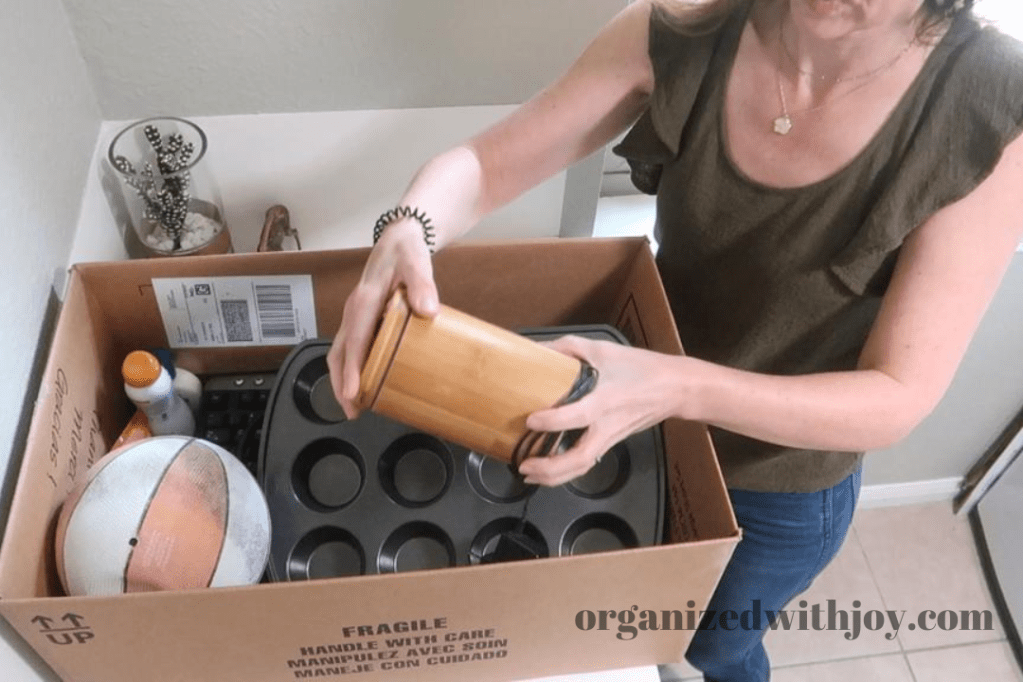
{{3}} Another tip is to use towels and blankets to pack fragile items. Using towels and blankets to pack fragile items will be efficient since you’re packing both items, but protecting the fragile items. Obviously you will want to take special care to wrap really fragile and special items with bubble wrap or newspaper.

{{4}} Speaking of newspapers, save newspapers to wrap breakables. If you don’t get newspaper you can buy non printed newspaper from moving stores. Using the non printed newspaper is nice for things like dishes and drinking glasses so they don’t get dirty from the printing.

{{5}} Another great tip is to ask local grocery stores or big box stores for boxes. Instead of purchasing new moving boxes, you can go to local grocery stores or places like Target or Walmart to ask if they have extra boxes you could take. They often have leftover boxes from unloading inventory and are happy to give them to you. Sometimes these boxes aren’t quite as sturdy as the moving boxes, so you will want to be careful with what you pack in them. 

{{6}} My next tip is to declutter, donate, and sell anything not worth moving. It is best to use the opportunity while you are packing things to move to declutter and donate or sell anything you are no longer loving or using. Depending on how much you have, this can be an overwhelming task and too time consuming to do in conjunction with packing to move, but it is wise to just leave behind anything that is no longer serving you.

{{7}} Next, have paper goods on hand for the last few days leading up to the move and the first few days in the new place. It is nice to have paper plates and bowls, and plastic cups and cutlery the last few days before a move so you don’t have to worry about doing dishes. In addition to that, then you can get your kitchen packed and ready to go! And it is nice on the other end, moving into a new place knowing you have something to eat on when you arrive without having to unpack.

{{8}} Something else that really helped me was to have a box or bin filled with all moving essentials – packing tape, sharpies, labels, scissors, AND know where it is (have a designated location for it). Often during a move everything is a bit chaotic. It’s easy to misplace things or not know where things are because everything is getting upheaved. If you have a designated bin for all of the moving essentials, and you know where it is located (maybe in a central location in the home), then it’s easier to keep track of those things and know where they are when you need them.

{{9}} The next tip some people may not think about, and that is to carefully label the last boxes. We often are just throwing a bunch of stuff together towards the end. Indicating in detail what is in the box will make it easier to know what is in it. In addition to that, write “last box” on them clearly so you know that it is a box you will also want to unpack first!

{{10}} Another tip I have is to enlist help. You can teach your children to pack! Most kids are excited to help with the packing process. You can allow them to pack their own things and give them ownership. Maybe a friend or family member can come over and help you pack or unpack as well. Working with friends and family is always so much more fun than working on your own!

{{11}} My next tip is to unpack essentials first. Maybe this is an obvious tip, but it can be overwhelming arriving at your new place and feeling like you don’t know where to start. Starting with bedding, bathroom essentials, and kitchen essentials is a great place to start. You will also have those last few boxes that you labeled “last box” which you will likely need right away as well. If you’re anything like me, the coffee will be the first off the truck!

{{12}} My final tip is to take breaks! Packing for a move, and moving in general is really exhausting, both physically and emotionally. Be sure to listen to your body and take breaks when you can. 

Well, I hope this gave you some tips that will be helpful for your next move! If you’re interested, you can check out the YouTube video I made in conjunction with this post!

Swedish Death Cleaning, 3 Benefits & 7 Tips

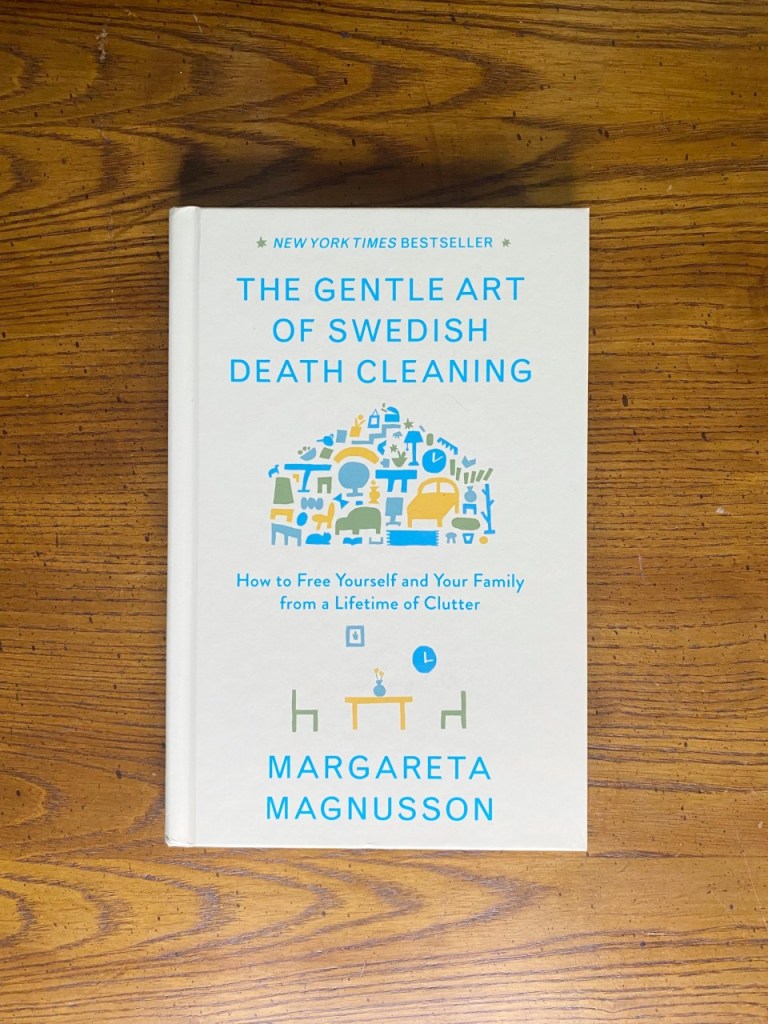
I have heard a lot about Margareta Magnusson’s book The Gentle Art of Swedish Death Cleaning, but I wanted to read it for myself. From what I learned before reading it, it was definitely something that resonated with me as someone who has a habit of regularly decluttering. The basic idea of Swedish Death Cleaning is to declutter and minimize your things leading up to your death in order to not leave a burdensome amount of stuff behind for your children or family members to deal with after you pass.

While reading this book I discovered 3 benefits of death cleaning and 7 tips as you embark on the journey of death cleaning. If you’re young, well that’s a relative term since none of us really know when we will die, don’t stop reading! You might find some of the benefits and tips helpful!

The first benefit in death cleaning is just acknowledging your mortality. When you face your mortality, you realize that your children or other family members will one day have to deal with the stuff you leave behind. It’s already stressful to lose a parent or loved one, dealing with their belongings can be an emotional and time-consuming task. It is good to acknowledge that whatever you leave behind will be someone else’s burden.

The next benefit is having a death cleaning mindset, which is you think more about how you can reuse and recycle things rather than bringing new things in.

The final benefit, you learn to appreciate things at the store instead of always having to bring the items home with you. Recognizing that anything you bring home will need to be later decluttered or handled by your children or family members after you pass will slow the inflow of things coming into your home.

Next I wanted to share some tips I learned about Death Cleaning. The first tip I learned was to not start with sentimental items. These items can really slow down your progress in decluttering, making it discouraging to continue on. By starting with items that don’t have sentimental attachment and there is not an emotional connection, you can get the momentum you need to encourage you to move forward.

The next tip is that it is easier to Death Clean when your home is organized. It’s never too early to start decluttering and organizing your spaces. It will make the process so much easier later on down the road. I think it is so beneficial to have a practice of regularly decluttering. We constantly have items coming into our homes. It’s much less overwhelming to deal with items a little over time. In addition to that, as we age it gets more difficult to maintain and manage our belongings. The fewer items we own, the easier it is to manage.

Tip number three is to take your time. This is why knowing about death cleaning is so important. If we acknowledge that it’s a process that needs to be done, then we will have plenty of time to go through our things. There might be circumstances where we are forced to go through things quickly – whether it’s an unexpected move or the loss of a loved one, but it is ideal to go through things little by little. This way you can be thorough.

Another tip I found helpful was to declutter items that are private that family members may not want to find. I am sure you can use your imagination on this one! I will give you an example from my decluttering experience. One time while decluttering my closet I found some old journals from my middle and high school years. It was mostly filled with angst ridden feelings that I guess were easiest for me to process on paper. Skimming through them I realized I really didn’t want to read these journals again, and I certainly didn’t want my kids to one day come across them, so I decided to get rid of them.

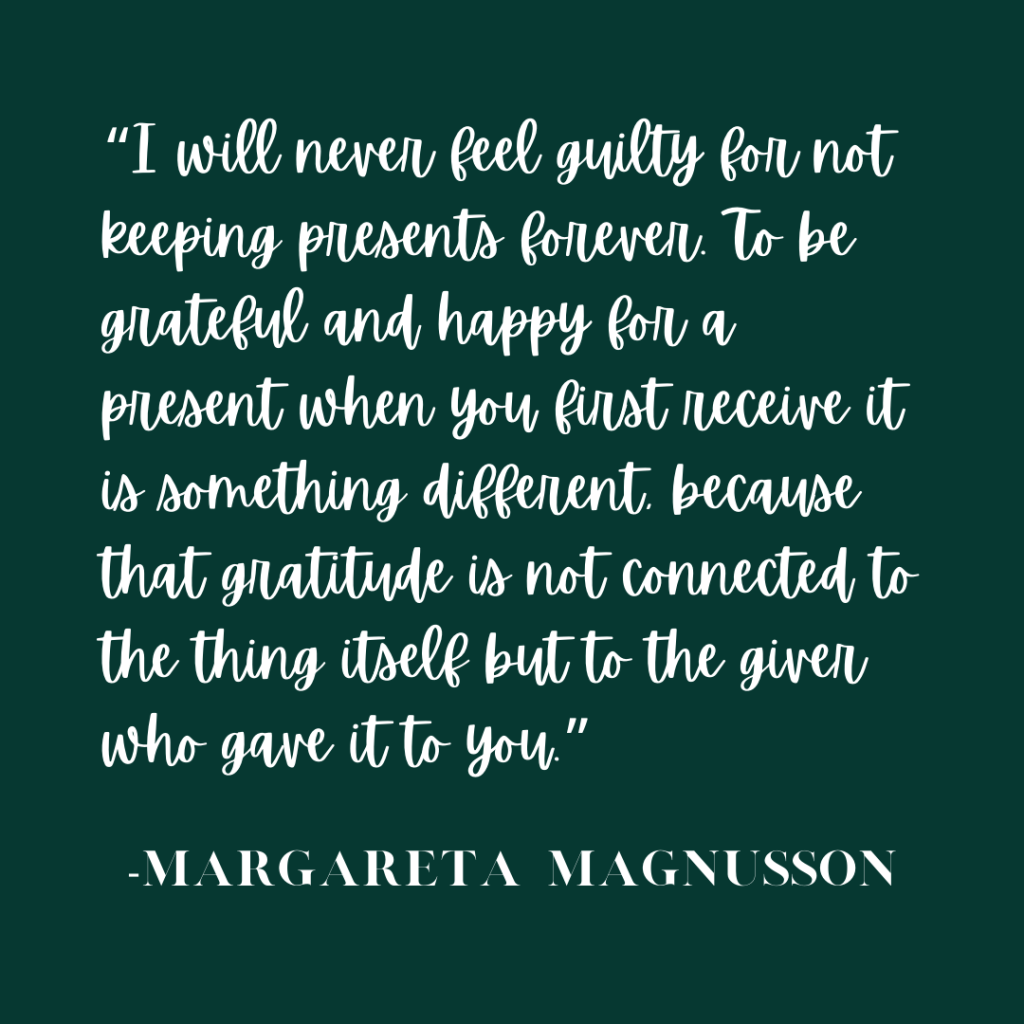
The next tip is to not feel bad about decluttering gifts! We can’t be expected to hold onto every gift we ever get for the rest of our lives. That would be ridiculous. Most people would not want their gifts to become a burden to you. For those gifts that you are no longer using or loving, it is okay to let them go. I really appreciated a quote from the book which was: “I will never feel guilty for not keeping presents forever. To be grateful and happy for a present when you first receive it is something different, because that gratitude is not connected to the thing itself but to the giver who gave it to you.”

The sixth tip is that you should save photos for last. Photos fall into that sentimental category, but in addition to that if this project is left undone before you pass it’s not quite as burdensome to family and friends. It can be a positive experience for them to be able to go through all the photos. 

The last tip is to have a “throw away” box. This is a box that you would literally write “throw away” on the outside of it so family members know that the contents of the box are really only meaningful or sentimental to you. This may be childhood toys, special letters or notes from family or friends, or maybe journals you kept.

I hope this was helpful to you! I highly recommend this book! It is a quick and easy read and there were definitely parts that made me laugh!

The video I made in conjunction with this blog post.

10 Organizing Mistakes

In today’s post I wanted to share with you 10 organizing mistakes people commonly make when trying to complete an organization project. I hope knowing these mistakes prevent you from making them when working on future organizing projects!

The first mistake I wanted to share is not decluttering first. This is the first thing you need to do with any organizing project. There is no sense in organizing items that you no longer use or love. You should declutter before assessing what organizing tools you will need to complete the project.

The next mistake is not measuring your space before purchasing organization bins. It is really important to measure the space you will be organizing so you know what size of bins to purchase and what type of items will fit in the space. I know a lot of people like to pick up organizing bins when they see them, but for a more functional space it’s best to know what you need before purchasing anything.

The third mistake is getting over ambitious. I think it is best to start small when you are organizing a space. Start with one drawer or one shelf. Maybe you have time allotted to organize an entire closet or even room, but know that many people underestimate the amount of time it’s going to take to get a space organized. Many people are overambitious and end up leaving organization projects half done. You will more likely have success if you do a little at a time, or at least be aware that it will likely take more time than you think.

The next mistake is wanting a Pinterest looking space instead of a functional space. Many people turn to Pinterest or Instagram for inspiration to get a space organized. Oftentimes spaces that look perfect are not functional. You can still achieve an aesthetically pleasing look with function, but it is really important to focus on function so that the new organization system is sustainable. 

Speaking of being sustainable… the next mistake is not keeping up with the system you set up. There is a common misconception that getting a space organized is one and done. Most spaces need to be maintained in order for it to function properly. Many spaces around your home have rotating inventory – whether it’s the fridge, pantry, or closet. You need to keep up with the system set up and declutter and reorganize the space on a regular basis.

Another mistake people make when organizing a space is not leaving breathing room. This goes hand in hand with keeping up with your system. When you organize your space you will likely not have that exact same inventory all the time. Leaving “breathing room” will allow for space for new or extra items that might come in later.

The next mistake people might make is not labeling an organized space. The obvious things may not need to be labeled, but it is important to label organizing bins in order to quickly find what you need. This also helps other people who will be using the space to know where things belong.

The eighth organizing mistake is not getting other people on board with the system. It is important that everyone who is using the space understand the system and commit to using the system properly. It is the best way to ensure the space functions well and stays organized.

Another mistake is not recognizing your organizing style. I have referenced the four organizing styles on my channel before. Cass, from the Clutterbug (she has a blog and YouTube channel) has come up with four different types of organizational systems, which I have found to be great classifications. Each one is represented with a bug. 

The first is the ladybug. This type of person likes things to be put away out of site, but their cabinets and drawers can get easily cluttered because they want to quickly shove things in drawers, baskets, or cabinets. They need a macro-organizing system – where things are quick and easy to put away. 

The next type is a cricket. They also like a clutter free environment, but they like things to be organized in detail, so micro-organization works best for them. 

The next type is a butterfly. They prefer everything to be displayed. A butterfly also needs the fast macro-organizing solution, however they will want things to be visible. They often feel like they could never get things organized and feel messy, but the truth is they can have a place for everything fitting within the way they thrive. 

Lastly is the bee. These people are also visual people and want their things on display, however they want things to be organized in detail. Like the cricket, micro-organization works best for them. They are likely the type of people who are big into crafting or even have a home business with a lot of supplies that need to be organized in detail.

The final organizing mistake is not taking things immediately to the donation center. When you don’t get rid of your decluttered items immediately, you risk them trickling back into your home and organized spaces.

Well, I hope sharing these common organizing mistakes with you today will help you for future organizing projects around your home!

The YouTube video I made in conjunction with this blog post.

Tips For An Organized Closet

I have a problem. Clothes. This is the one area where I really struggle to keep minimal. I actually wrote a blog post a while back about why I no longer strive to create a capsule wardrobe. Because of my love of fashion, and therefore my plethora of clothes, it’s imperative that I stay on top of keeping this space organized and tidy. Today I wanted to share with you 7 tips for keeping your closet organized.

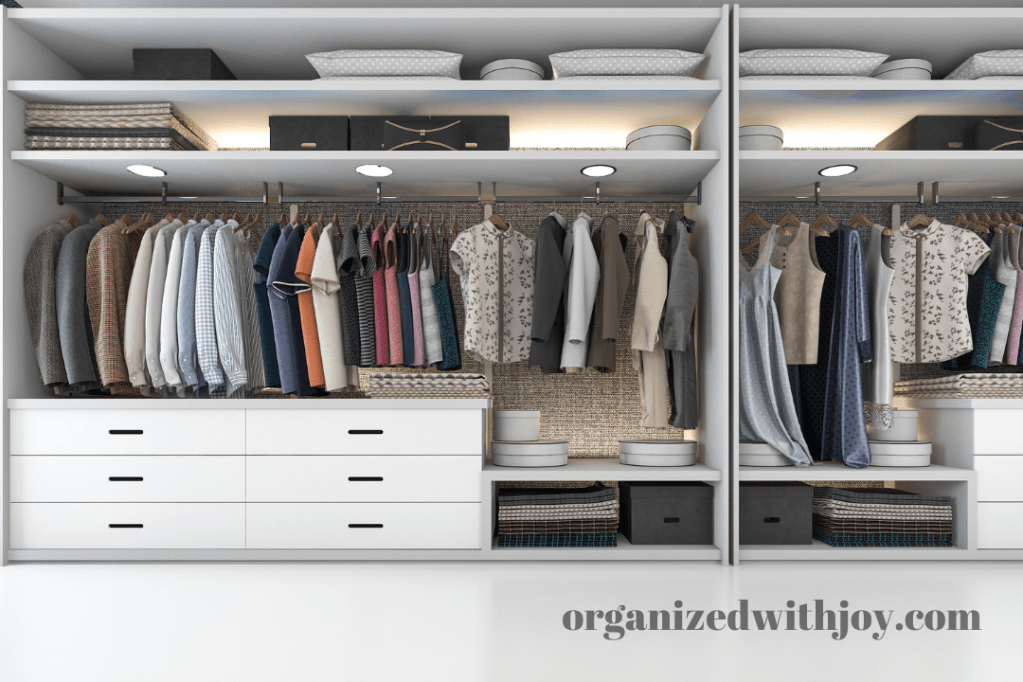
Tip number one is to DECLUTTER! Are you surprised that this is my number one tip? If you know me well, then you are not surprised! I always encourage people who want to get a space organized to first declutter! Getting rid of anything that no longer fits you, or has stains or holes is a good place to start. Keep only the clothes that you feel amazing in!

Tip number two is to KEEP A DONATION BIN in your closet for any clothes you want to declutter. If you are bringing new items into your closet, throw the items you are decluttering directly into the bin. Also, when you put something on and you don’t feel amazing in it, and you take it back off… don’t hang it back up! Put it directly into the donation bin. When the bin gets full, you can drop it off at your local donation center.

Tip number three is to BUY UNIFORM HANGERS. Having uniform hangers automatically makes a closet look more tidy and organized. My favorite type of hanger for aesthetic reasons is wood hangers. I have never owned the thin velvet type hangers, but I have also heard that these work really well because they fit more clothes into a space because of their thin design. Having uniform hangers also gives us natural boundaries on how many clothes we own (unless of course you go out and purchase more!) I have a set number of hangers and this helps me to stick to the “one in, one out” rule where I need to declutter items if I bring new items in.

Tip number four is to LABEL BINS you have in your closet. This is not a must, as you may already know what is in each bin, however labeling the bins makes it easier to identify each bin when you need to get something out.

Tip number five is to CATEGORIZE CLOTHING BY TYPE. I know that it looks pretty to categorize clothing Home Edit style in rainbow order, however it is more practical to have different sections for different types of clothing. You can still organize each category in rainbow order, still making it look nice. In reality, we dress for activity or weather. It is easier to find what we need if all of our tank tops are together, all of the short sleeve shirts, all of the cardigans – you get the picture. It takes less time and brain space if we know what type of clothing item we need and then only look through that section to select something. I also like to keep my shoes organized by category and have each type of shoe grouped together. 

Tip number six is to HAVE A PLACE FOR EVERYTHING. This tip is helpful really for your entire home! If you have a place for everything, it is much easier to put things back away quickly. If it is quick and easy to put things away, we are more likely to actually put them away instead of creating a pile of clothes in the corner chair, on a workout machine, or on the floor. If everything has a place, we are also more likely to stay on top of decluttering as more things come into the closet.

Lastly, tip number seven is to ADD GOOD LIGHTING to your closet. It is surprising what good lighting can do for your closet! When we moved into our home, our closet had no real light fixture, just a single bulb. Although I did not add brighter lighting, it did level up my closet to add an actual light fixture. I am in the process of looking for additional lighting to add to our closet so we don’t always have to turn on the overhead light. There are so many options for battery powered lights to add to your closet space!

Well, I hope these tips were helpful for you. In my opinion, closets can be the most difficult space to keep organized as there seems to be items coming in and going out frequently! Although I did say I’m not interested in creating a capsule wardrobe, I have decided to challenge myself in the month of February 2022 to live 28 days with 28 articles of clothing (not including pajamas, workout clothes, or accessories.) I will update you in March to let you know how that goes! I thought maybe trying it out without totally decluttering most of my wardrobe would give me a good picture of how I feel with less clothing options!

This is the YouTube video I made in conjunction with this blog post if you want to check that out!

5 Things To Declutter In December

It’s December! One of the busiest months of the year for most of us! But I wanted to encourage you to spend a little bit of time decluttering this month with certain items that make sense to evaluate in December!

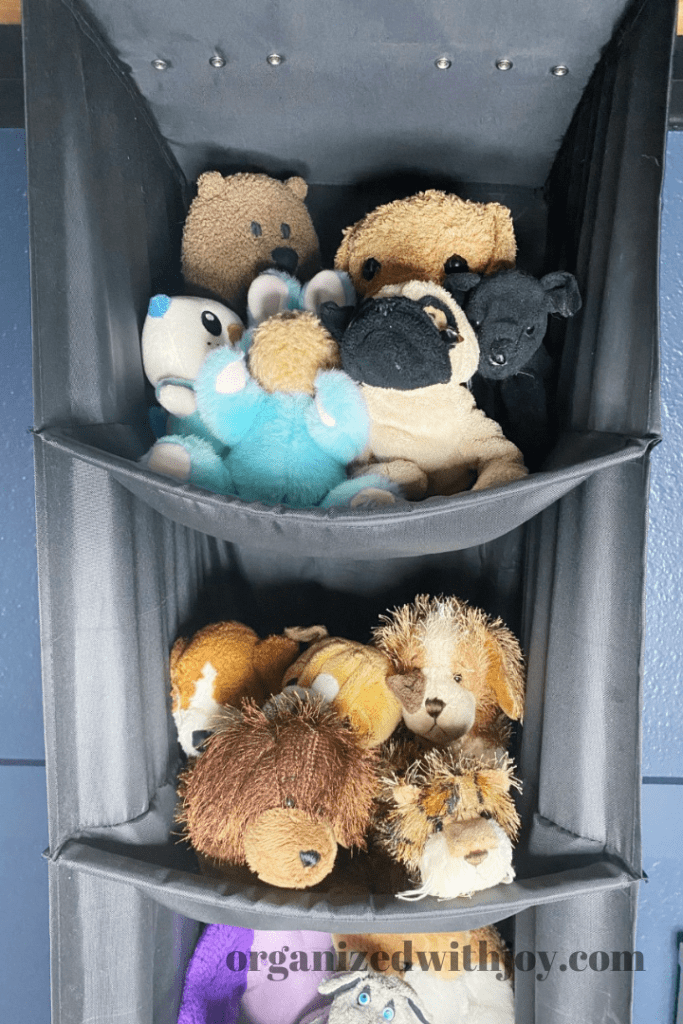
The first item is TOYS! It is smart to declutter toys prior to the inflow of new toys from Christmas gifts. It can be difficult to find a home for all the new toys that arrive on Christmas morning, so evaluating which toys your children no longer play with, finding broken toys or toys with missing pieces will help make room for the new items. If you purchased toys for your children, you can determine which category they fit in and see if other toys in that category can go. It’s always good to involve your children when decluttering toys at the appropriate age. Helping them understand that there is limited space for their toys and they should choose toys they no longer love to make room for the new toys that they will get for Christmas. Perhaps if the toys are gently used you could find a women’s shelter to donate to, helping your children learn to be giving – which is perfect for this time of year!

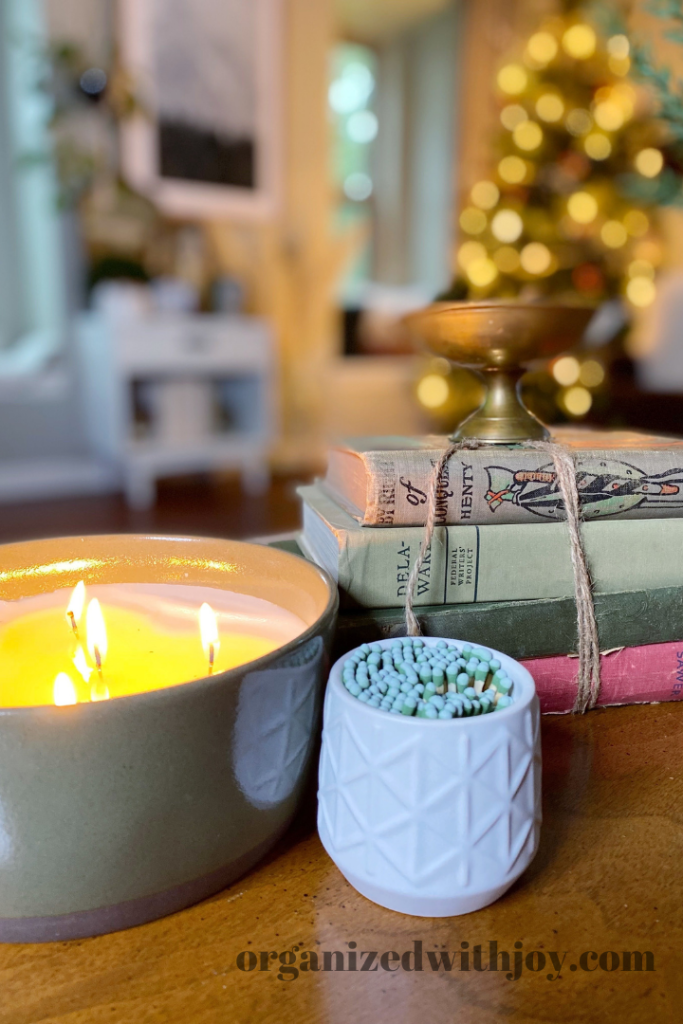
Next up is Christmas decor. This is the perfect time to evaluate which decor did not go up this year and determine if perhaps it’s time for it to go! Oftentimes if we don’t put it up this year, it is even less likely we will display it in the future. Be realistic about if it makes sense to store these items away for yet another year!

The third category of items to declutter in December is wrapping paper and wrapping accessories. When you are done wrapping all of your gifts for the season, it is a great time to determine if it is worth holding onto the scrap ends, stray tags, and extra ribbon. Certainly some of it might be worth holding onto for the next year, but really evaluate if you would actually use it a year from now.

The fourth category is winter coats, hats, scarves, and gloves. I know that in some parts of the country or world, you are well into the winter season with cooler weather! For me, here in Austin, the cool weather is just beginning! This is a great time to determine which coats and accessories you are wearing and which you are not. There might be a local charity for the homeless or perhaps a women’s shelter that would appreciate these items for the winter months.

The last category is kitchen items. During the holidays is probably when you are in the kitchen the most, using more of your kitchen items and gadgets than usual. Be honest with yourself if you are really using all the casserole dishes and spatulas that you own! Or perhaps you have holiday themed dishes that you had good intentions to use but never did. Now is a great time to declutter because you know if these items are actually useful to you!

Well, I hope this list of items you could easily declutter in December was helpful to you! Happy decluttering!

Here is the YouTube video I made in conjunction with this blog post!