ELIMINATING BAD HABITS FOR GOOD

Okay friends, for today’s Thoughtful Thursday I wanted to share something that I have been processing this week with friends. I recently watched a video which unpacked the idea of why we struggle to eliminate our bad habits. He suggested that we indulge in these bad habits as a coping mechanism. We all have psychological needs that need to be met. When these needs are not being met, we tend to turn to the quick comfort. And unfortunately the way our society is now, there is no shortage of quick dopamine hits!

If you have been around a while, you may know that I am doing a no buy year in 2025. I debrief on how each month is going on the last Thursday of the month, so you can hear all about May next week! Spoiler alert: it’s juicy! You will want to check out that post! But in addition to that I have also been doing another challenge each month. In April I did a minimalist closet challenge which actually bled into the first part of May because I was so busy with travel at the end of April and then the beginning of May. And because I was busy with these trips I ended up not coming up with a challenge for May! But I started thinking about these challenges and even my no buy year. For several of my challenges so far this year I have been eliminating bad habits from my life – no alcohol, no sugar, no shopping. As I evaluated these challenges and the idea behind it, I realized it’s not actually dealing with the deeper issue of these unmet needs. Just removing a bad habit for a month (or even a year in the case of my no buy year) does not deal with the deeper issue. It is just a momentary act of discipline. We can’t just remove bad habits from our lives, we need to replace them with something else. We need to replace them with healthy ways of meeting those psychological needs. 

This is certainly not easy or a quick fix. It takes a lot of self reflection, determining what are those unmet needs. Then we must think of healthy habits that can replace the unhealthy habits to meet those needs. It’s also about acknowledging that these quick comfort habits release dopamine in the short term, but often leave us wanting. Incorporating habits that have long form dopamine will be more beneficial in the long run. It’s not easy to think about the long term when you are just trying to deal with the moment and finding comfort or peace in the moment. But we must parent ourselves in the moment and say, “No. This is not what you need now.”

When we try to implement different habits or different routines in life we must think about what is the source of our self discipline? Is it self love or self hatred? If we make changes in life through the perspective of doing it for self love, it is more likely to be sustainable in the long run. In every decision in life we should ask ourselves: Is this good for me? Is this good for my family, my friends, or other people in my life? – then we are more likely to stick to our healthy habits. When we do things out of punishing ourselves, it will perpetuate shame and we will constantly be at battle with ourselves.

Something else I wanted to talk about with regards to this topic is the importance of relationships. The primary way we get our needs met is through relationships. Dr. Mark Hyman, whom I follow on Instagram, has shared data on the importance of relationships in our lives. In one post he stated: “Loneliness is as harmful as smoking 15 cigarettes a day – it raises cortisol, weakens immunity, and accelerates aging at the cellular level. But science proves that meaningful relationships lower stress, boost oxytocin, and even activate genes that protect against disease. Connection is truly medicine.” This is evidence that it is so important to foster healthy relationships! I also think it is important to evaluate if you have toxic people in your life and either cut those relationships off, or I know with some people you can’t completely cut them out of your life but you can control how often you interact. If you have problems in close relationships like your spouse, parents, or children, I think it is so important to actively work on repairing those relationships and getting professionals involved if necessary, doing your part to turn the relationship in a healthy direction.

That is all I have for today’s post. I would love to hear your thoughts on this idea of digging deeper and evaluating your needs and meeting them in a healthy way. If you’re still here with me and this resonates with you, type the phrase self love down in the comments. We need to make decisions based on self love, and I think this will truly guide us towards handling things in a healthy way.

Here is the YouTube video I shared in conjunction with this post.

DESIRING CHANGE

Hey friends, for today’s Thoughtful Thursday I wanted to talk about desiring change in life. I thought this was an appropriate topic since recently I have been changing things up around my home. Also, I think a lot of people use the new year as an excuse to change things up – either in their lives, or in their environment. For me this new year I have desired change now more than I have in past years. I mentioned that I am doing a no buy year this year, and I am doing an additional challenge each month this year. In January I have been doing dry January and abstaining from alcohol. Along with my no buy year, I am being more intentional about the food I purchase and focusing more on whole foods and cooking from scratch. So far things are going amazingly well, but I do recognize we are only 3 weeks into the new year so things may get more challenging as the year proceeds. But I’m already seeing some wonderful benefits from the changes I have made, which I will talk about next Thursday as I plan to debrief about my no buy year at the end of each month.

So, with all of this change, it got me thinking about why we would pursue change in life. At first I was just thinking about my desire to rearrange my furniture and remove things from my spaces. I have heard that it is good to change things up in our physical spaces, but the more I thought about it I realized that it is just another manifestation of my desire for change. While change is an inevitable part of life, sometimes we choose change. Desiring change is most likely a symptom of a desire for personal growth, dissatisfaction with career or life in general, or a realization that our current lifestyle does not align with our values or aspirations. 

In addition, upon doing a quick Google search about desiring change, a theme that came up was desiring change could be a trauma response. If we have past trauma that is unresolved, or we are in the midst of current trauma, naturally we want an escape from that. We may use our external environment, which we have control over, to change things up as a way of searching for peace and to calm our anxiety. I really think this is only a temporary fix, and if we don’t find healing for our trauma we will continue in this cycle of trying to find the “perfect” set up in our homes, the “perfect” amount of stuff. We are really searching for internal peace, but using our external environment to try to achieve that.

Often we desire change, and may take some steps towards change, but don’t have follow through or sustained change in habits. Breaking old habits and/or adopting new ones is not easy. It takes persistence, patience, and resilience. We must be prepared to face setbacks, discouragement, or criticism along the way – making it difficult to stay the course. While change is difficult, I have found so often it is more rewarding than I anticipated. It is worth pursuing change with tenacity if you find you really need a change in life.

While change is not easy, we can embrace it and navigate it successfully. The first step is self awareness. Recognizing you want or need a change in life isn’t always easy to acknowledge. But acknowledging it, and taking some time to self reflect and accept why you need or want a change is helpful in embracing the change effectively. Once we have acknowledged the need for change, we can begin to make a plan to execute the change. We must come up with detailed actions we plan to take in order to achieve the goal. While admittedly this year I have made a lot of changes at once, typically it is better to focus on small gradual changes as this more often will lead to sustainable change and make the transition less overwhelming. Also, when we focus on small changes we will have that immediate gratification of seeing the small wins which will propel us to keep going.

Having a positive mindset in this time of change will also help us to be successful. Reminding ourselves daily why we have incorporated this new habit, or ditched old negative habits will keep us on course. Surrounding ourselves with people – friends or mentors – who will encourage us on our journey will also help. I joined a Discord group with other people who are doing a no buy year and it’s encouraging to see their wins and to just have that camaraderie with others who are working towards similar goals. Practicing self compassion when you do fail is so important. It is easy to throw our hands in the air and give up completely when we fail, but we must view failure just as a learning experience instead of a reason to give up. We must view it as an opportunity to grow in reliance and confidence.

Lastly, we must take action. Maybe this is obvious, but so many times in my life I stayed in the planning and preparation phase. I once heard an author describe this as circling the runway instead of landing the plane. While planning and preparation are absolutely important, real change happens when we start taking steps towards the goal, even if it is baby steps. We must remain consistent. And as I have said many times before – progress over perfection. Keep taking those steps forward, recognizing that you will not always do things perfectly. 

Well friends, I hope this chat encouraged or inspired you in some way! Please let me know your thoughts on my thoughts down in the comments! 

Here is the YouTube video I shared in conjunction with this blog post.

HABITS ARE HARD TO CHANGE

Okay friends, for today’s Thoughtful Thursday post I wanted to talk about how challenging it can be to change habits. It is challenging to incorporate new healthy habits, and it’s also challenging to change the unhealthy habits. As we end out the year I know many of you are thinking about some changes you may want to make in the new year. The new year is a great time to evaluate behavior and think about what you may want to do differently moving into the new year.

I thought this is a good time of year to address this topic and share some thoughts with you. There are a few things I have been thinking about recently with regards to habits. First, I just want to acknowledge how difficult it is to incorporate new habits into your routines. I have been doing intermittent fasting for the past 3 or 4 years, and while this may be considered a healthy habit I decided I wanted to change things up and eat protein prior to my workout in order to gain muscle. Y’all I did this for maybe two weeks, but slowly reverted back to my old habit of not eating until noon – which is after my workout. Even though my previous habit wasn’t a bad habit it was still nevertheless challenging for me to incorporate a new habit. As we think about incorporating new habits moving into the new year we must acknowledge that it will be hard. If you are wanting to change a bad habit or add a healthy habit, it will likely be extra challenging! 

I think it’s important to first be aware of the internal struggle you will experience as you make changes. It can be difficult to make lots of changes at once, and I have noticed for myself I have more success if I just focus on one or two changes at a time. If you choose one thing to focus on per month in 2024, by the end of the year you will have changed 12 habits! 

Something else that can derail new habits is failure. It can be easy to give up when we have a day where we fail to meet the expectations we have set for ourselves, but I think we will have more success if we pick ourselves up and dust off and move forward the next day. It can be hard to accept that we won’t do things perfectly, but once we do we begin to see the change sticking over the long haul.

Another thing that is important to acknowledge is that even if you have stuck with a good or healthy habit for a long period of time, it doesn’t mean that it is easy to stick to. There will be days that you don’t feel like following through. I have been someone who avidly works out since I was in middle school, but I can promise you there are some days when I am not feeling it and I want to skip the workout. It is on those days that the habit drives the behavior more than my feelings. Just because we have a habit doesn’t mean that it will always be easy to stick to it!

I do want to address that there are some habits that become an addiction and you might need to seek professional help if you are not having luck changing those habits on your own. Addiction can come in many forms these days. So many people think of substance abuse, but we can be addicted to our phones, social media, shopping, food, and more! Sometimes we need to get help from a professional to get out of these unhealthy cycles. I’m mentioning this briefly to acknowledge it, but I know that there is no simple solution to these sorts of unhealthy habits. But I did want to mention it.

I hope this post encouraged or inspired you today! I would love for you to check out my YouTube channel if you haven’t already done so! I will link the video below that I made in conjunction with this post!

How To Keep Your New Year’s Resolutions

We are just a few weeks into the new year. This is usually the time people begin to drop off on their New Year’s resolutions. It can be challenging to make life-long changes overnight. People often set goals at the new year: to lose weight, to eat healthy, to get organized, to name a few. Often, people use the new year as an incentive to muster up enough willpower to make the changes they want to make. But somewhere mid January or early February, the willpower isn’t enough and slowly the goals that had been set begin to go by the wayside.

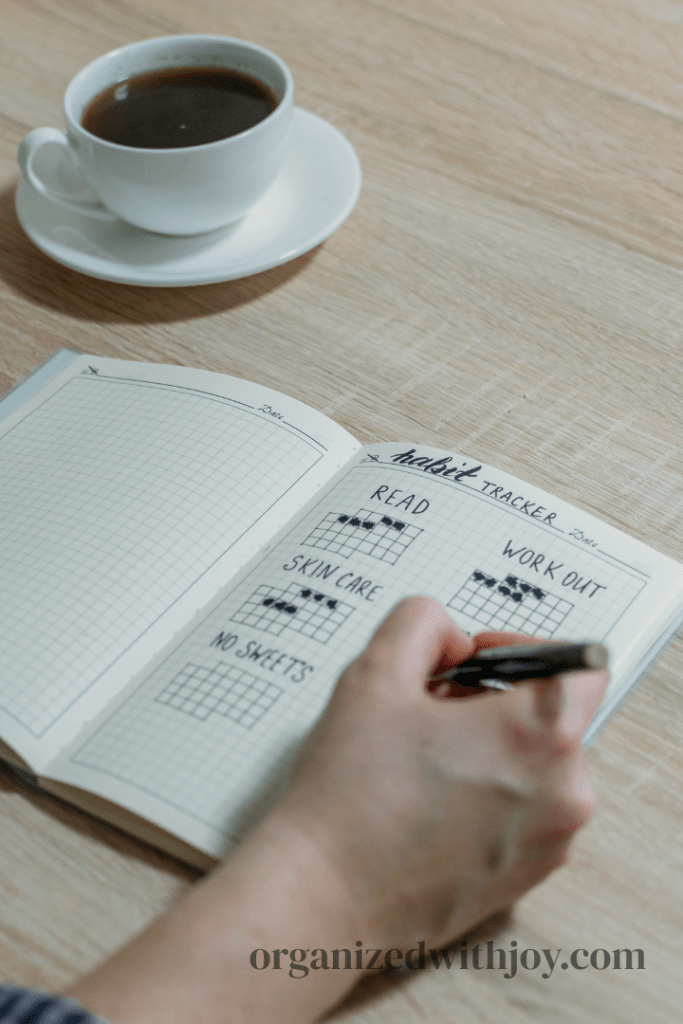
To make lasting changes, I propose that instead of setting goals or making resolutions, you should focus on your habits. When we practice small, repetitive actions day in and day out, this can more effectively lead us to our goals. Don’t get me wrong, I’m not against goal setting or making resolutions. That process is fun and exciting because we get to imagine and dream what life could be like. Resolutions are future oriented – making it easier for us to come up with lofty goals, because it is our future self that will have to have the follow through! One of my favorite sayings from the tv show, How I Met Your Mother, that I like to use when I’m procrastinating is “I’ll let future Joy worry about that.” And that’s exactly what we are doing – creating perhaps unattainable goals, and hoping our future selves will have follow through. This is often why year after year nothing actually changes.

I would like to share with you 6 things you can do in order to actually attain your goals.

{ONE} Put it on your to-do list. Habits happen by making something a part of your routine. Whatever you want to achieve, put it on your to-do list and then don’t make excuses and just do it! You want to exercise three times a week? Schedule it in. You want to spend more time with friends? Plan a standing weekly or monthly get together and have it on your calendar. You want to drink more water? Put timers on your phone to remind you to fill up. Want to get organized? Put it on your calendar each week to spend time purging and organizing a space in your home. Over time, these practices just become part of who you are.

{TWO} Choose the “basic solution” over the “quick fix.” Often times, along with resolutions, people buy in to “quick fix” solutions. Whether it’s a special herbal tea, a protein shake, or vitamins and supplements, these things can’t replace what will truly make a lasting change. Making it worse, marketers play into this desire we have to find a quick fix. These quick fix solutions nor our will power can replace making changes in our habits. If we focus on basic solutions and make those a part of our habits, we are more likely to succeed. A basic solution to the goal to “get healthy” might be to get 7-8 hours of sleep at night, to drink 8 glasses of water a day, to exercise a certain number of times per week, instead of taking pills or drinking teas or shakes.. We all know, there are really no shortcuts. People want some magical or secret solution, but the truth is that change happens through small, repetitive actions everyday. 

{THREE} Let your habit connect to a priority in your life. If we want change, we must make these stepping stones to our goal a priority. If you value exercise, friendships, health, organization, then your habits must follow. The good thing about a priority leading your habit and not a goal leading it, is that you can change the habit if it’s not working for you. With a goal, if you “fail” once you feel like you have to start all over and this can be daunting. Say you make it a goal to exercise three times per week. Well, in February you get sick, and it derails this goal. At this point it could be easy to just give up. Habits are easier to “start over.” If exercise is a habit, then when you miss a week of it because of illness, you start over next week! You don’t have this feeling of guilt when you “failed.” Goals are great platforms to make changes in your life, but priorities ultimately dictate our behavior.

{FOUR} Reward yourself. It’s important to have small rewards along the way. This reinforces the behavior. Whether it’s external rewards – like having a soda or beer on Friday night after drinking your 8 glasses of water each day that week, or internal rewards – acknowledging how good you feel after a workout to remind yourself that it’s worth it!

{FIVE} Create an environment or systems to help you succeed. Often times we fail because we don’t have the needed systems in place to foster success. In the example of wanting to drink more water – buy a new water bottle, or have a water bottle out and ready to fill up in the morning, or set timers throughout the day to remind you. Visual cues will remind you to do what you set out to do.

{SIX} Don’t expect perfection. As I mentioned previously, it can be hard to keep chugging along after failure. If you miss a day of exercise, or eat a cheeseburger instead of a salad one day, THAT’S OKAY… start over the next day. It’s difficult to perfectly stick to good habits. Illness, travel, and special celebrations can get in the way of keeping our routines. It’s important to just keep moving forward with your habit.

I hope this encourages you that you CAN succeed in your resolutions this year. Focus on habits instead of goals. Habits are DAILY DECISIONS that can help you achieve your goals!