IMPLEMENTING SOFT DISCIPLINE

In a recent Instagram post I shared a quote that said, “growth only happens outside of your comfort zone.” I am someone who likes structure and routines. I realize that at times having rigid routines can stifle my ability to get out of my comfort zone. Finding ways to stick with my healthy habits while also leaving room for flexibility made me think about living with soft discipline. I think this idea of soft discipline also lends itself to living a more intentional lifestyle – honoring those moments when we need a slower pace because of how we are feeling physically or because of the seasons, or when we should lean into a time when we have higher energy. When we create rigid routines for ourselves, this doesn’t leave room for this energy shift.
So, what is soft discipline? It is having structure in life, but with compassion instead of rigidity. Contrary to traditional discipline, which can seem to focus on self-punishment and an all or nothing mindset, soft discipline is daily doing what matters with self tenderness. It focuses more on our spiritual intuition and is rooted in intentional living. Instead of being harsh or demanding with yourself to “stay on track,” soft discipline allows you to pay attention to your energy, what season you are in, and your inner guidance.

I think oftentimes we struggle with sustaining self-discipline because we are not compassionate with ourselves when it comes to our goals. Especially in western cultures, there is a high value on productivity which can lead to perfectionism and burnout. The nature of discipline leads us to battle with ourselves as though we have an inner drill sergeant calling out what we must do. But unfortunately sometimes this inner voice can create a mindset of shame and self-criticism, which leads to a lack of motivation or shut down instead of motivating us to follow through.

The core principles for executing soft discipline is having a gentle structure, focusing on micro movements, having compassionate accountability, allowing for energy-led planning, and celebrating progress over perfection. 

First, soft discipline includes creating a flexible framework for your day instead of a rigid schedule. Having routines is good, but it is also good to give yourself grace within those routines. Focusing on rituals over routines can help to change your mindset towards a more compassionate routine. For instance, if you view your morning walk as a ritual – where you get to pay attention to your five senses, you get to clear your head, you get to move your body – this will make it feel more like a ritual you don’t want to miss rather than a task you must do to check off your to do list. Lastly, it can help to create anchor points in your day – having morning rituals, midday breaks, and evening resets.

Next, soft discipline includes focusing on micro movements. These would be actions that have the potential to build on other actions. Sometimes when we start small it gives us the momentum we need. Allow yourself to just do 5 minutes for a task. This will often lead to the energy and momentum you need to keep going. Focus on the momentum and not the mastery or completion of a task. Soft discipline also includes compassionate accountability. Talk to yourself as you would talk to a friend. Replace punishment with curiosity and ask yourself: “What do I need right now?” instead of “Why can’t I get this done?”

Another principle of soft discipline is to allow for energy-led planning. I have to admit that I am so bad at this. I spent many years not honoring what my body was capable of doing and would over-commit and just push through. I am getting better at this, but it does not come easy to me. I am more of a pull up my boot straps and get it done type person. We must learn to pay attention to our intuition and our inner rhythms. We all have days where we don’t feel as energetic, and days where we have lots of energy. Honor your energy levels, slow down when you need to, and lean into productivity on days where you have lots of energy. If possible, align your tasks with your energy levels.

Lastly, soft discipline focuses on celebrating progress over perfection. So often we want to see big changes or big progress – especially when we are focusing on a specific goal. But it can be so helpful to start small, and celebrate along the way. When we celebrate our follow-through, even if it was not perfect, it can help to build our self-trust giving us that feeling of pride in our accomplishments.

Creating a life around soft discipline feels more peaceful, intentional, and sustainable. You begin to follow through more often because you are aligning to your energy and giving yourself grace. Soft discipline gives you the mindset of choosing yourself, kindly and gently, over and over again with each choice you make instead of the mindset of the drill sergeant just checking things off your to-do list. This doesn’t mean soft discipline is easy, all discipline is work, so we must have that expectation. But living with a more compassionate approach to discipline will reframe your outlook to viewing discipline as devotion to yourself – to your future self, your peace, and your purpose in life!

This is the YouTube video I shared in conjunction with this blog post.

NORMALIZE A NORMAL LIFE

For today’s Thoughtful Thursday post I want to talk about an idea I recently heard about from another YouTube creator, normalizing a normal life. I follow her channel because she does a lot of reaction videos to overconsumption, especially amongst influencers. As many of you know, I am doing a no buy year in 2025 as a way to challenge myself to prevent overconsumption in my own life. I think when we are constantly exposed to content online where people are showing shopping hauls or restocks (often with unnecessary stuff, or stuff you could not possibly use before the expiration date), we begin to think overconsumption is just normal. We also are exposed to people who seem to lead out of touch lives. I get that some of these videos are purposefully overproduced, but it really can get in your head none the less!

In addition to my no buy year, I have been pursuing minimalism for over a decade now, slowly but surely decluttering our home. And more recently I do feel like I have gotten pretty ruthless with decluttering in the pursuit of a more simple life. In today’s message I just wanted to encourage you that it is okay to lead a simple life. It’s okay to have a normal life. I truly believe that there is beauty in the mundane if we allow it or see it.

Part of the reason I wanted to discuss this topic now is because as we come up on the holidays, we may feel more inadequate than any other time in the year. We may feel like we aren’t doing enough family activities, or we don’t have enough holiday decor, or the right decor. I’m here to remind you that you don’t need to go out and buy all new holiday decor with the theme of the latest trend (cough cough Ralph Lauren Christmas cough cough). I do love to share my holiday clean and decorate with me videos on YouTube to inspire people, but I never do it with the intent that they would go out and buy the same things I have. I just want to get people excited about the upcoming holiday season! And most of my stuff I couldn’t link if I wanted to because I have had it for many years, or it is a vintage or thrift find! The holiday decor you have is good enough! One thing I like to do is style my existing decor differently every year so it feels fresh and new!

I have always tried to be authentic on my YouTube channel, and share as candidly as I can here on my blog. Yes, I do like to edit and present it in such a way that hopefully is artistic and interesting, but I am sharing my real (and normal) life! I do wish normal lives were more popular on social media. It does seem like the easiest way to become successful online is to have a non-normal life. Maybe a normal life is not interesting or exciting, but I’m okay with that. I will continue to pursue a simple, quiet life. I think a majority of people in the world lead a normal life, so I am just here to remind you that it is okay if your life feels normal or ordinary. Don’t let what you see on social media steal the joy of your beautiful, normal life! Embrace it and appreciate it!

Here is the YouTube video I shared in conjunction with this blog post.

BEING PATIENT

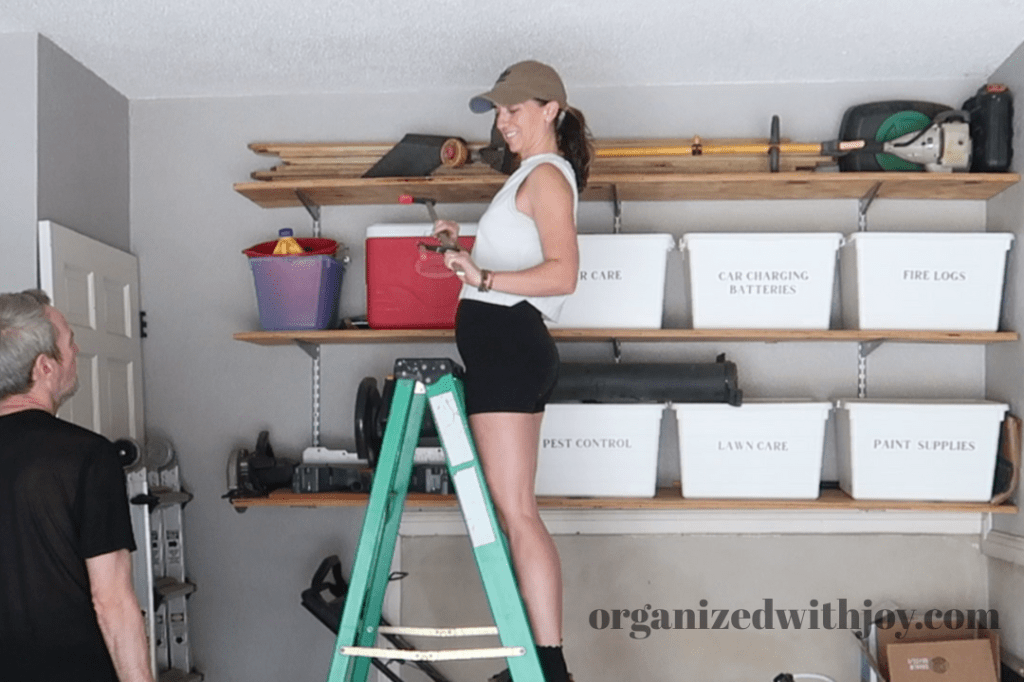
For today’s Thoughtful Thursday I wanted to talk about being patient with people. Being patient with people in general, but also being patient with our spouse, children, or any other housemates when it comes to decluttering. My husband recently helped me go through and declutter items in our garage as some of the things belong to him. I have been wanting to do this decluttering project for quite a while, so I have had to be patient with my husband as I waited for him to have the time and bandwidth to do it. I have to say, I have not always been a very patient person. I am someone who likes results, so I struggle to be patient with the process. I am learning though that there is so much growth and goodness that can happen in the process and in the waiting. 

When it comes to decluttering, I really think we all have our own pace. Whether that is because we don’t have much time to devote to it regularly, or because we are the type who needs to really think through and sit on decisions for a while. I know my husband doesn’t have a lot of time or bandwidth to devote to decluttering because of how demanding his job is, so I have been patient with him with regards to going through his things. I can’t even tell you how many times I have cleaned out our garage for my YouTube channel and mentioned “I will need my husband’s help to declutter more in here.” The only reason I am really starting to push him is because we are talking about downsizing, and I don’t want him to have to go through all of his things in a short period of time. I do feel like it is much more manageable to declutter a little at a time. In the end, this really didn’t take that long. We spent about 30 minutes on two separate weekends to get this done.

It’s not always easy to be patient with our loved ones as they have their own decluttering journey. As I have mentioned so many times before, decluttering muscles are built through practice. Just like we can’t force our loved ones to go to the gym and workout, or do anything for that matter, we can’t force them to declutter. They have to want to do it for themselves. I have found that just by being an example, and my family experiencing the spaces in our home that are more minimal, it has inspired them to start decluttering. We must let it be on their own time.

I find it important to be patient with others with regards to decluttering, but I also find it important to be patient with others in general. This is also something that is not easy. Oftentimes we have our own timeline and we want others to conform to our timeline, but that is just not how it goes. One thing that helps me to be patient with others, especially those closest to me like my husband and kids, is to remember how slow paced I myself can be with making changes in my life. I want others to be patient with me as I grow, learn, and change, so I will offer that same patience. 

I remember when I was younger in my marriage how impatient I would be with my husband (and then later my kids) when we were trying to get out the door. I was raised in such a way that you arrive 5 minutes early or you’re late. My husband is someone who takes his time doing anything. Which is actually a good characteristic. It usually means things are done well and thoroughly, but it can mean he isn’t on time. He has learned this about himself and now knows to shoot for being ready 15 minutes before we actually need to leave. But I used to get so irritated about it. Even if I didn’t express my irritation to him (I am sure I did at times, at least in heavy sighs and eye rolls) I had this bad attitude about it in my heart. At some point I realized that we could be late with my having a bad attitude, or we could be late with me having a good attitude – realizing it is better to protect our relationship and my heart attitude than to be on time somewhere. And, he eventually realized that he had to give himself more time than he thought to get ready. But I share this because my heart changed before his behavior changed, and that was for me how I wanted to show up in the world. I had to learn to be patient.

Being patient with others means recognizing that they are on their own life journey towards growth and change, or perhaps stuck in a cycle of stagnation. But either way, we are not in control of others and their choices. We are only in control of the choices we make. If we keep focusing on doing the right things for ourselves, I think this will inspire those around us. I am sure you have heard that kids do what you do not what you say. I think anyone within our sphere of influence will be affected by our behavior. Hopefully we can be a positive influence to motivate and inspire. But we must be patient as they maneuver through life and make their own decisions.