BALANCING MINIMAL AND COZY

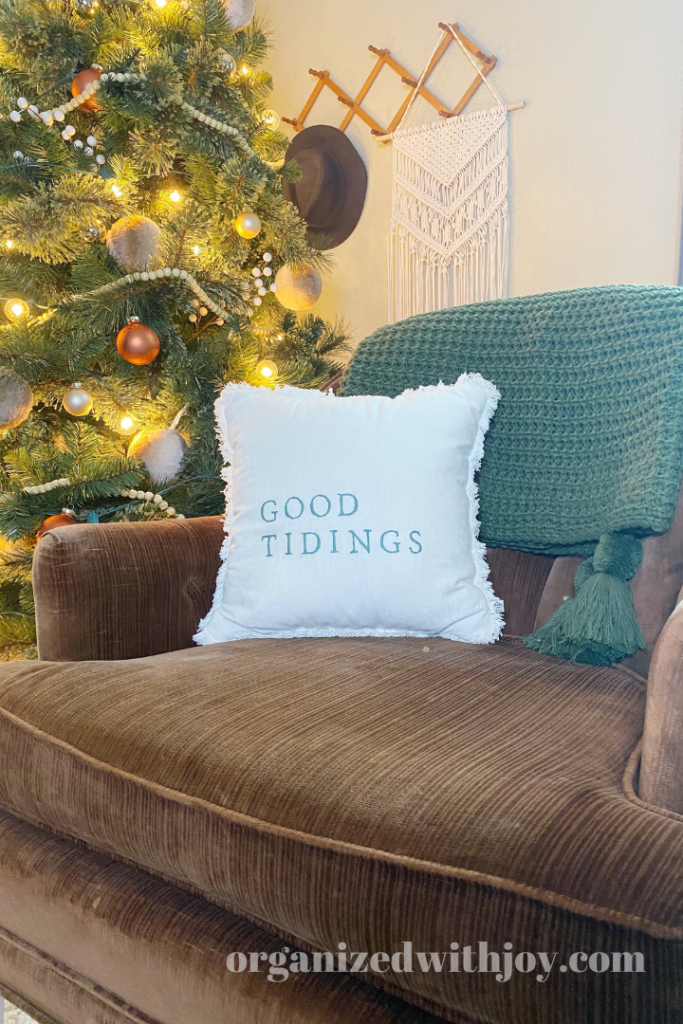
It’s that time of year where we all want our spaces to feel cozy! Fall equals soft blankets, candles burning, cozy sweatshirts, and baking all of the fall goodies! But today I wanted to talk about the struggle I have had as I pursue minimalism to create spaces that are minimal but also cozy!

When I first started pursuing the idea of becoming minimalist I thought I could never be a minimalist because I really enjoy decorating our home to make it more cozy and inviting. Eight years later, I’m realizing that “minimalism” is not a one size fits all. There is no true definition of minimalism, or a box you can put it in. To me, it just means living with the things I use and love. With this in mind, I wanted to share with you the ways I make my home cozy and inviting while still striving towards minimalism.

It can be challenging to find the balance between minimal and cozy for me as I love decorating and making our spaces feel inviting, but I also don’t want my spaces to feel too cluttered. For me it has just been a process of trial and error, living with decor set up and deciding how it feels and if I hit that balance. I feel like the longer I have pursued minimalism, the better I get at figuring out that balance.

I do like having some holiday decor pieces, however I also like to have some items that I just leave out year round and might rearrange them for a new look. Rearranging my decor helps me to keep minimal extra decor stock in my home, because it feels fresh and new when I move it to a different room, or set pieces up in a different arrangement. I also like having pieces that transition well into multiple seasons so I’m not taking all of my decor down for each new season.

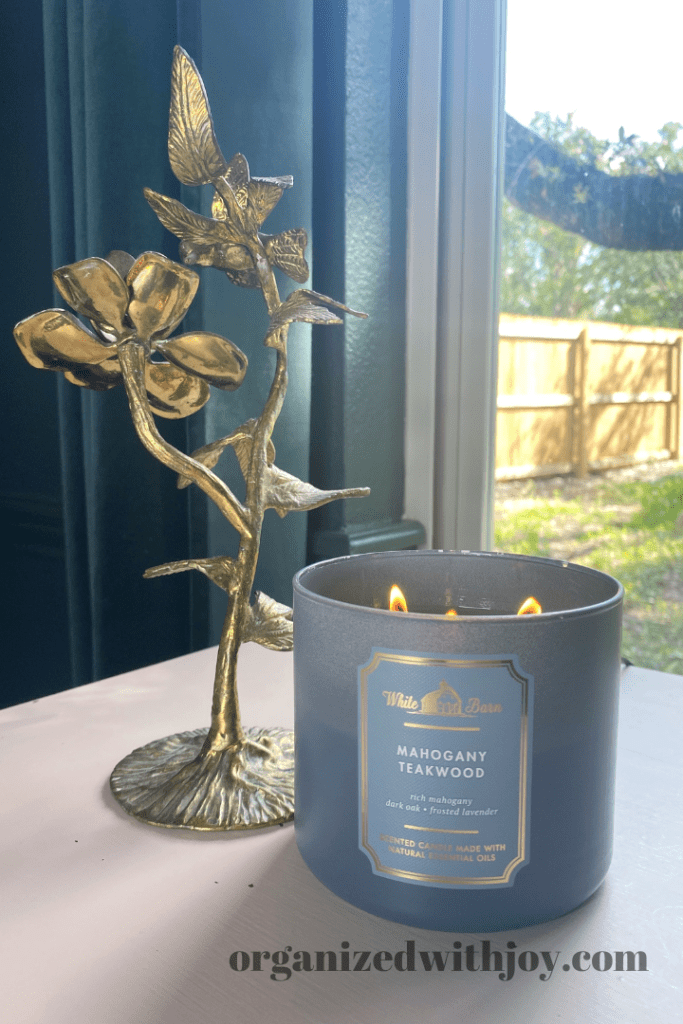
Another way to achieve cozy and inviting spaces in your home has nothing to do with physical stuff, but it’s more about making a space feel a certain way. This is the idea of Hygge (pronounced HOO-GUH). This is a cultural practice that was first used in Denmark, but has been used throughout the Norwegian countries. I’m not sure if you have heard of this term before, but it incorporates focusing on the five senses, using different textures like with pillows and blankets, using ambient lighting, having calming music playing in the background, having a scented candle burning, an oil diffuser going, or even something cooking or baking in the oven. Having a delicious home cooked meal, or a homemade loaf of bread can make a space feel cozy! You don’t necessarily need stuff to create that cozy and inviting feeling in your home.

Another way to achieve that cozy feeling while still keeping things minimal is creating an environment where people feel welcomed – whether that’s family or friends. Focusing more on the relationships – conversations, hugs, or cozying up with one another under a blanket provides that inviting feeling. Arguably, stuff just distracts from those intimate moments!

Something else that makes a space feel cozy, even if it’s minimal, is a space that is in order. Of course I’m going to mention the importance of organization and cleanliness to create that cozy and inviting feeling. Chaos in our physical space can breed chaos in our minds, which does not lend to a feeling of coziness or peace. Just having a clean and orderly space can help you achieve that feeling of coziness, and obviously that is easier to do with less stuff to take care of.

When I first started pursuing minimalism and would see some of the images in blog posts or in videos, I wasn’t sure that was for me. I didn’t like the idea of living in a space that had sparse things. But now I’m learning there is a balance and I can achieve both minimal AND cozy! I love to hear from you in the comments! Let me know if you are trying to pursue minimalism and have that balance between minimal and cozy. Or let me know how you make your spaces cozy for the fall season!

Here is the YouTube video I created in conjunction with this blog post if you would like to check it out!

5 THINGS MINIMALISTS DON’T TALK ABOUT

For today’s Thoughtful Thursday post I wanted to talk about something I was wrestling with and thinking about during the process of decluttering old fall decor, and adding in the new pieces this year. If you missed it, on Tuesday I shared a video on my YouTube channel with my fall haul and old fall decor declutter. But I wanted to share with you what was going on behind the scenes in my mind. It did take me several days processing with friends and evaluating my reasoning behind why I decided to purchase new fall decor before I felt confident in my decisions.

If you have been reading my blog posts for a while, I am sure you have heard me talk about how I have been pursuing minimalism for several years now. As I processed through my decision to add new fall decor this year, I thought of 5 things most minimalists don’t talk about. I wanted to share these with you if you are on your own journey to become more minimal, or just on a decluttering journey. 

The first thing I wanted to share is that minimalism looks different for everyone. As a matter of fact, I wrote a blog post about this very topic. Because minimalism doesn’t have hard and fast rules, it can be difficult for me to navigate becoming more minimal. To be honest, I am the type of person who works better under rules, but I do appreciate the fluidity of minimalism. Everyone is in a different life stage, requiring different things. Everyone has different passions and hobbies, and different things are important to them. For me, I love making our home cozy and inviting. I do that with home decor, pillows, blankets, and art.

The second thing I wanted to share is you don’t stop purchasing things altogether when you are pursuing minimalism. One of the most difficult things for me is making decisions on bringing new pieces into my home. I like to be very intentional about what comes into my home, so I know I tend to overthink and overanalyze every purchase. It makes it difficult for me to make decisions, and I often feel guilty when I buy something new. But, I know logically that this is not healthy. I don’t think when you begin to pursue minimalism that means you will never buy anything again. That’s just not practical. For me, since home decor and styling is a passion and hobby of mine, that means I will be removing old decor that I don’t love as much as I once used to and replacing it with new items.

The third thing most minimalists don’t talk about is how decluttering is an ongoing process. Like I mentioned, there will most likely be new items coming into your home regularly. I am sure there are a small percentage of minimalists who purchase nothing new, but for most decluttering is just a part of the process. This is why you will see a monthly declutter with me video on my YouTube channel where I share everything I decluttered for that month. Decluttering is an ongoing habit I have incorporated into my routines. This is how I can keep our home minimal.

The fourth thing I wanted to share is that pursuing minimalism helps you to be more honest with yourself when evaluating your purchases. When I first started pursuing minimalism, I didn’t realize how this would cause me to be really cautious about the items I purchase. One of the things I spoke with a friend about regarding my new fall purchases was the idea that I might just be doing this for content and would I do this even if I didn’t have a YouTube channel. She wisely encouraged me, even if I was doing it for content, that would be okay! It is my job after all, and creation is part of the job! Even if that didn’t bring me solace, ultimately I do think I would have still replaced my old decor even if I wasn’t sharing it on YouTube. I am hyper aware of sharing on YouTube in an authentic way, while still creating aesthetically pleasing content.

The fifth and final thing minimalists don’t talk about is the struggle to remain balanced. It can be a challenge to fight against consumerism. Many people in Western culture buy new home decor every season! I think this is why I overanalyze my purchases. I wonder if I’m getting sucked back into consumerism, or if I am truly being thoughtful and intentional with my purchases. It can be difficult to remain disciplined about what you bring into your home. I think most minimalists don’t talk about how difficult it is! I hope one day I can get to the place where I’m confident in the balance.

I do find it a little comical in hindsight that I was feeling bad about replacing fall decor that I have now owned for almost 20 years! I remember purchasing a good portion of that decor when my son was a baby, and now next month he turns 20! So, I think it’s okay to replace it!

DEBUNKING THE BUSYNESS CULTURE

Okay friends, for today’s Thoughtful Thursday post I wanted to talk about the culture of busyness. I have often talked about living intentionally, and part of that is living at a slower pace – spending time on the things I love and the things that are important to me, and cutting out the things that just keep me busy.

In today’s fast-paced world, many people are proud of how busy they are. They may believe this busyness is a sign of importance or productivity. Today I wanted to challenge this glorification of busyness and the idea that constant activity is synonymous with success and/or fulfillment. I wanted to debunk this idea that busyness is always positive by sharing the detrimental effects it can have on our mental well-being, relationships, and overall quality of life.

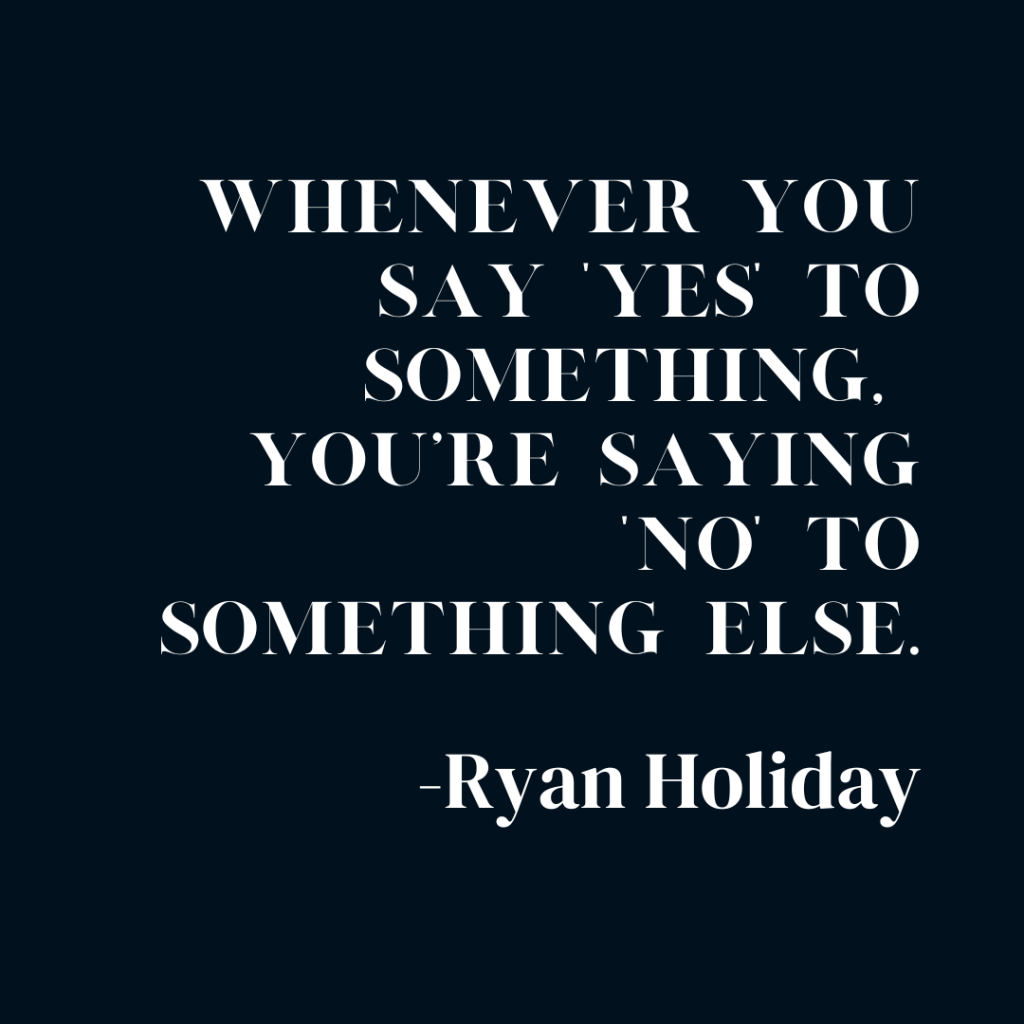
Ryan Holiday, an author and content creator has said this: “Whenever you say ‘yes’ to something, you’re saying ‘no’ to something else.” We all make decisions on how to spend our time. And we all have a finite amount of time. If we say yes to lots of things, then we may be forfeiting time to rest and rejuvenate. 

One of the primary things I wanted to talk about is this assumption that being busy equates to productivity. The reality is, busyness often leads to inefficiency and burnout. When we have a lot on our plates, our ability to focus on and prioritize tasks diminishes. This affects our productivity and our quality of work. Being busy is different from being productive, and I think people often don’t realize this.

Something else I wanted to address is the effect constant busyness has on our mental well being. The constant pursuit of busyness can over time take a toll on our mental health. Having nonstop obligations leave little room for rest, relaxation, and self-care. All things that I think can be undervalued. This can lead to stress and anxiety which causes emotional exhaustion. Rest and relaxation are not a negative thing, these are not things to be viewed as being lazy, but instead as part of a healthy lifestyle. Scheduling in times of rest prevents you from being lazy by making a plan in your schedule for rest AND for work. When we give our brains, bodies, and emotions time to rest and rejuvenate, we are more likely to be productive when we are working. If you think about athletes training, they schedule in time to allow their bodies to rest for their muscles to recover. Our brains are no different, and need time to recover as well.

Our relationships can also take a toll when we are constantly busy and have a packed schedule. In the pursuit of busyness, we can sometimes sacrifice quality time with friends and family. When we are busy all of the time, it can be difficult to be present in the moment as we do interact with others, we may be thinking of all the other things that we must get done. Deep and meaningful relationships require time and attention. When we leave little margin in our lives to develop these kinds of relationships, we are left feeling alone and/or disconnected. We must schedule our time in a way that we can be fully present in everything we do, including time with people fostering these deeper connections.

Contrary to popular belief, a truly fulfilling life cannot be measured by the number of tasks we accomplish each day. Busyness can cause us to not live in the moment, and therefore we may miss life’s little pleasures as we are rushing from one task to another or one activity to another. Again, as we keep a schedule that allows for margin we are more likely to truly live in the moment, enjoy the little things, and therefore experience more gratitude in life. If we have a balanced life of productivity and the ability to live in the moment our quality of life will go up!

To counteract this culture of busyness, we must embrace simplicity and mindfulness. Simplifying our schedules, and learning what to say yes to and what to say no to can create the space we need for this type of presence in each task and activity in life. As we are more mindful of how we spend our time, we begin to become self aware of our priorities and moving forward we can begin to choose our time doing the things that align with our values and goals in life.

I did want to say that I recognize that there will always be busier seasons in life. I remember when my kids were all school aged we felt busy and on the go constantly. This was just a season. Also, we chose to combat the extreme busyness by limiting the number of activities our kids could participate in each season. We wanted to teach them the value in not overcommitting and to be fully committed to the things they wanted to invest their time in. We not only embrace these ideas for ourselves but to teach our children the value of rest and self-care. 

Lastly, I just wanted to encourage you to challenge our culture’s narrow view of success, which often revolves around busyness and external achievements. True success should be viewed more holistically, accounting for mental well being, healthy relationships, and personal fulfillment. When we adopt this mindset, we will be able to escape this culture of busyness and replace it with something far more meaningful.

This is the YouTube video I posted in conjunction with this blog post.

10 CREATIVE HOME DECOR IDEAS

Hey friends, today I am sharing another Thoughtful Thursday post. If you know me, then you know that I am intentional about what comes into and goes out of my home. I’m on a journey towards minimalism, curating spaces that only have the things I use and love. I guess you could say I like to be thoughtful about my home decor. Today I wanted to share 10 creative home decor ideas with you!

The first idea I have is to upcycle or repurpose items. Perhaps you have a piece of decor that you already own that you are no longer loving. You could spray paint it or use texture to change it up. I have used textured spray paint or terra cotta type paint to transform vases. You can also change up your furniture by painting it, sanding it down and re-staining it, or covering it with new fabric. You can also upcycle items that you find at a thrift store, garage sale, or online resale platform. It’s fun to find a reasonably priced piece and create something new out of it. In addition to this, you could repurpose items, like an old wine bottle, a jar, or some other recyclable items.

The second idea I have for you is to incorporate DIY decor. I just love unique and one of a kind decor pieces. When you create your own decor it is for sure one of a kind! Admittedly, I am not very skilled at making DIY decor. I do like to do home DIY projects, and I have built some furniture for our home. Most recently, last fall I made a pedestal table, and it’s fun to have this one of a kind piece in my home!

Another idea I have for you is to go thrifting! There are many places to go thrifting – antique malls, Etsy, Facebook Marketplace/Craigslist, garage sales/estate sales. It’s fun to hunt for treasures at these places. I really enjoy searching for vintage home decor while thrifting. You can often find creative pieces while thrifting, and the added bonus is this is an environmentally friendly option.
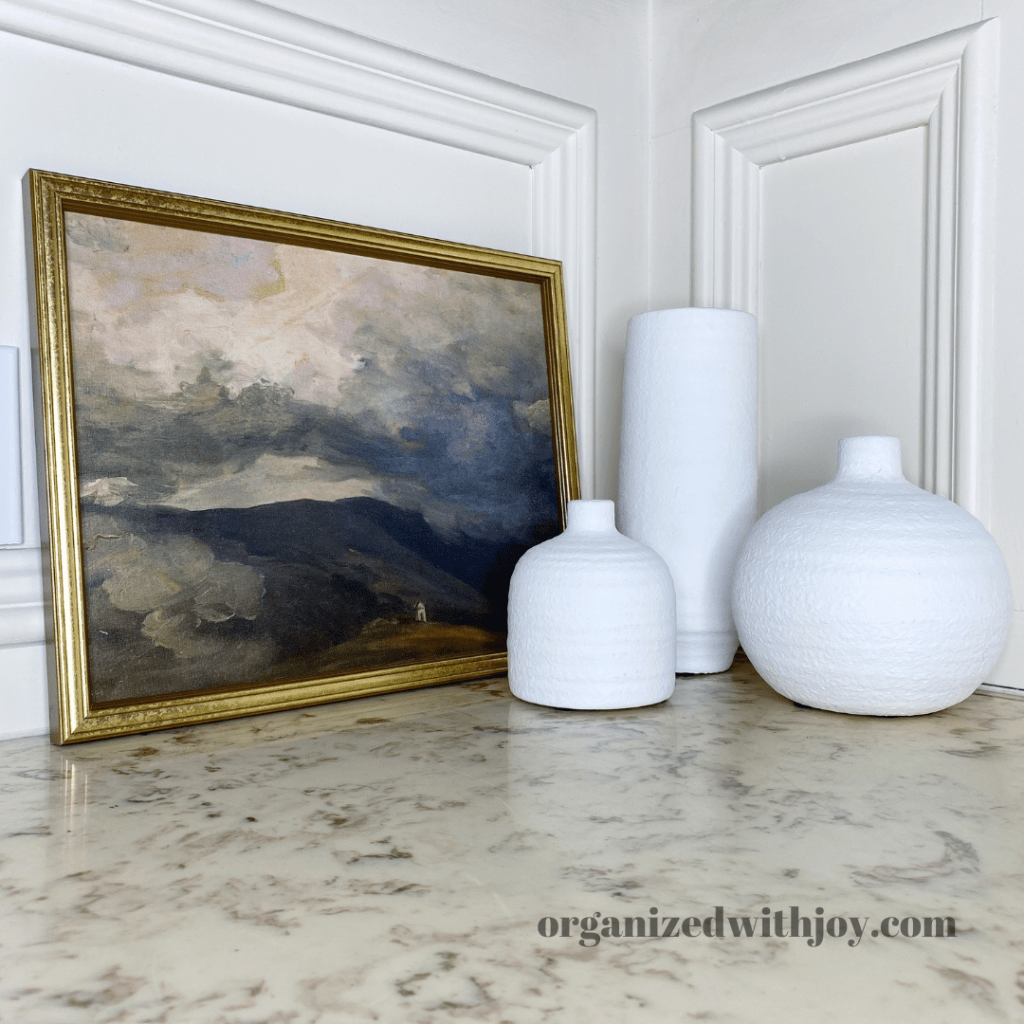
The fourth idea I have for you is to look for home decor on Etsy. There are a multitude of things you can find on Etsy, supporting small business owners and individual artists. I have purchased vintage items, downloadable prints, photography artwork, handmade pieces of art (like macramé), and unique floral stems (like pampas grass). Once again, you can find unique pieces to add to your home decor collection on Etsy.

I also enjoy shopping at local boutiques to find interesting home decor. I recognize not all cities have boutiques like this, and I’m sure I’m lucky to live in Austin where we have many! This is also another great way to support small business owners instead of shopping at big box stores.

The sixth idea is adding pieces of decor or furniture through inheriting them. Inheriting pieces from grandparents, parents, or other family members can be a great way to add to your decor collection. You can choose items that fit your style, but are also meaningful to you. When my grandmother passed away, my grandfather let us walk through the home and choose anything we wanted to remind us of our grandma. I chose this beautiful brass bird sculpture that reminds me of my grandma because she loved birds and bird watching. The brass aesthetic fits in with my style as well. It is a special piece of decor for my home.

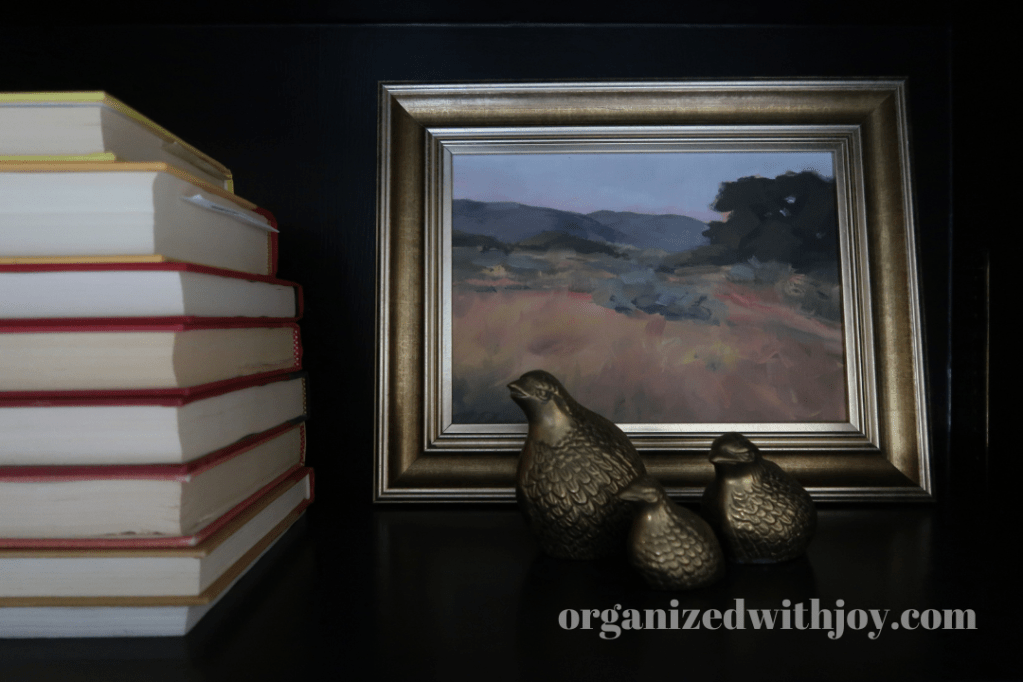
You can also use books or other everyday home items when styling your spaces. We have many books that we would like to hold onto, but we are not going to necessarily read again. {{And by “we” I mean my husband!!}} I have used those books to style around our home. You could also use simple things like toilet paper stacked neatly on a bathroom shelf, or cotton pads and Q-tips displayed in a cute jar. I also have oil and vinegar bottles, and salt and pepper holders that are aesthetically pleasing to sit out on my kitchen counter doubling as decor.

Another idea I have for you is to use organizing tools as decor. I love choosing baskets or bins to corral things, but also to look pleasing to the eye. Whether it’s on a shelf or inside a cabinet, these items can serve dual purpose – for practical purposes, but also as decor.

The ninth idea I wanted to share is to use mass manufactured pieces sparingly. I do sometimes find pieces at big box stores or other nation-wide chains, but I like to just sprinkle those items amongst the decor pieces I purchased from other places mentioned above. When these items are styled along with these other unique pieces it makes it look less like a mass manufactured piece. In addition to this, you can look for pieces that look more artisan which will make it look more like a one of a kind piece.

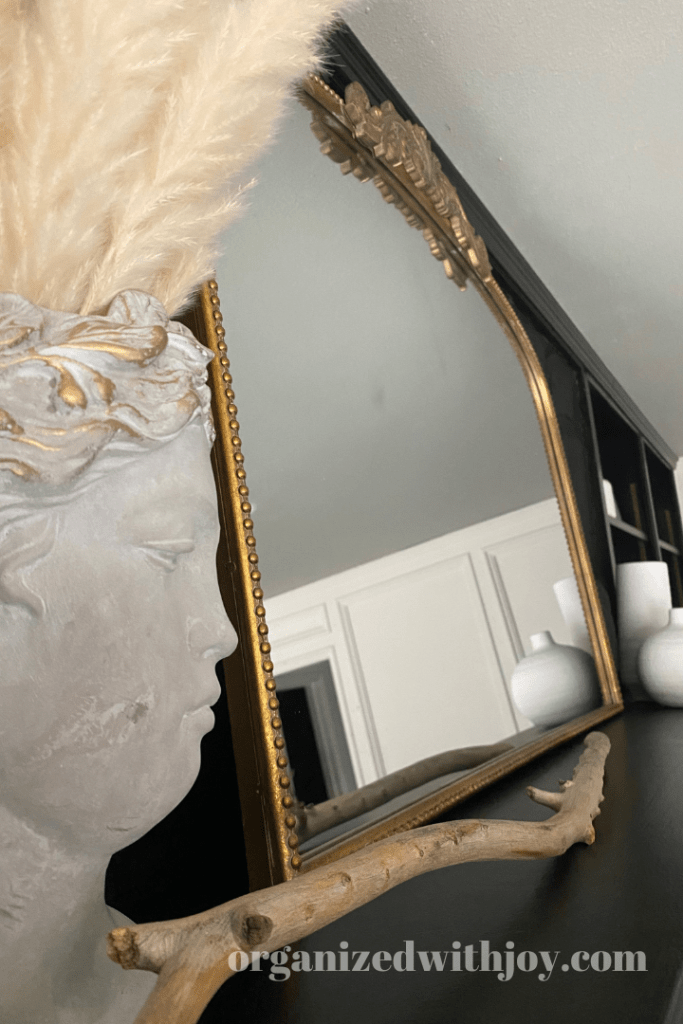
Lastly, I wanted to share with you to look for dupes of higher end items. I will sometimes find a high end item that I absolutely love, but I just can’t spend the money on it. The internet provides an easy way to find dupes to add to your home. I have been eyeing that popular Anthropologie mirror, the Gleaming Primrose mirror. I was able to find a similar mirror on Amazon for a fraction of the cost! Pieces like this can make your home decor collection seem more upscale and artisan.

I hope these 10 creative home decor ideas were helpful for you today! I wanted to share this because I am so passionate about curating beautiful and unique home decor pieces as I pursue creating intentional spaces in my home! 

Here is the YouTube video I created in conjunction with this blog post.

FEELING LIKE A FRAUD

Okay friends, for today’s Thoughtful Thursday post I wanted to address something that I’ve been thinking about lately and that is feeling like a fraud. This is something most people experience at some point in their lives. This is such a common way to feel. So much so that psychologists have coined the phrase “imposter syndrome” to describe this feeling. Two clinical psychologists, Pauline Rose Clance and Suzanne Imes first identified and named this phenomenon back in 1978. The definition for imposter syndrome is the condition of feeling anxious and not experiencing success internally, despite being high-performing in external, objective ways. This condition often results in people feeling like a “fraud” or “a phony” and doubting their abilities. 

I wanted to talk about this, because I feel like it is one of those taboo subjects that people feel this way, but don’t talk about it. Like I mentioned, it is natural to feel like a fraud from time to time. Often, it is just not true. We only see people from external appearances or what they portray – either on social media or in real life. Often we are comparing our internal feelings about ourselves to the external things we see others doing or accomplishing. I want to encourage you today to see things from a proper perspective when you are having those feelings. I want to share some practical things you can do when you are having this feeling. Feeling like a fraud can be a sign of self-sabotage, so be aware of that and then be intentional about addressing your feelings. 

The first thing you can do is self-talk. When you have negative thoughts that come into your head – telling you that you are not enough, you are not competent, or not successful – you can acknowledge that you feel that way, but remind yourself that you ARE enough, you ARE competent, you ARE successful. If you can’t do this just in your head, perhaps process these feelings with a friend or use a journal to write down your fears around feeling like a fraud. We must find a way to break the cycle of ruminating and turn our thoughts towards the positive. 

Along with this, you can make a 2-column list with ways you are inadequate and ways you are competent. Sometimes writing it out you may realize you are far more competent than you think, and this can help bring perspective.

You might say, but what if my inadequacy list IS longer than my competent list? Then I would encourage you to reframe your inadequacies. Often acknowledging our inadequacies is the beginning of growth. Look at your struggles as a way to learn and become stronger! Being realistic with yourself, evaluating areas of life you do need to work on, and coming up with strategies to make changes may give you some peace of mind.

Talking to someone who knows you well about your feelings can be really beneficial. Getting feedback from a trusted friend or family member can help you to have a better perspective. We are often much harder on ourselves than others are on us. Trusted friends or family members know you well enough to give honest feedback, but also see you in a different light than you see yourself.

Lastly, be gracious with yourself. We often forget that we are aware of both the internal and external portrayals of ourselves and therefore can be hard on ourselves. Remind yourself that you are only human. You cannot be perfect and you will make mistakes. But that’s all a part of the growth and learning process!

I wanted to share a personal anecdote with you about feeling this imposter syndrome. We all second guess ourselves. Recently I added some new pieces to my bedroom – a new throw blanket and pillow. That day I was thinking about how much I talk on my YouTube channel and here on my blog about minimalism and intentional spending. I also do a fair amount of decluttering on my channel as I continue to pursue minimalism. Sometimes when I bring new items into my home and share it on my channel I feel a bit like a fraud. Like why am I buying more things when I am trying to create a space that is minimal?

First of all, whenever you’re on a journey of any kind, it is just that – a journey! By the definition, it is an ongoing process and not a point where you arrive. So, pursuing minimalism is a journey for me. I may make mistakes along the way – I may make poor decisions, but ultimately I am trying to be intentional with what comes into my home. Most of the time with items like these two items – it is not an impulse purchase. I think about it several days before I decide to purchase the items. Also, these items are practical. Like I mentioned, we needed cooler blankets for the warmer months, and the pillow was just a cover to add to my existing pillow, just a design that I think works better for warmer weather.

 In addition to this, one thing that I am always trying to balance in my home is making my spaces warm, cozy, and inviting, without having too much clutter. I love decorating our spaces to make our home a place that my family and friends feel comfortable and enjoy being in. Ever since I did my no spend year back in 2019 I am definitely more intentional about what I purchase. I used to just peruse the aisles of Target or Home Goods, do online shopping, or be influenced by what others had and were sharing on social media. Now I am far less tempted to do this and find it an even more creative process to curate the items that come into my spaces or wardrobe.

Does this mean I will always be perfect in my shopping choices? NO! Even if I’m intentional about what I purchase, you never know how much you will love something or how well it will serve you. You make the best decisions with the knowledge you have!

Keeping your focus on your values instead of perfection will help tremendously in feeling confident in who you are. Success is not a point in time, it is a continual process, so there will be ups and downs.

I hope this chat was helpful or resonated with some of you. As always, I love to hear your thoughts in the comments! If you feel comfortable, let me know if you have felt like a fraud before and what was your experience!

The YouTube video I shared in conjunction with this blog post.

WHY DECLUTTERING ISN’T ENOUGH

Well, it has been quite a while since I have posted here on my blog! I have been focusing on my other social media platforms – YouTube, Instagram, and Tik Tok. I have been thinking about how I would like to share more often here on my blog. On my YouTube channel every Thursday I share in a video series called Thoughtful Thursday where I share cleaning, organizing, and/or decluttering motivation and in the voiceover I share my thoughts on a topic. This week my topic was pertinent to my website, so I decided to go ahead and share the information that I shared in that video. But it got me to thinking that I would love to start sharing my Thoughtful Thursday thoughts here on my blog as well, even if it isn’t specific to cleaning, organizing, or decluttering. So, you can look forward to seeing my thoughts each Thursday!

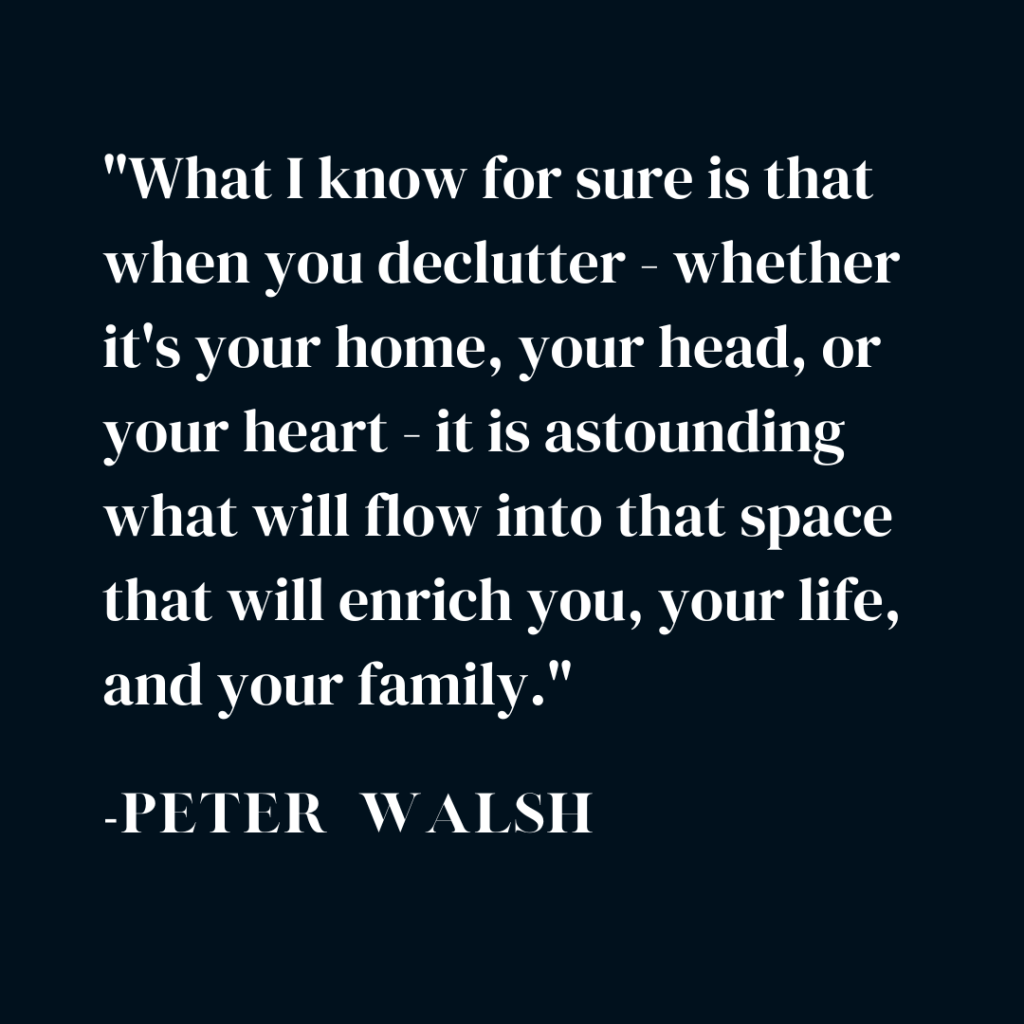
So, for this week’s Thoughtful Thursday I wanted to share with you why decluttering isn’t enough to create a clutter free home. Over the weekend I was thinking about how much time, energy, and effort it takes to keep up with our stuff – caring for, cleaning, and organizing it. I came across a quote from Peter Walsh, a professional organizer and author, probably best known for the TLC show Clean Sweep. I shared this quote over on my Instagram feed earlier this week: “What I know for sure is that when you declutter – whether it’s your home, your head, or your heart – it is astounding what will flow into that space that will enrich you, your life, and your family.”

This quote has inspired me to continue decluttering my home, even though in some ways it seems like I have nothing left to declutter! When we declutter, we make space for other things that will enrich our lives. I also loved his point that it’s not just our physical stuff that takes up space – but also mental and emotional clutter can prevent us from experiencing other beautiful things in life. We must be self aware, realizing what we spend our time and brain space thinking about and telling ourselves. I talk a lot about the importance of self talk over on my YouTube channel, as well as on my Tik Tok page. It is meaningful what you say to yourself. Also, if there are unresolved emotional issues in life, I encourage you to not ignore them but deal with those issues. Whether that’s reconciling in relationships, healing from past hurts or trauma, or just dealing with day to day emotions. This may require seeking professional help, and I can tell you from experience that this is so worth it. When we make time to deal with our emotional “clutter,” if you will, it frees up space in our lives for something else!

I did want to camp out on the physical clutter aspect today. I think one thing many of us don’t realize is that decluttering is usually not enough to keep a clutter free home. First of all, decluttering is an ongoing process. As long as items are still coming into our homes, we will have a need to assess what we are using and loving. Over time, as we go through different stages of life – for ourselves and especially our children – we will need to evaluate what we are still using.

In addition to this, I think one of the biggest reasons people feel like their homes are still cluttered despite decluttering, is because of the inflow. Things come into our homes organically – if nothing else junk mail, and kids’ papers. But we may also be contributing to this through our shopping habits. Think about how easy it is for something to come into your home. Especially if you do online shopping. You can shop from the comfort of your sofa, or even your bed. Within a few clicks you are done and the item is on its way directly to your front door. Whereas if you want to go through the decluttering process you must set aside time to evaluate your items, make decisions, sort the items, bag or package up the item for donation, drive to a donation center, or go through the steps it takes to sell an item online – taking a photo, writing a description, etc. It is actually much more difficult to get rid of items than to acquire them. This is something to keep in mind while shopping.

I have shared about my no spend year back in 2019, and this really opened my eyes to my spending habits. I am so thankful for that experience as it has helped me to be far more intentional about what comes into my home. Related to this, in order to keep the inflow in check, I do not purchase new things for each season – like new decor or new clothes. I like to curate my collection of decor and wardrobe intentionally and purchase items that speak to me. I may add some new items for a particular season, but I don’t shop for each new season.

In addition to this, is how easily we accumulate things because of free items or sales. I have learned that it is okay to say no to free items if it is not something I will love or use. It took time to learn, but now I am much more particular about what is allowed in my home.  I have also learned not to get sucked into a good deal. Just because something is on sale or seemingly a good deal, doesn’t mean I need it or it will be useful to me.

Something else that will make an impact in your decluttering process is accepting that it’s okay to have open spaces in your home. Now, I recognize that this may not resonate with everyone – I know some people are maximalists and like every nook and cranny to have something in it, well maybe this blog post is not for you anyway! Once you get to the point where you have open spaces, then you may be seeing the difference in your home on your decluttering journey. Sometimes we feel the need to fill the space back up, and obviously this is going to be counterproductive if you are getting rid of items just to fill the space back up again.

If you are on a decluttering journey, I hope these ideas were helpful to you. It’s really not enough to just declutter our spaces. We must change our spending habits as well in order to truly make an impact. I know for me, I just got tired of the cycle of stuff going out, stuff coming in. Slowly but surely I am seeing more open spaces in my home. It has helped greatly with my anxiety levels, not feeling overwhelmed with stuff in my space and just not having to take care of as much stuff as I once did. I am still working on it! I am thankful for the space I have now for other things to flow into my life, as Peter Walsh says.

Here is the YouTube video I made in conjunction with this post!

SIMPLIFYING YOUR HOLIDAYS

In today’s post I wanted to share with you EIGHT WAYS you can simplify your holiday season this year. Over the past several years I have been pursuing minimalism, and it has not just been about decluttering and living with less physical items, it has also been about living a more intentional life. It’s been about eliminating anything that no longer serves me so I can live at a slower pace. One of the things I evaluated was how I spent my time, money, and energy around the holiday season. There are several things that I have intentionally chosen to do in order to simplify my holidays.

The first thing I wanted to share with you is to MINIMIZE YOUR HOLIDAY DECOR. I am all for people doing whatever works for them! If you have the time, energy, and bandwidth to deck the halls all out for the holidays, then you do you! But my guess is you’re reading this blog post for a reason. You long for things to be more simple during the holiday season. Having a more simplified holiday decor collection will definitely help with this. I am now down to two large bins for my Christmas decor, and I feel like this is a good amount. Something else I do is choose holiday decor that could be cross-over into winter. Having decor that is not Christmas specific will cut down on the amount of time it takes you to put everything out.

The second thing I would suggest is EVALUATE HOW MANY GIFT EXCHANGES TO BE INVOLVED IN. I recognize for some people this is really meaningful and important. Just evaluate if there are gift exchanges or people on your holiday gift list that could be eliminated. We stepped away from extended family gift exchanges because we don’t get to spend the holidays with them in person. It didn’t really make sense to purchase something they told you they wanted, wrap it up, then stand in line at the post office to mail it. It felt like at that point we were really just exchanging money. 

Third, I would suggest DO AS MUCH ONLINE SHOPPING AS YOU CAN. It takes the stress out of shopping to sit in the comfort of your home instead of hustling and bustling around with everyone else.

Another suggestion I have is to EVALUATE YOUR HOLIDAY GATHERING COMMITMENTS. Are there any holiday parties that you could say no to? All of the extra commitments around the holidays can get overwhelming, so intentionally choosing which parties to go to is wise.

The fifth thing you can do is, DON’T COOK ALL OF THE HOLIDAY FOOD YOURSELF. Does your local grocery store or a nearby restaurant have pre-made holiday foods you could purchase? Sometimes it’s helpful to at least purchase a few pre-made dishes, especially if you are hosting a holiday meal.

The sixth thing you can do is KEEP HOLIDAY BAKING SIMPLE. Instead of making a dozen different types of cookies, maybe choose your 4 or 5 favorite cookies. Perhaps buy pre-made sugar cut cookies to decorate. Or pre-made icing to decorate your cookies.

Next, the seventh thing you can do to simplify your holidays is consider NOT SENDING OUT HOLIDAY CARDS. This is a tough one. At least it was for me. I have been married 26 years and we always sent out a family photo Christmas card up until last year. I started writing Christmas letters about everything that was going on with our family that year as well once our kids got to be school aged. It was fun, but also a lot of work and expensive to send out after purchasing the cards, the paper for the letter, and the stamps. So, last year I finally decided to just remove this from my holiday to-do list.

My eigth and final idea is to KEEP YOUR TRADITIONS SIMPLE. If you have traditions that are time consuming or a lot of work it can be overwhelming. By keeping your traditions simple you are more likely to have follow through, and it will remove some of the stress in your holiday season.

Well, I hope these ideas were helpful for you to simplify your holiday season this year! Wishing you and your family a Merry Christmas, Happy Hanukkah, Happy New Year, and whatever holiday you celebrate!

Here is the YouTube video I made in conjunction with this blog post.

10 Questions to Ask Yourself When Decluttering Sentimental or Holiday Items

Today I wanted to talk about decluttering sentimental items, and in particular holiday decor. Decluttering sentimental items can be such a difficult thing! Holiday decor can have an added layer of difficulty because of the sweet and fond memories wrapped up in the items. I always encourage people to start with an easier category when beginning their decluttering journey because momentum is the key. It’s a whole lot easier to declutter items that don’t have a sentimental attachment. Starting there will give us the confidence in our decision making process as we gain momentum with decluttering. If you are in a place where you are ready to tackle decluttering sentimental items, but you are struggling, I have ten questions you can ask yourself as you make these decisions.

The first question you can ask yourself is: Am I going to use it again? If you didn’t put it out this year, how likely are you to put it out next year? Oftentimes if we do not display something from our Christmas bins one year, we are not very likely to display it the next year. And even less like the next year, or the next. I know it can be difficult to be realistic with ourselves when it comes to sentimental items, but really evaluate if you are going to display items in the future. 

If you’re not going to display the items, the second question you can ask is: are these items worth just storing away in a closet, attic, or basement? I am all about displaying or discarding. For me, when things are out of sight, they are out of mind. Be honest with yourself if the items are important enough to just have stored away in a box somewhere.

The third question to ask is: Am I believing in my  fantasy self? This term refers to having items in your home that you think you will one day use because of who you wish you would be. You have a desire to follow through on ideas you have, but the reality is you probably won’t. Maybe you’re keeping old Christmas cards to use for a future craft project, or you have some other craft materials to make things that you will actually never make, or maybe you have a lot of holiday decor with the idea that you will put it all out but the reality is you don’t have the time or bandwidth during the holiday season to do so. Again, being realistic with yourself is the key. Ask yourself how much you really need to have on hand. How much will you actually use?

The fourth question you can ask yourself is: is this meaningful to my children or family members? Think about if your children or family members would want these items when you are gone. I know this is a bit morbid to think about, but it is a good way to help make these decisions. If you missed my previous blog post (or YouTube video) regarding Swedish Death Cleaning, you should check it out for a more in depth explanation, but this mindset has helped me when making decisions especially regarding sentimental items. The basic idea of Swedish Death Cleaning is recognizing that one day when you pass away your children or other family members will have the responsibility of deciding what happens with the belongings you left behind. It is already an emotional time dealing with the loss of a loved one, but there is the added burden of going through their stuff. Therefore this question of will your family members find these items meaningful is valuable.

An adjacent question you can ask yourself with regards to your children or other family members is: can I pass anything along to my children or family members now? While you are still living it is a great time to ask your family members what items are important to them. You may find that what is important to you may not be important to them, or vice versa. It may be easier to let go of sentimental items if you know they are going to be cherished by family.

The sixth question you can ask yourself is: will this matter to me one year from now? Five years from now, or ten years from now? Thinking about sentimental items in terms of the future can help you to make those decisions. You may want to hold onto items for now and that’s okay. It can take time to let things go. In a recent video on my YouTube channel where I was going through my Christmas decor to declutter, a friend asked me if I was emotional going through my kids’ childhood items (my three children are now young adults). I honestly was not emotional. It took time, but I am starting to get to a place where I am accepting this life stage. It takes time to transition for sure, but when you’re ready to let go, you’re ready.

The seventh question you can ask yourself is: is this item something I could take a photo of to have the memory? Sometimes it’s enough to have a photo of the special item, and this takes up far less physical space since photos are now digital. This is an especially great technique for larger sentimental items.

Another question you can ask yourself is: how much Christmas clutter am I okay with having displayed in my home? Everyone has a threshold of how much stuff they can have around them. Studies have shown that clutter can contribute to feelings of anxiety and overwhelm. For some people that threshold is higher, but really evaluate your threshold. If you like a lot of holiday decor and you have the time and energy to put it all up, then by all means keep it all! But if the reality is you have way more than you feel comfortable displaying then it’s time to evaluate what you can part with. 
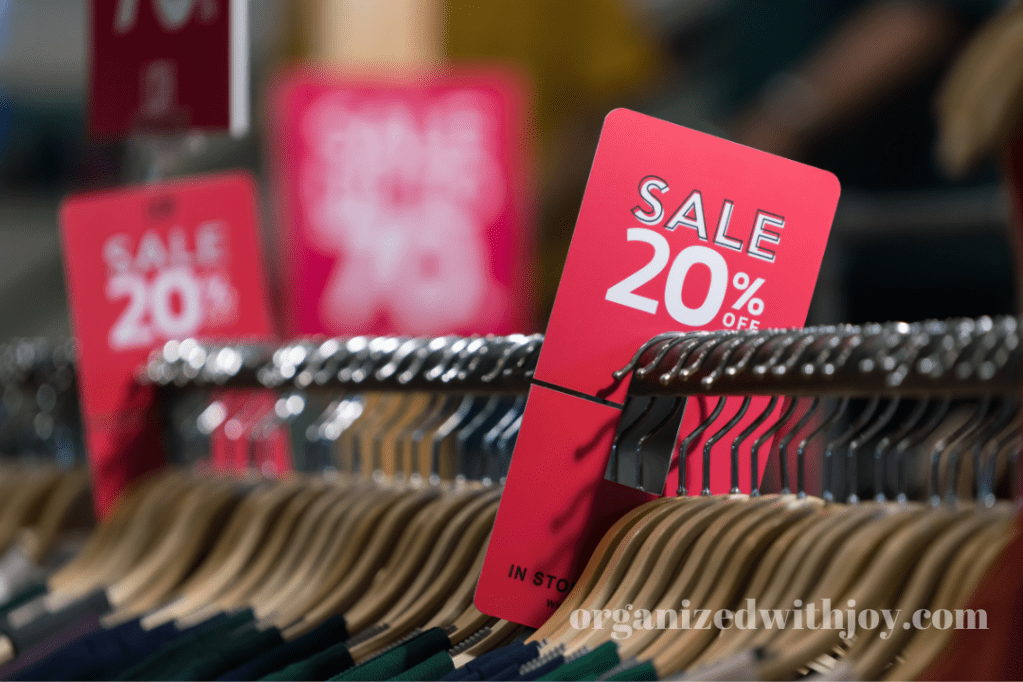
The ninth question you can ask yourself is: do I have the space to store what I want to keep? Physical boundaries can be a great way to limit what you keep. It can be helpful to give yourself boundaries by having a certain number of bins for your holiday decor and only keeping what fits in the bins.

The tenth and final question you can ask yourself is: Am I keeping items because of guilt? Sometimes we keep sentimental items or holiday items because they were gifts given to us. It can be very difficult to let go of items given to us, however it doesn’t seem sustainable to keep every gift ever given to you. I am sure the person who gave you the gift would not want you to keep the item simply out of guilt and might rather you pass it along to someone who can use and enjoy it!

Well, I hope these ten questions were helpful to you to process through making decisions when it comes to decluttering sentimental and holiday items. This time of year as we get out our holiday decor and set it up is a great time to think through these questions! Happy decluttering, and happy holidays!

Here is the YouTube video I created in conjunction with this blog post if you would like to check that out.

7 Tips to Avoid Decluttering Burn Out

Have you decided it’s time to get serious about decluttering your home? Are you tired of the piles, not being able to find what you need, and just the stress of clutter? Today I wanted to share with you 7 things you can do to avoid decluttering burn out. Sometimes when we decide we are fed up with the clutter and want to do something to change it, we can quickly get burnt out! 

Often people try to do too much, too fast, causing this decluttering burn out. In light of that, my first suggestion is to do a little at a time. I know at first it can be easy to pull everything out of a space konMari style and want to tackle everything all at once, but I suggest you resist the urge to do this. It is better to do a little at a time so you don’t get easily overwhelmed. I would start very small – maybe a single drawer or cabinet. Usually starting small like this gives us motivation to choose another small space, and then another, until we have gone through every space in our homes! Another idea adjacent to this is to set a timer. It can feel less overwhelming to work on projects like decluttering when we know there is an endpoint.

My next tip is to have a decluttering plan. For anything in life, when we have a plan set in place it makes everything go more smoothly. When we have a plan, we also have that feeling of there being an endpoint. {{Although I will say, as long as items are still coming into your home – even as gifts, freebies, or things your kids bring in, decluttering is a constant process. You just eventually get to the point where it’s not as overwhelming.}} What I like to do is choose one room in my home per week to deep clean and declutter throughout that week. Going through spaces in this way breaks it down into more manageable tasks.

My third tip is to make a game out of it! Making a game out of any task that isn’t fun can make it fun! I like to play the Minimalism Game, however this may be overwhelming to some people. With this game, you choose one item to get rid of on day one, two items on day two, three items on day three and so on throughout a month. So you end up donating things for 30 days, equaling over 400 items! Another game you could play is have every family member take a trash bag or box and see who can find the most items to donate. I am sure there are so many great decluttering games out there which you could Google for more ideas!

My next tip is to take breaks. If you feel a burn out coming on, take a few weeks or months where you aren’t focusing on decluttering. Sometimes we just need to take a break from it to recharge and feel ready to go through things again.

Another thing you can do to avoid decluttering burn out is to not start with sentimental items. These items can be very difficult to declutter and slow your process down. By starting with a space with items that you don’t have sentimental attachment to, you get the momentum you need to be successful at decluttering.

My sixth tip is to celebrate your successes. Celebrating along the way can also help with the momentum. When you acknowledge the progress you have made it can inspire you to keep working at it. An idea that I have seen is to take before and after photos. Sometimes we forget how far we have come! Having those photos can remind you of how much progress you have made!

My last tip is to invite a friend or a professional to help you! Sometimes you just need someone there to help you talk through why you should keep or get rid of items. Having another pair of eyes and someone else’s input can be really helpful. Also, this can also make this process less painful and more fun!

Well, I hope this post was helpful to you and that you are inspired to start decluttering your spaces today!

The Real Secret of Tidy People

I think I have figured out the real secret to being a tidy person. I have a whole blog post sharing how to keep your house tidy. These habits are easier to develop if we adopt this secret of being a tidy person. In my other blog post I share several habits you can cultivate to become a tidier person. Dealing with things immediately instead of setting them down to deal with later, having a cleaning routine that makes sense so you can stick to it, enlisting the help of other family members, and having a place for everything are all great habits that can help you to stay on top of clutter accumulating. But the real secret is the final tip I shared in that post – DON’T OWN A LOT OF STUFF!

The real secret of being a tidy person is that they don’t have extra inventory in their homes. They don’t keep things just in case. They don’t want to manage a lot of inventory. I think I came to this conclusion as my kids got older. Now that all of our children are adults, even though currently they are all living with us, I realize that there is a lot less stuff I need to manage. When they were younger there were toys, school papers, and sports equipment. Now that they are older they manage their own things.

In addition to that, over the past 7-8 years I have been pursuing minimalism. It is definitely a slow process for me decluttering my home and learning new spending habits, but less inventory in my home equals less to put away, clean, and organize.

I have a friend who openly admits she is not tidy. I would consider her a maximalist. She loves ALL the things! And I think that is totally fine! We are all different, and that’s what makes the world a beautiful place! I can go over to her house and appreciate all of the things she has surrounded herself with, but I personally could not live this way. If you’re someone who loves all the things, that is okay. But just know that the more you own, the more difficult it will be to be a tidy person. It comes down to what you value and what you can handle.

I am very affected by my external environment. My guess is you are too since you are reading this blog post and wanting to learn the secret to being tidy. Clutter and extra stuff around me definitely affects my anxiety and my mood. When my external environment is chaotic, I feel a bit chaotic in my mind as well. Everything we own takes up our energy and time. The less we own, the less we have to manage, the easier it is to keep a tidy home.

The more I simplify our home, the more I really see the benefits of living with less! Easily being able to tidy your home is one of those many benefits. I hope this post was helpful for you today!