The holidays are such a wonderful time of year, where we get to celebrate and enjoy slower, intentional time with family and/or friends. But, this time of year can also be very stressful and overwhelming. I wanted to share five tips to help you prepare for the holidays. Having an organized schedule and being prepared will help your holiday season go smoothly so you can enjoy the beautiful parts of this season.
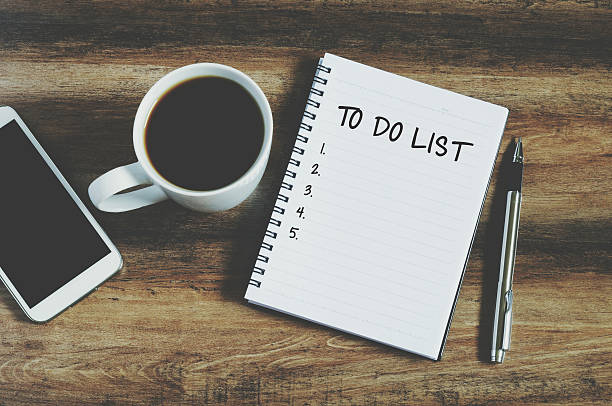
{{ONE}} Make a list of all that needs to get done, then allocate tasks leading up to the holiday. There is always so much extra to do around the holidays. Extra cleaning that needs to get done, extra cooking, and extra shopping. Plan ahead and allocate different extra tasks to different days. Maybe you want to get some deep cleaning done prior to guests coming into town. You could plan to do that a week or even two weeks out. Then, you will just need to do last minute cleaning before their arrival. If there is any shopping – food or gifts – that needs to get done, do it in advance. Having a plan to get things done ahead of time will prevent that feeling of “scrambling” to get things done.
{{TWO}} Prepare food in advance. In conjunction with allocating tasks ahead of time, plan to prepare some of the holiday food ahead of time. Are there any dishes you could make a week or two out and freeze? Is there any prep work you can do in advance to make preparing the dish easier closer to the holiday?
{{THREE}} Plan to make easy meals right before and after the holiday. You could make some meals ahead of time and freeze them to have leading up to the holidays. Alternatively, maybe this is a good time to check out meal plan services. Many of these companies that send you meal kits to your front door offer very simple meal options that might be worth investing in just for the holidays. Crockpot or Instant Pot meals are another great easy option as there are many all-in-one meals you can throw together very easily.
{{FOUR}} Enlist help.I have ordered the pre-made Thanksgiving meals from our local organic grocery store for the last several years – taking the task of most of the food prep off my to-do list. Perhaps plan a potluck meal for Thanksgiving or other holiday get-togethers, taking some of the food prep off of your to-do list. Have your kids help with the cooking and cleaning. It might not be perfect, but the work gets done and it teaches your kids some of the elements of hospitality. If you don’t have kids, maybe some friends can come over on a Saturday morning to help you get your house clean or food prepped. More hands = work getting done faster, and I have always found it way more fun to cook and clean with friends!
{{FIVE}} Lower your expectations. I am giving this advice as a “recovering perfectionist.” I know we all like things to be perfect at the holidays, but likely your guests won’t even notice the cobwebs in the corners of your house, or dusty baseboards. And if so, WHO CARES! The holidays are about gathering family. Most family members are much less critical of our housekeeping and cooking skills than we think. I know I would not want family members to be stressed out trying to make things perfect for my arrival!
I hope this gave you some ideas of how you can get your schedule organized prior to the holidays. Doing a little extra work in advance each day will take some of the stress off leading up to the holidays. Remember, even if everything doesn’t get done, the important part of the holidays is celebrating and spending time with family! Wishing you and yours a beautiful holiday season!
Here is the YouTube video I made in conjunction with this blog post if you’d like to check it out!
I would say the month of October was a win for my no spend year! I quit browsing through the Poshmark app, as I intended to do. Having that distraction cut from my life not only prevented me from breaking my rules, but also gave me more clarity. This month was for sure a month of a deeper understanding of the root cause of my spending habits. I have been waiting all year to have these kinds of revelations, and exactly what I was hoping for with this no spend year.
First, I will talk about the one thing I did purchase. I purchased a top for our annual family photos. I will assemble that with other clothing items I already own for the outfit. I will revisit the rules I set in place in case this is the first time you are stumbling upon my blog. I am allowed to purchase items for special occasions.
I purchased this velvet top from Poshmark to pair with other items in my wardrobe for our annual family photos.
The main thing that I have been evaluating this month is the idea that there are root issues in all of our lives which hold us back from living more fully. These issues can easily get covered up with distractions. For me, that distraction was shopping. For someone else it may be binging Netflix, eating too much or unhealthy foods, drug/alcohol use, and many more vices. It’s difficult to do the work of reflecting on what holds us back in our lives when we don’t leave space for that work. I think it is natural to want to distract ourselves from these issues and not deal with them. Reflecting on our lives and making necessary changes is difficult!
As I reflected, I realized I used shopping as a way to find value and stay busy. It’s in my nature to make things beautiful. I love organizing, decorating, and putting together creative outfits. I feel safe in these areas – meaning I have confidence I can do them well. We all have a certain amount of time and energy in each day. I was using shopping, and organizing, and decorating, and putting together new outfits as a creative outlet. This was hindering me from growing my organizing business – which is scary and requires facing unknowns. I used these things as a distraction from dealing with the root issue of fear in my life: fear of rejection and fear of failure. I’m growing. I’m moving outside my comfort zone. I’m trying new things. I’m beginning to grasp that if this new thing or that new thing fails, or if I’m rejected, THAT’S OKAY. At least I put myself out there. At least I tried.
Over the last month, I have been promoting my business more via word of mouth. Owning and saying “I’m a professional organizer,” instead of saying, “I’m a SAHM, but I kinda, sorta started a business.” I also updated my LinkedIn profile. I recently started a YouTube channel, where I will be sharing organizing tips. I’m beginning to lean into my giftings as a creative in a way that brings more purpose.
Here is my first YouTube video. My plan is to make one video per week. Would love for you to check it out!
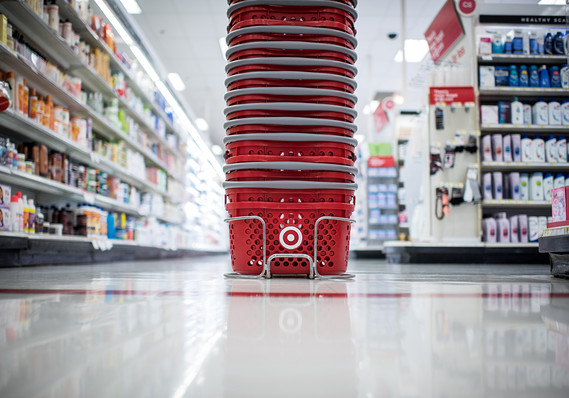
One other thing that I thought about during this month is decision fatigue, which can waste our time or worse paralyze us from moving forward. I had some items that I needed to purchase at Target. Items in which I would have to make decisions. In the past, these decisions felt overwhelming or I felt like I was always making the wrong decision. This time, it didn’t feel that way. I instead felt confident in my decisions. I wondered if it was because when I used to shop at Target, prior to this no spend year, I would go in with a list but get sucked into the dollar spot, the home decor section, or the clothing section. I would see things I liked or wanted and I would have to make decisions about those items – on the spot! After walking through Target, I was completely done with making decisions, perhaps even before I got to the items that were actually on my list!
I’m still in the process of thinking through what I would like to do moving forward into 2020. I do think I’m going to be intentional about sticking to my list, especially in places like Target or Home Goods where it’s easy to get sucked into browsing. Share with me any ideas you have on dealing with consumerism in your life. What types of “rules” do you have in place for yourself? A budget? Certain number of clothing or home decor items purchased per month or per year? I do want to have a plan as we move into the new year!
Many people feel overwhelmed when thinking about decluttering their homes. They may have flashbacks to a “Tidying Up With Marie Kondo” episode in which the participants are required to remove all the clothes from every closet and pile them into a central location. While this technique may work for some, or work if you have the up front time to devote to it, not all of us are prepared to allocate a whole day – or several – to decluttering. What I have always instructed my kids and sometimes clients, is the old saying: “There is only one way to eat an elephant: a bite at a time.” Sometimes it makes sense to declutter a little at a time to prevent decision fatigue or simply becoming overwhelmed, which can often lead to giving up on it all together. I wanted to share TEN areas in your home that you can likely delclutter in under TEN minutes! Doing little bits of decluttering over time is more manageable and you will see results in the end.
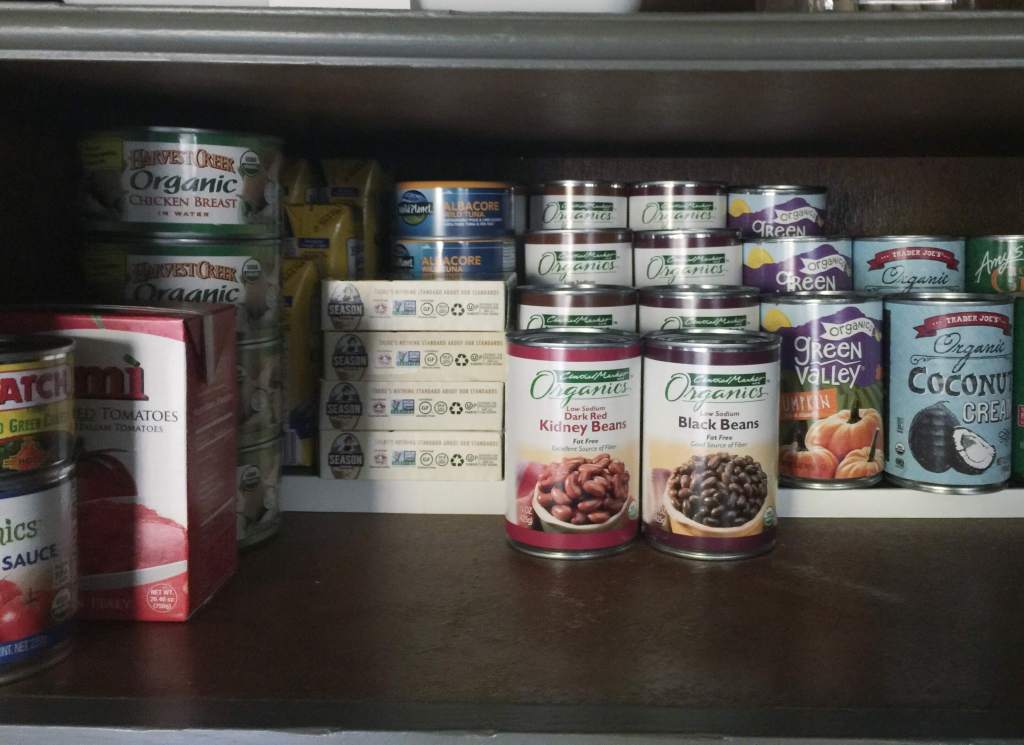
{ONE} The pantry. I’m not talking about a complete overhaul where you take everything out, clean it out, and purchase uniform storage containers. All you’re going to do is a quick sweep of the pantry and find food that is expired and food that you know won’t get eaten. This shouldn’t take long at all!
{TWO}The refrigerator/freezer. While you’re in the kitchen, you can do the same thing in your fridge and freezer. Look for food items that have gone bad, are expired, or your family is no longer eating. You might be able to get the pantry AND fridge/freezer done in 10 minutes!
{THREE} The kitchen utensil drawer. We often have too many kitchen utensils cluttering our kitchen drawers. If you fear you will get rid of something you actually use, you could store items away in a garage or basement for an allotted amount of time (perhaps 6 months) and if you were able to go without them, after the time is up donate the items! Also, The Minimalists – Joshua Fields Millburn and Ryan Nicodemus have what they call the 20/20 rule: if you can replace an item that you may want to get rid of within 20 minutes or less, and for $20 or less, you should go ahead and let go of it. Many of these kitchen utensils are easy and cheap to replace.
{FOUR}Cleaning products. We have all bought cleaning products that we thought would work well, but don’t. We then just leave them in the back of our kitchen or bathroom cabinet. If you are not using a cleaning product, I would suggest getting rid of it. If it falls into the category of hazardous waste, just be sure to dispose of it responsibly. Most cities have a drop off location for such items. Also, on this topic, if you are trying to simplify, cleaning products is a great way to start! While marketing might tell you that you need a separate product for each cleaning task, the truth is you can easily make your own multipurpose cleaner with simple products you probably already have on hand. There are many resources online to find ways to make your own cleaner. Or, if you don’t want to make your own, consider just using a pre-made multipurpose cleaner for everything!
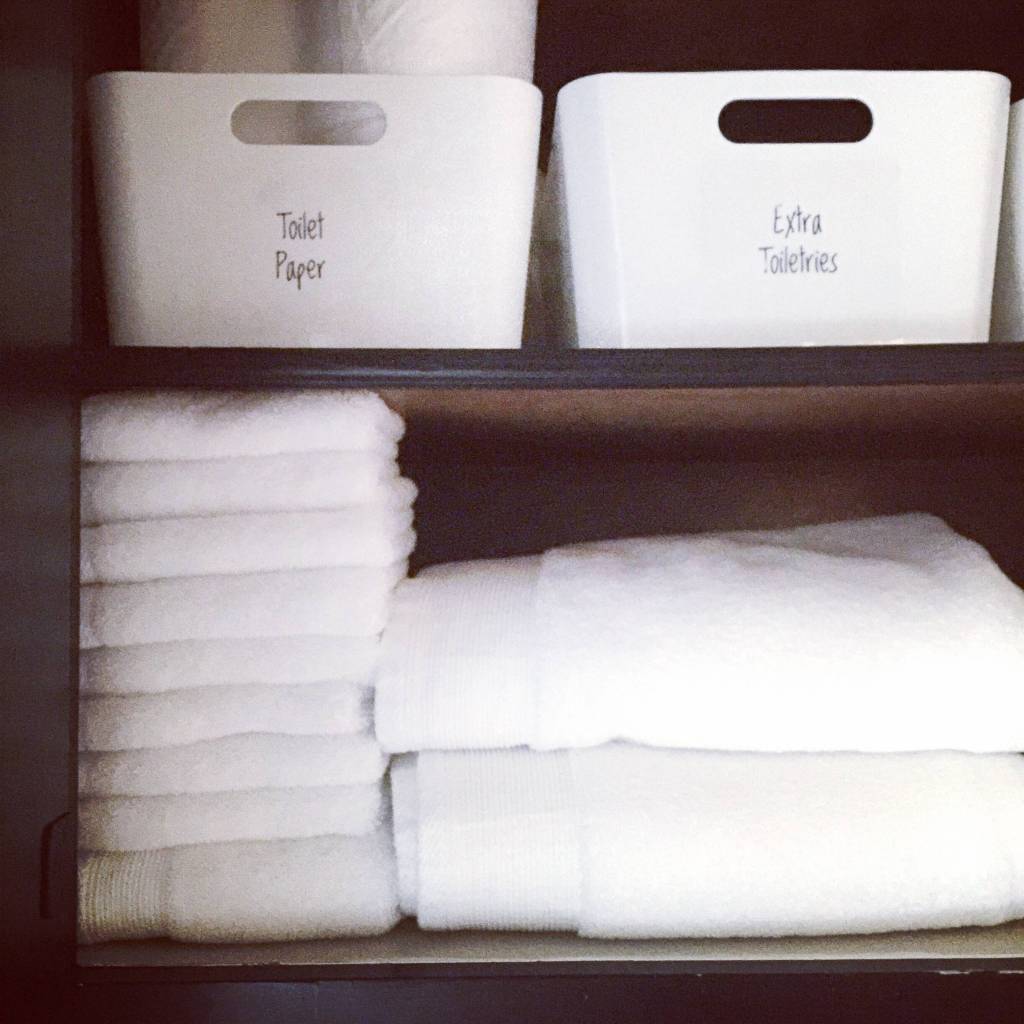
{FIVE} Sheets and/or towels. For some reason, it is easy to accumulate extra sheets and towels. It can be easy to quickly go through your linen closets and assess how many you need. When I purchase new sheets or towels, I immediately discard the old ones. Many animal shelters are in need of old sheets and towels, where you can donate them. I have two sets of sheets for each of our beds (one for on the bed, one for in the cabinet or in the wash), and two towels per person (one for use, one for in the cabinet or in the wash). This has worked really well for us for many years!
{SIX} Medicine cabinet. It can be difficult to remember to go through the medicine cabinet periodically to make sure we are discarding expired or unused medicine. I like to go through ours about every 6 months. This is also a task that doesn’t take long.
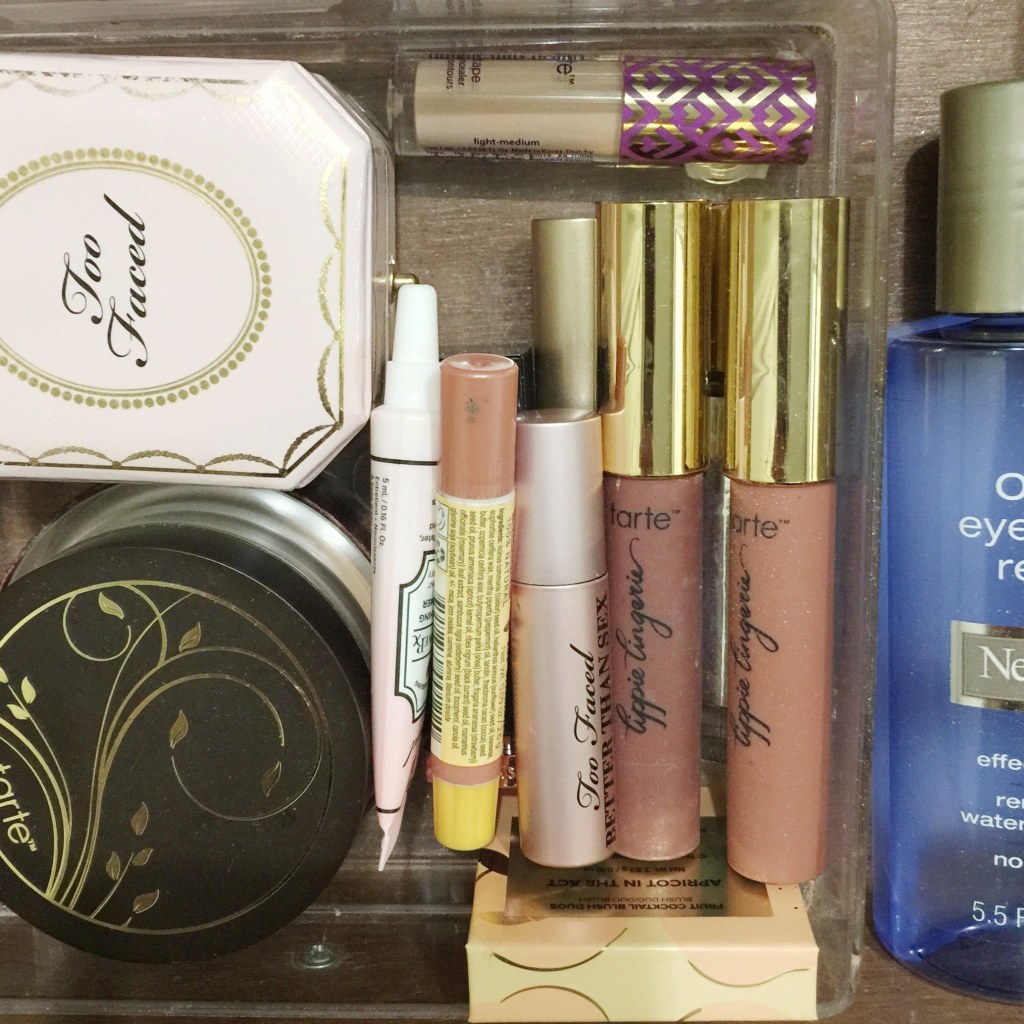
{SEVEN} Make-up drawer. Another place that can easily accumulate over time is our make-up products. Do you ever get sample make-up items then after testing just let them sit in the drawer? It’s good to go through and assess what products you are using regularly. It’s an easy place to declutter.
{EIGHT} Pens/pencils. I like to go through our pens and pencils periodically. This is another area that can quickly accumulate. Sometimes I wonder where all the pens came from! They multiply! You may not have time to test each one to determine if they work, but you can at least pare down the ones you know you don’t use. And next time, if you try to use a pen and it doesn’t work, throw it away immediately!
{NINE} Coats/jackets. Typically we don’t own too many jackets, so it’s an easy category to declutter. It’s a great idea to quickly assess at the beginning of a new season what jackets can go!
{TEN} Board games. Are we the only family that loves NEW board games?? It is a weakness of mine to buy new board games. Now that our kids are teenagers/young adults, it is one of the main forms of entertainment we enjoy together as a family. While purging this area of your home, include your spouse and kids! You could even make a game of decluttering the board games. Have them all out in a visible area one night during dinner and vote on which ones should stay, and which could go!
I hope this inspired you, knowing you can begin small when contemplating the process of decluttering. It doesn’t have to be overwhelming or time-consuming. Take a little “bite” every day, and before you know it “the elephant” will be gone!
There are several areas in our home that we could evaluate our things and determine if we could let go. Here are 10 areas to consider and ideas on how to let go.
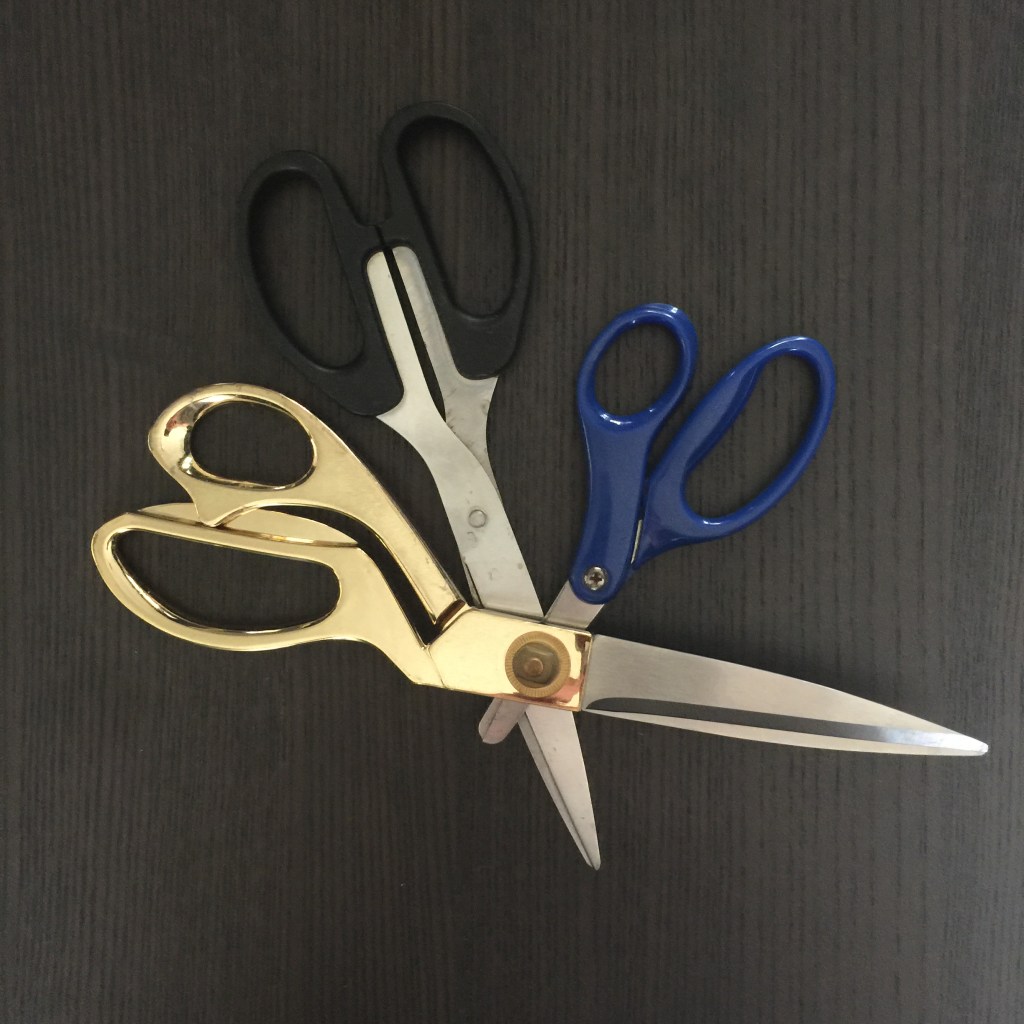
1) Multiples of one item. Having multiple of one item is an easy place to begin decluttering. While there are certain things you may want to have multiple of in your home (we have multiple pairs of scissors since they seem to disappear easily!), often times we don’t need those multiples we just accumulated them over time. An easy place to find multiples is in your kitchen.
2) Unused gifts. I think it is a universal feeling to feel guilt getting rid of something someone gave to you. Even if you are someone who doesn’t attach sentimental value to things readily, it is difficult. I’m sure it’s even more difficult for those who do attach sentimental value to items. When someone gives you a gift, that item now belongs to you. You can appreciate their gesture and experience the joy of the act of giving in that moment, but if this item is not useful to you or brings you joy then it is silly to hold onto it just because it was given to you. If the person who gave you the item would be upset because you didn’t use it or you gave it away – that is an issue they have, not you. Usually, your friends and relatives would not want an item they gave you to cause stress or clutter in your home. I think most people would rather the item that they spent money on would be given to someone else to be useful than to sit in a drawer or closet in your home.
3) Sentimental items (especially large ones). This is a tough one. Obviously we don’t need to get rid of all sentimental items. It’s okay to hang onto items that have meaning and remind us of events or times that bring back positive thoughts. However, we need to evaluate how many things we hold onto. Do you hold onto a napkin touched by your middle school crush? Okay, maybe that’s going too far, but you get what I mean. It’s okay to give yourself limits on what you keep as far as sentimental items. Choose a box or two, and keep only what fits inside those boundaries. Some items, especially large ones can be kept digitally by photographing the item(s) prior to letting them go. Typically, the picture of the item will bring back the same memories as the item itself. Also, if you have sentimental items that cause negative feelings, I would recommend letting go of those items. There is no need to hold onto something that causes you pain.
4) Clothing items that don’t fit you. Obviously there are exceptions to this. If you are pregnant or in the process of a weight loss journey it makes sense to have a variety of sizes in your closet. However, if you are holding onto a piece of clothing because you might one day fit into it, that is not a good motivator. Let go of those items and if you do lose the weight, you will be able to purchase new clothes that fit. On the other hand, if you have lost weight and are hanging onto clothes that are too big, in my opinion that’s not good either. You lost the weight, stick to your new healthy routines and you will likely keep the weight off.
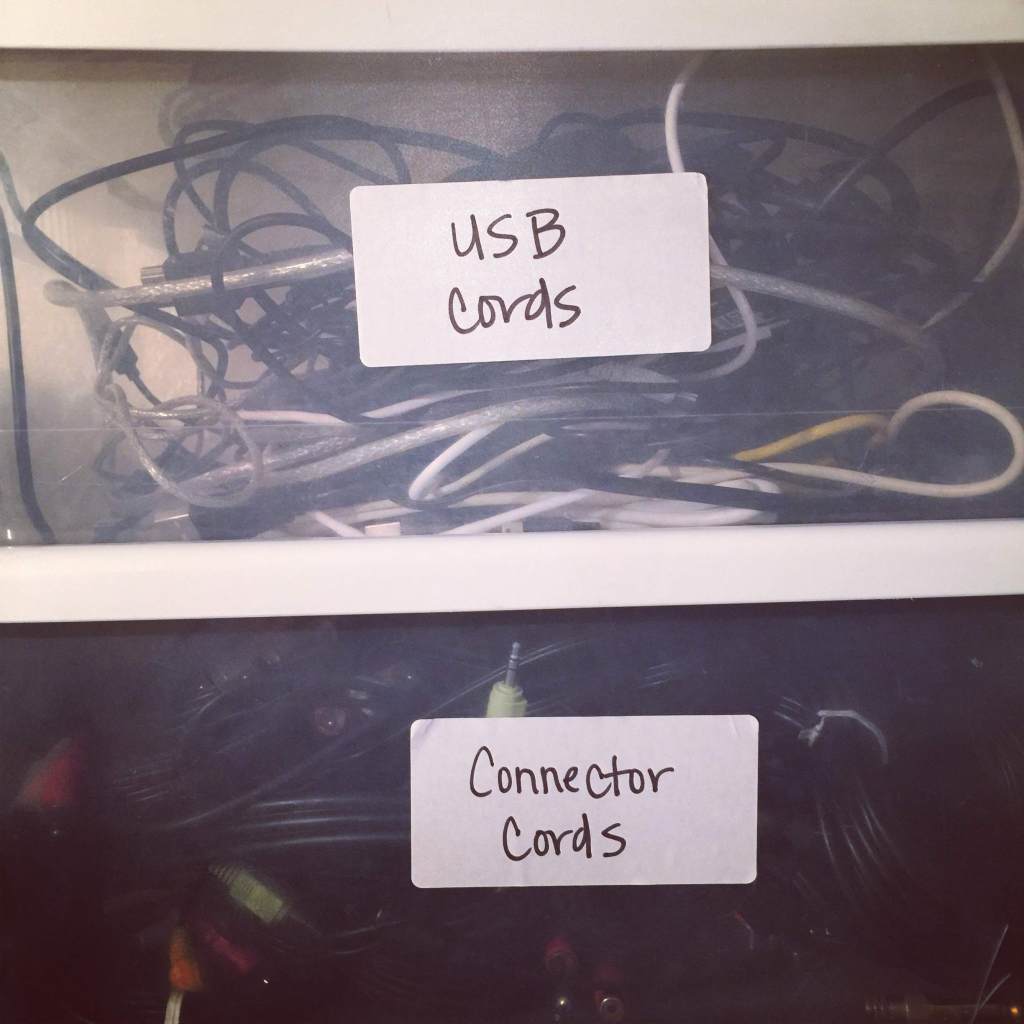
5) Unused electronics. This could maybe be under the “multiples” category, but I decided to talk about it separately since so many of us have closets overflowing with old phones and laptops. Typically, when you get a new phone, computer or laptop, you don’t use the old one again. There may be a small chance that your new one breaks and you do need a “back up.” If you feel more comfortable having a back up, then just keep one. By donating these items, they maybe could get a new life for someone in need. Along with these items are all the cords that come with it. If you get a new item, it will likely come with the appropriate cords so you can send the cords along with the old items. Cords do seem to multiply, at least in my house! I’m sure at some point we purchased these extra cords, but this is another area to evaluate if you really need to keep these items. Even as a professional organizer, I have yet to convince my husband of this!
6) Pieces of unused furniture. This one is tough because furniture can be expensive. Furniture also takes up a lot of space. Look around your home to see if there is a chair, a side table, or a coffee table – maybe even a bed or sofa – that could go.
7) Toys! Many of us are fortunate enough to have very generous and giving family members and friends. That coupled with how cheap toys are, and how easy they are to acquire, leads to heaps of toys around our homes. I remember when my kids were young, toys seemed to seep into every room in our home. They already had designated space in our game room, my boys’ bedroom, and my daughter’s bedroom. Not to mention, we had a playroom lined with toy storage shelves with bins! I’m very thankful that my children had such giving and loving grandparents, aunts, uncles, and family friends. In hindsight, I wish I had chosen boundaries for their toys, and had them help with the process of letting go of old toys to make room for new ones. Often times, kids get overwhelmed with too many toy choices and end up gravitating toward electronics instead. I think having less toys promotes creativity.
8) Home decor. The styles and our tastes are ever-changing. It’s okay to acknowledge that and let go of items that no longer fit your home decor style. Often, we keep items because we spent money on it, and may feel guilt about letting it go. These feelings lead to overstuffed cabinets and closets filled with home decor we might use, but probably won’t. Be realistic about whether an item truly does bring you joy, or is beautiful to you, or if your judgement is clouded by the feelings of guilt. These items could be used and enjoyed by others instead of hiding in the back of a cabinet or closet in your home. An idea is to think about any family members or friends who would want certain items. I recently wanted to part with these miniature chairs I had in my home for many years. I have a friend who always commented on those chairs when she was over at my house, so I asked her if she would like them. She was happy to get them, which made it easier for me to part with them.
9) Extra toiletries or cleaning items. Do you keep extra toiletries or cleaning items in your home that sit at the back of your cabinet? Evaluate what you will actually use and get rid of the rest. As I have mentioned several times, it can be difficult to get rid of items you paid money for. However, if you are storing the items but not using them, it doesn’t get you that money back to keep holding onto them.
10) Paper, notecards, ect. Paper trails are probably the most difficult thing to declutter. I myself struggle with decluttering these items, and knowing what’s important to keep. Many bills can be sent via email and accessed online if you set that up in your account settings. Other paper items can be scanned and kept digitally. I recently learned about Scanbot, an app you can use to scan in paper items before discarding them. Same with kids papers and artwork. Consider scanning things in and keeping them digitally. If you would like to keep their original artwork, I put together a scrapbook for each of my children with their special artwork. Another area is note cards. Evaluate how often you actually need/send note cards to determine how many makes sense to keep around your home. Many of us send notes digitally, even birthday cards! You may be someone who likes to send tangible cards, and that’s great! Just evaluate how many you need around your home verses how many you own.
This is certainly not an exhaustive list! There are many other areas in our home where we could reevaluate and declutter. These are just some ideas to get you started!
I have three kids – age 22, 18, and 15 – so we have experienced every stage for toys. We have also experienced all you deal with in owning toys: buying/receiving, storing, cleaning up, purging. I have three different types of kids too when it comes to what they like to keep and what they can let go of in regards to toys. I have one who saves everything, one who keeps almost nothing, and one in between.
This was how I had our toys organized when we lived in a 700 square foot apartment. You can see the photo labels on the bins.
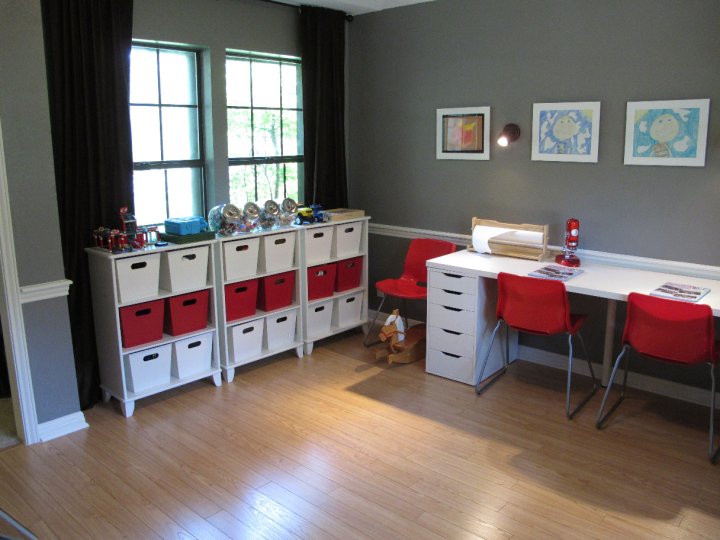
This is the playroom from our previous home, when our kids were young.
This is what our playroom looked like at the end of our playroom days, in the house we currently live in.
First, I want to say that I am very grateful that we have such generous parents, grandparents, and siblings in regards to receiving things for our kids. However, our kids had too many toys. As I look back, I wish that I had done things differently in handling how to deal with toys. I hope to help someone who is still in the thick of it or just beginning the journey.
Our boys’ room with their toy shelves.
We used to live in a very large house that had a playroom and a game room – both of those rooms housed toys. In addition, my daughter had some of her toys in her room and our sons had some of their toys in their room. That’s a lot of toys! One thing I did that helped with the chaos of all the toys is to have organization systems in place.
Our daughter’s room and her toy shelves.
Having a place for everything gives boundaries and helps the kids learn how to organize. I grouped each type of toy together. When they were very young, I took a picture to represent each group, laminated it and stuck it on the front of the box. Also, any toys/arts and crafts/board games that I wanted them to have help with I stored on a higher shelf where they couldn’t reach. Over the years I had different types of bins and storage containers. I started with plastic bins – which were more cost effective, and easy to attach photos to the front of the bin. We have also had baskets and wooden bins which were more aesthetically pleasing.
In hindsight, I wish I had done a better job of teaching my kids how to purge and let go of things. My oldest especially has trouble letting go of things. I used to feel like this was my fault, but given our middle child has no problem with this I think it is a temperament thing. I do believe it would have helped her to learn how to think about things in terms of what to keep and what to donate or discard if I was able to guide her starting at a young age.
This was our game room. You can see some of the toys on the shelf, and there were more in the closet. Notice my 3 year old playing on the computer and not with the plethora of toys we owned.
As I look back, I think my kids were at times overwhelmed with all the toys, and may have resorted to playing video games or playing on the computer more often than I’d like to admit. I remember having to direct them – to come up with ideas of things they could do. This wasn’t always the case, but I do wonder if they had less toys to choose from, if they would have been more creative in play. {{As I’m putting this blog post together and looking through the photos I had in mind to share, I’m even more regretful! We had an overwhelming number of toys!}}
I also think of how much of my time was spent organizing, reorganizing, cleaning up, and purging their toys. I think if they had less toys I would have had more time to spend with them. In hindsight, I would have had better boundaries for my kids and allowed them to make the choice as to what stays and what goes. This would give them the boundary, like whatever fits in this set of boxes, but would give them the autonomy to make the choice as to what is most important to them. Now that we are done with the toy phase, all I can do is pass along any wisdom and experience I gained in going through that stage of life!
It’s so interesting to me how when you have multiple kids each one is so unique. They are all raised in the same home, and in our case with the same parents, yet they all have different temperaments and characteristics. Our oldest child, and youngest are collectors by nature. They are sentimental and like to hold onto things. But our middle child is completely opposite. He is a minimalist kind of by accident because of how he is innately. I admire him for not putting so much value on material things. I am somewhat the same way, but not to the extent he is. I joke about how moving him into college will be a completely different experience than it was to move our daughter into college. I envision him having one small suitcase to hold his clothes, his computer, and his fancy desk chair.
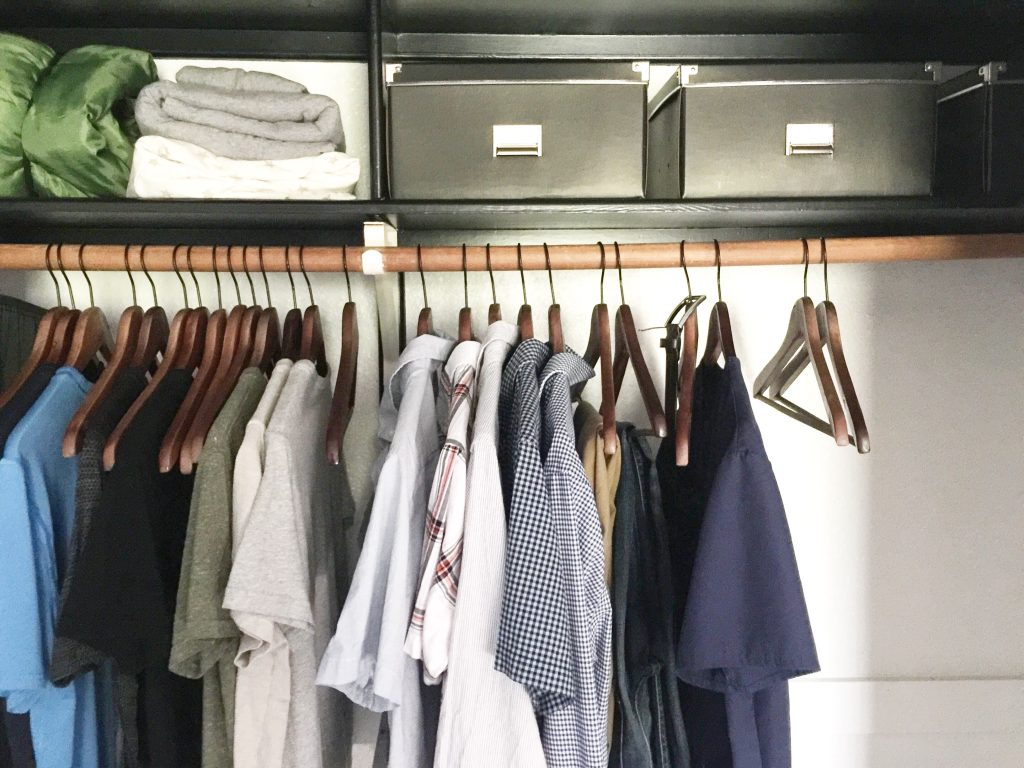
This is a snapshot of his closet. This is most of his clothes. He does have a dresser which holds shorts, socks, underwear, and a couple of sweatpants.
I believe his simple living has contributed to his success in life. Since he doesn’t have a lot of stuff, there’s not much to take care of. Also, it cuts down on decision making when getting dressed in the morning. He has two “uniforms” (with the exception of the scrubs which he is required to wear on specific days for an internship) – either the clothes he wears to the gym (dry fit shirt and shorts) or the clothes he wears to school (cotton t-shirt with cargo shorts). We do live in a temperate climate, so he can wear shorts year round. His mind isn’t constantly overwhelmed by external distraction because of the lack of clutter leaves space, and he can better focus on his school work.
This is a box of things he has been telling me for a while that he is ready to part with. The more I thought about it, I realized he probably won’t want these participation trophies as an adult.
We recently cleaned out his room. He has told me in the past that I could get rid of all of his childhood trophies – he told me they were just “participation trophies” so they didn’t mean much to him. We were able to pare down his already sparse room by eliminating the trophies, some sports jerseys from said activities, school t-shirts he doesn’t wear, and a pile of shirts that he had outgrown, and a few hats that he no longer wears. It was amazing to me that in spite of his room already being decluttered we found this much stuff to remove!
Anyone who is a parent knows how much you can learn from your kids. At times we forget and think we have so much to teach THEM – because we are older and wiser, but your kids have a lot to teach you too! Each one of my kids has challenged me in different ways to evaluate my life. With my minimalist child, he has caused me to evaluate what I really need in life to survive and feel fulfilled. He is an inspiration to me to simplify my life.
This is his dresser. I chose to add decor to his room, but he doesn’t mind if it’s there or not.
This is the other side of his room. It pretty much stays this clean all the time.
Several years ago, a friend let me borrow a book titled “Sink Reflections, The Fly Lady’s Baby Step Guide to Overcoming CHAOS.” One of the main takeaways I got from this book was her idea of zone cleaning. This method allowed me to keep on top of the clutter a little at a time. In her book, she describes 5 zones of your home: entrance/front porch/dining room (1), kitchen/pantry (2), the main bathroom/one extra room (3), master bedroom/bath/closet (4), living room/den/family room (5). I personally have broke down these categories even further to make completing these tasks more manageable. I have 12 zones in my home. Each home is different, and the amount of time you have to complete the tasks are different, so it is easy to tailor this to your home and schedule.
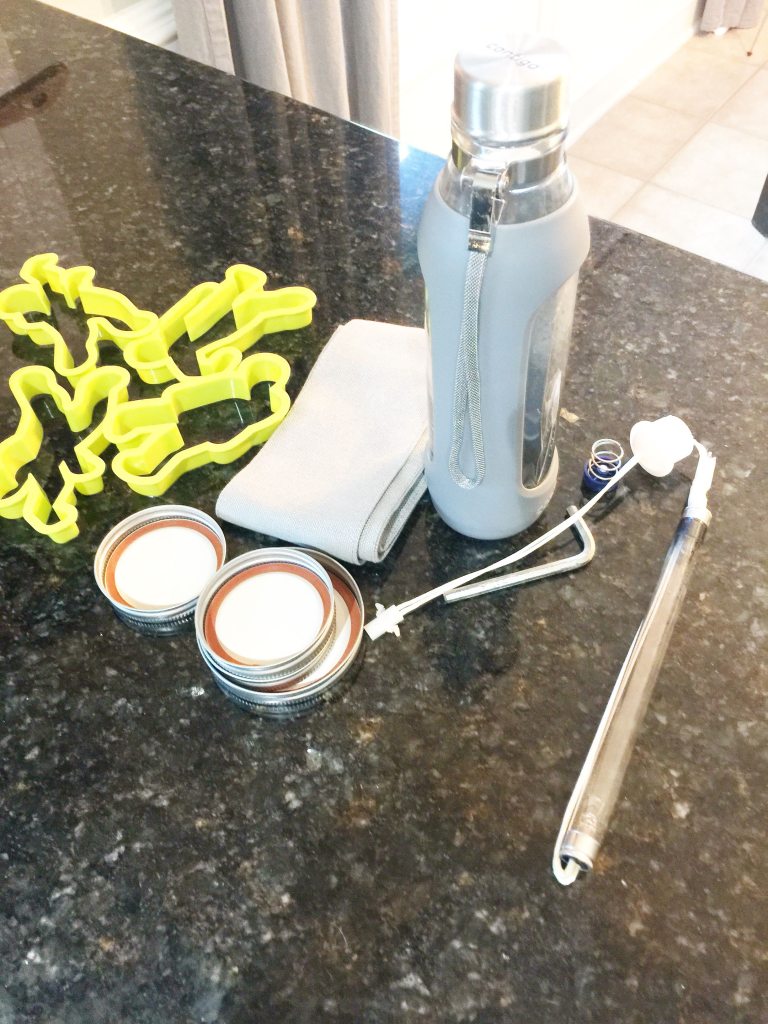
Here are about 10 items I recently found in my kitchen to declutter
The basic idea of zone cleaning is to choose one room each week to focus on deep cleaning and decluttering. I typically “circle” my house to keep track of which room is next. With this method, in my home, every 12 weeks each space gets a deep clean. Deep cleaning for me includes things that I don’t do each week: clean the ceilings/light fixture, dust the baseboards/blinds/window sills, clean the interior of the window, remove items from cabinets or drawers to clean inside the drawers, if the room has carpet I steam vacuum those. In addition, while I have things removed from cabinets and drawers I evaluate what I am using or what is expired to determine what can be decluttered. I try to choose 10 items from each room each week. I don’t always find 10 items in each room, but I will frequently find more than 10 items in some of the rooms. If I found exactly 10 items per week, that is 520 items per year leaving my home! That number seems overwhelming, but if you break it down to focus on just one room per week it is manageable!
In my bathroom declutter, I like to go through our medicine to determine if any of them are expired
You could tackle this in one of two ways: I like to just spend part of one day getting the room complete. Alternatively, you could choose one chore on that list per day, making it even less overwhelming. For instance, you could choose one section of cabinets to go through in your kitchen, or choose one day to clean the ceiling and light fixture and another day to clean the baseboards/blinds/window sills. Doing tasks like this that could seem overwhelming in small spurts can make them more manageable.
I know some people are obsessed with the KonMari method of decluttering, and that works well for some people. But if throwing all of the clothes from your whole house into a pile seems overwhelming to you, maybe the zone cleaning method would work well for you. The problem with decluttering once and for all is that we constantly have things coming into our homes, especially if we have children. This zone cleaning method will allow you to continuously go through your items so you don’t have to dedicate a large amount of time all at once to decluttering. What do you think of the zone cleaning method? Have you heard of it? Does it sound like something that would work for you?
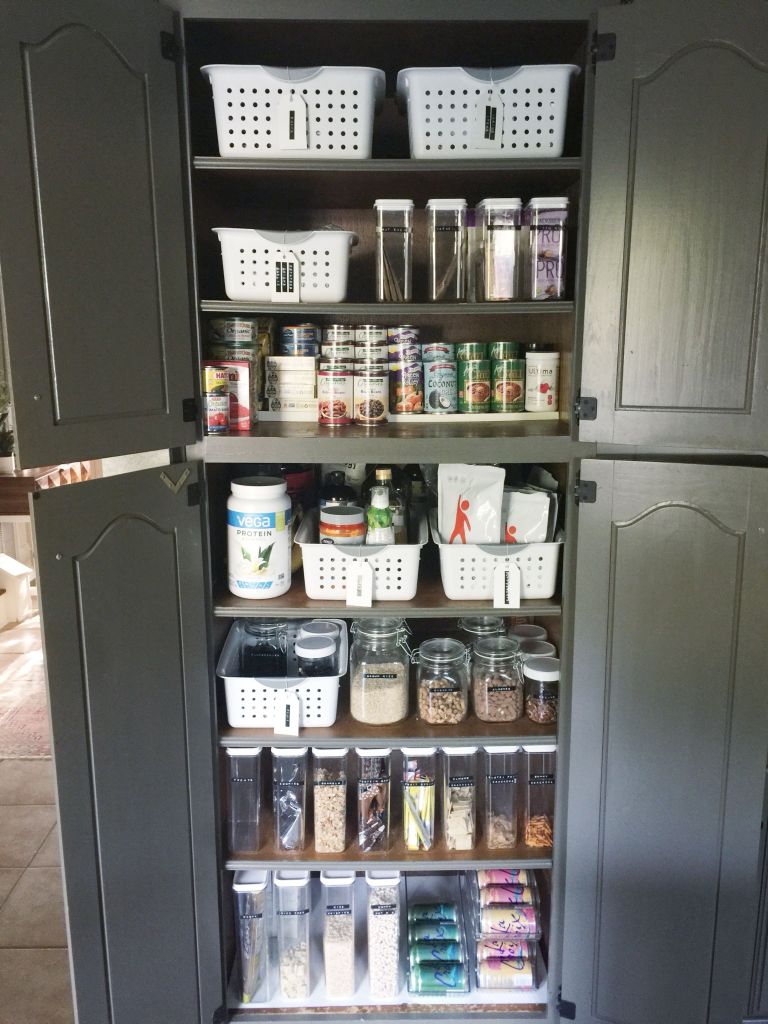
Do you have a difficult time keeping your pantry organized? It’s challenging to keep a pantry neat, even for the most organized person. Items are always coming in and going out, which can make it difficult to have systems set in place that help keep it organized. Obviously everyone has different sizes of pantries, families, and budgets to support such a transformation. I have some tips that might help bring order to any chaotic pantry.
One of the easiest ways to keep things organized is to invest in some storage containers and bins. This doesn’t have to cost a lot of money. You could use unused bins from around your home, or even use cardboard boxes to store items. Mason jars are an inexpensive way to store food, and makes your pantry look visually appealing. If you do have the budget for it, there are a variety of options and places to get storage bins and containers. I love Target or the Container Store, and I know Dollar Tree often has great storage solutions.
Bormioli Rocco Fido Jars
By far, my favorite storage containers are the Bormioli Rocco Fido glass storage jars with airtight lids. I have used these jars for over 15 years to store my baking items, staple dry goods (like rice and pasta), and even some staple snack items (like nuts and dried fruits). I have continued to collect these jars over the years as our needs have expanded and changed. They are a bit of an investment up front, but I think it is so worth it! I also recently did a pantry makeover and bought some reasonably priced plastic containers to store all of our items that generally come in cardboard boxes, making the pantry look more uniform, and making it easy to find what we’re looking for.
Using bins to store like items is another way to keep things organized. This would be especially useful for items that are in one category but rotate so you’re not purchasing the exact same thing each week.
Use baskets like these to store like items
Riser used for canned goods
There are other great organization tools for the pantry. I like to use a riser for my canned goods – that way I can easily identify everything I have available. You could also use baskets or bins for canned goods, allowing you to pull out the basket to see what you have. In addition, there are can storage bins which allow the cans to “roll” out one at a time. I use this for my cans of sparkling water. You could also use it for cans of soup or vegetables if you keep a good stock of those on hand.
Plastic storage containers, and can organizers help keep things looking neat
I like to label everything. You certainly don’t need to do this, particularly with clear jars or bins in which you can see the contents. I personally just like the look of the jars and bins being labeled. I like to keep meals and snacks simple, so I tend to purchase the same things over and over. If there is some change, the labels are fairly easy to remove. If they are extra stubborn, I just use Goo Gone and it easily comes off. I have used a variety of different labels over the years. I have written with a Sharpie on a plain label or name tag label. I have printed out labels. Most recently, I am obsessed with my simplistic embossing label maker. I like the old school, mid-century look to it. You certainly could get a fancier label maker as well.
The best way I find to organize a pantry, particularly if it is really messy, is to remove everything from the pantry. You could take this opportunity to clean all the surfaces. It’s also a great time to evaluate what food has expired or is not being used. For the food that, for whatever reason you aren’t eating, you could take it to a food pantry or I like to ask friends if they would like anything as everyone’s tastes are different!
Once everything is cleaned out, you have a clean slate. Now you can categorize the items and decant anything that will go into storage containers. One thing to remember prior to going out and purchasing storage containers is to measure your space. You will wanted to make sure the containers fit on the shelf where you are planning to store them. The final step is just a game of jigsaw puzzle – trying to see where everything fits. Especially when my kids were younger, I liked to have their snack foods on their level, and have junk food items up on a higher shelf where they couldn’t reach. It’s funny, even though they are teenagers, the snacks are still on the lower level in my pantry and the junk food is still stored on the top shelf!
I hope this gave you some ideas or inspiration to get your pantry organized! Do you have any tips for keeping a pantry organized? Any questions I didn’t answer?
One of the biggest obstacles in staying organized is the amount of items coming into our home. I’d like to think I am a relatively organized person, however I began to notice that really I had just become what I like to call an “organized pack rat.” Yes, I had boxes neatly labeled – but they were stacked high and I often did not open or look through any of those boxes.
A few years ago I discovered the idea of minimalism. Really, I have always been one to purge things. Once my youngest entered elementary school I began to find ways to purge things and organize the important things so they were on display and I could enjoy them daily. But, learning about this idea of owning less in order to live a more fulfilling life intrigued me. I began to read blog posts and watch YouTube videos from people who were pursuing minimalism and what that looked like for them. So, over the past three years I have been slowly decluttering my house.
Through some of the minimalist blogs and YouTube videos I began to learn about more important reasons to pursue a minimalist lifestyle, like the impact our consumerism has on the earth and on the people who make the products we purchase. I recently watched a documentary on Netflix, “The True Cost,” which was very thought-provoking. This documentary revealed some of the poor working conditions people in third world countries are experiencing in order for people in America and Europe to have cheap clothing. Not to mention how these factories are polluting the communities of these individuals, which is impacting their health. The fashion industry is number two in the pollution of the world, only second to the oil industry. Our planet has natural limits and cannot continue to sustain the impact consumerism has on it. It’s not just the clothing factories that are polluting the earth, but the clothing itself once it is discarded. According to the documentary, only 10% of clothing donated to charities are actually sold to a customer. The other 90% ends up in a landfill or shipped to a third world country to be sold there. Again, most of that ends up in polluting their communities. Many of the low-cost, fast fashion items are made at a price.
Back to accumulation… recently, after cleaning out my closet AGAIN I began to think about why I seemed to still have SO much stuff in spite of decluttering. It can be easy to bring home a new shirt here, and a piece of home decor there; but over time it adds up. My closet was an example of this. A couple of years ago I reorganized our closet, decluttered it and bought the number of matching hangers we needed for the remaining articles of clothing. I proclaimed I would do the “one-in-one-out rule,” but somehow that went by the wayside. My accumulation could not keep up with my decluttering! So, believe me, I know this is easy to do! And this was just my closet. There are so many areas of our homes that we are accumulating and not decluttering. What complicates things more is when you have other people living in your home. Spouses and children also bring things into the home.
This is embarrassing, but I have a feeling I’m not the only American who struggles with accumulation. THIS is a pile of things I recently took to the Goodwill. It was a pile I had been accumulating for the last three months until I could take it in, but this is still A LOT.
I decided that it’s best to not get rid of my husband’s and kids’ things without their permission, but I could make a significant impact on our home by decluttering my own things. This impact would be even more significant if I slowed the inflow of stuff. In 2019, I am choosing to do a “no spend” year, in hopes that by focusing on not accumulating our home will STAY decluttered. Once we declutter and slow the inflow, then organization has the impact we were hoping for. Organization systems set in place work best when everything has a home. It can be difficult to stay on top of incorporating new items if they come in faster than we can find homes for them. Of course there will be ever-evolving needs in our homes as our children grow and our hobbies change, but if we are intentional about the day-to-day things we allow into our home, it can have a lasting effect on the organization of our homes.
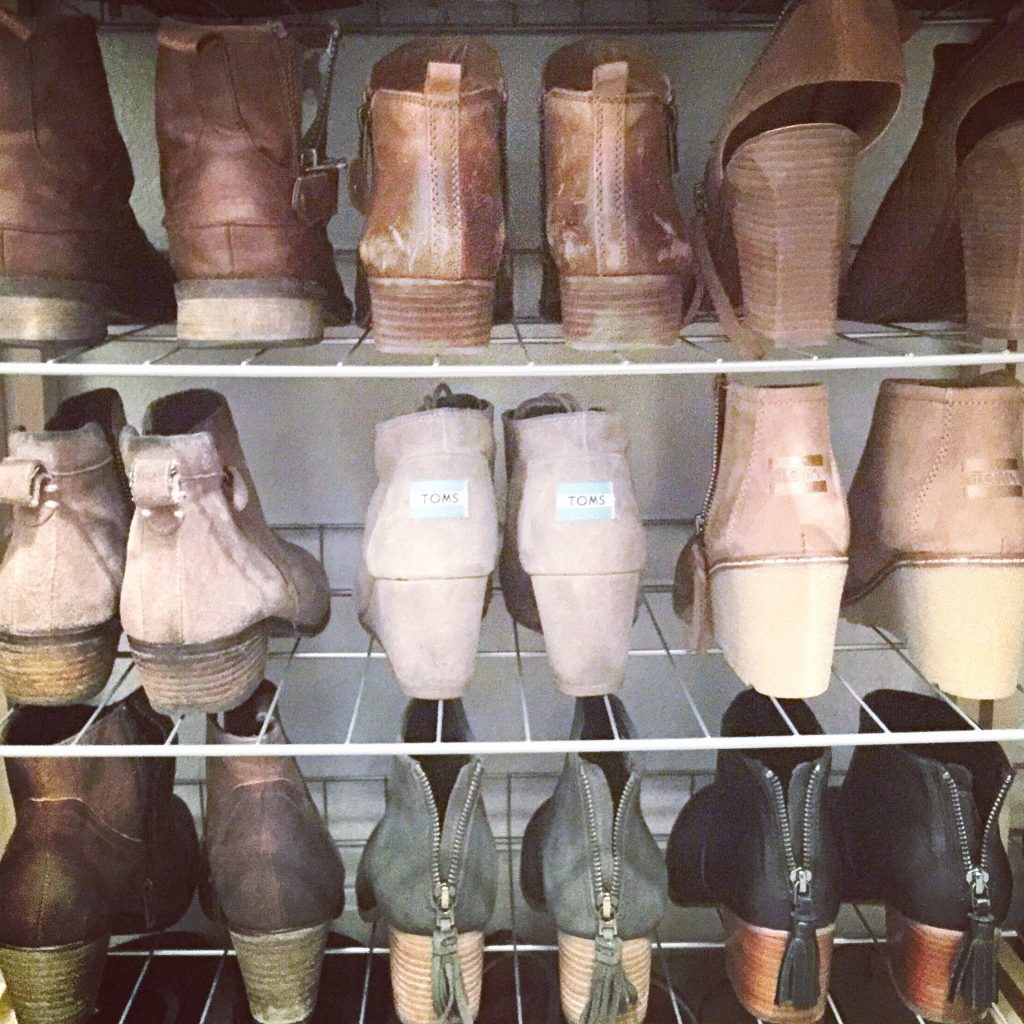
I really want to be a minimalist. I read books and blogs about minimalism, and it sounds so simple and clean. But as I stand in my closet and stare at my collection of booties, I know that I will never be a true minimalist. The principle behind minimalism is a good thing, but just like anything else, I’ve learned there’s balance and it’s okay to own more than three pairs of shoes. Now I am striving to only own what is useful or brings joy.
There are two keys to becoming more of a minimalist: 1)purge, 2)slow the inflow.Purging is fairly easy for me. I admit that there are times when I think about an item that I got rid of and thought, bummer I could have used that. But, the truth is, most of the time after it leaves my house, I have completely forgotten about it. One thing that I do in order to not feel as overwhelmed about purging is to pick a room each week and try to get rid of 10 items from that room. Sometimes I don’t reach the 10 items, but with the influx of stuff from my kids and free-bees, it can be pretty easy in some rooms. I take that opportunity to straighten things up and reorganize the area. I don’t do this every single week as some weeks are busier than others, but if you keep working your way around the house it will stay mostly organized and clutter-free!
Slow the inflow is the thing I struggle with. I like to shop. BUT, I have done different things to restrain my purchases. First, I don’t go shopping unless I need something specific. Next, I really try to stick to buying what I went in to purchase. That can be tough, especially at places like Target… we go in for face soap and toilet paper and come out with framed art work and that lamp you just couldn’t resist! I also have chosen to focus on quality vs. quantity, and finding things that will remain classics for several years. I love fashion, so I always have things in my wardrobe that may only last for a couple of seasons. Something I have done in the past which helps is to fast from purchasing clothes, shoes, and home decor for a set period of time (like one month). I have done a one month fast, two month, and three month! For 2019, the entire year I plan to do a spending fast from clothes, shoes, and home decor. Choosing to fast from consumerism allows for time to step back and really examine your priorities. I have realized during my past spending fasts that the inflow is what is truly keeping me from having only the things I love in my home. How about you? Does minimalism intrigue you? Or scare you?! Do you have tips on how to stay organized and clutter free in your home?
















 organized with joy