MEDITATIVE PRACTICE

Hey friends, for today’s Thoughtful Thursday I wanted to talk about something I was thinking about the other day while putting up our outdoor Christmas lights. I have been lining the path leading up to our house with lights for the last several years. It is a tedious process and I’m always trying to remember exactly how I installed them previously. I have these little light pick type holders, they are little stakes you put into the ground and then put each individual light bulb into individual stakes so that the lights are neatly lining the sidewalk. On the day I was doing this project I was not feeling great. I was dealing with some seasonal allergies, which made me a little irritable. I didn’t realize I had two different lengths of light strands and I thought I had installed the wrong ones because they didn’t reach all the way down the path, which irritated me even more! I later realized that the lights usually didn’t extend the full length of the pathway. But I had this thought while installing the lights – a lot of homemaking tasks and projects can be tedious, but they can also be quite meditative if we view it that way.

When we have a task that requires little thought and is a repetitive task, we can view this as an opportunity to have a meditative moment. As I was installing each little individual light, this repetitive motion afforded me the space to think through things that were on my mind. It gave me time to process some things I had been thinking about. I know when we perform these repetitive tasks it may be easy to want to entertain ourselves during that task. We may want to listen to music or a podcast, or watch a YouTube video. And there is nothing wrong with that! I certainly do that too. I just had this moment of clarity where I realized how meditative some tasks can be. I have been trying to mono-task more often lately. Doing one thing at a time – whether it’s cooking, cleaning, or putting up Christmas lights. This can help you to live more in the moment, and also leave more space for quietness and reflection.

Something that I have actually been thinking about all year is how inundated we are now with entertainment. Having a mini computer right in our pockets and going everywhere with us has made it really easy to access content and constant entertainment. I have noticed recently how easy it is to mindlessly open apps on my phone or mindlessly scroll Instagram. I go on to respond to comments or DMs and before I know it I’m just scrolling. I feel like it has become something that is an autopilot response. Any dead space we have – whether it’s sitting at a traffic light or waiting in line, our auto response can be to pick up our phones. I have been wanting to do a social media detox for a while now, but it’s just so complicated given that I post on social media for business purposes. I’m thinking about trying a 12 day detox leading up to Christmas day. And honestly, Instagram is the only social media app I struggle with. I do watch YouTube videos, but I feel like I am more intentional with YouTube. I got rid of Tik Tok and FaceBook a couple years ago. Social media is such a double edge sword because on the one hand it is a great way to connect, but it can also be a time suck. I have also wondered if I would spend more time with people in real life if I didn’t have this app to connect with people.

But back to the main topic I have been thinking about – meditative practices. I think once I filter out this extra input in my life, it will be easier to truly enjoy the meditative quality of some of my homemaking tasks. I will be less apt to find some way to entertain myself while cooking, cleaning, decorating, organizing, or decluttering and instead enjoy the process more and focus my mind on prayer, self reflection, or processing my most recent emotions. I do feel like this is such a challenge because of how prevalent media is in our lives. I don’t want to be a zombie and mindlessly open apps, and mindlessly scroll. I want to be intentional with what I do with my time and my brain space!

MAINTENANCE OVER COMPLETION MINDSET

Okay friends, for today’s Thoughtful Thursday post I wanted to talk about an idea that I recently heard about. That is the idea of having a maintenance mindset over a completion mindset. So often we have this mindset that things will be better when something is completed. Or we will feel at peace once something is completed. Once we have achieved that goal we are striving for we will feel accomplished. But the truth is there is always something more. When we live in this completion mindset, we will probably never feel at peace. Instead, we should shift our mindset to one of a maintenance mindset where we constantly have routines or habits that we perform as part of our everyday lives.

I really liked this idea. I think this explains intentional living so well. Mindset shifts are so powerful, and this idea of having a maintenance mindset in life over a completion mindset is such a small but meaningful mindset shift. In many areas of life, especially in work, education, and fitness we are taught to chase milestones: complete the project, graduate with honors, and reach the finish line. This “completion mindset” focuses on finishing tasks and achieving goals. While it can drive short-term motivation and give a sense of accomplishment, it often creates a cycle of burnout, disappointment, and stagnation after the goal is achieved. In contrast, adopting a “maintenance mindset” — the perspective that success is about continual care, improvement, and sustainable habits — leads to deeper growth, resilience, and long-term fulfillment.

The completion mindset focuses on completing something, and then setting it aside. For example, we often think of fitness goals in terms of completing something: losing a certain number of pounds, finishing a race, or completing a workout program. Once the goal is met, many people revert back to old habits or lifestyles, leading to lost progress or frustration. This is because the underlying assumption is that we only need to exert the effort until the task is complete.

On the other hand, if you have a maintenance mindset, it’s not necessarily about achieving this specific goal, instead it is about the process itself. The emphasis is on continual growth, and finding satisfaction in the day to day routine of the process. Fitness for instance shouldn’t be just about completing a goal, but a lifestyle of sustaining daily healthy habits. Learning is not just about retaining information to pass a test, but about cultivating curiosity for a lifetime. Relationships are not about finding “the one” or finding the perfect friend or perfect friend group, it’s about continuously nurturing the connections you have, working through problems, building trust and understanding.

The completion mindset may actually set us up for persistent dissatisfaction in life. After the thrill of meeting a certain goal has been accomplished, there can be a dopamine crash. Without knowing your next steps or coming up with an ongoing system to cultivate continual growth, you may begin to feel directionless. In addition to this, when we have a completion mindset, each task can feel daunting and overwhelming, which with a maintenance mindset it is a consistent journey with manageable steps.

A maintenance mindset is rooted in stewardship rather than conquest. It asks, “How can I care for this so it thrives over time?” rather than, “How can I conquer this challenge and move on?” It sees value in consistency, patience, and gradual improvement. It understands that good things, once achieved, still require attention and energy. I’m realizing that living this way is not an easy road, but focusing on continual growth in life will have long term benefits!

Lastly, I wanted to highlight the idea that when we have a completion mindset, we are focusing on chasing outer change to find peace. That is the biggest problem I find with this completion mindset. This peace we are striving for continues to evade us as we keep placing new goals or achievements on ourselves. When we live in this maintenance mindset, we can live in peace as we know in the forefront of our minds that what we are working on and towards is just a continual process.

Here is the YouTube video I shared in conjunction with this blog post!

INTENTIONAL LIVING

Okay friends, today’s post is a day late! It’s been a busy week over here as I prepare to leave to go visit my son in Portland! For today’s Thoughtful Thursday post I recently came across this quote from the ancient stoic, Seneca. He said, “For the love of bustle is not industry, it is only the restlessness of a hunted mind.” I found this quote interesting and appropriate for those seeking to live an intentional life. It is a reminder that just because we stay busy, does not mean we are living a life of meaning or intention. We can stay busy for the sake of being busy yet not accomplish anything.

The video I shared in conjunction with this blog post was a “Day in the Life” type video. Doing these types of videos is quite interesting because it organically gives me an opportunity to evaluate what I am doing with my time. Granted, I don’t film every minute in these videos, but it does make you more aware of what you are doing. I would really like to do an audit of my time and see exactly where I am spending my time and what I may want to do differently. It’s easy to get sucked into busyness, but we must really evaluate what is essential. On the other hand, it can be easy to waste our free time scrolling or watching things that aren’t even beneficial for us.

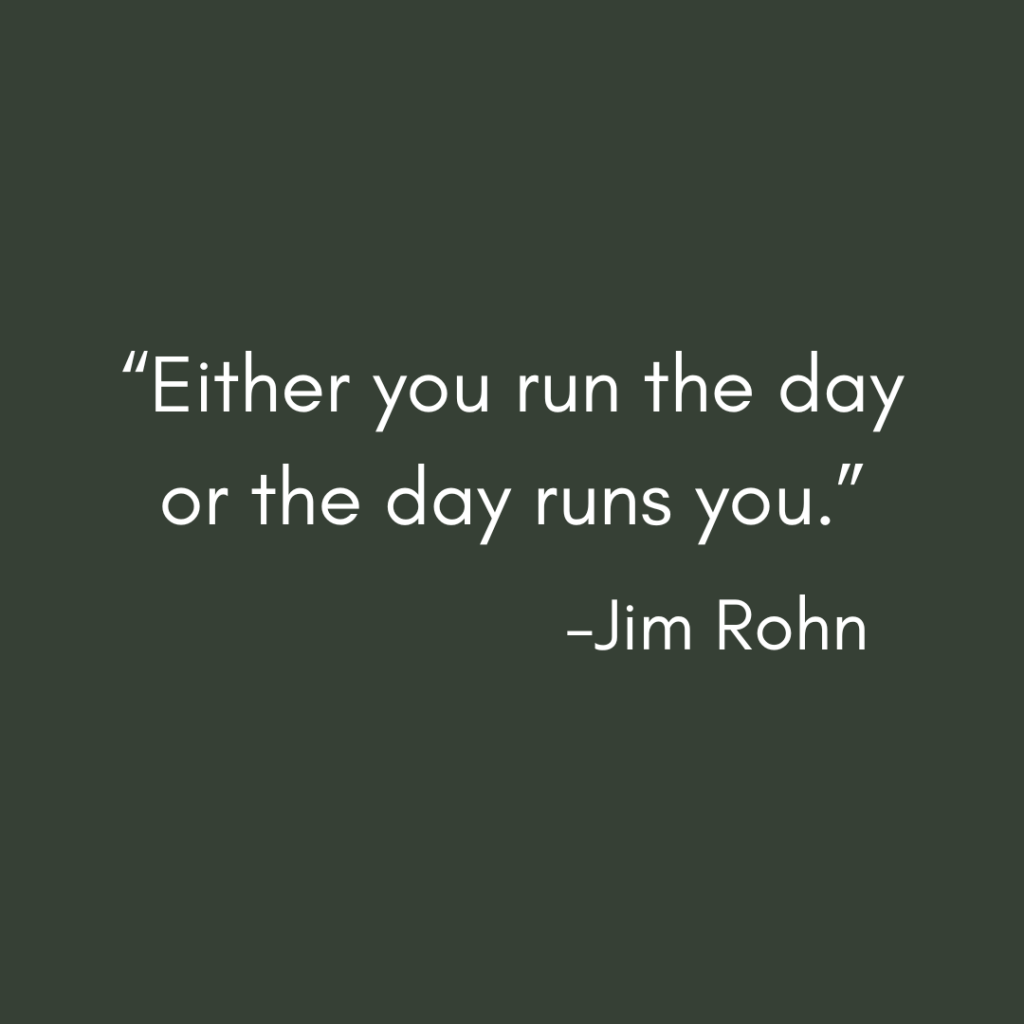
A quote that I shared over on Instagram this week, from Jim Rohn reminds us that if we are not intentional with our time, we can get carried away by the urgent or sidetracked by unimportant things. The quote says, “Either you run the day, or the day runs you.” We must prioritize what is important. Assessing our goals and values can help guide us as we determine what our true priorities are in life.

One idea I keep being exposed to more recently is the importance of living in the real world – spending time with friends or family, getting outside, working with your hands, reading, or pursuing other hobbies, versus constantly being online. Creating boundaries with technology is so important, yet also very difficult so we must be aware of how easy it is to get sucked into scrolling or spending mindless hours on technology. There are studies that have proven the addictive qualities of social media, making it really important to set those boundaries.

I know I have shared this idea or something similar several times before, but it’s definitely an idea that I keep circling back to and pondering. None of us are going to be perfect. We will all struggle, waste time, and sometimes spend our time doing things we wish we wouldn’t have done. But the more we expose ourselves to these ideas of the importance of living intentionally, the more we will pursue it!

Here is the YouTube video I shared in conjunction with this blog post.

MY NO BUY YEAR 2025

Okay friends, for today’s Thoughtful Thursday video I wanted to talk to you about my no buy or low buy year in 2025. I know I mentioned that I might be doing this in 2025 and I have officially decided that this would be a really good challenge for me this year. Shout out to one of my newer YouTube friends Leah, who really pushed me over the edge to encourage me to do this challenge! She is also doing a no buy challenge! She also has a discord group for anyone doing a no buy year and it’s already been amazing to connect with some like minded people!

I have done a no buy year in the past. It has been a while as that was back in 2019. I chronicled the whole process through blog posts here on my website so you can search back through and read those if you are interested. I decided to go back and skim through some of those blog posts as I wanted to recap lessons I learned so that I can get the most out of this round two of no buy year. The primary thing I would like to be conscientious about is how I am spending my time. I did learn that doing a no buy year actually gave me more extra time than I expected. At first I was not utilizing my extra time in a productive way, so I want to be sure to be aware of that this time around. I also want to be aware of not replacing shopping with other unhealthy vices. Instead I would like to replace it with things that are meaningful or will be good for me in the long run.

My primary goal with this no buy year is to really eliminate vices I use in my life to avoid doing difficult things, or to avoid self reflection/self growth. Something as simple as house projects I am avoiding. They need to get done, but I do other things and ignore them and then they keep piling up. I would like to tackle all of these house projects I have been avoiding, some for years. I think this shift will also help me to be more creative in general, and help me to step outside of my comfort zone more.

Another reason I want to do this is because I recognize that when you are trying to pursue minimalism or a simplified life, it is important to pay attention to the inflow as much as decluttering or the outflow. If we are continuing to purchase things without being intentional about our purchases, we can end up just constantly working at decluttering but not see much progress.

SO, let’s get to the details of this now buy year. Obviously it’s technically more of a low buy year because I will be purchasing basic necessity items. I will be purchasing food, toiletries, cleaners and anything I need for basic everyday needs. However, with regard to food, I will not be buying as much processed food as I have in the past. I will keep some convenience foods on hand, because I know for our family right now it’s impractical to not have any on hand. I will be transforming my pantry into a primarily ingredient based pantry and I will be sharing that process on my YouTube channel later this month! I will talk in more detail about food and how that will play out with my no buy year in the video where I makeover my pantry!

The main thing I want to focus on for this no buy year is clothing. I know that my biggest vice is shopping for clothes. I do feel like after my previous no buy year I got much better at being intentional with what came into my house in general, but even with clothes. I feel like slowly over the last 5 years I have gotten worse about truly being intentional, so this no buy year will be a reset for me. The only exceptions will be if I need to replace something – but I will be really ruthless with myself if it ACTUALLY needs to be replaced. The other exception will be purchasing a dress for my sister’s wedding. I may be able to use one I have, but I will allow myself to purchase a new one for that occasion. In addition to clothing I also will not purchase any new shoes or accessories. Again, I do have one exception because I really need a new computer bag, which I have been on the hunt for all year without luck! I also will not be purchasing any new home decor. But I will be purchasing items for all of those home projects that need to get done!

One category I want to address is health and beauty. I will purchase items that run out or need to be replaced, but I have a good morning and evening skin care routine that I am going to stick to and I’m not going to purchase additional products. I also regularly purchase vitamins and supplements and I will continue to purchase those as well as I find that health and fitness are one of my top priorities.

I am really excited about what this year will bring with this huge challenge I am undertaking! I’m also nervous, because I do remember that it was definitely difficult the last time I did it! I would love to hear what your thoughts are about this no buy year challenge. Have you ever done anything like this? If so, what was your experience with it? I would love to hear from you in the comments!

The YouTube video I shared in conjunction to this blog post.

SLOWING DOWN

Okay friends, for today’s Thoughtful Thursday post I wanted to talk about how when we slow down, it creates a perspective shift in life. In today’s culture, productivity and busyness seem to be praised above all else. It seems like it is a badge of honor to answer the question how are you doing with the answer: I’ve been so busy! But I would like to argue that busyness doesn’t necessarily equal productivity. And slowing down can give us the space we need to evaluate our lives and if what we are doing with our time and energy truly aligns with our goals and values.

One of the main reasons people hesitate to slow down is because they equate it with getting behind. In our westernized culture, we have been taught that busyness leads to success and success reveals our worth, measured by our output. This relentless pace can lead to stress and eventually burnout because it doesn’t leave room for creativity, introspection, or genuine connection with family and friends. On the other hand, people often equate slowing down with doing nothing, or worse laziness. But the truth is slowing down allows us to live life with intention and presence. By slowing down we leave space to evaluate our lives, our surroundings, and our thoughts and feelings. This introspection gives us insight into what we really want out of life. In the hustle and bustle of life, we can begin to focus on the immediate which can cause us to lose sight of what really matters!

Oftentimes, creative ideas arise from moments of quiet and reflection, not during moments of intense stress and busyness. Have you even awoken in the middle of the night with a great idea? Our bodies are able to slow down enough for our minds to wander and think about new possibilities. Slowing down fosters a mental state that is open and receptive, allowing us to come up with those new and creative ideas.

Slowing down can help us enjoy everyday tasks more as we shift our perspective to being present in each moment. So often we feel hurried and rushed, like we are living life against the clock. With the modern pace of life time can feel like a scarce resource and something to be managed and optimized, however if we are able to slow down we can experience a sense of flow and harmony as we take care of our daily tasks. When we slow down these everyday mundane tasks can actually be enjoyable as we live with a deliberate mindset. We begin to notice the small moments that can bring joy and peace into our lives. We might begin to truly experience things with all 5 senses, being fully attuned to the moment – something that is difficult to do when we are moving quickly and doing things just to get them done.

This week I decided to start eating my lunch outside in quietness. No phone, no YouTube video to watch, no talking to people. I tend to eat lunch by myself anyway. I started this practice as a way to slow down. Eating in silence has already helped me to be more aware. I feel like I eat so slow and I’m not sure if I am eating more slowly as I sit quietly in nature to eat, or if time is passing by more slowing because I’m not multitasking. I plan to do this for 30 days to see the long term benefits!

Slowing down enhances our relationships. As we take the time to truly listen to others and engage with them we deepen our connections and develop greater empathy. Instead of hurrying through conversations or multitasking while we are talking, we create that space for genuine connection.

Slowing down is not about withdrawing from life or avoiding responsibilities. It’s about being more present and mindful in the way we approach life. It’s about enjoying each moment to the fullest. It’s about giving ourselves permission to have space to pause and reflect. We move from a mindset of scarcity and urgency to one of abundance and presence. This shift allows us to see the beauty in the mundane, and to connect more deeply with ourselves and others.

Here is the YouTube video I shared in conjunction with this blog post.

ASK WHAT, NOT WHY

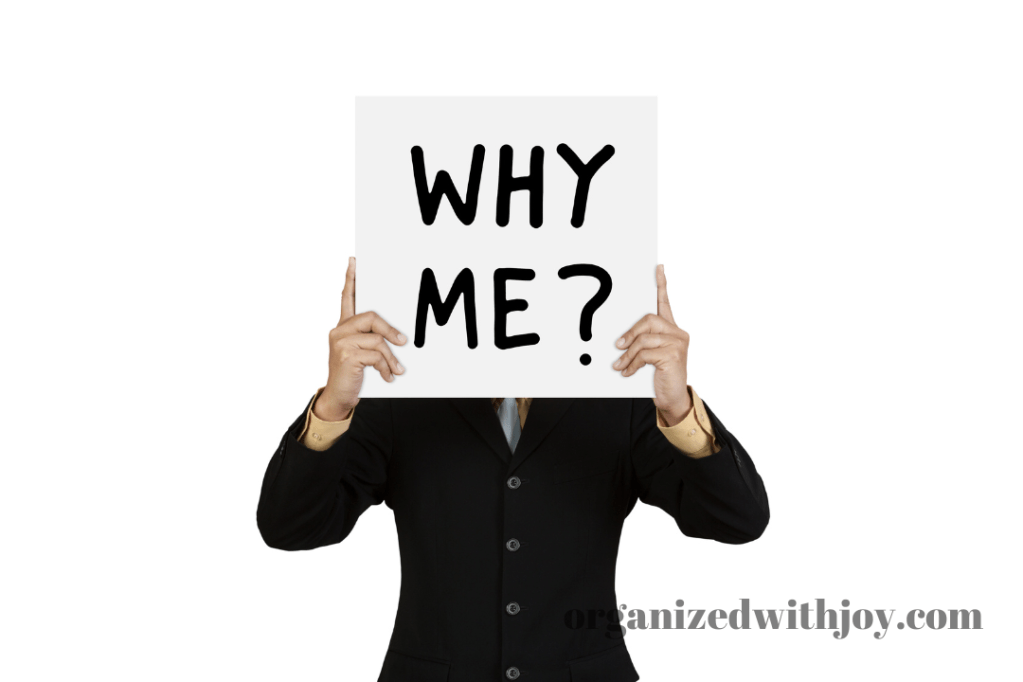
Okay friends, for today’s Thoughtful Thursday post I wanted to talk about an idea I recently heard on a podcast. The host of the podcast was discussing with the interviewee about hardships in life and he suggested that instead of asking “why?” when we are going through trials we should ask “what?” Not why is this happening to me? But what should I do next? What could I learn from this? What is the purpose of this trial in my life?

I think it is human nature to ask “why me” when we are going through a difficult time in life. It’s human nature to want to understand why, to search for reasons. But the truth is we will likely never know why. Bad things happen to good people all of the time. We are wasting our energy, spinning our wheels, if we are just focused on trying to figure out why. If we shift our energy to answering “what” I think we will not only give purpose to our pain, but also we will find peace and contentment amidst the trial as we change our perspective. When we ask “what?” instead of “why?” We can focus on practical, actionable things which are more productive.

When we are going through something difficult in life, asking “why is this happening to me?” may lead to feelings of frustration or helplessness. Instead, asking “What can I do to improve this situation?” directs energy toward creating solutions and taking ownership. In this way, “what?” questions empower us by reinforcing the idea that, while we may not control external events, we can control our responses to them.

In personal growth and self reflection, asking “what?” questions can be transformative. When you ask questions like “why am I like this?,” “why do I keep doing x, y, or z?,” “why can’t I be more like this person or that person?” this keeps us caught in self doubt and insecurity. If we focus on what questions like “what can I learn from this?” or “what is in my control to change?” or “what small step can I take today towards becoming who I want to be?” encourages constructive thinking and leads us towards actionable goals.

“What?” questions can be helpful in relationships as well. In relationships “what?” questions tend to deepen understanding and empathy. “Why?” questions may feel accusatory and provoke defensiveness instead of mutual understanding. For example if you have a friend who is notoriously late and say, “Why are you always so late?” this can be perceived as an attack on their character instead of focusing on the issue at hand. If you say something like, “What usually causes you to be late?” it opens up the conversation to the actual issue at hand instead of perceived personal flaws.

Asking “what?” questions instead of “why?” questions helps us to feel more in control and there are actionable things we can do to change our circumstances or our perspective. When we focus on the “why” we stay in a defeatist mindset where we feel sorry for ourselves and just sulk about our circumstances which is not productive. Next time you catch yourself thinking a “why?” question, see if you can reframe to a “what?” question!

This is the YouTube video I shared in conjunction with this blog post.

INTENTIONAL LIVING IN 2024

Hey friends, for today’s Thoughtful Thursday post I wanted to talk about the value of intentional living. {{Scroll to the bottom to find the link to my YouTube video I’m sharing in conjunction with this post. I’m sharing some footage I took while driving to Portland with my son and then while we were in Portland.}} It can be so easy to fill our schedules to the brim. We live in a culture characterized by distractions, demands (both in our physical world and online), and fast paced living. I’m realizing the value of living intentionally to give me that space to really enjoy and savor each moment. There was a time in my life, when my kids were younger, that I felt like I was rushing through moments as I had my eyes on the horizon towards the next thing. Now I’m learning the value of consciously choosing how to spend my time, energy, and resources so that they are in alignment with my values, goals, and priorities. We don’t have to live on autopilot, living in a passive way and allowing the distractions and demands to dictate what we do. Instead as we focus on living intentionally we can cultivate a greater sense of fulfillment and purpose in life.

What does it mean to live with intention? When I looked up the definition on the Merriam-Webster website the definition that resonated with me was: a determination to act in a certain way; resolve. I like that idea of resolve. When we resolve to do something it’s not always the easy path or what we really want to do, but rather it’s what we choose to do. But a surprising definition entry was: a process or manner of healing of incised wounds. Wow. This really struck me. I thought about how when we are busy we have no time to process things. We have no space to heal emotionally or sometimes even physically. When we live with intention it leaves the margin we need to heal. When we leave this margin we are able to reflect on and evaluate what matters most to us so that we can align our daily choices with those values and priorities. We don’t have to follow social expectations or family pressure, but instead can decide what are those inner values and make choices that align with our long term well-being, goals, and happiness.

This doesn’t necessarily mean a meticulously planned out day, week, or life. It’s not about adhering to some rigid routines you put in place, instead it’s about being proactive on how you spend your time and not allow your choices to be influenced by external pressures and circumstances and instead by your own thoughtful choices that come from a place of your authentic self. Life is unpredictable, and things don’t always go our way. Challenges and setbacks are inevitable. Living with intention doesn’t mean we are exempt from difficulties in life, but actually helps us to be more equipped to deal with struggles as we can adapt, pivot, and continue to make choices that align with our values and priorities. Already having these values and priorities on the forefront of our minds can act as a compass as we navigate through challenging or unexpected circumstances. When we have not evaluated values, goals, and priorities, it can be all too easy to be reactive, giving into frustration and potentially reacting impulsively in stressful or unexpected circumstances in life.

Another key element to living intentionally is letting go of perfectionism. Perfectionism is not only not necessary, but it’s also not attainable. Living with this desire for perfection is also unhealthy. We weren’t created for perfection. Living with intention allows us to focus on progress over perfection. When we fall into the trap of believing there is some idealized version of life, it often leads to stress, anxiety, and burnout. By letting go of perfection, we can focus on making consistent choices that lead us towards our goals, values, and priorities, and embracing that we will not always do things flawlessly. This mindset allows us to embrace that life isn’t perfect, but instead those failures can foster resilience and encourage growth.

Mindfulness is another important aspect of living with intention. By practicing mindfulness we can become more attuned to our thoughts and emotions. This deeper awareness allows for self reflection which can help us stay on our intended path. Being mindful also encourages us to live in the present. We must be aware of the many distractions around us so we don’t get caught up in the busyness of life and miss the opportunities to engage with the present.

There are lots of things I have learned through focusing on living intentionally, but I will just share the top three things with you. The first thing I have learned in slowing down and living with more intention, is the value of being in nature. Time in nature is never wasted. For me being surrounded by God’s beauty refuels my soul and gives me energy! There is a John Muir quote that I really love. He said “Life I am so moved by nature. I have been known to cry while driving into the mountains, staring at a waterfall, or walking through the forest.

The other thing I have learned is to really value cultivating relationships that are supportive and meaningful. This involves being present with loved ones, offering my full attention (like putting my phone away when we are together), and spending quality time with one another. It’s not always easy to prioritize relationships. It takes intention to be authentic and vulnerable, creating space to develop intimacy with one another. It also includes setting healthy boundaries, and really evaluating who you spend your time with. There may be people who don’t contribute positively to your life. You may find you need to step away from these draining or even toxic relationships. By surrounding yourself with people who uplift and inspire you, you create an environment that supports your intentional path.

Lastly, living with intention is more likely to provide us with opportunities to do things outside of our comfort zone. By its nature, intentional living promotes growth, expansion, and change. When we stop living on autopilot and living in the rut of societal expectations, we can do things that in the past we have felt uncomfortable doing. The more I do things outside of my comfort zone, the more I realize that this is where life is truly lived! Helen Keller said, “Life is either a daring adventure or nothing.” And I couldn’t agree more! When we just run on the treadmill of life we aren’t really living!

Well friends, I hope this post about living intentionally encouraged you today. I always love hearing from you in the comments, so please share your thoughts on my thoughts. I also wanted to share an update on my son: he is doing amazing in Portland! He is loving his job and making new friends. I’m so incredibly proud of him and so glad I was able to be there for him in this big life transition! Click on the link below if you want to check out my video sharing the process of moving him!

LEAVING SPACE FOR PROCESSING EMOTIONS

Okay friends, for today’s Thoughtful Thursday post I wanted to talk about something that has been on my mind. There were several things that caused me to think about if  I am really leaving space in my life to process unresolved feelings, or am I still filling my life with other things as a distraction from processing and dealing with those feelings?

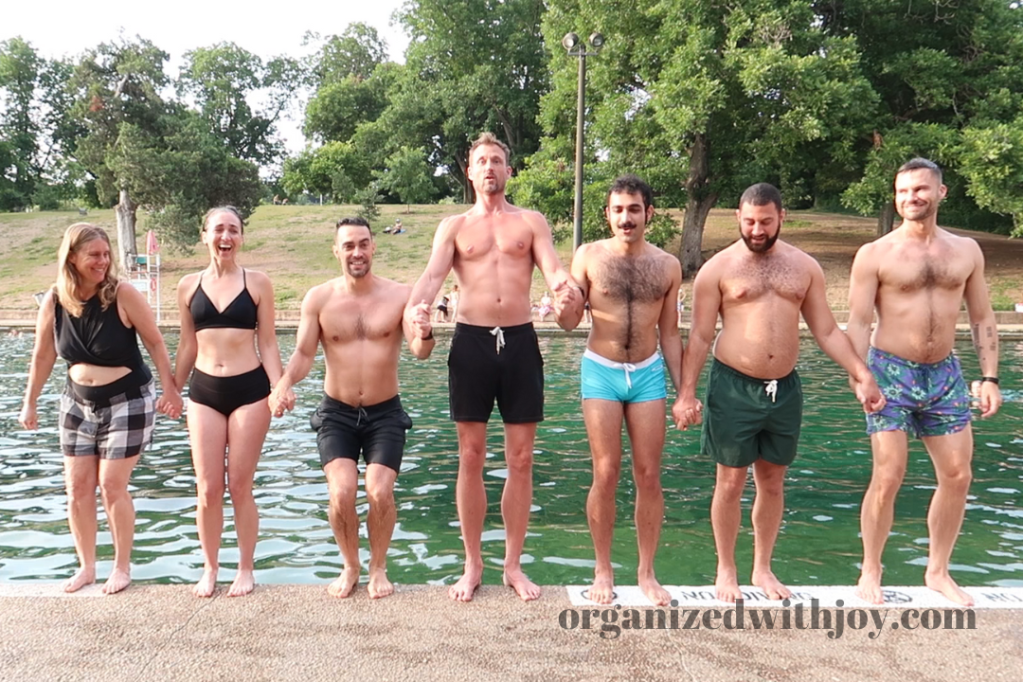
The first thing that spurred me on to think about if I am really dealing with my feelings is doing the Surrender Dip. If you missed it, last week I shared in my post (and in a DITL YouTube video) that I found this group on Instagram of people who get together once a week to jump in Barton Springs pool (which is a cold, spring fed pool in Austin) as a way to start the day off with positive energy! I decided to go again this week! The act of jumping in a cold pool has been a tangible way to let go of negative energy. But in addition to that it also just wakes you up. I don’t really know how to describe it. It shocks your nervous system in a good way. Also, this group provides a community of people who all are working to better themselves, which has led to some really deep and meaningful conversations. Some of these conversations have gotten me to really think about those areas of my life where I have some unresolved feelings.

The other thing that really got me to thinking about this idea of if I am really processing my feelings was a random YouTube video that I saw on my home page. As many of you know I am fascinated by minimalism, and trying to pursue a minimalist life in my own way. So this video where a YouTuber was sharing her extreme minimalist apartment tour with no furniture caught my eye. While I don’t think I could ever live as an extreme minimalist, I do find that lifestyle interesting and perhaps even a little bit enviable. As she walked us through every nook and cranny of her home – literally showing us everything she owned – I thought to myself how nice it would be to have so little to manage. Some of those feelings come from someone who has been a homemaker for many, many years and who is quite frankly tired of managing stuff!

Here is the YouTube video I watched if you’re interesting in check it out!

BUT, as I thought more about this idea of living with so little and having to manage so little I started thinking about what in the world I would do with all that extra time I would have. This made me realize that I do, to a certain extent, use my stuff or more specifically managing my stuff or working to keep me distracted. While I definitely have more margin in my life now than when my kids were younger, I find that I still am able to fill my time with work. I’m not exactly sure what to do with this information at this point. Do I look at my stuff with a more critical eye and declutter more? Do I lower my expectations of how often I clean and organize my stuff? Or are there other things in my life that I could cut back on in order to create that space that I need to process unresolved feelings?

It’s actually scary to think about opening that can of worms – allowing myself to really evaluate my feelings in certain areas that I have repressed over the years. But the first step is always awareness. I am aware that there are feelings that I have been masking or ignoring because it feels too hard. I was just talking to a friend this morning, and I realized that I have so much more self work to do! While I have grown a lot over the last five years of my life, I still have a lot more growth that needs to happen!

I don’t know what you are dealing with today. I don’t know what difficult thing you might be going through, but I hope this encouraged you today. Make space in your life to feel and process unresolved emotions! It is well worth it!

Here is the YouTube video I made in conjunction with this blog post.

INTENTIONAL LIVING, VALUING EXPERIENCES OVER THINGS

Hey friends, for today’s Thoughtful Thursday post I wanted to talk about part of my life ethos with regard to intentional living. Part of choosing to live intentionally for me is valuing experiences over things. Some people may say that when you spend money on an experience, it is over after that experience is over, whereas with things you will have it for as long as you would like. But I would argue that experiences actually last you a lifetime. You will always have the memories you make. I think now more than ever it’s important to be intentional about spending time with family and friends, or even by yourself off of screens!

This year I am turning 50 years old. I was joking with some friends that some people celebrate their birthday week or even their birthday month, but Joy is going to celebrate her birthday year! I plan to do lots of traveling in 2024 as I am focusing on this principle of experiences over stuff!

We recently returned from a family ski vacation in the mountains. The mountains are for sure my happy place! I love skiing for lots of reasons, one being the peace I feel on top of a mountain and as I ski down. There is nothing like the sound of silence in the mountains. The mountains are a place that also moves me emotionally and spiritually. There were several times where I just started crying because of my awe of the beauty and majesty of the mountains. That feeling really can’t be replicated.

I also wanted to share a little story about some of the things that went wrong on our trip. This seems to be a theme for our ski trips! I shared a ski vlog a couple of years ago on my YouTube channel, which I can link below, and you can listen to the stories I told from the adventures of that ski trip! But I wanted to throw in here this idea that it’s okay when things go wrong or we endure hardships when we prioritize experiences. I’m learning that just goes along with the territory and it can teach us lessons as well!

So, it was snowing when we entered the resort. Our condo was at the top of a hill on a small road which had not been plowed. AND we don’t have four wheel drive… you can probably tell where this story is going. We tried getting up the hill from two different entrances AND we tried helping push the vehicle up the hill while my husband hit the gas, to no avail! So, we decided we would park in the parking lot of the resort and walk our stuff the 400 yards or so up the hill to the condo! I have never experienced altitude sickness, but I think between working hard carrying bags up a hill immediately upon entering the mountains, and also not really getting enough to eat or hydration for the day since we were driving all day, made me more susceptible to getting sick. That night, in the middle of the night I got a text from my son saying he felt really sick too. I was then wide awake, not feeling well myself but also worried about him. I tried to get up to go to the bathroom, but took two steps before I passed out. I called for my husband to help me and I was trying to stand up again and passed out again! I woke up to him standing over me asking if I was okay. I was like, no I can’t stay conscious haha! He helped me get back into bed, gave me electrolytes, and a trash can cuz I was feeling nauseous. Sorry for the TMI, I did end up throwing up, but felt better after that. I thought for sure I wouldn’t be  able to ski the next day but surprisingly I was able to rally! Unfortunately my son felt sick for most of the trip and was only able to ski one half day of the three we were skiing!

Also, the morning we were supposed to leave it was predicted to accumulate close to 11 inches of snow, so we tried to get out as quickly as possible! It was a little precarious, but we did in fact make it out of the resort and down the mountain and then home safely!

One other thing I wanted to share with regards to valuing experiences: look for opportunities to experience whimsy. I find that I basically turn into a five year old child who is enamored with whimsy when I’m in the snow! Maybe this is a result of living in a climate where I rarely get to see snow, but nevertheless, it reminds me of the importance of finding joy in the little things in life. Look for moments or opportunities to experience playfulness. Sometimes we need to just stop taking ourselves so seriously!

Here is the YouTube video I posted in conjunction with this blog post.