REASONS TO DECLUTTER

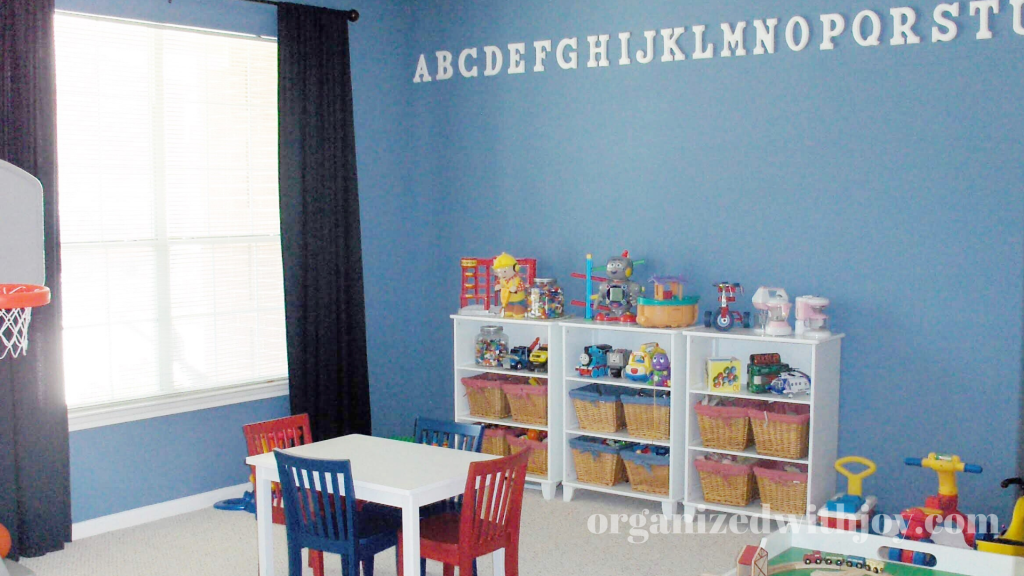
Having extra stuff in our lives, in our spaces, causes anxiety. Everyday when we walk into our spaces, we must process what’s going on. All five senses are engaged to subconsciously make sense of our surroundings. I think this is true for everyone to a degree, but this is particularly true for people who have been through trauma. Our spaces can be a sanctuary – a safe haven, or they can be a place of chaos, causing unrest in our minds and bodies, which causes anxiety. This was my initial main reason I began my own decluttering journey. To create tranquil spaces in every corner of my home. Spaces that calmed my nervous system, not triggered it.
I have been actively working on decluttering my home for over 10 years now. I have seen a progression in why I choose to declutter. At first it was to calm my spaces. Every room in my home was overcrowded with stuff. I disguised it as coziness, but the truth was it was just clutter. As I continued on this journey, I realized that having less physical possessions gave me extra time to do other things. I wasn’t spending as much time cleaning and organizing my spaces. Having less possessions gave me mental clarity. I began to declutter more because I saw the value in having more time and mental clarity. I could be more intentional with my life.

Down the road, I began to realize the buy/declutter cycle. As I continued my decluttering journey, I saw the value in being more intentional with what I brought into my home. I realized that the impact of all of my decluttering wouldn’t be sustained if I kept bringing new possessions into my home. That’s when I did my first no buy year, back in 2019. I had changed my spending habits after that year, but slowly old habits began to creep back in and in 2025 I decided to do another no buy year to reset my spending habits. I am hopeful as I look towards the future as I feel this had a big impact on me. As we become more intentional with our spending, we begin to see how much money we can save just by eliminating some spending which allows for freedom!
Now I see a new phase on my horizon. I see another reason to continue the decluttering process. I am realizing as I look around my home that I have a lot of things that I use, but I don’t use often. I am realizing that it is selfish of me to hang on to things I don’t use often because these things could bring someone else joy! On one of my recent YouTube videos, a loyal subscribers Jenny, made a comment which really resonated with me. It was a video where I was cleaning out my husband’s office. I had several things that I got rid of that day that I had been debating for a while and I also had a piece of home decor that I decided to display instead of leaving in the closet. She said, “it’s poor stewardship to hold on to something that you don’t use or display when someone else would be grateful to have and enjoy it now.” That really stuck me, and challenged me in a good way! I have upped my decluttering progress to the next level with this idea in mind! I need to be realistic with myself of how often I will really use items.

This month in January I am playing the minimalism game – where you get rid of one thing on day one, two things on day two and so on. I’m not being strict about sticking with the number of items each day. I am just collecting things as I see them and I’m hopeful that I will reach that 465 items number by the end of the month! I know this seems lofty, and even I’m not totally confident in my ability to succeed at this challenge, but check out my YouTube channel at the end of the month to see if I was successful! I will be sharing the process over there. I always have my YouTube channel linked at the bottom of each post. That video will be out the last Sunday of the month.

We all declutter differently. We declutter at a different pace and the amount we own and are willing to let go is different. But with this in mind, I think the best piece of decluttering advice I could give is to know why you are decluttering. Knowing your why can help motivate you to keep making a part of your routines. Can you relate to wanting to calm your space? Maybe you want to save money, or just be more financially responsible. Or perhaps you realize that you can bless others with the items you don’t use as often. Whatever the reason, it is good to know your why! Decluttering can be exhausting, both physically and emotionally. But it is so worth it in the end!

This is the YouTube video I shared in conjunction with this blog post.

PHYSICAL AND EMOTIONAL BAGGAGE

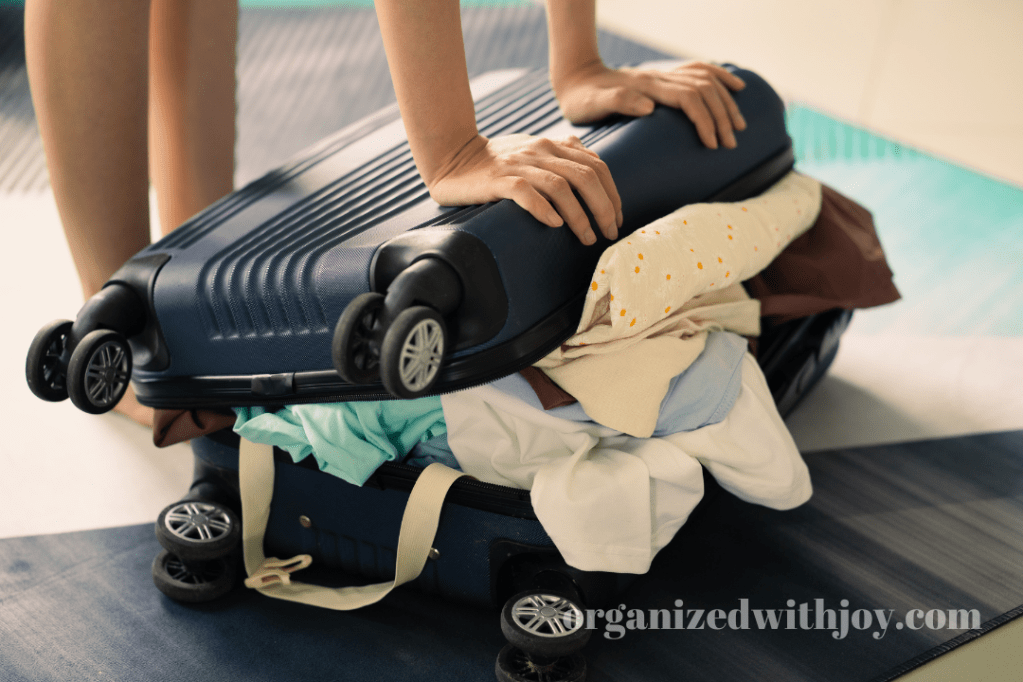
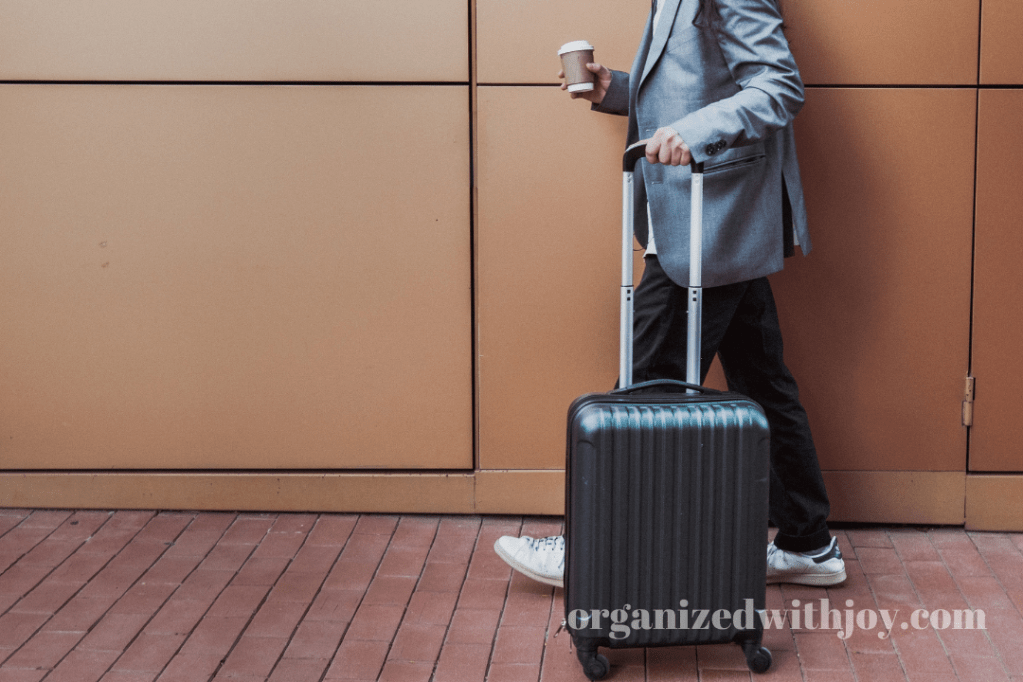
For those of you who don’t know, this year I have been taking a lot of trips. I wanted to focus on travel this year in part because there were events happening that required me to travel, so I just decided it would be my year of travel, and it felt appropriate because I’m turning 50 next month! With all this travel I have been thinking about baggage. Literal baggage, but the analogies of emotional baggage. So that is what I wanted to talk about for today’s Thoughtful Thursday.

Okay, perhaps I’m digging a little too deep to connect this analogy, but stick with me. This last trip I took I had to wait at the airport for quite a while before my flight left because my sister had to drop me off earlier than I expected when I ordered the tickets. And truly it was fine because I had a lot to catch up on from being away. But as I sat at the airport with my baggage under foot I was thinking about how difficult it was to do anything. If I wanted to go get coffee, I had to take it with me. If I needed to use the restroom, it came with me. I started thinking about how it was parallel to our emotional baggage in how it slows us down.

Physical baggage is tangible and measurable. Our bags are heavy or light depending on how much and what we pack. Emotional baggage is similar but it is all of our unresolved feelings, past traumas, regrets, and grudges we carry. Just as a heavy piece of luggage can cause back pain and fatigue, emotional baggage can lead to emotional pain and mental fatigue or if prolonged, lead to anxiety or depression. I didn’t do a great job packing my bags because I knew I would have plenty of time in the airport to do that. As I sat there unpacking and repacking everything more neatly I thought how often do I do this with my emotional baggage. I unpack everything – maybe with a friend or a therapist, or even just journaling. But do I ever decide there are things I need to let go of and no longer hold onto. Are there things that if I let go of them, my load would be lighter as I walked through life.

Are you an over-packer when you go on trips? I used to be an over-packer and wanted to account for everything and anything that could happen. But as the year went on and I went on more trips I started to learn what I really needed and my anxiety about not having what I MIGHT need started to calm down. I realized that it wasn’t worth carrying around ALL that extra stuff just in case. I got to the point where I preferred to take the risk of not having what I needed in order to have a lighter load. Are we holding onto things in life that are making our load too heavy? Both physical and emotional baggage can be an unnecessary burden we carry. When you are an over-packer you have unused items that become a physical burden, and when we hold onto emotional baggage we burden ourselves with these things that no longer serve a purpose. We can hold onto old grudges, past failures, or fears of rejection, which makes it difficult to experience life to the fullest in the present. Whether it’s physical or emotional baggage, letting go often involves unpacking everything, sorting through, deciding what is essential, and then letting go of the excess.

There is danger in ignoring the weight of our baggage both physical and emotional. When we carry a heavy bag for too long it can cause physical harm, and potentially long term damage if we don’t listen to our bodies. Similarly, when we carry emotional baggage for too long, the result can manifest in harmful ways such as anger, anxiety, or depression. This can affect our relationships, job performance, erode our self esteem, which can have long term effects on our lives. We must acknowledge and deal with the baggage because left unchecked it can end up controlling our lives, dictating how successful we are and our overall happiness in life.

The process of letting go, for both physical baggage or emotional baggage can transform any journey. Traveling light allows us to move freely, explore more easily, and feel less weighed down by possessions. In the same way, letting go of emotional baggage creates space for new experiences and personal growth. We can live more fully in the present and experience deeper connections with our loved ones. We can pursue goals more easily not being held back by our past. 

Here is the YouTube video I shared in conjunction with this blog post.

FINDING HOPE AMIDST SUFFERING

Okay friends, for today’s Thoughtful Thursday I wanted to talk about something that might be a bit heavy. I wanted to talk about finding hope amidst suffering. Suffering is a universal human experience that comes in many forms – like personal loss, health challenges, difficult relationships, or even societal inequalities. When we are going through suffering it can be hard to cling to hope for the future or hope for change, but it’s not impossible. Having hope amidst suffering really is a choice. We cannot expect to just feel hope, but we must actively pursue it. 

Suffering is obviously a personal thing, but it also connects us all as it is a universal human experience. Regardless of the source of suffering, it often causes us to question our belief system, leaving us with more questions than answers. In situations of extreme suffering, we can feel powerless over our circumstances causing us to feel hopeless. We wonder if change is a possibility. However, suffering can help strip away some of our beliefs that we are in control, reminding us of our vulnerability as humans. In this space of vulnerability, hope can emerge—not as a denial of suffering, but as a response to it. The act of seeking hope becomes a way of embracing our suffering and vulnerability: saying that while suffering is real, it is not the end.

Hope truly is a choice we must make. Choosing hope does not minimize our suffering, it merely helps us to cope and move forward. If we are intentional about pursuing hope, it can have a profound impact on our spirit—it enables us to endure even when external circumstances seem unbearable. Hope can come in many forms. For some, it is rooted in spiritual beliefs where they find comfort in a higher power and meaning beyond the suffering for suffering sake. For others, hope can be found in the connections they have with family or friends, receiving comfort and empathy during a difficult time in life. Recognizing the growth and or resilience you have gained through the suffering can be another source of hope, acknowledging that the suffering was not in vain.

One of the most effective ways to find hope in suffering is to shift your perspective. While it is natural to focus on the pain of the present, stepping back to view suffering as part of a bigger picture can be empowering. This shift often involves recognizing that suffering, while painful, is temporary and that the future holds the potential for healing and renewal. Sometimes suffering helps us to view the world through a different lens: appreciating the little joys in life, being more empathetic towards others, or it may be a catalyst to find a greater purpose in life. Finding hope amidst suffering doesn’t have to mean we are denying the pain of the challenge we are enduring, it just helps us to embrace the complexity of life. It helps us to see things in a different light and allow these challenges to make us better, stronger, and more resilient than before.

Something that can also bring hope or provide comfort is recognizing most of us who have endured suffering can attest that it does eventually end. We may have to face some other type of suffering in the future, but our current suffering will let up! We don’t have to allow our current suffering to define us. That is where hope can shift things. This suffering, even if it is longer than we want, is only one chapter and not the whole story of our lives.

Here is the YouTube video I shared in conjunction with this post.

IT’S OKAY

Okay friends, for today’s Thoughtful Thursday post I just wanted to share a bit of encouragement with you. As I have spoken about before, there is a lot that I have gone through over the past 5 years or so. One of the primary ways that I have dealt with challenging circumstances has been to focus on the positive. I have incorporated positive affirmations into my weekly routines and that has helped tremendously with my mindset and outlook on life.

BUT, I wanted to encourage you that it’s okay if you can’t always be positive. There are some days that we will struggle with keeping a positive mindset, and that’s OKAY! As I have frequently said – progress over perfection. We can do all of the right things to keep a positive mindset and to be healthy. We can listen to positive affirmations, follow through on healthy habits like exercise, eating healthy, and getting good sleep. But there are just some days that no matter what we do we just feel down, sad, disappointed, or even hopeless.

For me I am well aware that hormones play a role in how I am feeling, and acknowledging that and giving myself grace on those days has been helpful. Don’t beat yourself up when you are not feeling as positive as you would like. On these days you might benefit from spending more time than you ordinarily would on self care. Go get your nails done, take a bubble bath, or make your favorite dessert. I have also found it helpful to talk to friends and honestly to just vent when I’m feeling this way. If you are a friend receiving this sort of vent session – I think often we just want validation and to be comforted more than to have our problems solved. Oftentimes the problems are not something that has a simple formula to solve anyway.

I know I have shared before about the Marco Polo app, but I just have to tell you about it again because it has been on days like these that I appreciate that app so much! With this app you send a video message to a friend (or a group of friends) and you are basically just talking like a monologue and then your friends watch the video back when they have the opportunity. The thing I love about this is that you can just get things off your chest without any interruptions and it is surprisingly therapeutic!

I have also found that sometimes when I’m feeling down that it is okay to sit with those feelings. To feel those feelings. Cry if you need to. It can help to talk to friends, but it can also help to journal when you’re feeling this way. Sometimes we just need to feel the negative feelings and process them. Sometimes we don’t need to hear platitudes, instead we just want to feel the feelings!

If you are feeling down, sad, discouraged, or even hopeless right now, I just want you to know that you are not alone. If you feel comfortable sharing in the comments any difficulties you are going through right now, I would love to pray for you! And I hope you will have some better days ahead!

DEALING WITH ANXIETY, OCD, & PERFECTIONISM

Hey friends, for today’s Thoughtful Thursday I wanted to talk about something that has recently been on my mind. I have been thinking about mental health and balancing mental health challenges with my everyday life. For those of you who don’t know, I have shared in the past that I was diagnosed with generalized anxiety disorder around 15 years ago. Dealing with anxiety in my day to day life is now just the norm for me.

One thing that I haven’t really talked much about is my obsessive compulsive tendencies. I have not been officially diagnosed with OCD, but from what I know about this disorder it is often closely linked with anxiety disorders. Many people who have anxiety tend to have obsessive compulsive behavior to quiet the anxiety. We believe, although incorrectly, that if we could just do this one thing or control this one thing THEN we won’t feel anxious. The problem is there seems to be that one more thing that we believe will quiet our anxiety and it never really ends.

Now while I have not spoken much openly about these struggles, it may be obvious even to those uneducated about OCD. I am sure some people have thought to themselves “Joy goes a little overboard when it comes to cleaning, organizing, or decluttering.” Go ahead – raise your hand if you thought this! My response to that is I KNOW! I know I go overboard at times and that is one way I handle my anxiety.

Like I mentioned, I have been thinking about this more recently, and wondering if I need to find ways to better manage that anxiety. On the one hand, it has served me well in the sense that it has caused me to be highly motivated and disciplined in managing our household. However, it does get to the point where I have to evaluate how I spend my time. As someone who likes to live an intentional life, I am always evaluating what I do with my time and energy. 

I think something else that goes hand in hand with OCD is perfectionism. It’s easy to get caught up in the details and perfecting something when your anxiety is driving you and that manifests in obsessive compulsive behavior.

One of the things that I have been thinking about to practically help me navigate the OCD thoughts is to be realistic with myself about any given project or task. This can be very difficult for me as I was raised with a high work ethic. I was taught to do everything with excellence. And again, this is a great quality – but not when it interferes with relationships and other more important things. I’m learning to sometimes say “good enough is good enough.” I’m learning to evaluate when there are things that require A+ work versus the times when C+ work will suffice. This has been hard for me, but like I said – I’m learning.

Something else I do when I start to feel that anxiety rising because I feel like a project, task, situation, or circumstance feels out of control – I stop and ask myself: will this matter to me 5 years from now? How about 1 year from now? Or a month from now? Often I find that things that really upset me will not matter in the grand scheme of life. This helps me to let it go more easily.

Lastly, I like to make lists when I feel overwhelmed with life. Sometimes I can get out of control trying to do everything at once, or pushing myself too hard. If I make a list of things that need to get done, then I can more appropriately delegate tasks to different days. Once it’s on paper it can put my mind at ease. With that said, this doesn’t always work for me. Especially if it’s a big, ongoing project, I sometimes just want to keep working until it gets done.

I just want to encourage you today, no matter what struggle you may be going through, to give yourself grace. All you can do is work on things a little at a time, and try to be better today than you were yesterday. Self awareness is a great start because that’s where you can begin to make changes!

Here is the YouTube video I posted in conjunction with this blog post.

HOW TO STOP WORRYING

Okay friends, for today’s Thoughtful Thursday video I wanted to share with you how to stop worrying. As I type that I realize this is a tall order! It sounds so much more easily said than done. But before I get into that, I thought I would share a little bit of a back story on my journey with worry and anxiety.

I have struggled with anxiety my entire life – or at least as long as I can remember. Even as a young child I remember being worried or nervous about all sorts of things. As a result of this I struggled with GI issues, and started regularly taking antacids in my teens to combat the symptoms. I was mostly able to manage my anxiety and GI issues throughout my young adulthood. I did this mostly through trying to control my environment. Keeping my spaces cleaned and organized definitely helped ease my anxiety. Also, keeping physical clutter to a minimum helped.

However, as I grew older, slowly over time more and more responsibilities and things piled on me. First it was getting married, and learning to manage not only my things, but my husband’s things as well. Then our daughter came along, and two more children after that. The responsibilities and the THINGS kept multiplying. I suppose it was a mercy that I only added to our chaos a little at a time, however it was like that analogy of a frog in a cool pot of water that began to get hot and boil over time – so that it wasn’t noticeable that more responsibilities and stuff were creeping in.

When our youngest son was a toddler I started struggling with severe anxiety symptoms. I struggled with periodic panic attacks, which began to disrupt my life. My doctor diagnosed me with Generalized Anxiety Disorder and prescribed Xanax, which I could take when the symptoms were unmanageable. I was able to cope like this for several years, until my anxiety reached a point where it was affecting my everyday life. The journey that ensued is a whole other story, but ultimately I ended up seeing a holistic doctor and discovering that I had multiple food sensitivities, exasperating my anxiety. I was thankful to have answers, and with diet and supplements I have been able to manage for over 12 years now.

But something I have learned since then is the power of my thoughts. I have learned the importance of positive self talk – replacing negative thoughts or negative things I tell myself with positive ones. I also learned about the power of the unconscious mind and started adding sleep meditations and positive affirmations to my daily routines. 

In addition to this, recently I have been learning about stoicism and implementing these principles in my life. Something that has helped me greatly to deal with my anxiety is the idea of reframing. One of the stoics, Epictetus, said, “It’s not things that upset us, but our judgments about things.” When we worry, it is often about something bad happening, or about things not going the way we would like them to go. If we can learn to reframe our circumstances, not judging them as good or bad but accepting them as they are, then our worry dissipates. We must learn that all circumstances in life can be viewed as something that was meant to be for us – for our growth and maturity. When we let go of expectations of how things SHOULD go, we begin to feel peaceful. 

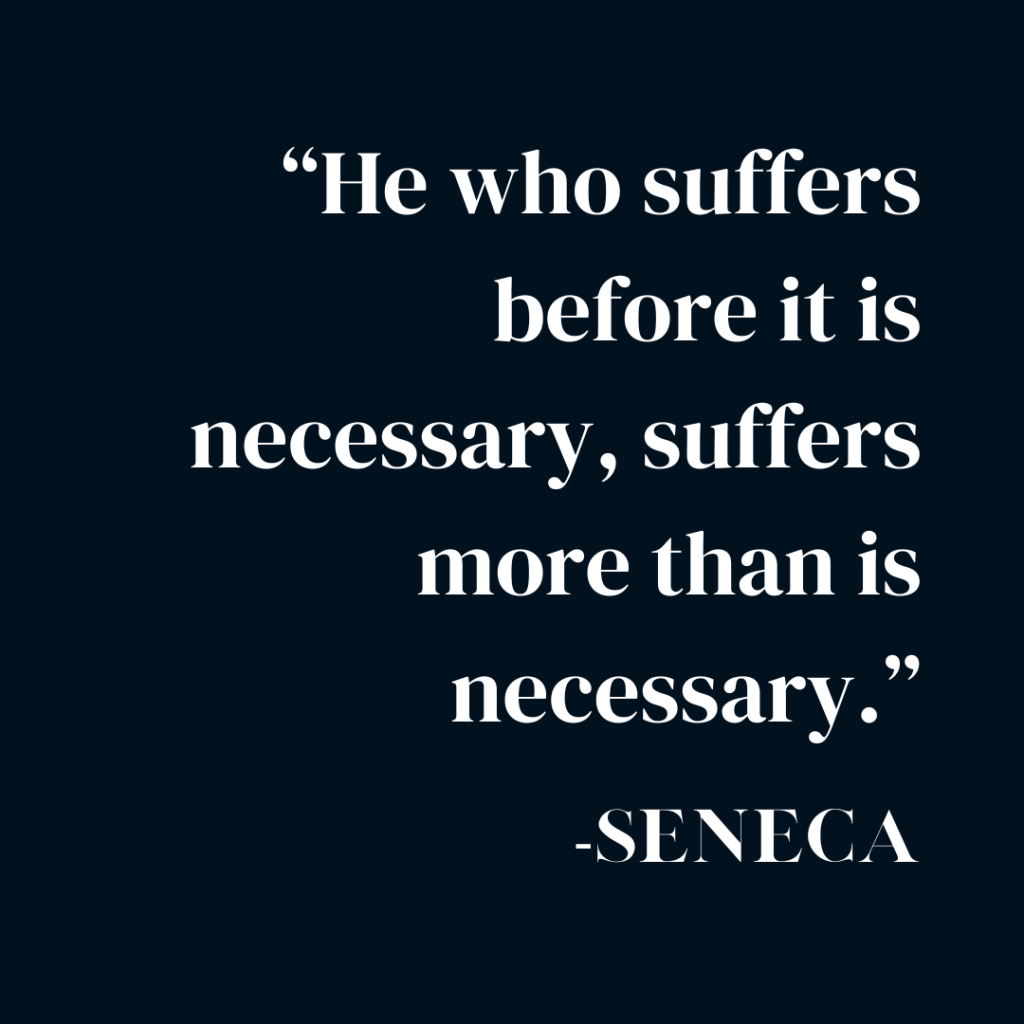
Another encouraging quote comes from the stoic Seneca and he said, “He who suffers before it is necessary, suffers more than is necessary.” Understanding that we are not in control of others’ nor our circumstances releases us from the responsibility to be in charge. Obviously we are in control of ourselves and everything we do, every decision we make has a consequence – whether good or bad. Therefore we have full control of those outcomes – for example choosing to go to bed at a reasonable time means you will get good sleep, and therefore will feel well rested in the morning. However, we cannot control other people, the traffic, the weather, etc. We must let go of that feeling that we can control it in order to experience the peace we long for. In my sleep example, we are in control of when we go to bed and when we get up, but we cannot control if a siren or a snoring spouse wakes us in the middle of the night.

Learning to be self aware of our thoughts and reframing our experiences, and learning to release control of things that we think we have control over but do not will help tremendously with extinguishing worry. Like I mentioned at the beginning of this talk – that certainly is easier said than done. Yes, this sort of inner work takes practice – and it is WORK, so it is not easy, but it is worth it!

Anxiety and Clutter

This blog post isn’t easy for me to write. It’s difficult to be vulnerable, but I am so passionate about the topic of mental health and the effects clutter has on our mental health that I wanted to share my own story.

I have struggled with anxiety my entire life – or at least as long as I can remember. Even as a young child I remember being worried or nervous about all sorts of things. I learned in my late teens that controlling my environment eased some of my anxiety. I guess it was at this young age that my love for organization and order germinated. I learned that the less I had to take care of, the less chaos there was in my life. Less chaos equals less stress and anxiety.

As I grew up and older, slowly over time more and more responsibilities and things piled on me. First it was getting married, and learning to manage not only my things, but my husband’s things as well. Then our daughter came along, and two more children after that. The responsibilities and the THINGS kept multiplying. I suppose it was a mercy that I only added to our chaos a little at a time, however it was like that analogy of a frog in a cool pot of water that began to get hot and boil over time – so that it wasn’t noticeable. 

When our youngest son was a toddler I started struggling with severe anxiety symptoms. My doctor labeled me with Generalized Anxiety Disorder and prescribed Xanax, which I could take when the symptoms were unmanageable. I was able to cope like this for several years, until my anxiety reached a point where it was affecting my everyday life. The journey that ensued is a whole other story, but ultimately I ended up seeing a holistic doctor and discovering that I had multiple food sensitivities, exasperating my anxiety. I was thankful to have answers, and with diet and supplements I have been able to manage for over 8 years now.

Several years ago, I began to learn about minimalism. I read blog posts and books, I watched YouTube videos, and listened to podcasts about the subject. I was so intrigued. I’ve always liked the idea of living with less. I remember when our kids were very young, I told my husband that I would happily sell everything and move across the world if the opportunity arises. That opportunity never came along, but I have always had this thought that we could live with less. Unfortunately, my husband and two of my kids like to keep things – as part of a collection, or hobby items, because we might need it one day, or simply because there is sentimental value to the items. I am learning to just be an example by minimizing my own things, hoping they will see the benefits.

The more I learned about minimalism, the more I learned of the benefits to mental health. I don’t know if I would have avoided the struggles I had with anxiety by becoming a family of minimalists, but I’m confident that having less to manage would have relieved some of the stress and anxiety I was experiencing.

There are times when I feel frustrated or disappointed that I didn’t learn about minimalism and how to implement it into the lives of our busy family of five earlier, but I recognize it is all part of my journey. It’s never too late to make changes in your life. We could get caught up on focusing on everything we missed from not making changes sooner, or we can make those changes and allow the new ethos to guide us moving forward – continuing to become a better version of who we are. Even though two of my kids are now young adults, I can still talk to them about the principles of minimalism, even if I didn’t teach them through my actions while they were growing up.

I hope my candor has in some way inspired you to evaluate your life. Are your things and the responsibilities that come along with those things causing extra anxiety in your life?